





























Growing sugar snap peas or snow peas
A pea that is easy to grow and deserves a place in the vegetable garden.
Contents
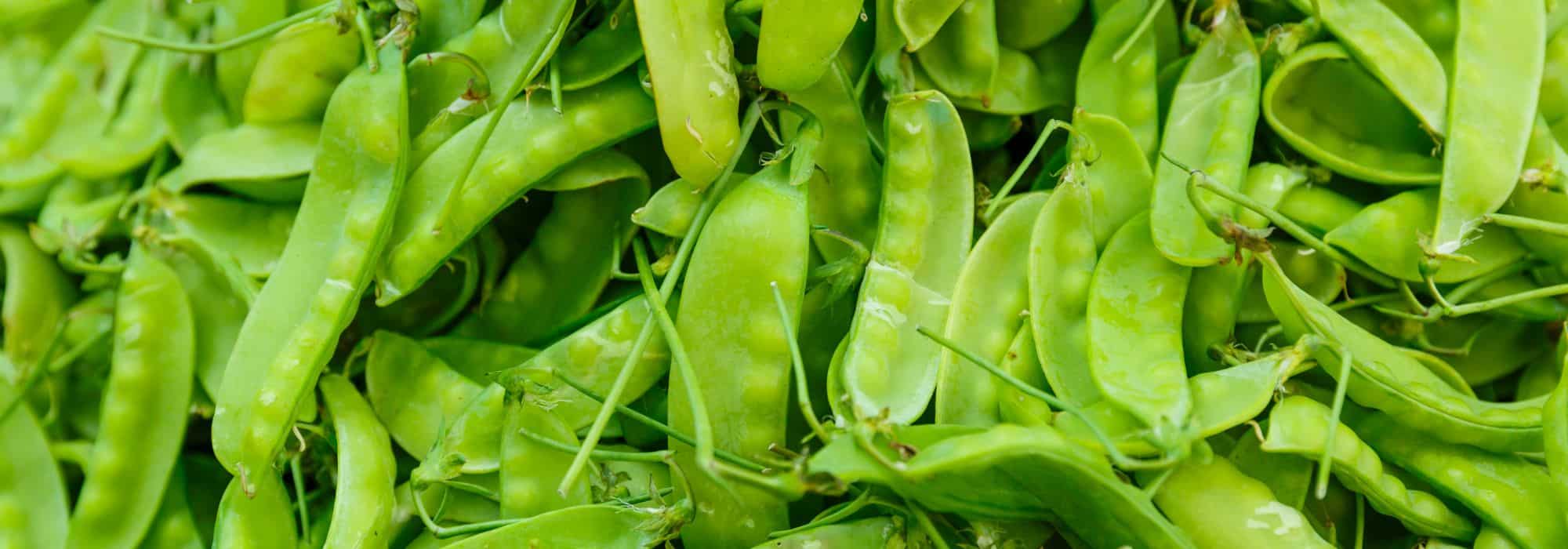
With their flat pods, sugar snap peas (Pisum sativum) are easily recognisable. A member of the Fabaceae family, this botanical variety is enjoyed in its entirety, unlike the shelling pea, commonly known as garden peas. Indeed, in sugar snap peas, everything is good, meaning both the pod and the seeds! It certainly deserves a place in the vegetable garden, alongside garden peas. Moreover, it is easy to sow, maintain, and harvest.
Discover all my tips for growing sugar snap peas in the vegetable garden.

What exactly is a sugar snap pea?
Indubitably, the sugar snap pea or mangetout does not enjoy the same notoriety as the garden peas or shelling peas. It is relatively rare to find it on greengrocers’ stalls. However, this vegetable from the Fabaceae family deserves a prominent place in the vegetable garden, as it offers numerous advantages.
Indeed, Pisum sativum is the type species that gave rise to round shelling peas. They are therefore very similar but different! In fact, with the sugar snap pea, you eat everything: the pod and the seeds. Simply because its pod is not parchment-like, meaning it is not covered by a hard, tough membrane like that of garden peas. This pod is thus edible, earning this pea the name mangetout! 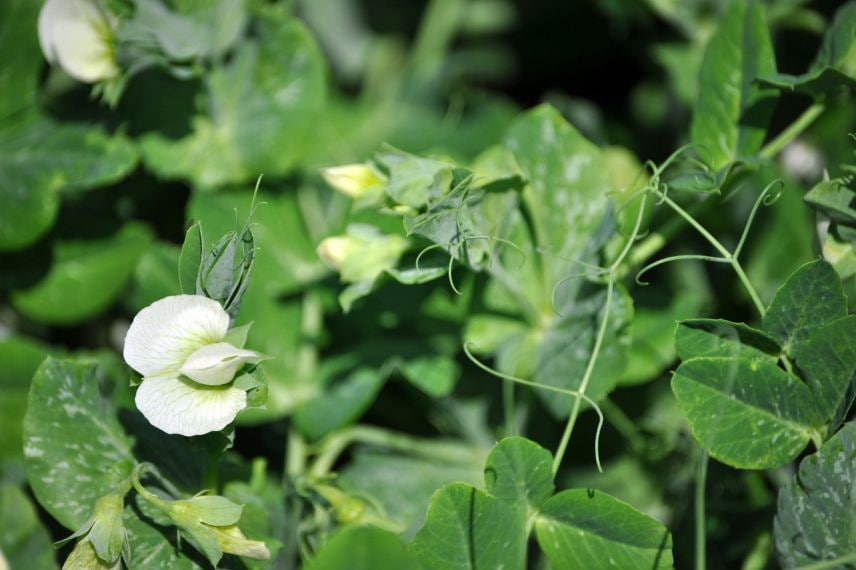
But it is also delicious! Renowned chefs do not overlook it, featuring it on the tables of their fine dining restaurants. It boasts a slightly sweet flavour and a crunchy texture. Provided it is grown under good conditions (rest assured, the sugar snap pea is easy to grow!), harvested at the right time, and cooked for just the right duration.
From a botanical perspective, the sugar snap pea has long stems with tendrils that allow it to cling to any support provided. The butterfly-like flowers display either white or purple colours, and the pods remain flat, as they are harvested before full ripeness.
When, where, and how to sow them?
Like peas, sugar snap peas are sown from the beginning of spring until April. If the soil is warm enough, sowing can be attempted as early as mid-February. Elsewhere, using a tunnel may be considered during this period. In any case, in March, sowing can be done everywhere. In regions with a mild climate, autumn sowing is possible. This way, sugar snap peas will be harvested early from the first days of spring.
Regarding soil, sugar snap peas prefer coolness but not moisture, so they require well-drained soil. Similarly, the soil should be well worked and loosened, enriched with compost (without excess) the autumn before sowing. It is also important to carefully weed the plot because, once the plants are developed, it will be difficult to intervene without risking breaking the fragile stems. As for exposure, it should be rather sunny, although sugar snap peas tolerate partial shade. However, they dislike scorching sun, so prefer a north-south exposure. 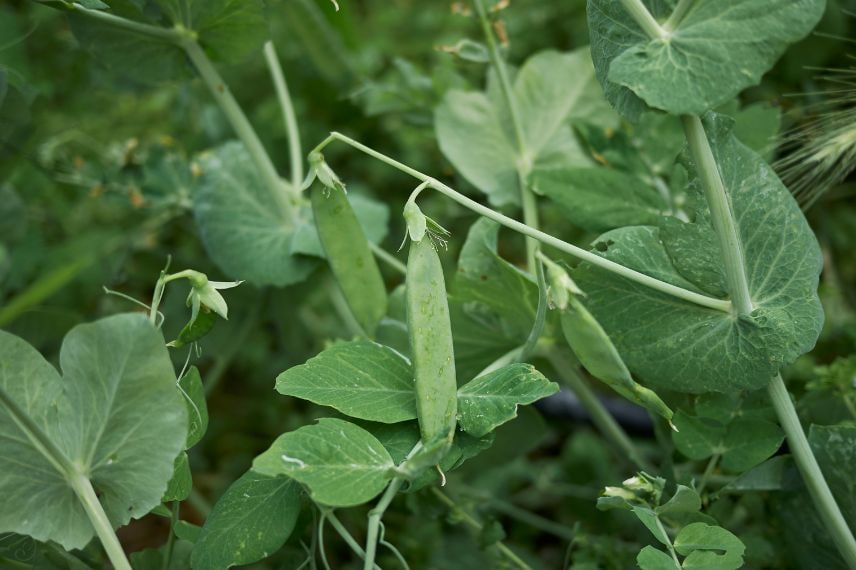
How to sow?
Sowing is done in rows spaced 40 to 50 cm apart. You can sow in clusters or in furrows:
- Dig furrows 5 to 6 cm deep
- Place 5 to 6 seeds every 30 to 40 cm or one seed every 2 to 3 cm
- Cover with soil
- Water with a fine spray.
For your information, sowing in clusters produces more resilient plants and leads to earlier seed germination. Germination occurs in just 8 to 10 days depending on weather conditions. If you want to speed up germination, you can soak your seeds overnight in water.
Discover other Beans
View all →
Available in 0 sizes
Available in 1 sizes
Available in 1 sizes
Available in 1 sizes
Available in 1 sizes
Available in 1 sizes
Available in 1 sizes
Available in 1 sizes
Available in 1 sizes
Available in 1 sizes
What care do sugar snap peas need?
Sweet peas grow quickly and do not require too much attention. On the contrary! The less you tend to them, the better.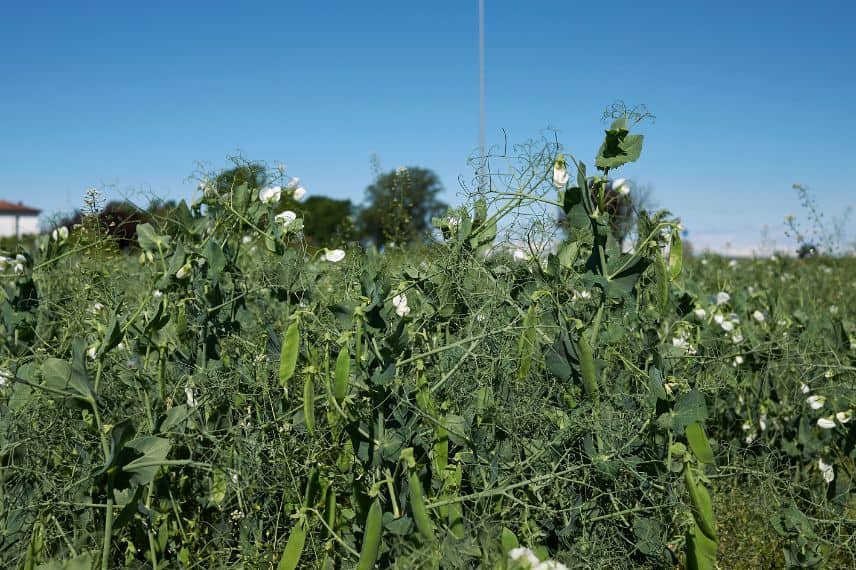
- As soon as the first seedlings appear, support them with climbing netting, canes, or stakes connected by sturdy strings. Don’t hesitate to use multiple supports, as depending on the variety, the stems can reach 2 m in height!
- Water sparingly if spring is dry. Watering is especially important during flowering (otherwise they become susceptible to powdery mildew), after which the weather will suffice.
- Avoid excessive hoeing and weeding as the root system is quite shallow.
- Mulch if necessary, but use a fine mulch.
Read also
Succeeding in growing peasGarden-to-plate sugar snap peas
Harvesting takes place 70 to 80 days after sowing, starting from April-May. And it will be (practically) daily, as the sugar snap pea is productive! Admittedly, harvesting is not always straightforward as these legumes are particularly voluble.
The pods are picked when they are thin and flat, barely swollen by the seeds that can be seen through the delicate skin. While waiting to have a complete dish, they store very well in the vegetable drawer of the fridge, unwashed. Then, simply trim the ends and ensure to remove the string if there is one.
Harvesting continues until July. 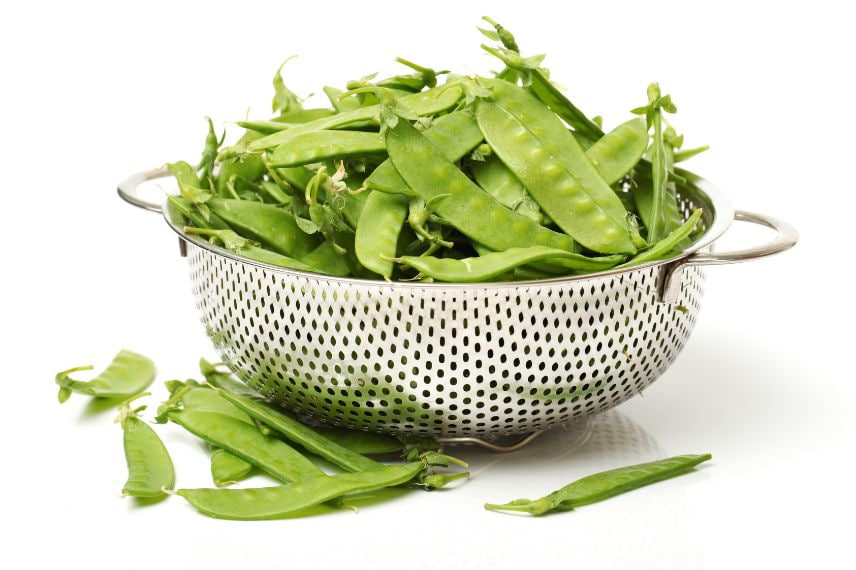
Once washed, the sugar snap peas are blanched in salted boiling water for 6 to 7 minutes. They can also be cooked directly in a wok or sauté pan with a little olive oil. Sugar snap peas are delicious with early potatoes or even prepared in salads.
Did you know? Once harvesting is complete, do not pull up the plants. As legumes, sugar snap peas have roots capable of storing nitrogen in their nodosities. So, leave the roots in the soil for future crops and compost the plants. You can also let them decompose on the plot.
Some varieties of sugar snap peas
There are several varieties of mangetout peas, dwarf or climbing:
- The ‘Normand mangetout’: a semi-climbing variety that produces long, slightly curved pods
- The ‘Corne de bélier’: a tall variety that reaches 1.5 m. It is a productive variety that offers long and wide pods
- The dwarf ‘Bamby’: a dwarf variety that hardly exceeds 50 cm. It produces beautiful, tender pods
- The semi-climbing pea ‘Carouby de Maussane’: it grows to 90 cm and offers very tender green to light yellow pods
- The ‘Héraut mangetout’: a climbing variety that reaches 1.4 m, producing tender pods without strings
- Subscribe!
- Contents

Comments