


Growing mangaves in pots
To bring a touch of exoticism to terraces and balconies
Contents
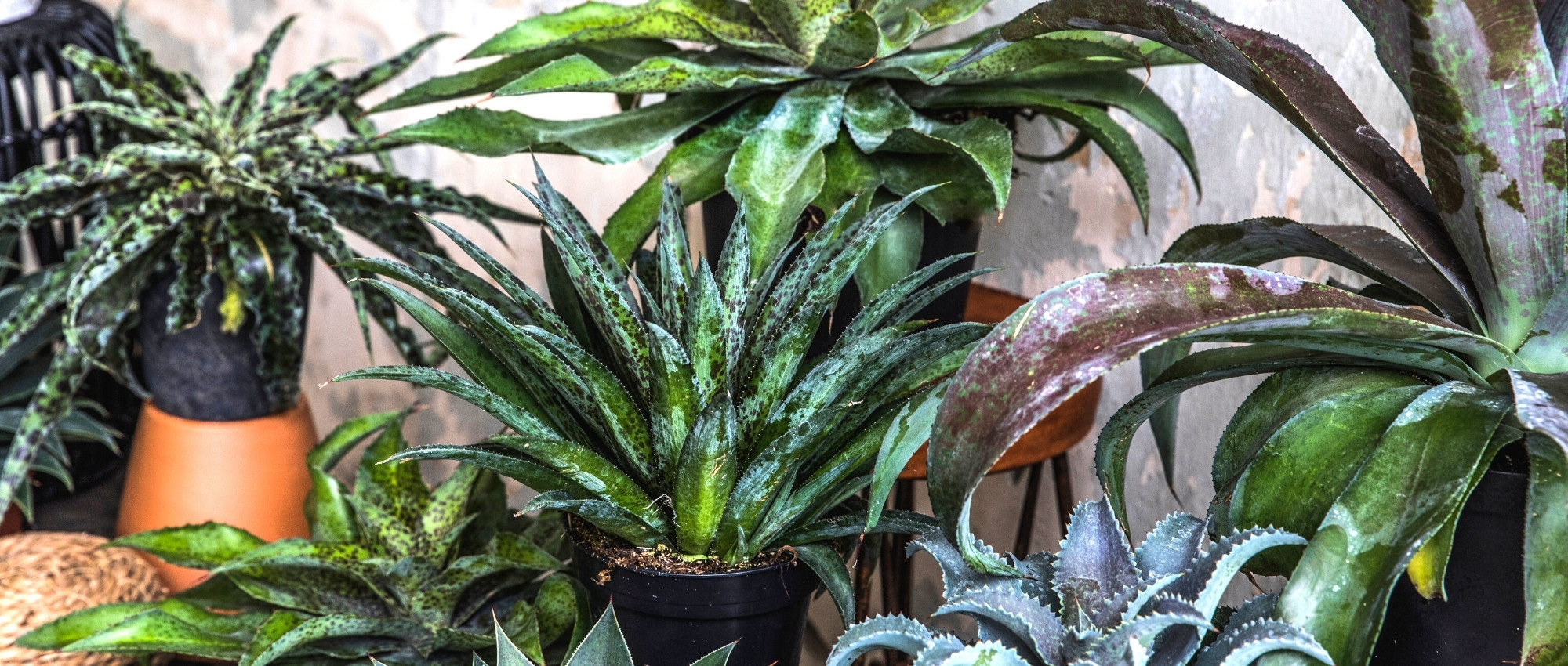
Mangaves are unique succulent plants that, like agaves, form rosettes of thick leaves. Their exceptional hues are appreciated: their leaves can be green, bluish, or reddish, and are often punctate with purples. The shape of the leaves is also distinctive: they can be broad or narrower, sometimes trailing, or dentate along the edge of the lamina.
As they are not very hardy plants (they can tolerate down to -5 °C), growing them in pots is an excellent solution to protect them from the cold in winter by bringing them under cover. Cultivating them in pots also allows their foliage to be truly showcased, especially for varieties with long, trailing leaves. A mangave grown in a beautiful terracotta pot will make a statement on a sunny terrace or balcony. Discover all our tips for successfully growing them in pots in this guide!
And to learn everything about mangaves, feel free to check our dedicated page: “Mangave: planting, growing, and care”

What type of pot to choose?
To grow Mangave, we recommend choosing a terracotta pot rather than a plastic one. Indeed, terracotta pots are porous to water and air, allowing for better drainage and aeration at the root level… perfect for a dry medium plant like Mangave! Glazed or enamelled terracotta pots lose this porous quality, but they have the advantage of being very decorative and highlighting the original colours of the Mangave. Additionally, terracotta pots slightly regulate temperature and can gain a few degrees in winter compared to plastic pots. They are also more aesthetically pleasing and environmentally friendly, but heavier to handle. Alternatively, a large plastic pot can still be suitable. The most important thing is that there are drainage holes at the bottom to allow water to escape.
Choose a pot large enough for the root system of the Mangave to develop properly. Ideally, it should measure at least 30-40 cm in diameter and depth for the younger Mangaves, and more if you are growing a large Mangave that is several years old. As the Mangave grows, repot it each time into a new pot that is slightly larger than the previous one.
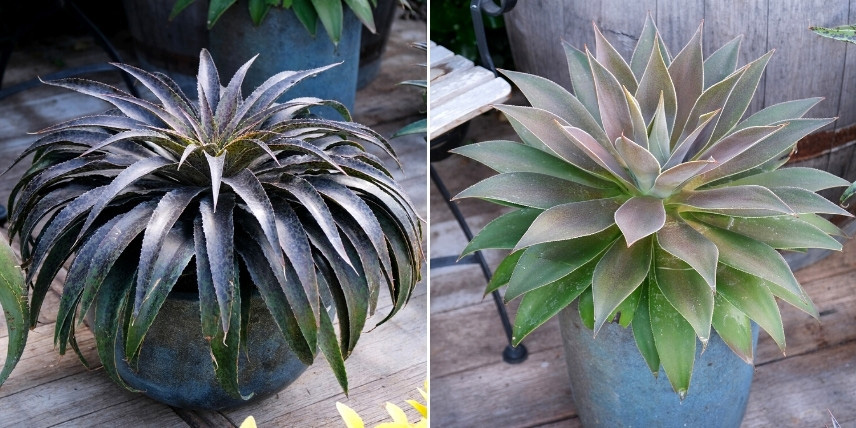
The Mangaves ‘Inkblot’ and ‘Lavender Lady’, grown in pots
Read also
Mangave: Planting, Growing, and CareWhat substrate to use?
Like all succulents, the mangave is sensitive to stagnant moisture that could rot its roots: you should therefore choose a well-draining substrate, such as special cactus compost. You can also create your own substrate by mixing one third coarse sand, one third compost, and one third garden soil.
Discover other Mangave
View all →
Available in 0 sizes
Available in 1 sizes
Available in 1 sizes
Available in 2 sizes
Available in 2 sizes
Available in 2 sizes
Available in 2 sizes
Available in 2 sizes
Available in 1 sizes
How to plant a mangave in a pot?
We recommend planting the mangave in a pot in spring, around April.
- Place a layer of gravel or clay balls at the bottom of the pot to facilitate drainage.
- Next, add a draining substrate, for example, a mixture of coarse sand, potting soil, and garden soil in equal parts.
- Remove the mangave from its original pot and place the root ball in the centre of the new one. The top of the root ball should be just a few centimetres below the upper edge of the pot.
- Fill the pot by adding substrate all around the mangave. Be careful not to bury the collar or the lowest leaves.
- Lightly compact.
- Water.
- Optionally, add a small layer of gravel or coarse sand on the surface. In addition to its aesthetic appeal, this mineral mulch will reduce the risk of rot at the collar and lower leaves.
Read also
Pairing ideas with MangaveWhere to place it?
As with most cacti and succulents, the mangave is a young plant that needs warmth: it will appreciate being placed in full sun. You can, for example, set it up on your terrace or balcony. Direct sunlight gives the mangave a more intense colouration. However, if you live in the south of France, such as the Mediterranean basin, it is better to place it in partial shade to protect it from the scorching sun.
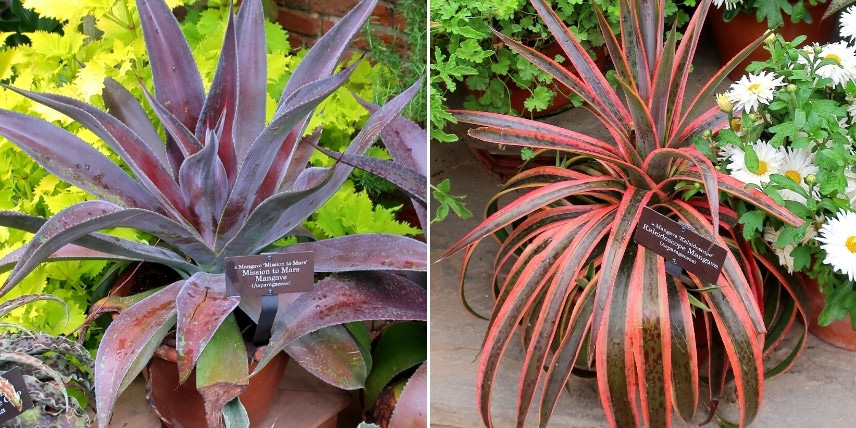
The mangaves ‘Mission to Mars’ and ‘Kaleidoscope’
How to care for a potted mango tree?
Watering and fertilising
Potted plants require more attention than those in the ground: indeed, in pots, the substrate dries out more quickly and the mineral elements are limited, causing the substrate to gradually deplete. However, mangaves are plants of dry environments, relatively low in water and mineral requirements. Thus, we recommend watering the mangave about once a week in spring and summer, then reducing watering in autumn and winter. Always wait until the substrate is completely dry before watering, and if you have placed a saucer under the pot, be careful not to let water stagnate. Like all succulents, the mangave is sensitive to excess moisture, which can cause its roots to rot.
In spring and summer, you can provide the mangave with a special cactus liquid fertiliser, low in nitrogen, which you will dilute in the watering water, at a rate of one or two applications per month. Stop fertilising in autumn and winter.
Repotting
We recommend repotting the mangave every two years, choosing a pot that is slightly larger than the previous one each time. This allows for substrate renewal and supports the plant’s growth by providing enough space for the root system. Preferably repot in spring and choose a well-draining substrate.
The mangave sometimes forms offsets around the original plant; if you see any, you can take the opportunity during repotting to remove and replant them in pots.
Wintering
If you live in a region with a mild climate, where the risk of frost is low, such as the Mediterranean basin, you can leave the mangave outside for the winter. However, we recommend protecting it from rain (for example, by placing it under a roof overhang or on a covered terrace).
In cooler regions, we advise bringing the mangave indoors for the winter, starting in October, for example, in a conservatory or unheated greenhouse, kept frost-free. You can also place it in any bright, cool room. If it does not receive enough light, the mangave may become leggy and pale.
In spring, when you take the mangave back outside, it is best to acclimatise it gradually to the sun. Initially, place the mangave in partial shade, waiting a few weeks before moving it to full sun. This will prevent its foliage from burning, as it will have lost the habit of direct sunlight during the winter.
Diseases and pests
When grown indoors, the mangave can be attacked by mealybugs, which form small cottony white clusters. If you see any, remove them with a cloth soaked in 90° alcohol. You can also make an anti-mealybug solution by diluting one teaspoon of black soap, one teaspoon of methylated spirits, and one teaspoon of vegetable oil in one litre of water. Mix well and spray this solution on the foliage.
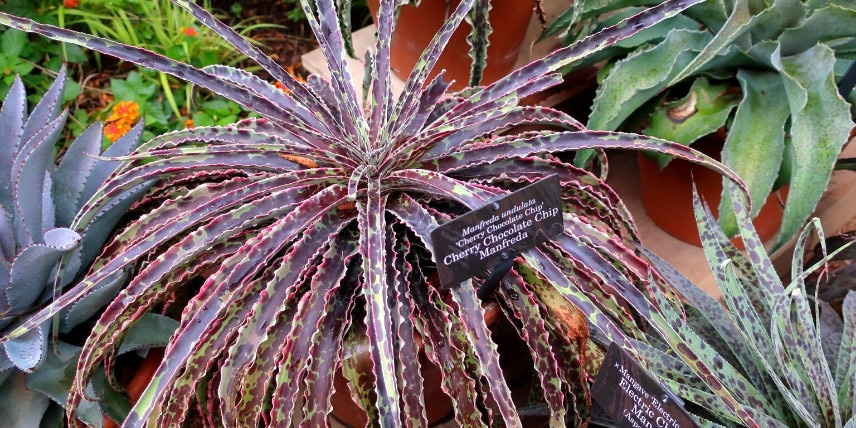
The mangave ‘Cherry Chocolate Chip’
- Subscribe!
- Contents
Comments