





























Hazel diseases and parasitic pests
Symptoms, Prevention and Treatment
Contents
Hazel or Corylus are attractive shrubs with their long pendulous aments appearing from late December to early March, as well as their round, dentate foliage that turns yellow in autumn. They can produce between 7 and 12 kg of hazelnuts per tree from their sixth year. Hazelnuts enjoyed by many are harvested from the end of summer. They adorn informal hedges or gardens, giving them a natural look. Easy to grow and low-maintenance, these bushes are very hardy and resist diseases well. Like all plants, they can however sometimes be subject to certain diseases or parasitic attacks. Discover which diseases and parasites may affect the hazel, with all our tips to identify, prevent and treat them naturally.

Balanin
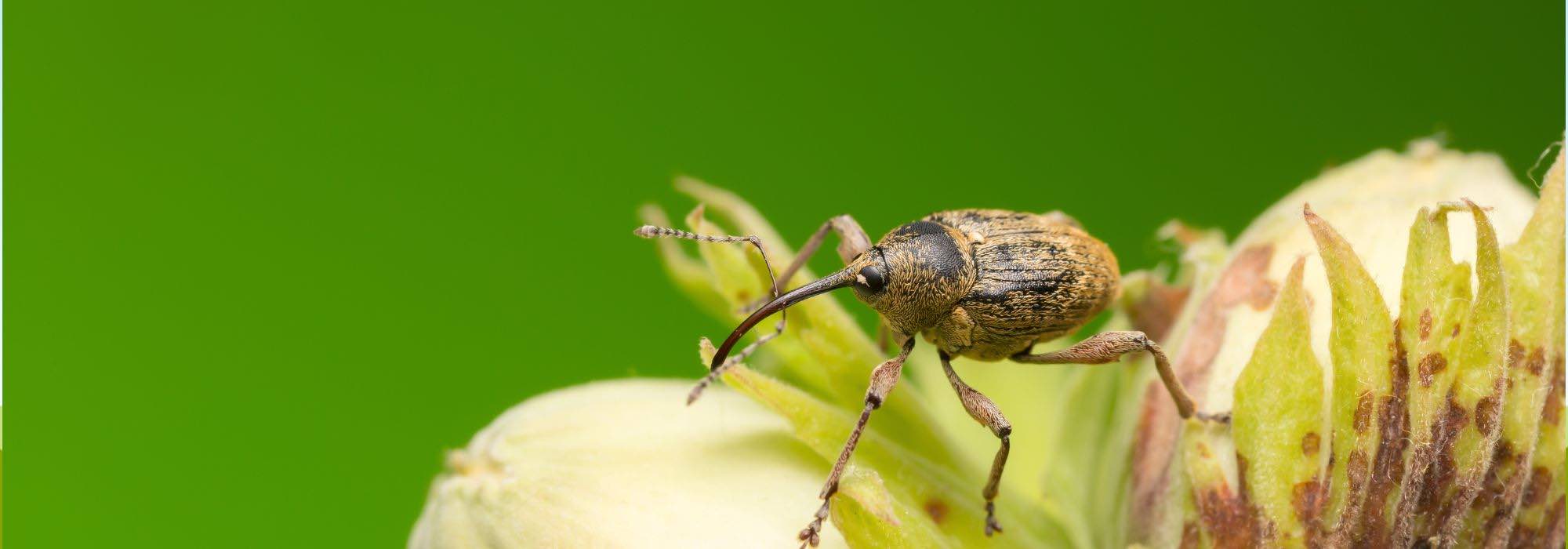
The balanin is the most common pest of hazel trees. It is a small beetle that resembles weevils and lays its eggs in hazelnuts, one per fruit, in June. A larva develops inside the fruit and devours it. Very voracious, balanin beetles can eat an entire hazelnut crop. Adults also nibble the hazel tree’s leaves.
Symptoms
The balanin measures 1 cm in length and is brown, with a body covered in hairs and fine beige or yellow scales. It has large black, round eyes and a rostrum, a long, very fine and curved nose which allows it to pierce the shells of hazelnuts to lay its eggs. This rostrum measures a third of the insect’s total length and is equipped with two elbowed antennae. The balanin larva is about 1.5 cm long and cream-white with a brown head.
Other signs that your hazelnut tree is infested by balanin: hazelnuts drop to the ground early, they are pierced with a small hole and the nut is empty. The fruits may also be coated with a grey rot following balanin attacks and in damp weather.
Prevention and treatment
Each season you can implement measures to eliminate balanins.
- In spring, place glue bands on the trunk of the hazel tree.
- In May and June, you can remove the adult balanins by shaking the tree, after having previously laid a light-coloured sheet on the ground. This helps collect the insects and then dispose of them.
- In summer, collect the fruits that are perforated or have fallen early to the ground and burn them.
- In autumn and winter, rake the soil to bring the larvae to the surface and expose them to their predators such as the blackbird.
- You can also encourage the arrival of predatory insects of balanin, such as the carabid beetle, by placing insect hotels near your hazel tree.
For further reading, see our Balanin advice sheet.
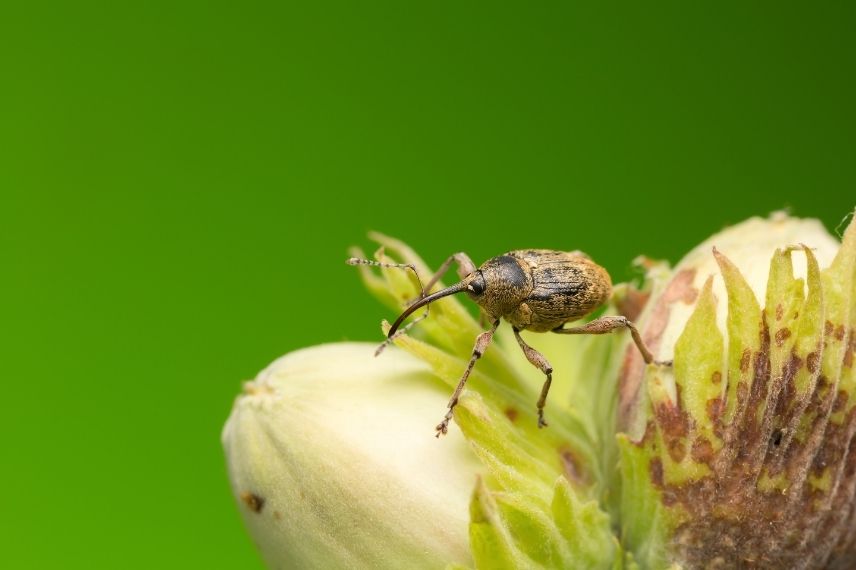
The balanin is a pest insect specific to stone fruit trees
Read also
Choosing the right hazel: buyer's guidepowdery mildew
Powdery mildew is a fungal disease caused by microscopic fungi.
Symptoms
Powdery mildew is recognisable by the white, powdery coating that appears on the leaves. This is why it’s nicknamed ‘the white disease’. Leaves may drop, and the fruits may turn dark.
Prevention
To prevent this disease, ensure good air circulation around the hazel tree. As a preventive treatment, you can spray horsetail decoction.
Treatment
This disease does not threaten the hazel tree if it remains localised. In that case, remove the affected leaves. If the infestation is more severe, apply sprays based on sulfur, baking soda, nettle manure or horsetail decoction to treat powdery mildew.
For more information, consult our advice sheet on powdery mildew
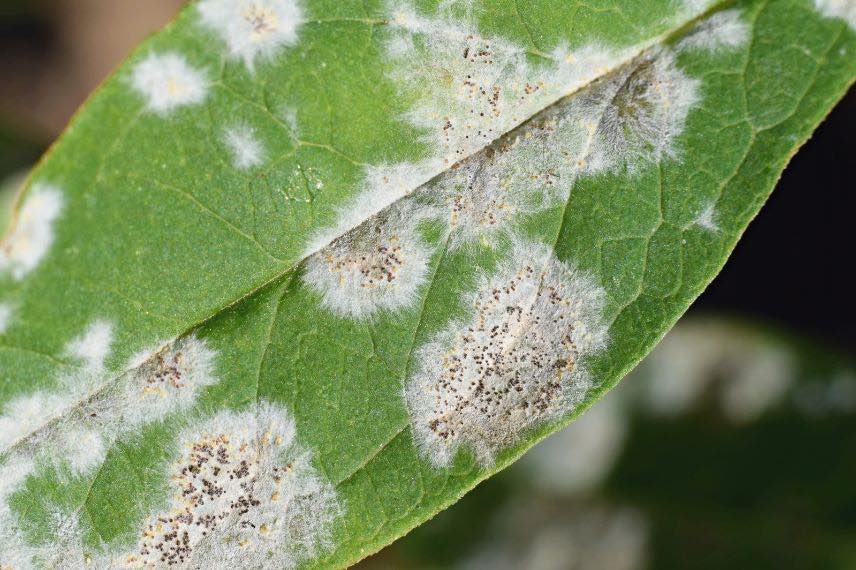
Powdery mildew symptoms
Green aphids
Green aphids sometimes attack hazel trees, but do not cause significant damage.
Symptoms
These small green insects feed on the sap of young shoots and leaves. Leaves may become distorted as a result of their feeding, and a black substance called sooty mould may appear and give the vegetation a sticky appearance.
Prevention
To prevent green aphid infestations, you can turn to predatory insects such as ladybirds and lacewings. Introduced into the garden, they provide a natural and effective way to curb aphid multiplication.
Treatment
To remove the aphids, you can remove them by hand or with a powerful jet of water. You can also spray a solution of black soap diluted in water at a rate of 15 to 30 g per litre of water.
For further reading, see our advice sheet: “Aphid: identification and treatment”
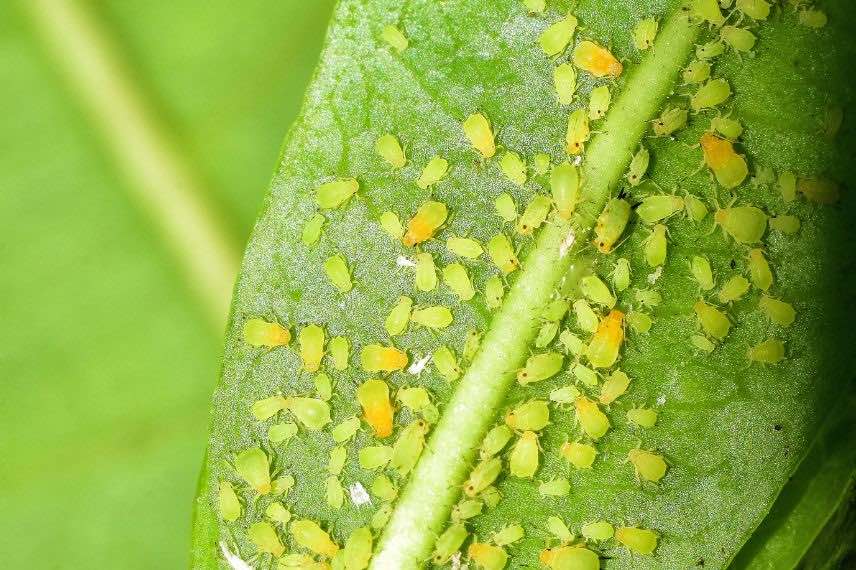
Colony of green aphids
The Phytopte
Phytoptus avellanae is a tiny white mite that attacks hazel buds, which can reduce the harvest.
Symptoms
Buds swell abnormally and show widely spaced scales and drying out.
Prevention and treatment
The treatment consists of removing the affected buds.
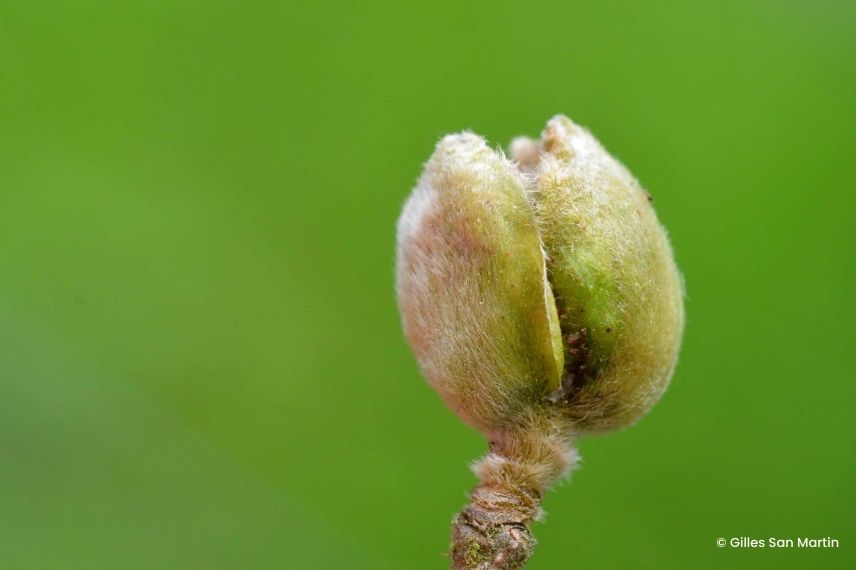
Phytoptus avellanae on a bud
The Cheimatobie
This is a moth whose pale-green caterpillars feed on hazel leaves.
Symptoms
Leaves are chewed and riddled with holes. Threads and bristles and small green caterpillars may be observed.
Prevention
Fit a glue collar around branches in autumn.
Treatment
Remove caterpillars by hand.
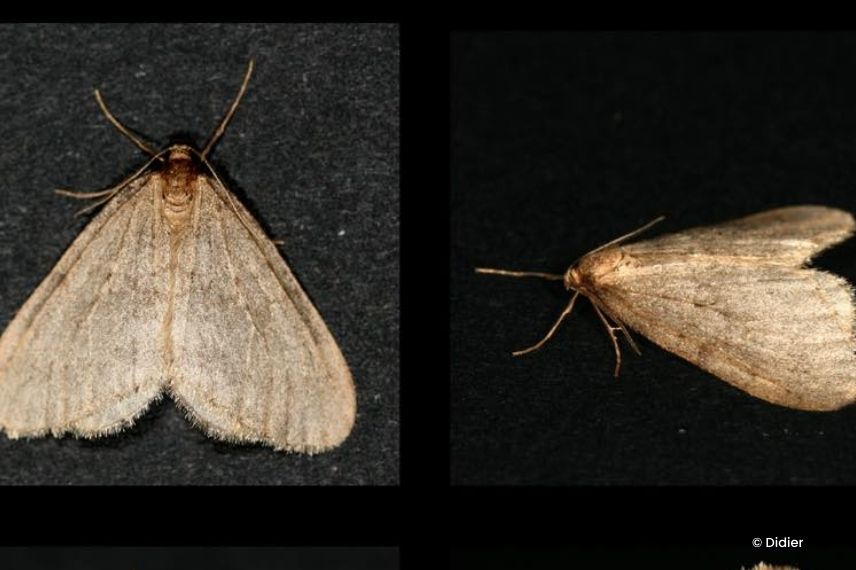
The Cheimatobie moth
Other parasites
The hazel tree can be attacked by other insects, such as sawflies, larvae that nibble the leaves, or bugs that pierce the hazelnuts, making them inedible. Hazel mosaic can also be observed, caused by a disease and which forms a mosaic on the leaves. Also to watch for is the appearance of a Japanese beetle, the Popillia japonica, which damages fruit trees including hazel trees, in Italy, the United States and Canada. The appearance of dentate leaves betrays its presence and it should be reported to the Plant Health Service.
In addition, discover our fact sheet: Identify the main plant pests and diseases, as well as our full guide on planting and maintaining hazel: Planting and maintenance of hazel.
Also worth reading: The Asian long-horned beetle, a threat to our trees?
- Subscribe!
- Contents
Comments