





























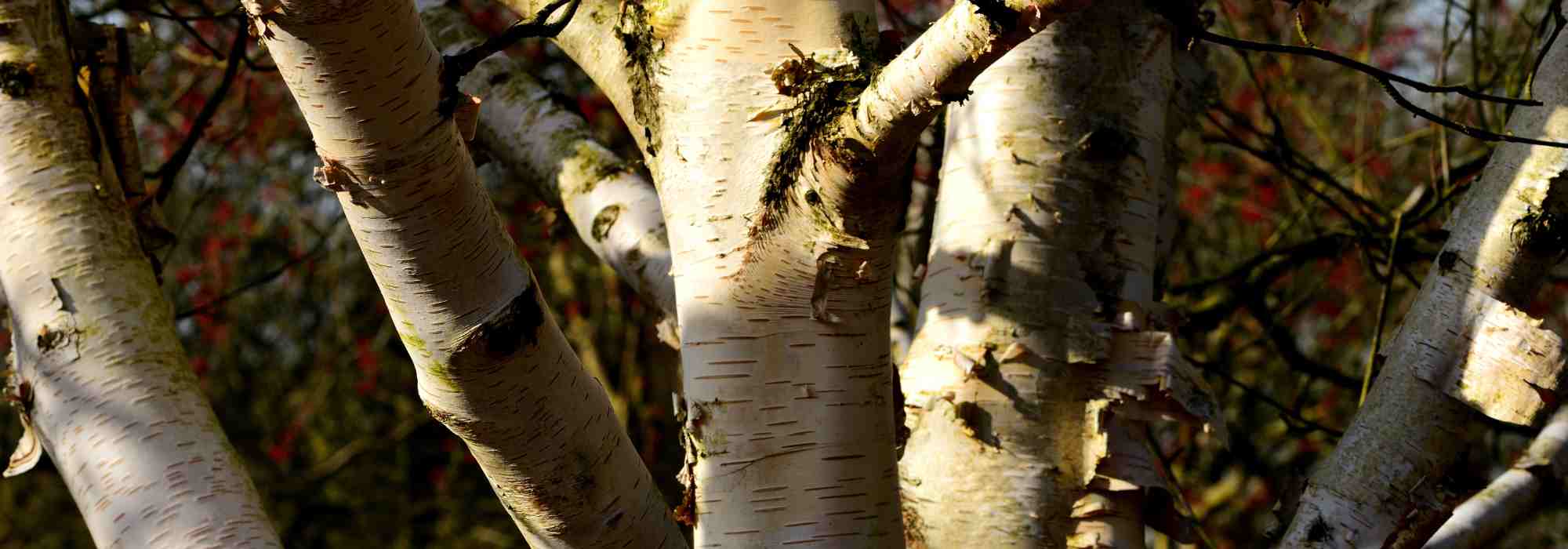
The Himalayan Birch
A breathtaking white bark
Contents
Birch trees are a favourite of ours, but the one we are going to show you in this video is even more spectacular thanks to its remarkable bark. This birch is the Himalayan Birch or Betula utilis. More specifically, it is the one most commonly found in commerce and with the whitest bark: Betula utilis var. Jacquemontii.

The Himalayan birch
Betula utilis belongs to the family Betulaceae, like all birches, as well as hornbeams, hazels, and alders. The distribution range of the Himalayan Birch is quite broad: from Afghanistan and western China in forests mixing birches, conifers, and rhododendrons. Moreover, within its distribution range, the species is becoming rare due to overexploitation of forests. Growing this tree also helps to partially preserve the species.
Why “utilis”? In Asia, the bark was used to write sacred texts, mantras… which were then placed in talismans. This birch was therefore useful to the population. That is where its Latin name comes from.
Read also
Birches: planting, pruning and careWhy plant a Himalayan white birch?
This is the birch whose bark will be the whitest in winter, and it is a considerable asset in our gardens during this season. Its white trunk will perfectly complement branches or winter flowering plants that are very colourful: decorative dogwoods, winter heathers, Witch hazel…
The foliage also becomes very beautiful in autumn before falling, taking on a bright yellow hue.
This is a tree that will grow relatively slowly for a birch: about 20 cm per year. It is ideal for small spaces, as although its height can reach, after many years, 15 m tall, it will not exceed 5 m wide.
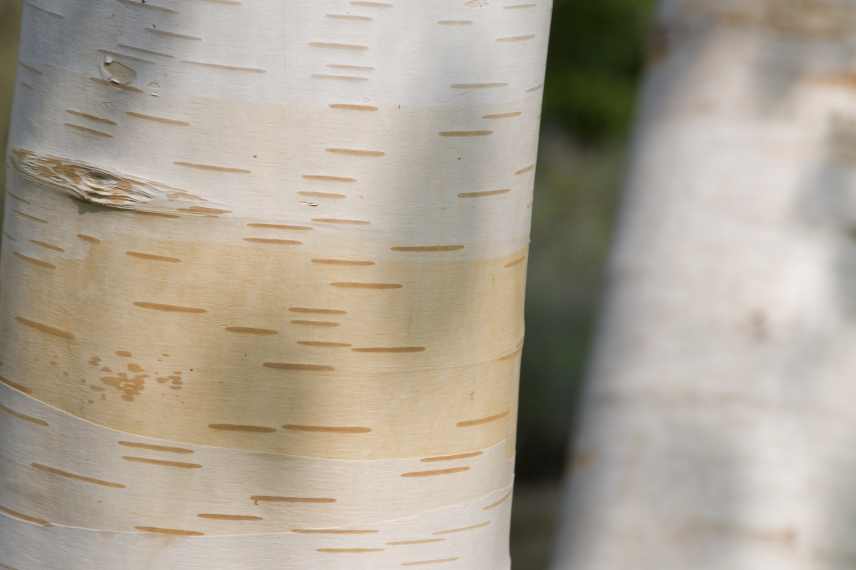
A bark shining with whiteness revealed particularly in winter
Where to plant it?
It is indifferent to soil pH, prefers fertile, cool, but well-drained soils. Very hardy, it grows well in full sun or partial shade. It is worth noting that the yellow colour of the autumn foliage will be more intense in acidic soil.
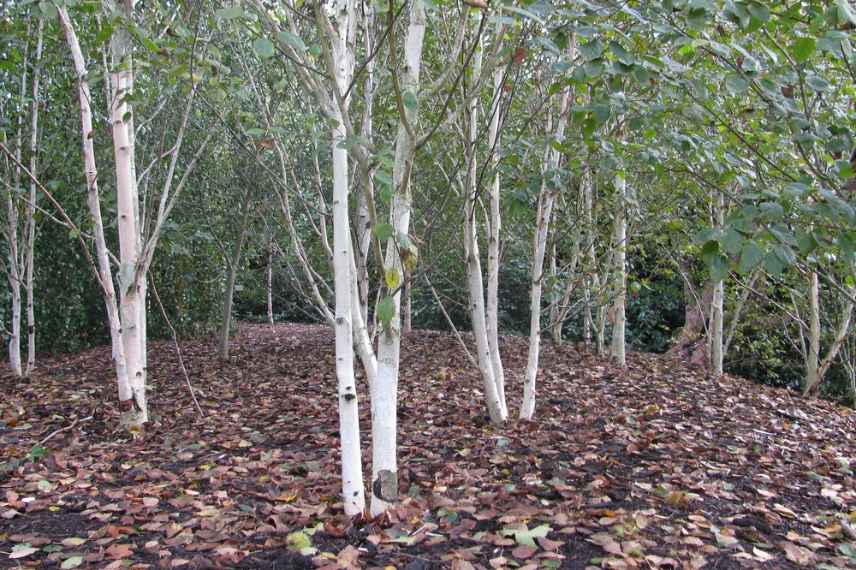
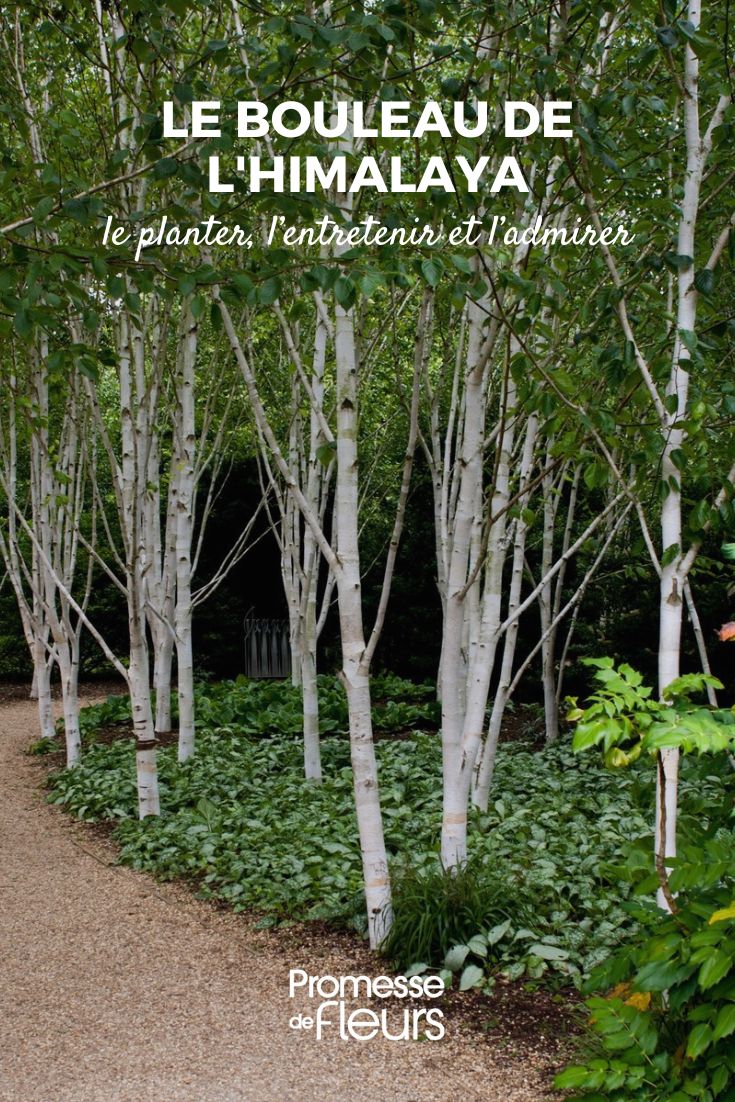
It can be planted in isolation, in groups, or in small clusters (as shown in the image).
Read also
Birches: the most beautiful barksCare for Betula utilis
Pruning is not necessary, but you can remove the lower branches of the trunk or some poorly placed ones at the end of winter. It can be pruned “pollarded” (removing branches at a certain height to encourage the tree to produce new shoots), but it is better to allow it to maintain a natural, ovate, and slender habit.
If you find that your birch is not white enough, you can gently remove the thin superficial bark that starts to peel, then wash the trunk with a damp sponge. After 4 or 5 years of cultivation, lenticels will appear on the trunk, adding an extra decorative aspect to this tree.
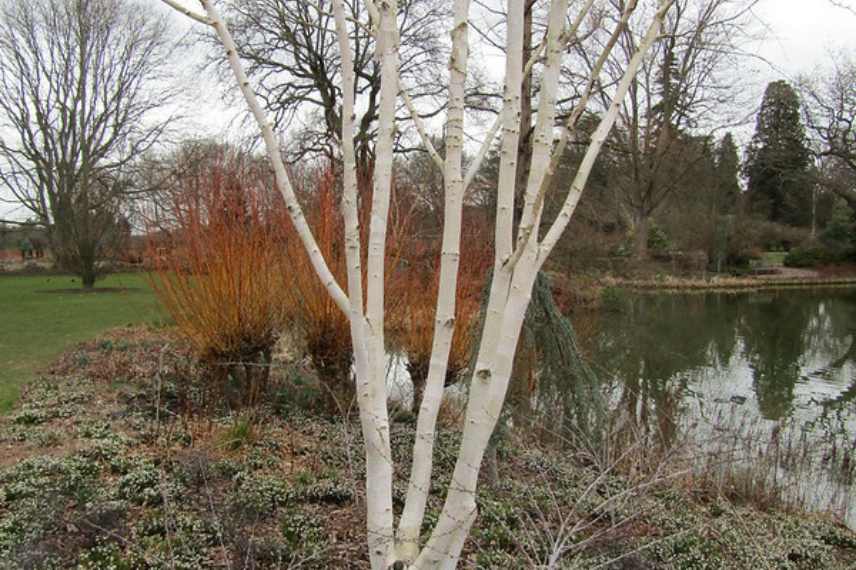
Betula utilis var Jacquemontii (©Leonora Enking)
- Subscribe!
- Contents
Comments