





























How can I speed up compost decomposition?
Tips and advice to speed up composting
Contents
Almost every gardener has one in the garden (even two or three!): a compost heap. Composting is a natural process of decomposition of organic matter by microorganisms, insects and worms, which allows us to transform our garden and kitchen waste into rich, fertile soil. However, it can sometimes be frustrating to see that the decomposition process is slow and that the compost isn’t ready to use as quickly as we would like. Fortunately, there are several ways to speed up the decomposition of compost and obtain a soil amendment quickly. Follow us, as we reveal the best practices and tips for rapid composting.

What makes good compost?
A good compost is what we call a ‘balanced’ compost. That is, it is a harmonious mix of brown and green materials, and once decomposed it becomes a soil amendment with an excellent carbon-to-nitrogen ratio for healthy plant growth.
But who makes the compost? The decomposer microorganisms mainly, but also insects, fungi and other earthworms. They thrive on your compost heap, but they need nitrogen, carbon, oxygen and water to develop and multiply. And the more of them there are, the faster the decomposition of the organic matter will be!
So it’s up to you to provide all of this with a few simple steps, to give them a good balance, and you will obtain a high-quality amendment… while speeding up the decomposition process.
Read also
How to hide a compost bin?Finding the right balance between green and brown materials
To begin with, you’ll need a good balance between nitrogen-rich materials, called “greens”, and carbon-rich materials, called “browns”.
Green materials, such as kitchen waste, lawn clippings and the green leaves from your shrub prunings, etc., are rich in nitrogen and provide a source of energy for decomposer micro-organisms.
Brown materials, such as fallen leaves, twigs, dry hay, straw and wood chips, etc., are rich in carbon and provide a source of food for the micro-organisms.
A good ratio is about 1 part green materials to 3 parts brown materials. This balance promotes good microbial activity and, as a result, rapid decomposition.
Remember that the best approach is to alternate green and brown materials in successive layers… like a lasagne.
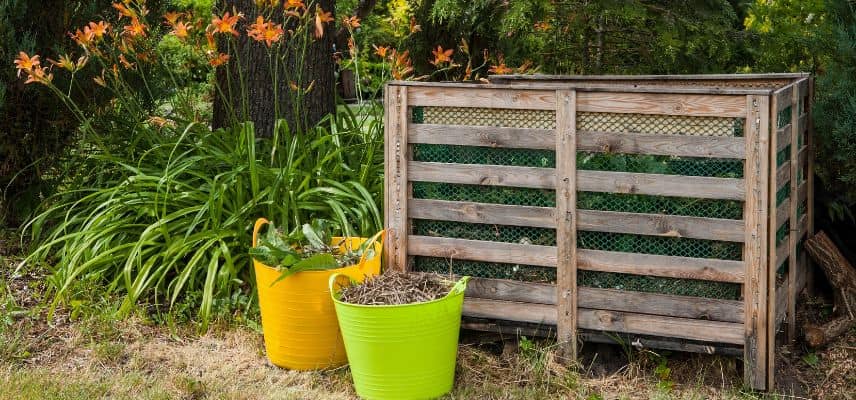
A good balance of green and brown waste produces well-balanced compost
Incorporate only small pieces
In your compost bin, only put in small pieces, or chop them up before adding them to the compost heap. Small pieces have a larger surface exposed to decomposing microorganisms, which speeds up the decomposition. Coarser materials, such as branches and thick stems, may take longer to break down and may slow the overall process, which is why it’s worth shredding them or cutting them into small pieces in advance.
Read also
Does compost attract rats?Ensure adequate aeration
Oxygen is essential to the composting process. Turn the compost regularly with a fork or a specialized tool. This helps to aerate it and prevent the formation of anaerobic zones, where the decomposition process would slow down and could produce unpleasant odours… unpleasant odours. Moreover, decomposer micro-organisms need oxygen to develop and multiply.
We recommend turning the pile of compost every two to four weeks for better results.
→ To learn more, read our articles on the topic: “What is a compost aerator used for?
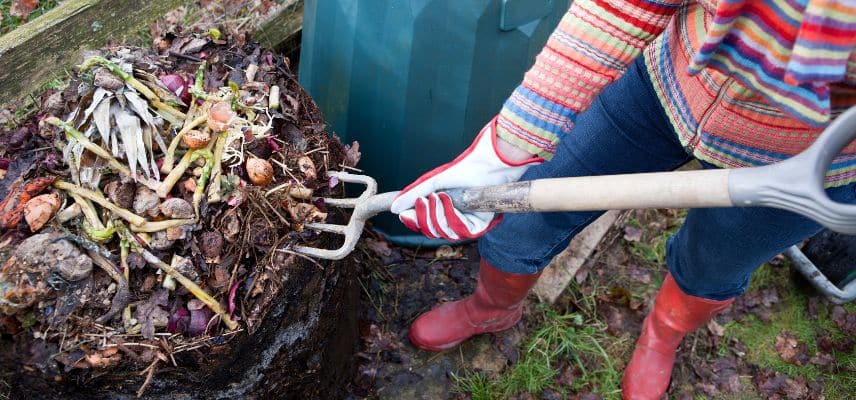
With a fork, aerate the compost.
Humidity control
Moisture is also important in promoting the proliferation of decomposer microorganisms, and consequently the decomposition of compost.
Your compost should stay damp, but not waterlogged. Indeed, excess water can lead to poor aeration and slow decomposition. Moisture similar to that of a squeezed-out sponge is ideal.
If the compost heap seems dry, water it until it feels damp to the touch. If it is too humid, add brown materials (straw, hay, dead leaves, wood fragments, etc.) to absorb the excess moisture.
Using compost activators
Admittedly, it’s not obligatory, but you can speed up the decomposition process by adding compost activators. Compost activators are generally nutrient-rich organic materials (notably containing nitrogen) that provide an extra energy source for decomposer microorganisms. For example, well-rotted manure or dried blood can serve as natural activators.
In your home (or rather in your kitchen), you can also find other natural activators: crushed eggshells, coffee grounds, tea leaves and fruit and vegetable scraps, etc.
To learn more, read our articles on the topic: “Natural compost activators: when and how to use them?”
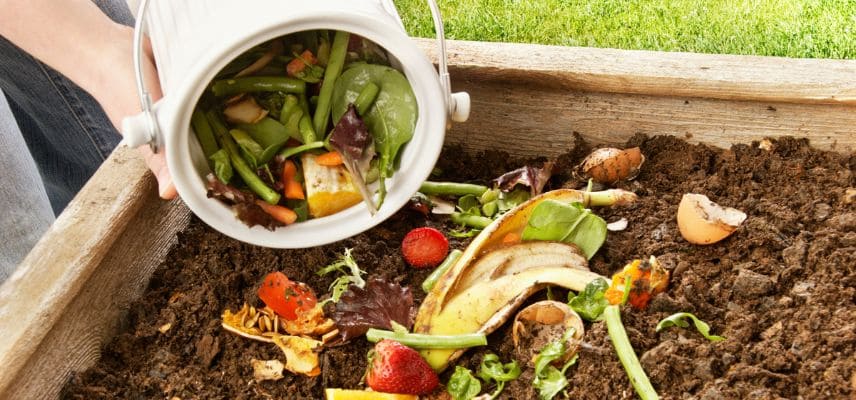
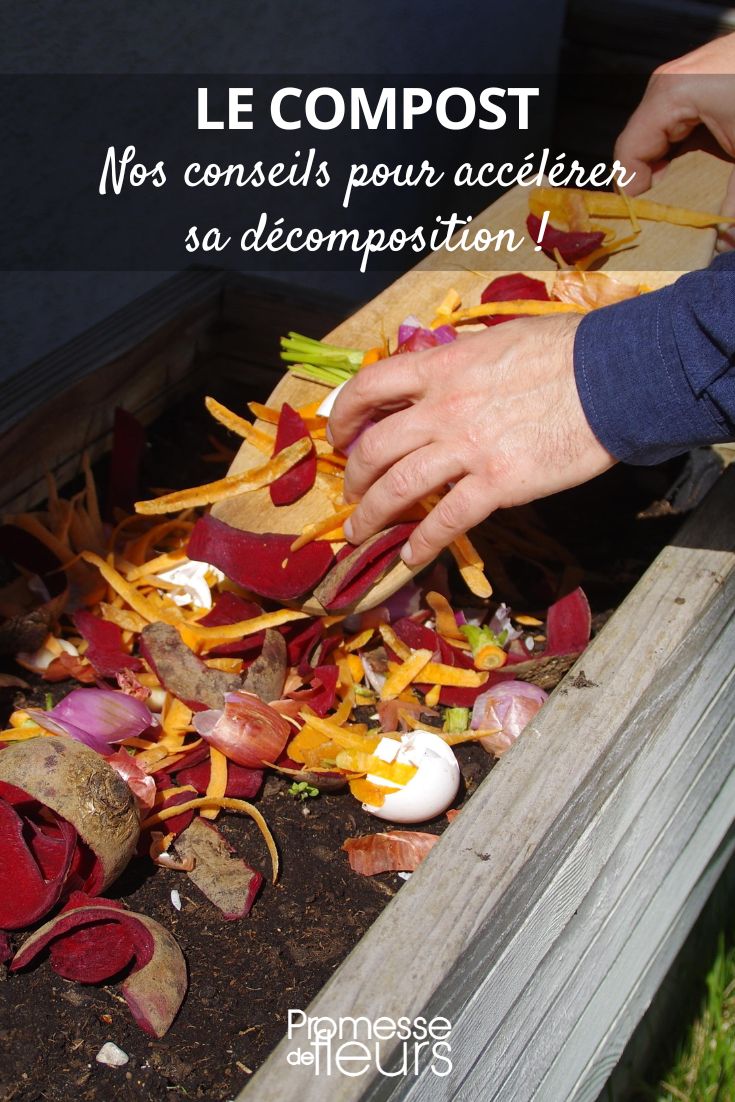
Peelings and eggshells help speed up the decomposition of compost
Avoid certain components
To obtain compost quickly, avoid adding certain materials that require a very long decomposition. These include, for example, diseased plants, crushed mollusc shells, or certain animal litter layers, which require at least 18 months (or longer) to decompose to eliminate the pathogenous agents. Similarly, dairy products, meat, bones and domestic animal excreta should be avoided. Moreover, some diseases of your diseased plants (powdery mildew, clubroot…) may persist in the compost after a few months…
→ For more information, read our articles on the subject: “Can cat litter layer and domestic animal litter layer be composted?” and “Compost: what to do with diseased plants?
Choosing the ideal location
Placing your compost bin in a sunny spot helps to raise the temperature and thus accelerate decomposition. However, excessive sun exposure (especially during a heatwave or in hot regions) risks drying out your heap… and consequently slows decomposition. It is therefore preferable to place the compost heap in partial shade, unless you are diligent with watering.
Further Reading
Following these tips, traditional compost can break down more quickly, providing a nutrient-rich amendment for the garden. However, for busy gardeners who can devote a great deal of time to the garden, there is an even faster method: hot composting. To learn more about this technique, read our article “Hot composting: single and quick“.
- Subscribe!
- Contents
Comments