





























How to grow Akebia in a pot?
Complete guide to successful flowering
Contents
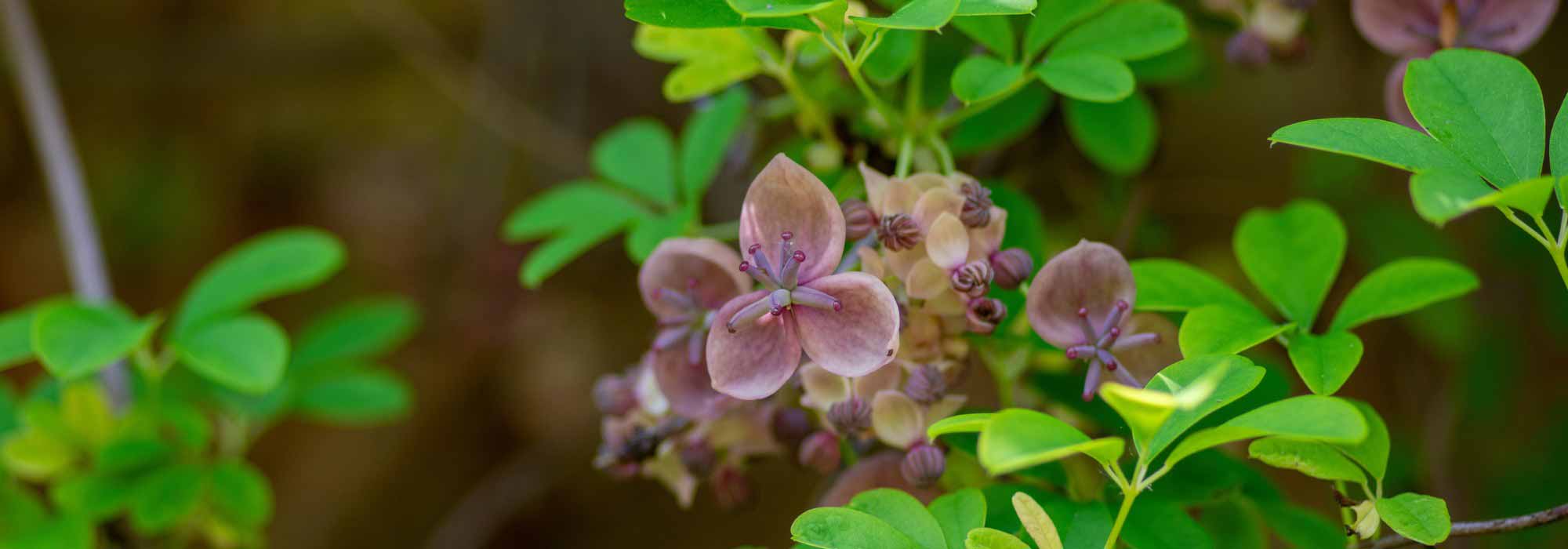
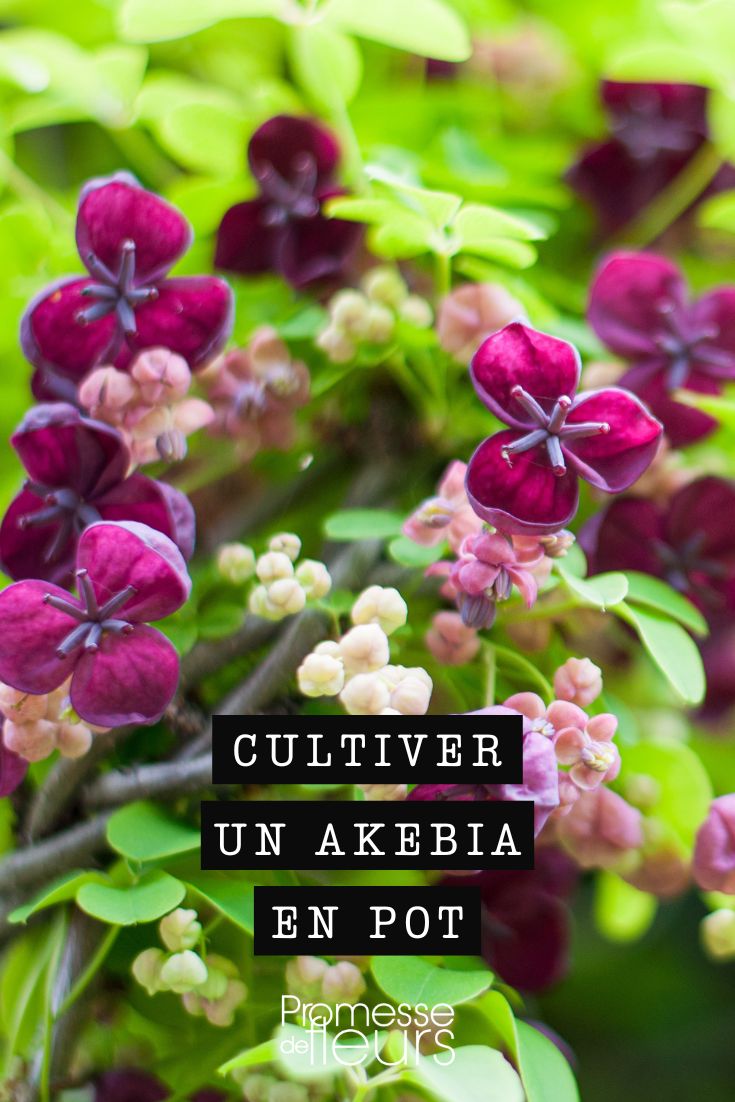
Akebia, commonly called ‘chocolate vine’, is a climbing plant that captivates with its lush foliage, very decorative, and its exotic flowering with a vanilla fragrance in spring. Very vigorous, this handsome liana can reach 5 to 8 metres in three to five years, an ideal for dressing walls, trellises, or pergolas, or for climbing up a tree. Despite its exuberance, it grows very well in a pot, which allows you to enjoy its rapid growth and exotic flowering even on a terrace or balcony. Regular pruning will be enough to control its spread, as it can be invasive. It will require a fairly deep container, as well as sturdy trellising to support its development. Discover our tips for growing Akebia in a pot!

Can Akebia be grown in a pot?
Akebia grows very well in a pot, provided you follow these precautions. This distinctive climbing liana has a shallow root system that allows it to be grown in a pot. All Akebia varieties are vigorous. They rapidly form 5 to 10 m long lianas in all directions and require a space that suits them. However, remember that any plant grown in a pot will have its root system contained, which will limit its growth compared with a plant grown in the ground. And Akebia tolerates pruning well, making it easy to keep in check.
A solid trellising is necessary. Akebias, with their flexible stems and tendrils, naturally seek to cling to a support. In a pot, a trellis, wire mesh or any other sturdy vertical support provides them with a framework for climbing gracefully. All you need to do is allocate a location for your Akebia that is easy to maintain and carefully choose the support on which this vigorous climber will cling.
The best varieties to grow in pots
There are several species and varieties of Akebia, distinguished notably by the colour of their flowers. For pot culture you can choose:
- the Akebia longeracemosa : this is a rare species that flowers from May to July in long pendulous flower clusters in a chocolate-purple colour. It will quickly reach 3–5 m in height with a 2 m spread.
- the Akebia quinata ‘Silver Bells’ : it stands out for its silvery-white and mauve flowers, and can reach 6–8 metres in height.
- Akebia quinata : it is the best-known and most cultivated species. It is characterised by clusters of flowers in a magnificent purple-violet colour. With substantial growth, reaching 6–8 metres in height and spread, it is easy to prune.
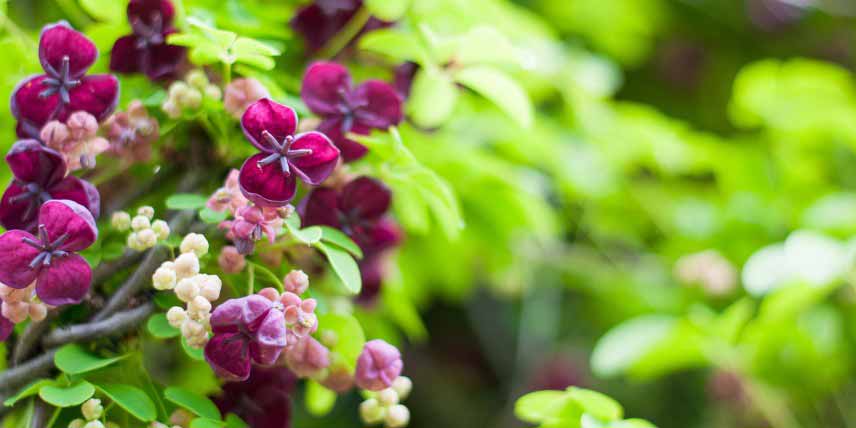 Akebia quinata[/caption]
When should you plant an Akebia in a pot?
Planting an Akebia in a pot is ideally done in spring or autumn, when temperatures are moderate to allow good root establishment before periods of heat or severe cold.
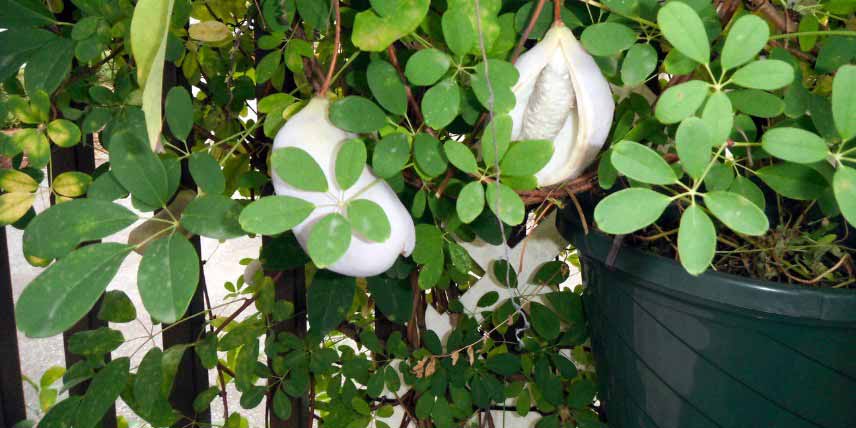
An Akebia quinata grown in a pot (photo: Ursus sapien)
Read also
How to propagate <em>Akebia</em>?Where should you place a potted Akebia?
Choose a well-lit location, with no direct exposure to the scorching sun, as Akebia appreciates semi-shade or diffused light. We recommend placing it preferably in semi-shade, especially in hot regions and preferably facing east, so that the plant benefits from the morning sun. Place the pot in a well-sheltered spot, particularly from cold winds, as late frosts can cause damage to young shoots.
How to grow an Akebia in a pot?
What type of pot to choose?
Opt for a pot with a diameter and depth of at least 50 cm, in terracotta or plastic, with drainage holes at the bottom. A wide, stable pot will provide ample space for root development and ensure good stability for the plant, especially if it climbs a trellis.
Which substrate?
Low-maintenance, this climber is content with a good, light, fertile and well-drained potting compost that will ensure optimal growth. Ideally, mix the potting compost with garden soil and coarse sand. Good drainage is necessary to prevent water stagnation, because Akebia does not tolerate excess moisture.
Add a drainage layer to the bottom of the pot to avoid water accumulation that could cause the roots to rot. Use clay balls or gravel, in a layer of about 5 cm to ensure good water flow.
How to plant an Akebia in a pot?
- Fill the pot three-quarters full with the substrate.
- Carefully remove the Akebia from its original pot, taking care not to damage the roots.
- Place it in the centre of the pot, adjusting the height so that the collar (the point of transition between the stem and the roots) is level with the soil surface. Adjust the amount of soil at the bottom if necessary.
- Once the plant is well positioned, fill the spaces around the roots with the remaining substrate, gently firming to hold the plant in place. Leave a gap of 2 to 3 cm between the surface of the substrate and the rim of the pot.
- Place a trellis or another support nearby. For example, position the support against a wall or a railing, depending on where the pot is located, to provide a stable structure for the Akebia and to allow the plant to climb without hindrance. Place the Akebia’s pot about 20 to 30 cm from its support.
- Tend the first shoots onto the support to start guiding the stems; afterwards, they will cling on their own.
- Water generously immediately after planting to thoroughly moisten the substrate and allow the roots to adapt to their new environment. Ensure the water drains well through the drainage holes to avoid any stagnation.
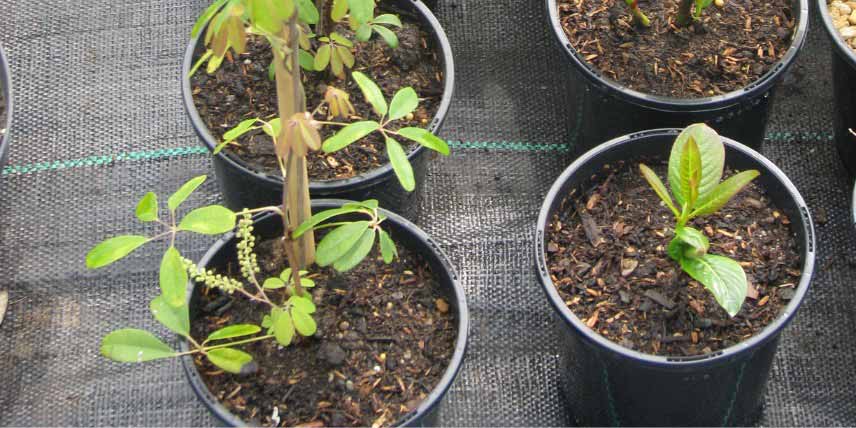
An Akebia longeracemosa in a pot, alongside a Salix fargesii (photo: peganum)
How to look after Akebia?
Once well established in its pot, this handsome woody climber requires little care.
Training
At the outset, help its stems climb, after which its branches will easily wind themselves around the support.
Watering
Watering should be moderate, as the plant prefers a slightly moist soil, but without waterlogging. In summer, weekly watering is sufficient. Allow the soil to dry out between waterings. You can also mulch during the summer to keep the base cool. In winter, space out watering to prevent the soil from becoming waterlogged.
Frost protection
Hardy, Akebia can stay outdoors over winter, as it can tolerate temperatures around -15°C, sometimes more when sheltered and if its base is properly protected by mulch. In case of severe frosts, you can protect your Akebia from the cold by wrapping the pot in bubble wrap or cardboard.
Fertilisation
Each year, in spring, before growth resumes, apply some well-decomposed compost at the base of Akebia to provide the nutrients it needs.
Pruning
At the start of spring, simply give it a good tidy up to remove dead stems or overly invasive branches, and to stimulate new growth of shoots. You can cut back long stems that wander a little too far from the support, to keep it contained. It doesn’t like drastic cuts, but it is nonetheless possible to prune back one old stem to ground level every two years.
→ For more on Akebia pruning in Gwenaëlle’s tutorial.
Repotting
Repot the Akebia every two to three years, preferably in spring, to refresh the substrate and give the roots more space.
Diseases and pests
Akebia is generally resistant to diseases; no pests are known to affect it.
- Subscribe!
- Contents
Comments