





























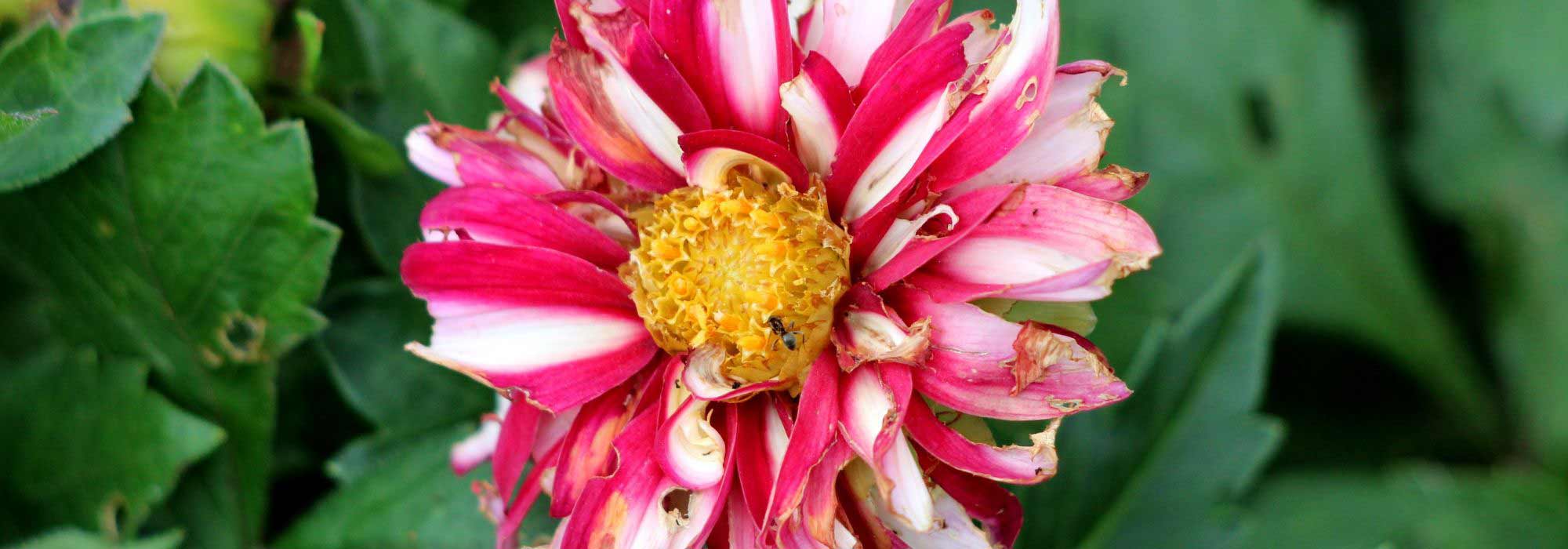
How to care for dahlias: main diseases and pests
Identification of the most common cultivation problems, prevention, and natural treatments
Contents
Throughout summer and into early winter, dahlias delight gardens with their generous and colourful flowering. They offer an incredible diversity of shapes to suit all tastes: simple or sophisticated, with orchid or anemone-like flowers, in perfect spheres or with a tousled appearance, you are truly spoilt for choice!
While dahlias are relatively easy to grow in the garden or in pots, they can still fall victim to diseases or become targets for parasites. Good growing conditions, along with regular observation, will often help manage most minor issues before they escalate. And in case of symptoms, natural solutions often exist to care for your dahlias.
Here are our main care tips for beautiful dahlias.

My dahlias are being nibbled, or even devoured!
Several pests can be blamed for chewed leaves.
As spring returns, gastropods cannot resist the appetising young shoots of dahlias, sometimes even before they emerge from the soil. The result: the plant often struggles to grow, and its growth is slowed. As a preventive measure, to protect your dahlias from snails and slugs, create a natural mechanical barrier around your plants. For example, use ash, wood shavings, or crushed eggshells. Renew frequently, especially after rain. Unwanted pests can also be collected manually at dusk or early in the morning. Beer traps, pellets, repellent plants, barriers, releasing hens or Indian runner ducks… There are almost as many solutions as there are gardeners! To learn more, Ingrid details 7 ways to fight slugs effectively and naturally.
But snails and slugs are not the only ones to find our dahlias appetising. If you notice that the leaves are chewed or the petals are holed, it could be earwigs, more commonly known as earwig or pincher bugs. The damage is often limited, with no real harmful effect on the plant’s health. Moreover, these insects are very good allies for the gardener, as they also feed on aphids, larvae, and other harmful insects. Angélique tells you more in her article “The earwig, an overlooked ally for the garden”. We therefore advise you to simply encourage this insect to change its feeding area, by providing shelters elsewhere in the garden: small piles of stones, wood, or a terracotta pot filled with straw will create dark, damp shelters that are highly appreciated.
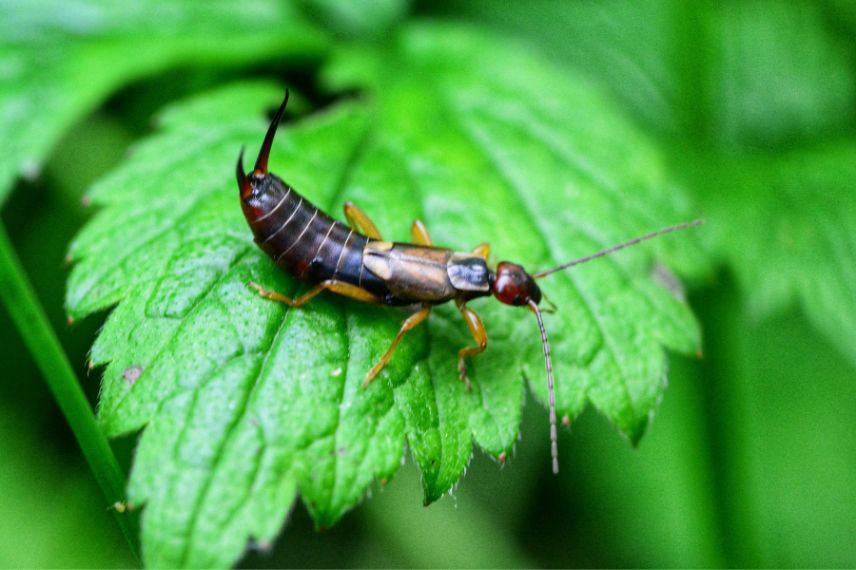
Slugs, snails, and also earwigs can devour dahlias
Read also
Dahlia: planting, care, and growing tipsMy dahlias are infested with aphids
Aphids enjoy the young, tender shoots of dahlias, from which they will suck the sap to feed. A few individuals will not endanger the plant, and natural predators often suffice to eliminate them for you.
However, in the case of a heavy infestation, the vegetation may be stunted, new shoots curled in on themselves, and the leaves crisped. Ultimately, aphids can lead to the development of diseases (sooty mould) or transmit viruses.
A simple jet of water may be enough to dislodge the aphids. In the case of a larger colony, spray at the end of the day with a natural insecticidal soap (1 tablespoon diluted in 1 litre of warm water) on the affected parts. Note that this treatment is not selective: do not apply it if you notice ladybirds on your plant, for example.
For further reading: “Aphid: identification and treatment”.
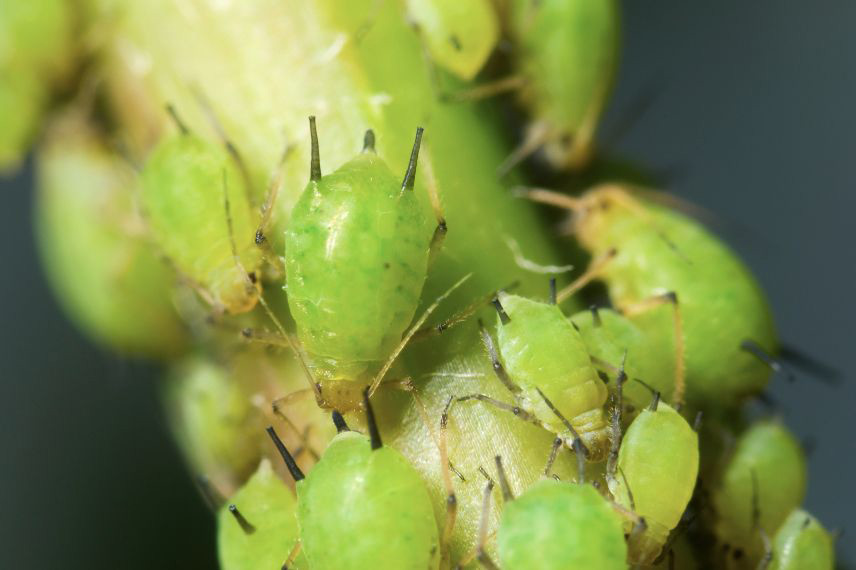
Aphids
Discover other Dahlias
View all →
Available in 0 sizes
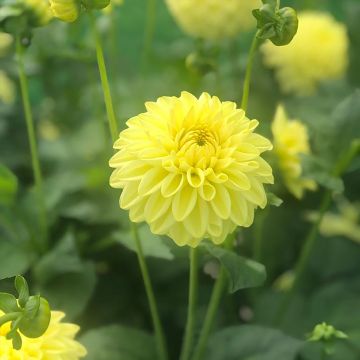
Available in 1 sizes
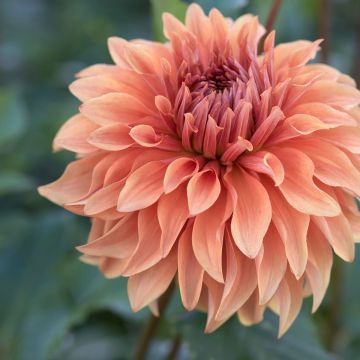
Available in 1 sizes
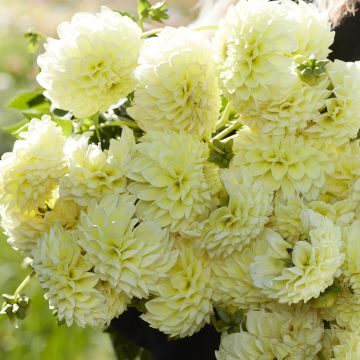
Available in 1 sizes
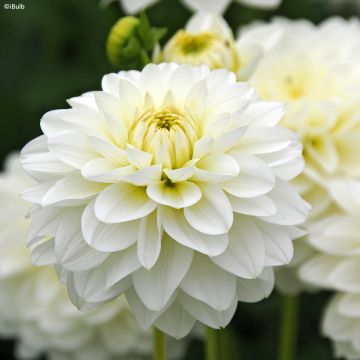
Available in 1 sizes
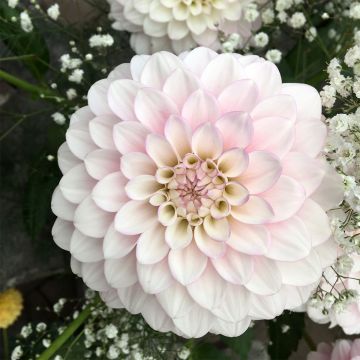
Available in 1 sizes

Available in 1 sizes
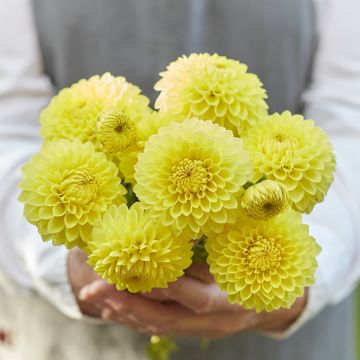
Available in 1 sizes
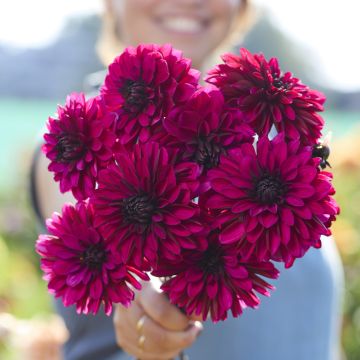
Available in 1 sizes
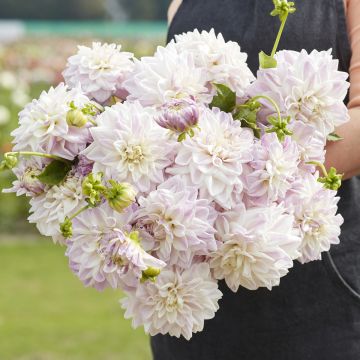
Available in 1 sizes
There is a white deposit on my dahlias: how to treat powdery mildew?
Powdery mildew, also known as white disease, is a fungal disease that is very common in both ornamental gardens and orchards or vegetable plots. A combination of heat and humidity, along with a lack of ventilation, often creates the ideal climate for its development.
This disease is identified by the white-grey veil, which has a somewhat powdery appearance, that it deposits on the aerial parts of plants (leaves, stems, flower buds). Overall, it can weaken dahlias and make them more susceptible to other diseases or pests. While the damage is primarily aesthetic, growth may be slowed and flowering affected in cases of severe infestation.
As a preventive measure, avoid wetting the foliage during watering. Do not overcrowd your plants: maintain a planting distance of at least 50 to 70 cm between your dahlias (consider the spread of the chosen varieties at ripeness). Try horsetail decoction, used by many gardeners to strengthen the plants’ immune defences. Find all of Virginie’s tips on how to make horsetail manure.
At the first signs of symptoms, remove the affected parts to prevent the disease from spreading to the rest of the plant.
The sulphur-based fungicides are effective but remain non-selective and can be irritating. The Bordeaux mixture is also used as a curative treatment. It is applicable in organic farming but is increasingly controversial, partly because high quantities of copper pollute the soil. We therefore advise using these treatments sparingly. There are also other more natural treatments based on bicarbonate, milk, or garlic. Find the various recipes in our article “Powdery mildew or white disease”.
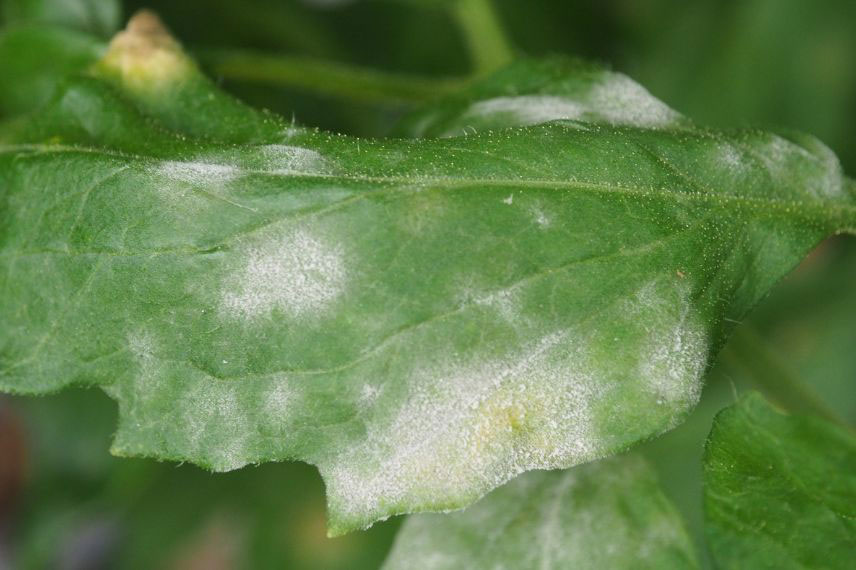
Powdery mildew
Read also
How to choose dahlias?The leaves of my dahlia have brown spots
The charcoal disease of dahlias is another cryptogamic disease caused by a fungus. It is identified by the presence of spots on the leaves of dahlias: initially yellow, they later turn brown or black. The leaves eventually develop holes and, ultimately, dry out completely. Overcrowded cultivation combined with warm, humid conditions promotes the development of this disease.
As a preventive measure, as with powdery mildew, avoid watering the foliage of your plants and do not overcrowd your dahlias at the time of planting.
At the first signs, immediately remove the affected parts to prevent contamination of the entire plant. Use pruning shears or scissors, which you should disinfect thoroughly after pruning to avoid transmitting spores to other plants.
In cases of more advanced disease, you can attempt treatment with a fungicidal product or Bordeaux mixture. However, if the plant is too infested, you will unfortunately need to uproot your diseased dahlia to prevent any further spread. Avoid replanting dahlias in the infected area the following year.
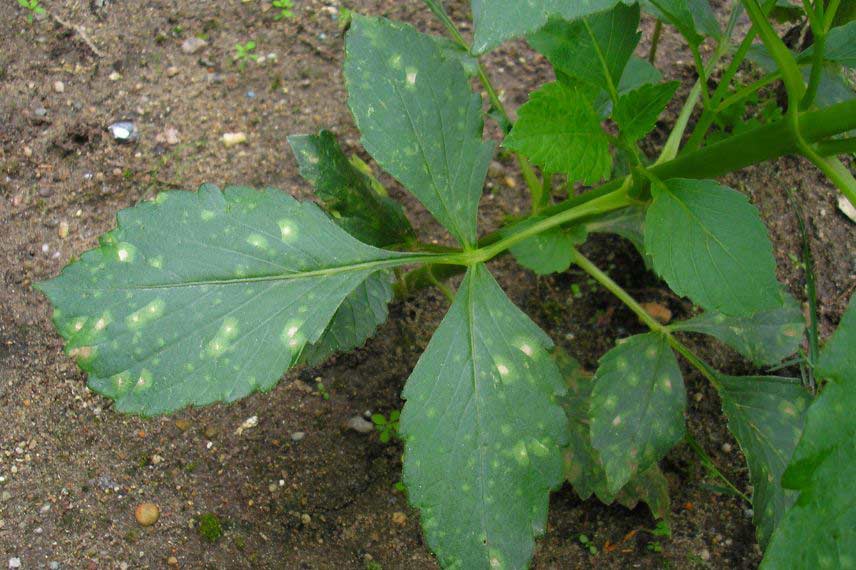
Initially yellow, the spots of charcoal disease later turn brown or black.
The leaves of my dahlia are turning yellow
Yellow leaves can have several causes: lack of water, excess water, pests, or fungal diseases.
First, check the substrate: if it is dry several centimetres down, water generously. Conversely, if it is very wet or waterlogged, stop watering for several days. If your dahlia is grown in a pot with a saucer, also check for standing water (always empty the saucer 20 to 30 minutes after watering).
The dahlia mosaic virus can also cause yellow spots on the leaves. The plant’s growth is then slowed, and the leaves become distorted. Unfortunately, there is no treatment. Remove the infected plant and burn it to prevent any contamination.
If you do not observe any other symptoms suggesting a disease, it is possible that the leaves are yellowing due to an attack by red spider mites, sap-sucking mites. You will notice their presence by the white silk covering your dahlia. They cause yellow or greyish spots on the leaves, which eventually dry out and fall off. As a preventive measure, avoid excess nitrogen in the soil, which makes the stems and leaves softer and more appetising. You can also spray in advance nettle manure (How to make nettle manure?) or tansy manure (How to make tansy manure?). For more information: “Red spider mite: identification and treatment.”
Note: yellow leaves cannot turn green again. Remove them as they appear to avoid unnecessarily exhausting the plant.
Why is my dahlia not flowering or flowering very little?
Dahlias typically bloom generously for several months. If your plant is producing few or no flowers, it may be lacking water or nutrients. Dahlias thrive in rich, well-drained soil (that does not allow water to stagnate).
Especially if you notice other signs of deficiency (thin stems, slow growth, underdeveloped size), do not hesitate to add a handful of well-decomposed household compost to the substrate. You can also opt for a flowering stimulant fertiliser throughout the season. Rich in phosphorus and potassium, it promotes the production of new buds. Conversely, avoid nitrogen additions, which encourage leaf production and can make dahlias more susceptible to pests and diseases.
During the entire flowering period, ensure regular watering, as the plant is quite demanding in terms of water. Increase watering during dry spells (about twice a week). Install an organic mulch (flax, hemp, buckwheat husks, dead leaves, dried grass clippings) at the base to prevent evaporation and better retain moisture.
As time goes on, remember to remove faded flowers to stimulate the production of new buds. To achieve larger flowers, you can also pinch the buds of the side stems (between your index finger and thumb).
As a preventive measure, consider incorporating a handful of manure or fertiliser at the time of planting the bulbs in spring. Dahlias also need sunlight to bloom well. Therefore, choose a bright location that is sheltered from prevailing winds.
Why are the flowers on my dahlia wilting?
If dahlias are quite thirsty young plants, an excess of water can conversely lead to the rotting of flower buds or flowers.
Under normal circumstances, prefer a generous watering once a week rather than several small waterings spread throughout the week. Water as soon as the substrate feels dry to the touch on the surface.
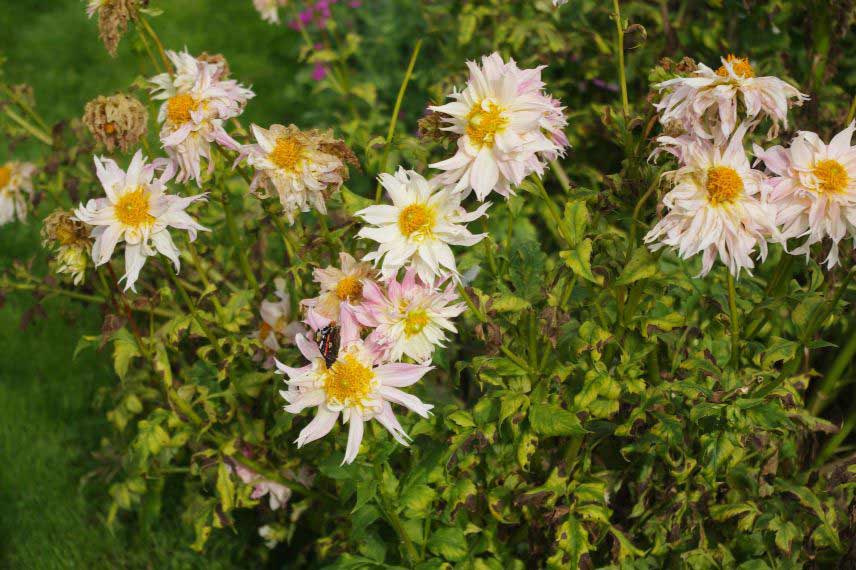
Excessive watering can lead to the rotting of dahlia flowers
- Subscribe!
- Contents
![[plant_guide plant="dahlias"]
Dahlias are beautiful flowers that come in a wide range of colours and shapes. To ensure they thrive in your garden, here are some tips for caring for them:
1. **Planting**: Dahlias prefer well-draining soil and full sun. Plant the tubers in spring after the last frost has passed.
2. **Watering**: Keep the soil consistently moist but not waterlogged. Water at the base of the plant to avoid wetting the foliage.
3. **Fertilising**: Feed your dahlias with a balanced fertiliser every 4-6 weeks during the growing season.
4. **Support**: Dahlias can grow quite tall and may need staking to prevent them from flopping over.
5. **Deadheading**: Remove faded flowers regularly to encourage more blooms.
6. **Overwintering**: In areas with frost, dig up the tubers after the first frost, let them dry, and store them in a cool, dry place for the winter.
By following these simple tips, you can enjoy a stunning display of dahlias in your garden throughout the growing season.](https://en.promessedefleurs.eu/blogwp/wp-content/uploads/2022/10/Maladies-et-parasites-du-dahlia.png "Diseases and Parasites of the Dahlia")
Comments