





























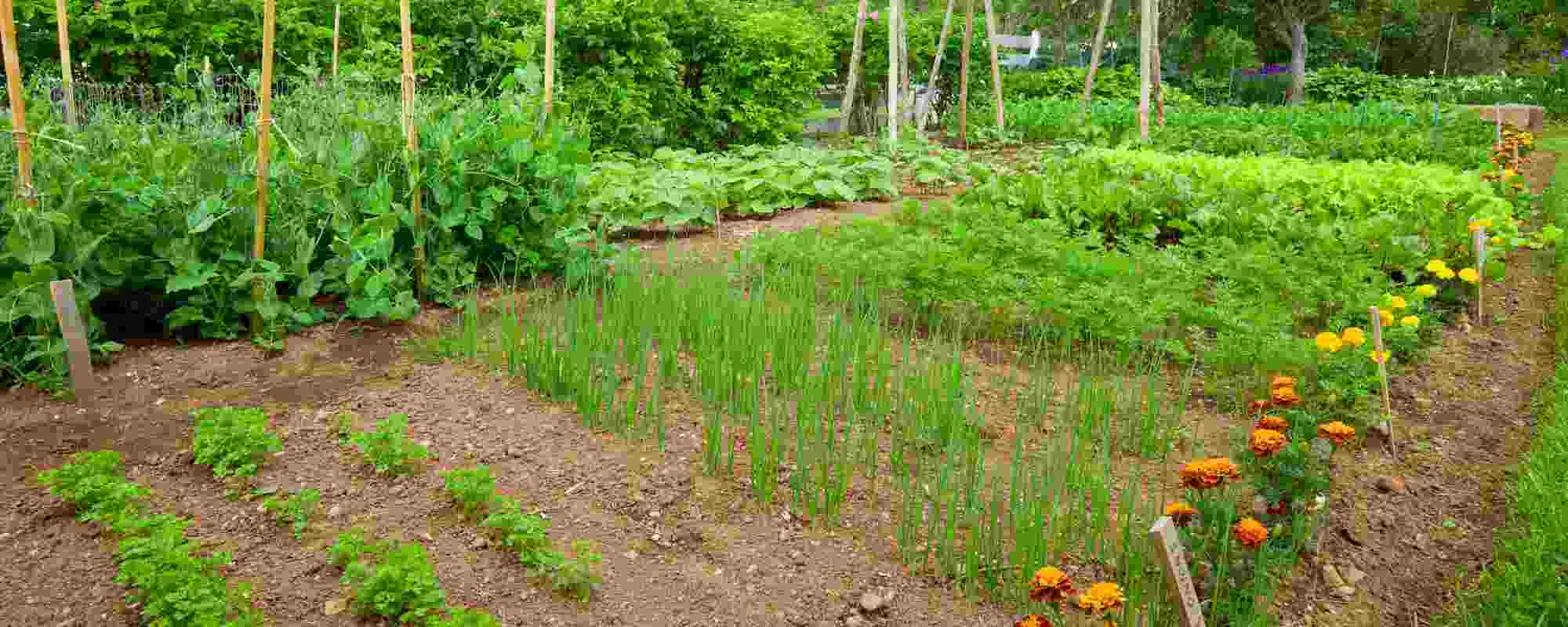
How to create a kitchen garden adapted to your needs?
Our tips for determining the ideal size of your kitchen garden in relation to your family’s size and your available time
Contents
Want to eat healthy, tasty and fresh vegetables? Need to get back into the seasonal rhythm and diversify your diet? A wish to make an eco-friendly gesture for the planet? A desire to simply take part in an accessible physical activity, including your children? In short, whatever your reasons (or arguments), you’ve taken the plunge and are thinking about starting a vegetable garden. We can only congratulate you. That said, we also want to warn you: gardening is a demanding activity, which requires some effort, but also a bit of time. Especially if you want to feed your family with your production of vegetables and small fruits. And we can only suggest you not to bite off more than you can chew.
Indeed, it is essential to estimate your needs as accurately as possible to determine the size of your vegetable garden. And on this regard, caution is prudent. It is better to start small and then expand the area devoted to growing vegetables, herbs and small fruits.
Discover our tips to best estimate the surface area of your vegetable garden according to the display of your family, but also the time you have to devote to gardening.

Key concepts for creating a kitchen garden
Logically, when you decide to create a vegetable garden, you will need to consider a multitude of small things before you dive headlong into clearing your plot. The aim is to envision your ideal vegetable garden according to your needs, preferences and constraints. That said, you must work with what exists, namely the space you have available, which will determine the size of your vegetable garden.
The first area for consideration is to assess the time you have to devote to this vegetable garden. Because cultivating vegetables and soft fruits should never be seen as a chore, but always as an enjoyable hobby, a pleasure and a relaxation (despite the inevitable effort involved in working the soil!). So the time factor is crucial. Thus, if you have only one or two hours per week to devote to gardening, start with a small plot that will accommodate a few easy-to-grow vegetables that mature quickly. Likewise, you will use these hours for planting, maintenance and watering. It will also be easier to buy plants in pots or plug plants rather than sowing seeds. If you can spare at least an hour a day for your vegetable garden, you can go bigger, because that hour will give you time to sow, plant, tend and harvest… without aiming for food self-sufficiency. With at least two hours a day, things become more serious. You can consider cultivating a larger area, installing a greenhouse to extend the seasons or trying less traditional growing methods…
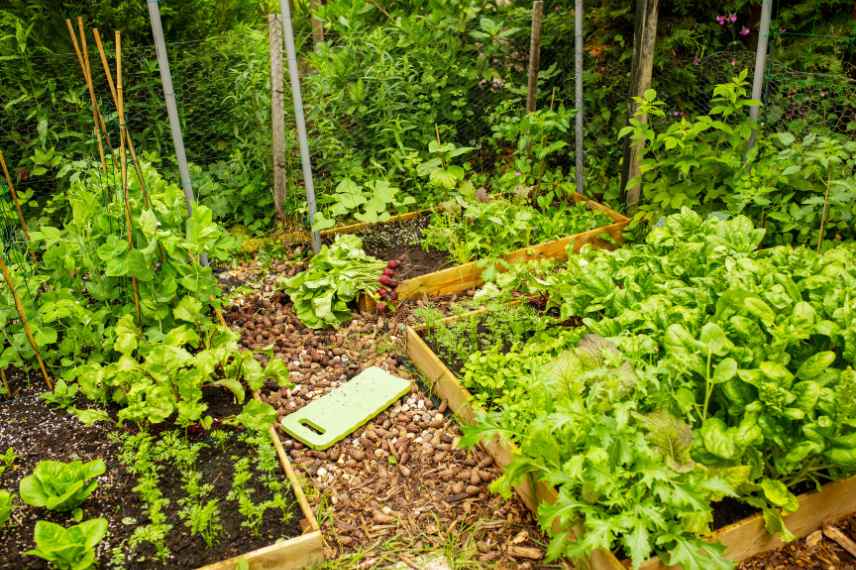
A vegetable garden should adapt to your needs and the time you have available
Next, once you have assessed your available time for gardening, the next step is to evaluate the size of your vegetable garden. Logically, it will depend on the area of your plot. But not only that! You really need to tailor your vegetable garden to the time available. Thus, if your time is limited, simply start with one or two vegetable beds. Easy to build and install, these beds will help you test your motivation and estimate the workload involved. Even though gardening in containers is likely less demanding than growing in open ground. Then, you can always increase your open-ground area while keeping your vegetable beds for sowing. However, with a bit of organisation, with an area of less than 50 m², you can practically feed two people with fresh, seasonal vegetables from spring to autumn. Providing you choose vegetables that are easy to grow and have short growing times. To feed a family of four, 100 to 200 m² seem reasonable. And to aim for self-sufficiency, allow at least 300–500 m² and several hours of labour.
The size of your vegetable garden is set. All that remains is to choose its location. A flat plot is always preferable, ideally facing south or south-west so that it benefits from enough light. However, with recurring heatwaves, it is now advised to have a bit of shade for certain vegetables such as radishes, lettuces, spinach… Likewise, choose a spot not too exposed to the wind that dries the soil or intensifies the cold. Finally, the soil should not be too dry, too acidic, too calcareous and above all relatively easy to cultivate. But again, you will need to work with what exists!
And now, off to work!
The small kitchen garden under 50 m²
Ideal in towns or on small plots, a vegetable garden under 50 m² lets you enjoy it with only a small amount of time. If you’re a beginner, start even with an area around 10–20 m² or a square vegetable bed. This small space will allow you to test your appetite for gardening, the real time you spend there, but above all your ability to accept failures. Not to mention your tolerance for more demanding tasks such as digging, hoeing and weeding…
It is preferable to give this vegetable garden under 50 m² a rectangular or square shape. Then you’ll lay it out into beds up to 1.2 m wide to make the work easier. But it’s perfectly possible to try lasagne gardening. Or raised-vegetable-bed gardening, very practical if you have little space or if your soil is poor. In this small space, you will also need to maximise the use of the space. For example, by growing your vegetable garden vertically. Don’t hesitate to use any mesh, any fence or any flat surface (house front, wall of a shed, etc.) to train climbing varieties of vegetables such as squashes, runner beans. Also think about building vertical structures such as tepees, tunnels, pergolas with bamboo canes and battens. I invite you, by the way, to read my article for a few ideas and tips: The vertical vegetable garden: our ideas for getting your crops climbing.
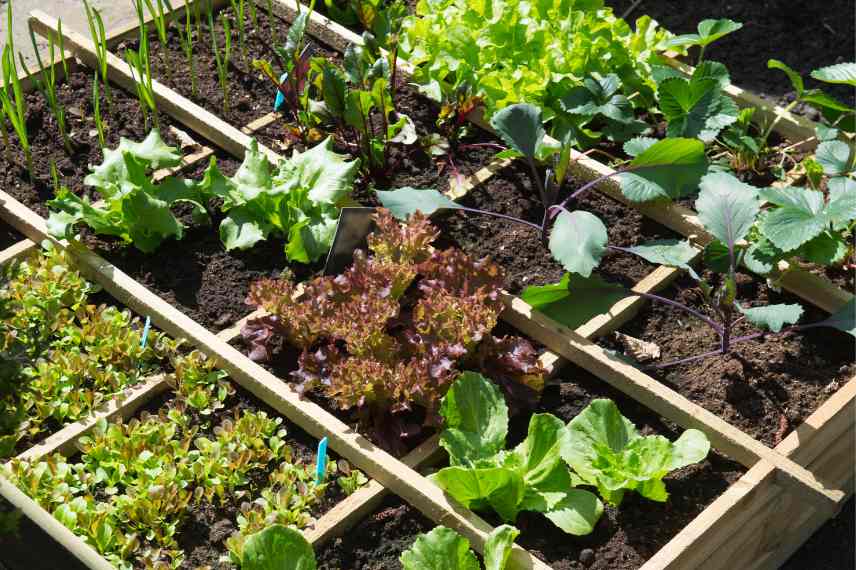
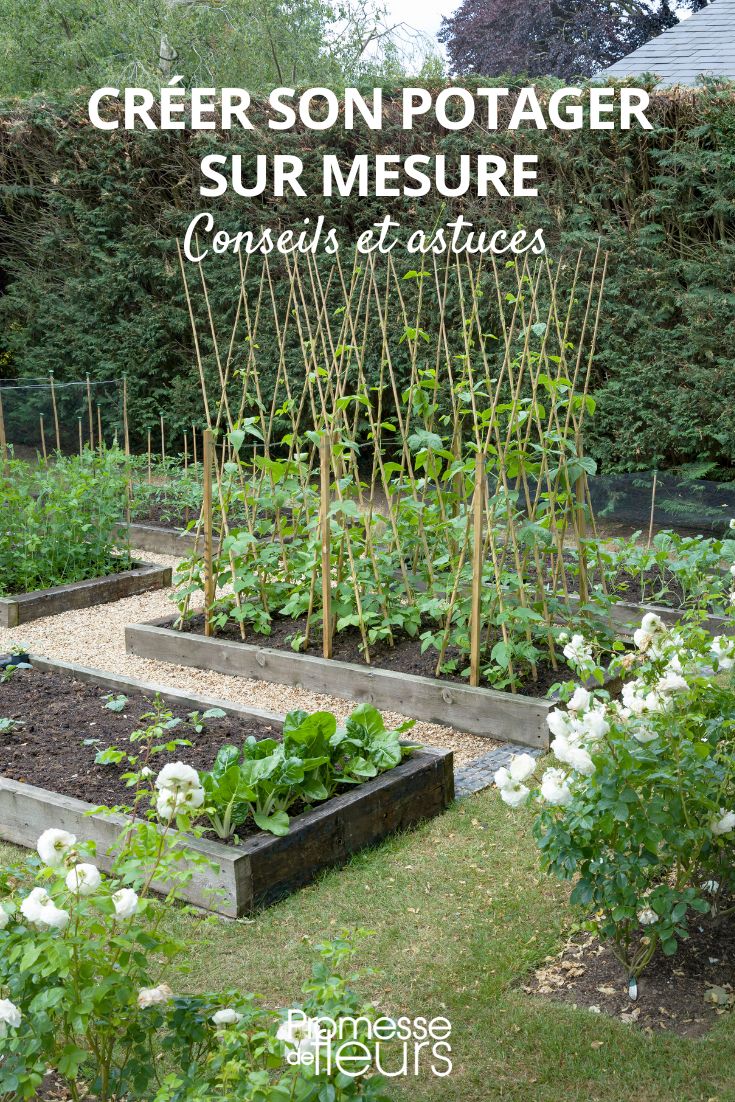
To get some hands-on experience, the square garden bed is ideal
In a small vegetable garden, it’s obvious you won’t be able to grow all the vegetables and soft fruits you could buy on the market. That’s why you should already ask yourself what you prefer to eat and what you buy regularly. Moreover, among these vegetables, choose those that are the most productive therefore the most profitable, those that grow the slowest and that occupy the land for the shortest time. Among these interesting vegetables for a small garden, you can cite all the salad leaves (and by selecting the right varieties, you can harvest from late spring to late autumn), the watercress, the rocket, the lamb’s lettuce, the radishes which are edible about 3 to 4 weeks after sowing, the spinach, the beans, the kale… but also tomatoes, courgettes, aubergines, cucumbers… not forgetting the herbs that are easy to grow in pots.
One last tip: never leave any space empty! As soon as a space frees up, sow salad leaves or radishes.
A standard kitchen garden around 100 square metres
With a vegetable garden of 100 to 200 m², you can easily feed a family of four during the growing seasons. Provided it is perfectly organised, well thought-out and planned. Nevertheless, the success and profitability of your vegetable garden also depend on the region you live in, the nature of the soil, but also on the weather at the time. This garden of at least 100 m² will require roughly an hour of work per day, adjustable depending on the season and the techniques used. Obviously, it is the soil preparation that takes the most time and effort, depending on whether you practise traditional digging or loosening with a broadfork.
To obtain the best yield from this area of the vegetable garden, several gardening techniques or methods can be tested:
- Staggering sowings every two to three weeks allows continuous harvest of certain vegetables such as radishes, lettuces, spinach…
- Crop rotation and the companion planting. And in particular the simple act of growing some easy vegetables in between the slow-developing ones such as the cabbages or the carrots.
- Growing early- or late-maturing varieties to spread harvests over time.
- Creating a frame or a mini-greenhouse.
- Vertical gardening to save space.
- The hotbed sowing…[caption id=”attachment_256690″ align=”aligncenter” width=”856″>
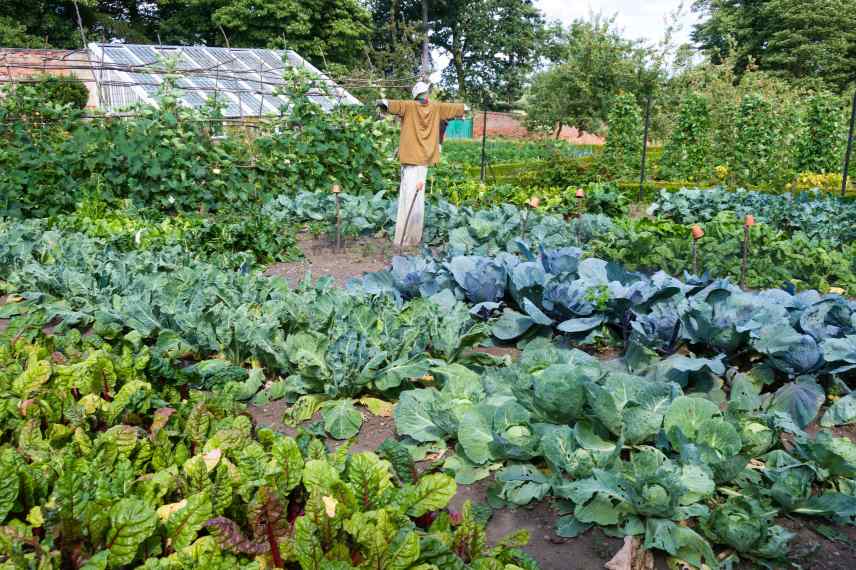 A garden of around 100 m² can feed a family of four during the season
Otherwise, in a garden larger than 100 m², you can sow and plant the vegetables mentioned above, to which will be added other crops such as peas, root vegetables, often slower to come on (carrots, turnips, beetroot…), Swiss chard, peppers, leeks, squashes, or perennial vegetables that require little care and come back year after year. On the other hand, potatoes require space. Or, treat yourself with one or two rows of new potatoes, harvestable 90 days after planting. Cabbages also take up space for a long time.
A kitchen garden of over 300 square metres to feed your family
With a vegetable garden like this, you’re stepping up a gear! This area can feed a family of four all year round. Even in winter, since the harvest will allow you to make preserves. Similarly, some vegetables can be frozen and other root vegetables stored in a silo to be consumed in winter.
In a vegetable garden of over 300 m², you can grow all vegetables, including potatoes or cabbages. You can also plant perennial species such as asparagus, artichokes or rhubarb, or perennial vegetables, or old and forgotten vegetables to vary meals. Not to mention the various cucurbit crops that can thrive. Also think of legumes (chickpeas, dried beans, lentils…), rich in protein, if your soil lends itself. Or flowers, essential for biodiversity and biological pest control against pests.
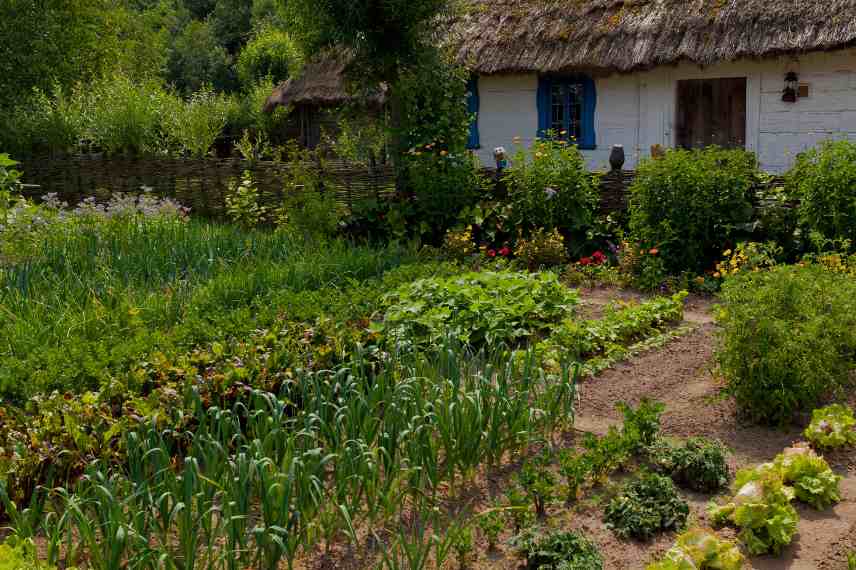
With a vegetable garden over 300 m², you can harvest vegetables to feed a family all year round
However, a garden of this size takes a lot of time. But you can maximise your harvests by cultivating your vegetables in a considered way thanks to mulching, drip irrigation, and welcoming beneficials (birds, insects, reptiles and small mammals…). Also think of incorporating soft fruits such as raspberries, strawberries, blueberries and the like.
And with an area of 500 to 600 m², you should achieve self-sufficiency. Provided you set up a small orchard.
- Subscribe!
- Contents
Comments