





























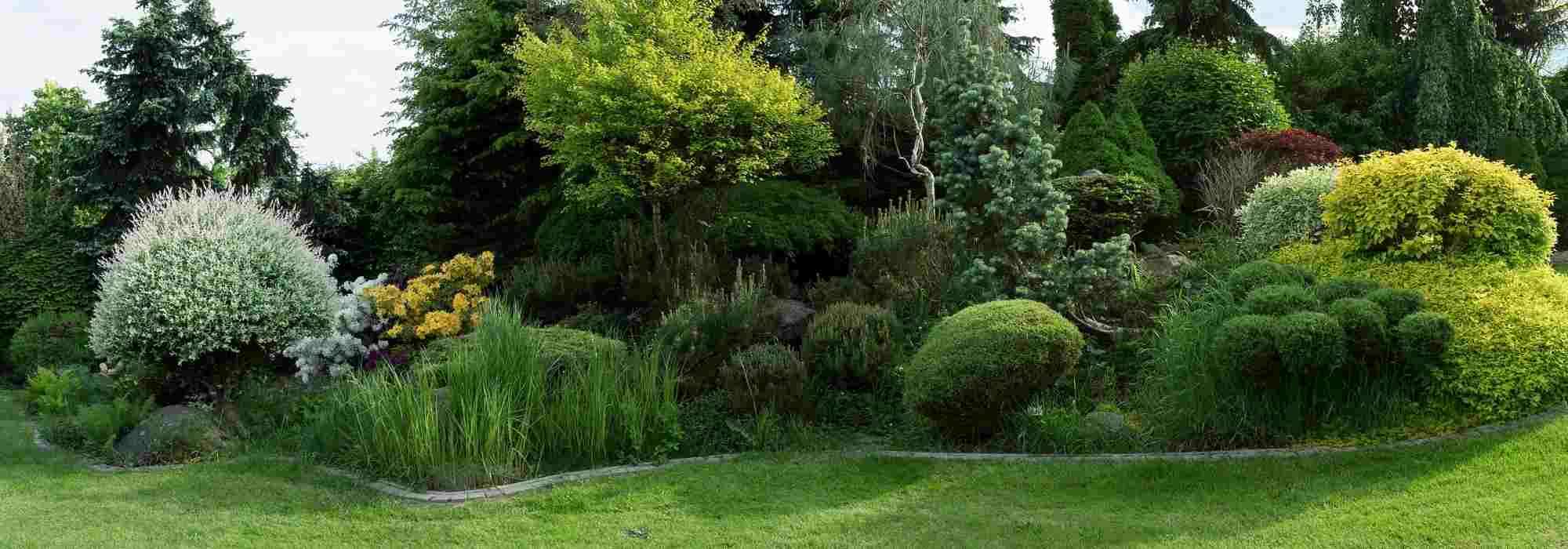
How to create beautiful borders in the garden?
To highlight your flower beds and paths
Contents
Borders structure and shape the flower beds and paths of a garden. These edges at the periphery of the beds are areas of the garden that should not be overlooked and should be maintained at a minimum to achieve a neat appearance. When planning new flower beds, it’s not always clear what style to give them, often wavering between straight or curved lines.
By creating beautiful borders along the edges of the beds, you can design and give a different style to your garden, depending on whether you choose distinct shapes, materials, and plants.
In this advice sheet, we provide you with some tips and ideas with images to create beautiful borders in your garden!
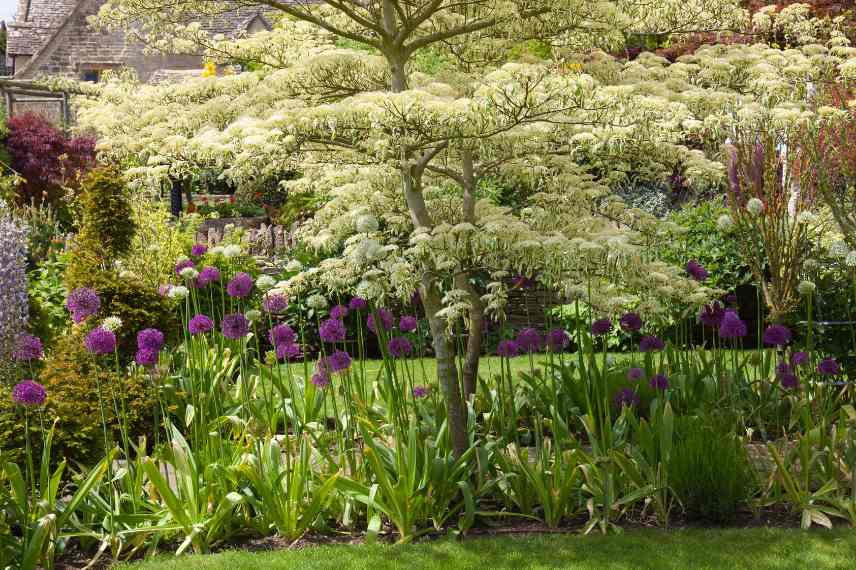
The style of a straight border: elegant and adaptable to many gardens

The shapes
A winding or straight line conveys different impressions and effects. While a curved design gives an informal image, a straight line presents a stricter appearance. Therefore, the curved line is preferred in English, cottage, or naturalistic gardens, where the spirit is freer or even blurred, whereas the straight line suits gardens that play on symmetry and regularity, as well as geometric flowerbeds (very classic or contemporary gardens).
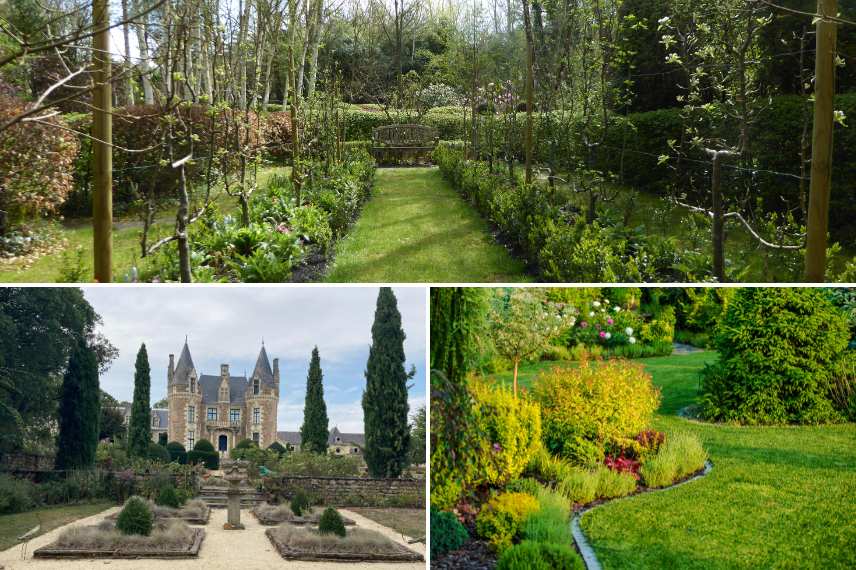
Straight lines align with perspectives in classic gardens, while curved lines blend into country or English gardens, for example (© Gwenaëlle David)
But be careful, as the notion of area is also important: in a large garden, a curved path is best reserved for a long route. The “waves” created should not be too small to avoid tedious mowing and to achieve a harmonious visual effect. If you choose a free design, always create wide curves, being sparing to avoid an unnatural result. In a small space, straight lines will always be a natural path for a short route.
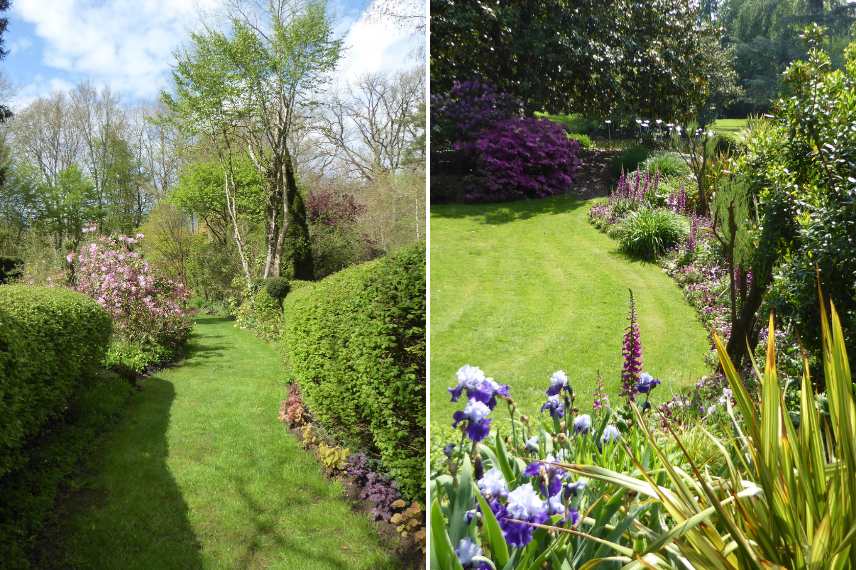
In large spaces, paths or flowerbeds with a slightly winding line are very suitable (© Gwenaëlle David)
But let’s not forget that the plants in a flowerbed can disrupt a line: undulating plants like grasses, light perennials, or beautifully arching bushes can suddenly erase the linear design of a border by spilling over onto the path or lawn. This is the beauty of plants on form, which, through their natural chaos, modifies it.
The shapes of borders also influence the type of materials or path coverings: a curved shape, bringing charm and softness, allows for a more understated choice of material.
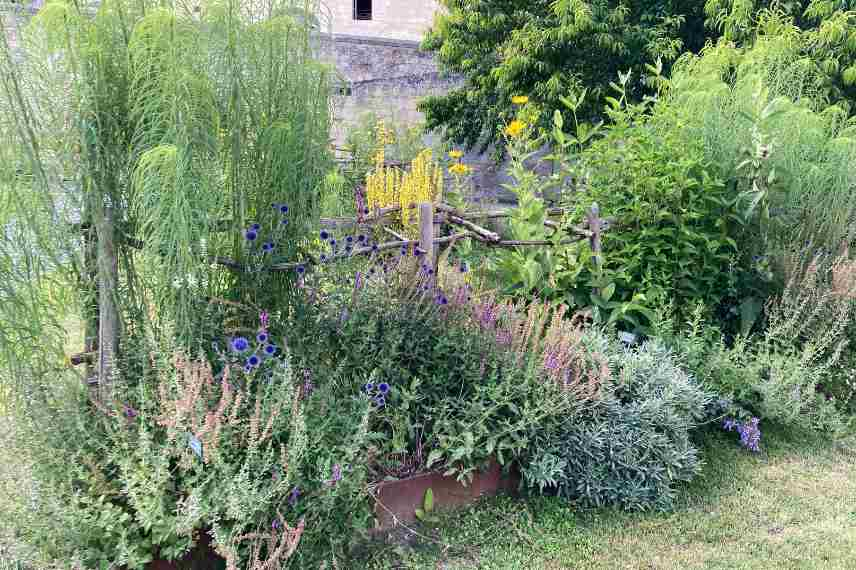
A flowerbed bordered by a rigid Corten steel edge, where summer vegetation takes its liberty (© Gwenaëlle David)
The size and depth of flower beds
The size allocated to your flower beds is crucial. In a large garden, you can opt for large, deep flower beds or mixed-borders that allow for generous mass planting, or you may prefer, often due to space constraints, to create smaller beds.
Large, deep beds where you plant tall perennials and bushes have the advantage of concealing unsightly parts of the garden. They will host lush plants and shrubs. Shallower beds are easier to create in small or intermediate gardens, positioned in various locations, against buildings, to accompany a path, to dress up a passage, etc.
It is often said that you should be able to easily access the interior of the bed, especially for maintenance. Ideally, you should be able to reach a bush, for example, to prune it by placing just one foot inside the bed. This reduces the depth to less than 3 m, and often to 1.5 m for beds against walls.
Regardless of the chosen depth, the height of plants should be considered to create a crescendo of flowering, with the shortest plants in front and the tallest at the back.
The last important “rule” is proportion. Nothing looks worse than a tiny bed lost in a large space, or conversely, a bed that is too imposing in a small area.
Finally, in the case of raised beds that are well-suited for delicate plants, or if you are installing rockeries, it is more the height of the border that needs careful consideration, always taking harmonious references for a beautiful integration with the rest of the garden → see also Sophie’s tips in Designing a terraced garden.
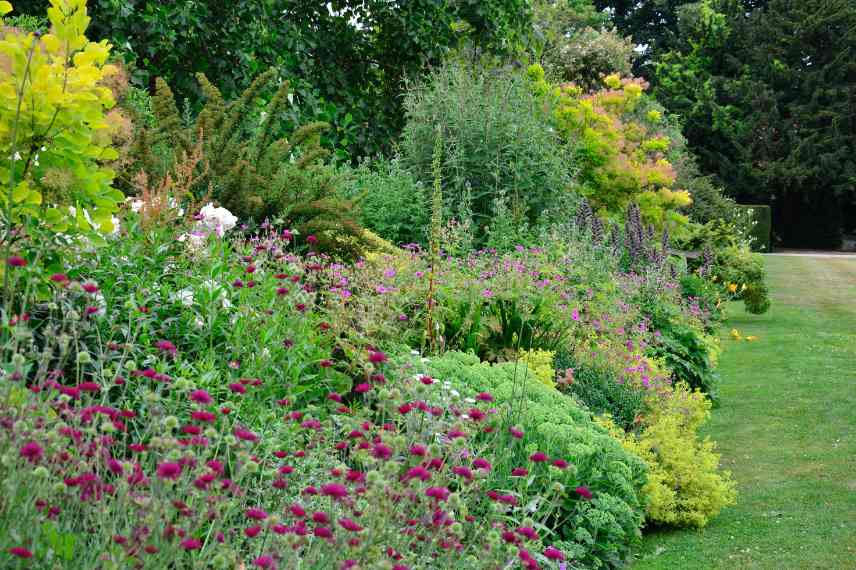
A deep bed here where summer abundance is key, in a large garden
Materials
The bed itself is often framed and delineated by a boundary made from a commercially available pre-fabricated material, such as wood, stone, bricks, or synthesised compounds. Using more natural materials lends a more organic style, such as when using wattle, logs, tree trunks for straight lines, tiles, or a Japanese-inspired style with trimmed bamboo, etc.
Keep in mind that this finishing border must serve two functions: retain the soil of the bed (or the path covering), to prevent it from spilling onto the lawn, or for birds and small wildlife in the garden to carry your mulch well beyond your original boundary, and provide aesthetics and neatness.
In the case of a bed created on a lawn, without a specific boundary, maintenance will need to be meticulous (edging, finishing the mowing) to keep the appearance tidy.
→ Our advice sheet on garden borders: solutions, advantages, disadvantages will provide you with all the tips to choose a suitable border.
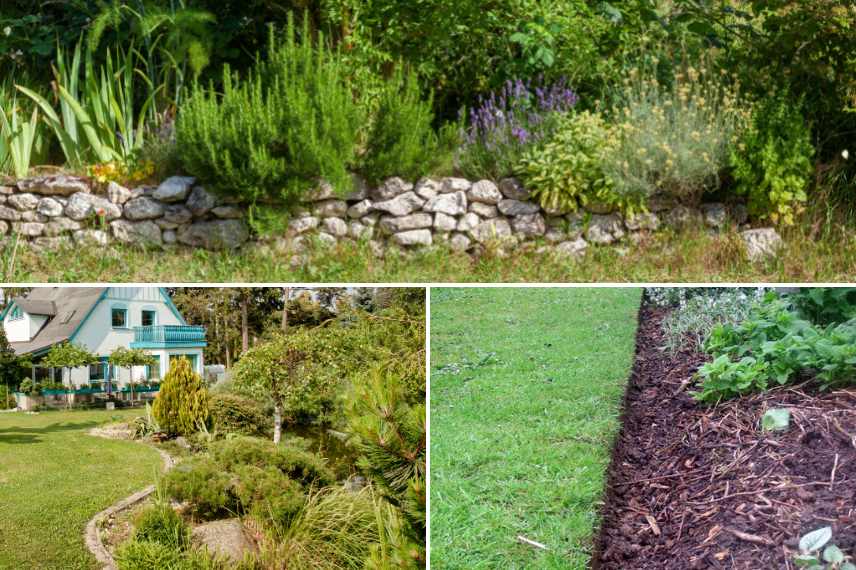
The materials chosen depend on your tastes and also the style of your house. They can be omitted if maintenance is not neglected.
Read also
The English garden mixed borderThe technique
Once you have chosen the type of bed or pathway, it’s time to implement it.
To assist you properly, a sufficiently long hose allows you to shape the design and immediately get a good overview of the curves or lines, thus the space allocated and the overall effect. You can also use a string line like a compass with a stake, marking the resulting line with sand or flour.
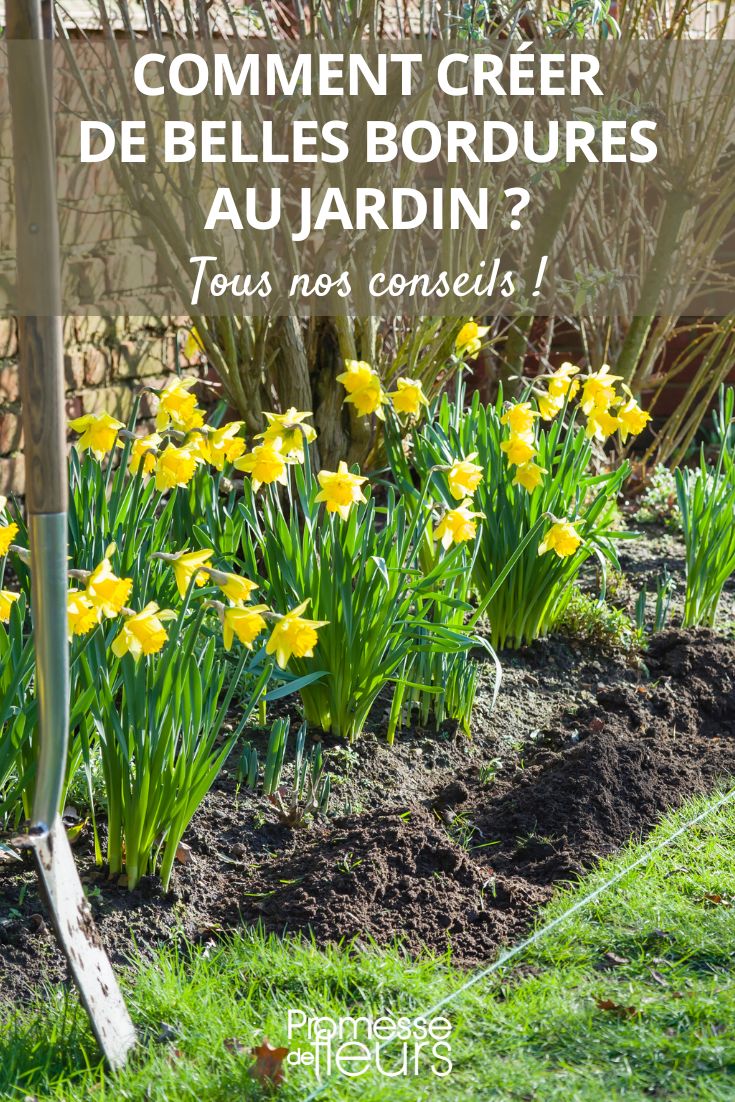
Always use a string line, essential for visualising straight lines, especially if you are working on a more geometric garden and a rectangular flower bed. Finally, on a lawn where you will be planting a bed, you can also use the mower as a pencil to draw the desired shape. In all cases, observe the result from different viewpoints to ensure proper proportions and anchor the project.
You can start to dig around the edges with a spade, following your model to create a clean cut.
Learn more about the steps to create a bed in our advice sheet: How to create a beautiful bush bed?
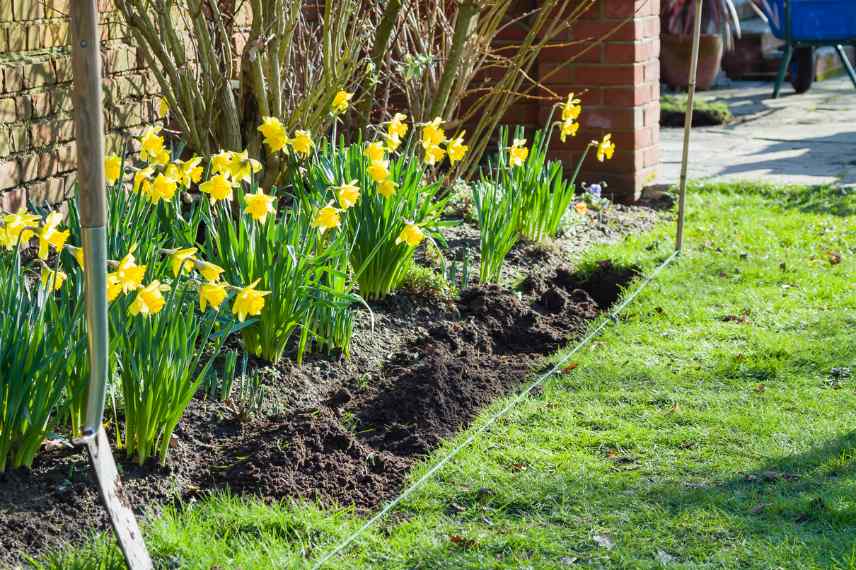
Widening a bed, using a string line
- Subscribe!
- Contents
Comments