





























How to design a Californian-style garden?
To create a warm, exotic ambience
Contents
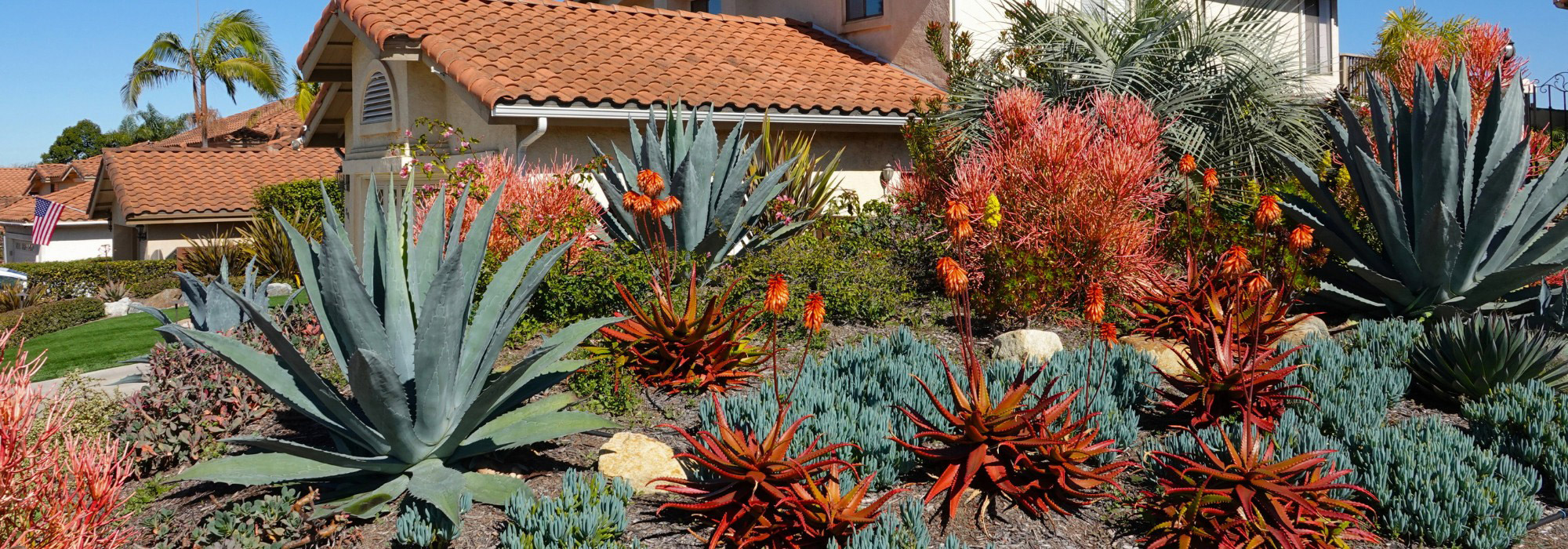
The Californian garden is a garden style inspired by California’s arid climate. It features vegetation composed of desert plants (palms, cacti, succulents) and a few flowering displays to bring colour. This type of planting aims to recreate a verdant and mineral micro-environment, contrasting with the desert’s aridity. It is a simple, elegant garden, welcoming, conducive to relaxation where serenity and harmony prevail. Here are our tips to help you transform your garden with ideas inspired by Californian style.

What is a Californian garden?
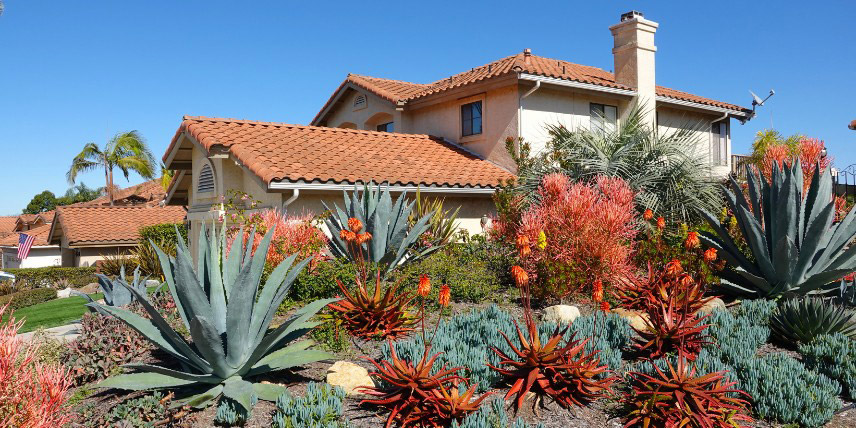
This type of garden evokes the sun, warmth and the Californian lifestyle. It perfectly embodies the outdoor lifestyle associated with California, where outdoor spaces are designed as genuine extensions of indoor spaces. The Californian garden draws its essence from the magnificent landscapes of the United States’ West Coast, where climatic conditions are characterised by abundant sunshine, hot, arid summers and mild, wet winters. It is marked by a range of influences, including Mediterranean, Mexican and Asian. This type of garden stands out for its relaxed and welcoming atmosphere, its natural aesthetic and its plant palette adapted to climate constraints. The mineral elements (rocks and gravel areas) and plants coexist harmoniously there, creating a perfect balance between the different spaces. Succulents, Mediterranean bushes, grasses and palms, hardy, low-maintenance plants able to withstand extreme conditions such as drought, full sun and poor soils, make up its composition. The Californian garden, water-efficient, is an environmentally friendly landscaping choice.
Read also
15 plants for a sunny rockeryWhat is the ambience of a Californian garden?
The Californian garden should inspire warmth, brightness and sociability. It exudes a warm, relaxed and welcoming atmosphere. We appreciate its simplicity and minimalism, avoiding any decorative overload to favour a sense of peace and well-being. The colours recall the natural hues of the American West Coast, combining green nuances from Yosemite and Sequoia National Parks, blue skies and Californian coastlines, terracotta and yellow of deserts and canyons. This colour palette evokes the rugged beauty of deserts and rock, punctuated by the green of a few plants. Under our latitudes, this garden is designed to offer a striking contrast with the surrounding environment, by providing plants with a strong exotic look, some flowering displays in vivid colours and decorative elements in natural materials, such as wood, stone and rattan, for an authentic and warm touch. The mix of plants from arid and dry environments emerging from mineral materials (stones, gravel) typical of this type of garden creates a desert-inspired and modern style at once. We aim to create cosy pockets of sociability to suit your preferences, a relaxation area, garden lounges and shaded areas.
For what type of garden?
Obviously, Gardens located in regions with a Mediterranean climate, with hot, dry summers and mild winters, naturally lend themselves to the Californian style. The drought-tolerant and sun-loving plants, such as palms, cacti and succulents, thrive there in their element. But rest assured, You can easily import a little bit of California into a garden in the Loire’s north or when not all conditions are initially met. The key is to recreate as faithfully as possible the typical ecosystem of this West Coast of the United States, a microcosm that is at once aesthetically pleasing, visually striking and water-efficient. In less forgiving gardens, one should prioritise exotic… but hardy! The hardier among them can be planted directly in open ground, provided the soil is very well-drained, with full sun and protection against frost in winter. The most frost-sensitive plants will be grown in large pots, carefully selecting the most sheltered and sunny location, or risk inevitable failures. It will then be easy to store the pots in a place sheltered from winter damp. These plants can spend the warm season, from April to October, outdoors. A small Californian-inspired corner can thus easily be created in small outdoor spaces, such as balconies, terraces or inner courtyards, thanks to the use of potted plants. To determine which plants are suitable for your garden, use our Plantfit app! 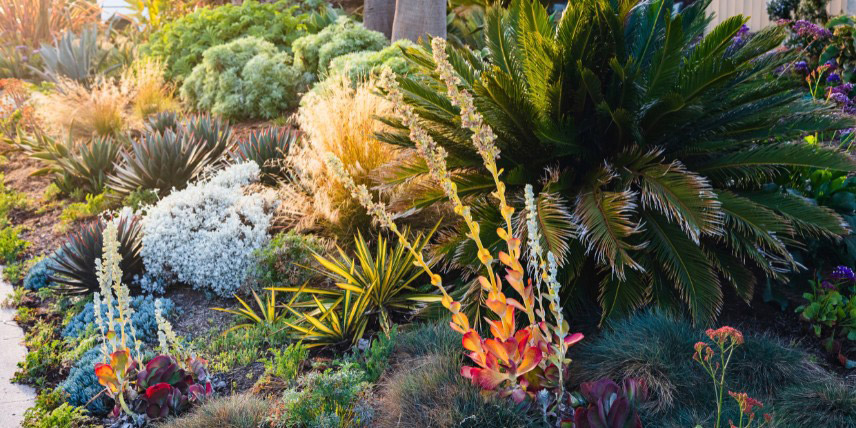
Read also
How to create a dry exotic garden?Which plants to choose?
Despite these climate constraints, Californians place great importance on shaping their green space into a vegetal and mineral haven (stones, gravels, typical of this garden style) between the desert and the tarmac. Cacti are displayed in sunlit rockeries, where their strikingly graphic silhouettes stand out against a very minimalist backdrop, punctuated by a few colourful blooms and wild grasses. The Californian garden favours drought-tolerant and sun-loving plants, such as succulents, Mediterranean shrubs, grasses and palms. It is a small, graphic and resilient ecosystem. To create a Californian-style garden in France, it is important to choose plants that will adapt to local climate conditions while preserving the characteristic aesthetic of this type of garden. We select all kinds of hardy plants, but with an exotic look. Four flagship plant types can be found in the Californian garden:
- Palms and Yuccas: These iconic California plants bring their decidedly exotic look. Some species, such as the dwarf palm (Chamaerops humilis) or the Chinese palm (Trachycarpus fortunei), are hardy enough to withstand French winters. The Yucca rostrata is among these exotic yet hardy plants from North American deserts, which naturally make their mark in this type of décor, just as the Nolina hibernica, a tree-like yucca.
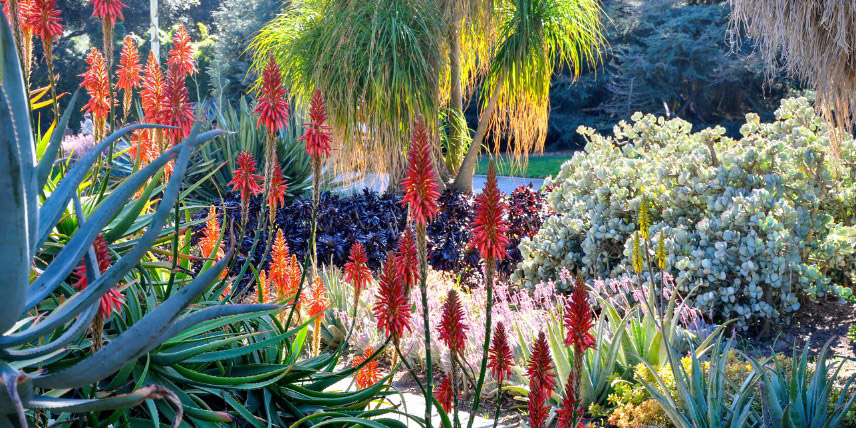
- Cacti and succulents: guaranteed Californian effect! Among species suited to French gardens, we can cite Agave, Agave americana : essential, graphic and architectural, or also Agave montana, equally graphic, but hardy to -20 °C, easier to acclimatise. The Dasylirion wheeleri, a handsome hardy blue-green plant from Mexican deserts, will also find a place in a Californian-style garden, as will the Mammillaria perbella, a frost-hardy “pincushion” cactus, perfect for creating miniature desert atmospheres. Aloes, notably Aloe arborescens, with their evergreen rosettes and spectacular flowering spikes, the Echeveria, the Opuntias, the Cylindropuntia imbricata (a fairly hardy cactus), the Sempervivums, and the Sedums make excellent subjects for a Californian-style setting.
- Mediterranean shrubs: they add a splash of colour and fragrance. You can choose, for example, rockrose (Cistus), rosemary, Santolines (Santolina), lavender, or the strawberry-tree (Arbutus unedo).
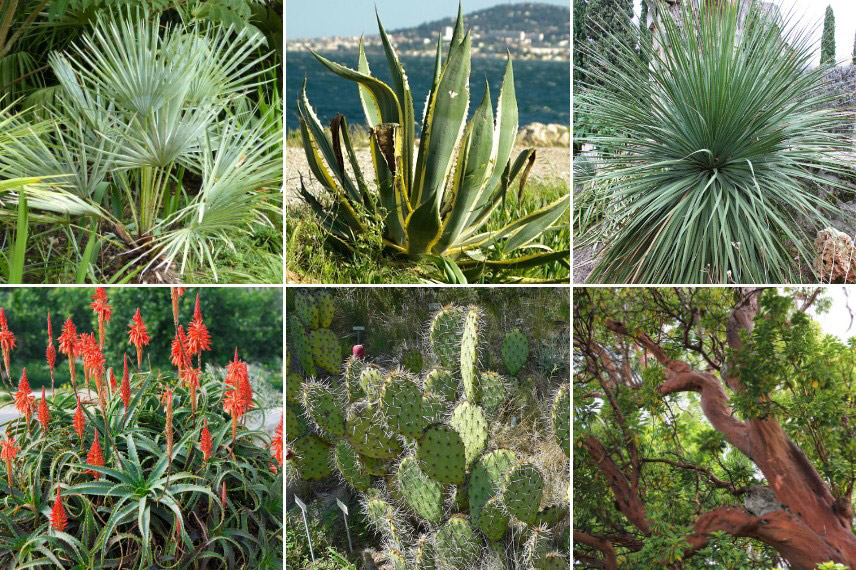
Some examples of plants to include in a Californian-style garden: Chamaerops humilis ‘Cerifera’, Agave americana ‘Variegata’, Dasylirion, Aloe arborescens, Opuntia phaeacantha (photo: Stan Shebs), Arbutus andrachne
How to grow them?
Most of the plants you will be planting originate from South America, the Mediterranean and Mexico, and even though there are varieties that are increasingly hardy, for example from North American deserts, your garden should be sheltered from cold winds. They require a lot of sun (at least six to eight hours of direct sun each day) and well-drained soil, even poor, rocky or sandy, and dry. They especially dislike heavy, waterlogged soils in winter, which promote root rot. If necessary, improve the structure of your soil by adding sand, gravel or organic matter, which will facilitate drainage of water.
For more information, discover our tip sheet: How can I make my soil more well-drained?
Perfect the decor
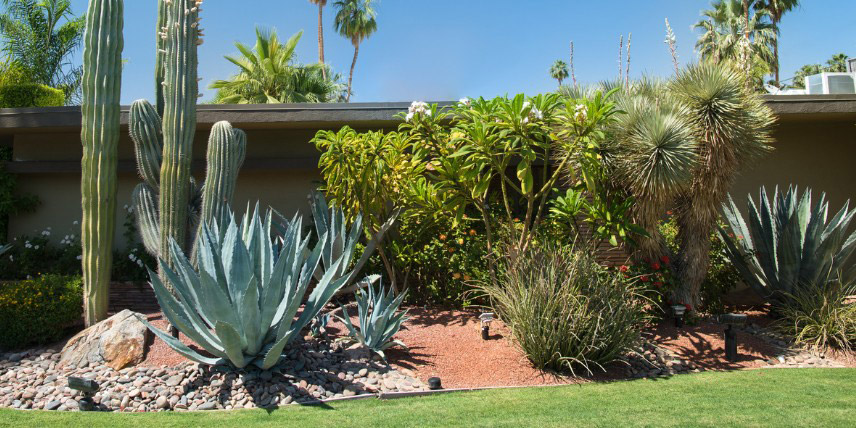
To enhance the exotic feel of your Californian garden, opt for natural, raw materials: pots, gravel, stone or sand define the paths, terraces and low walls, and quickly give the garden a contemporary look. The mineral mulches based on pouzzolane or basalt gravels help reinforce the rugged appearance. They bring an authentic, warm touch.
In a Californian garden, outdoor living spaces are designed to be welcoming and conducive to relaxation. There are dining areas, outdoor lounge areas. Choose comfortable, uncluttered furniture.
Bright colours and natural materials such as wood and rattan contribute to this warm, transporting atmosphere.
Recessed spotlights, string lights or solar lanterns will highlight your plants and living spaces.
It’s also essential to create shaded areas and a sense of cool. Install pergolas, arbours or shade sails to protect you from the sun, and create water features to bring a note of coolness.
- Subscribe!
- Contents
Comments