





























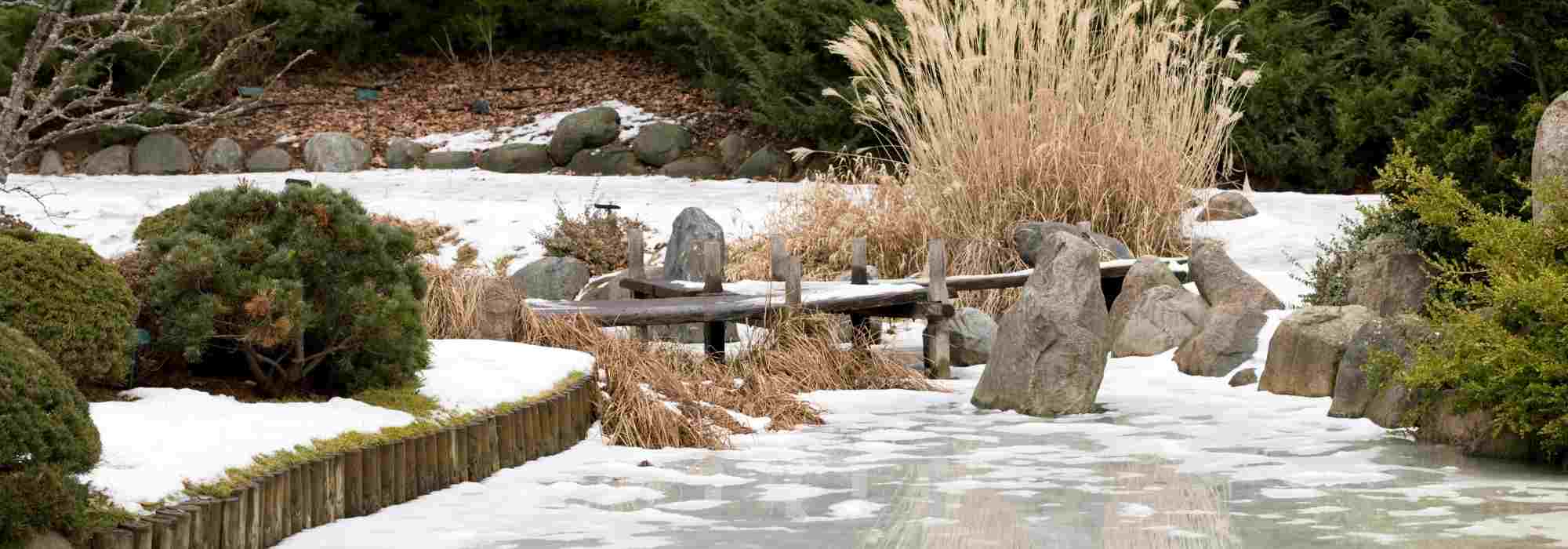
How to spot frost pockets in your garden?
Humidity, temperatures and draughts: factors to consider in a garden
Contents
At Promesse de fleurs, we have developed the Plantfit application, which enables you to choose the plants best suited to your garden, based on multiple parameters: exposure, soil type, the climate zone you live in… With this application, you will immediately know whether the maple you dream of will thrive in your garden. However, your garden is not a static entity that can be analysed simply with algorithms. And it can be fundamentally different from that of your nearest neighbour.
That is why identifying the coldest zones in this garden can be essential for selecting the most suitable plants, which will grow in the best conditions.
Discover with us how to determine the coldest and frost-prone areas of your outdoor space.

The benefits of knowing the cold zones in a garden
When building a house, you will surely choose its orientation with care to benefit from the best light, the best exposure, or, conversely, to avoid an intrusive sightline. In your garden, it’s a bit the same. When the season for planting trees, shrubs, climbers or perennials is in full swing, you need to find the most suitable location for each of the selected plants, often guided by a favourite.
If, logically, exposure, soil type, and associations with other plants are paramount, you must also take into account the plant’s cold hardiness. Indeed, plants benefit from varying degrees of hardiness, from very frost-tolerant to very hardy, sometimes down to -20 to -25 °C. Your hardiness zone is therefore essential in choosing your plants, but that’s not the only criterion to consider.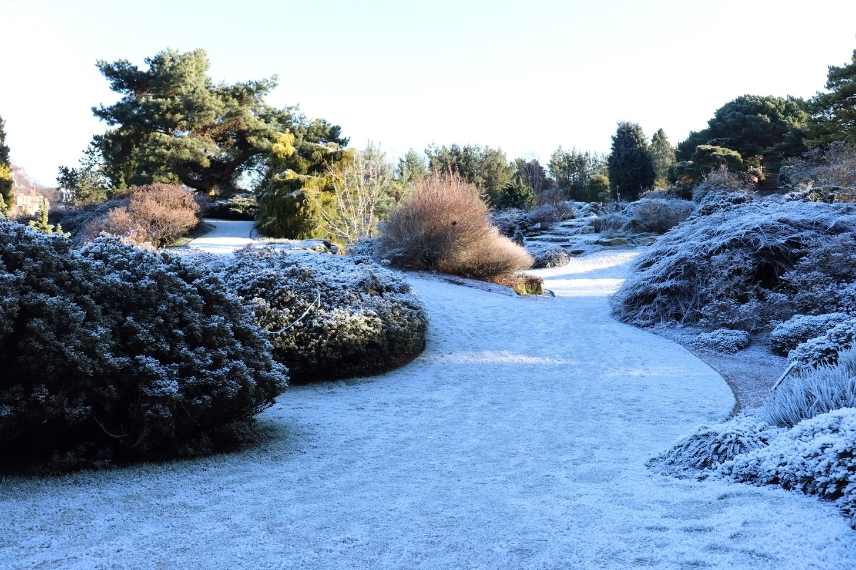
Indeed, within your garden, there can be enormous variations between such zones, to the point of observing real “microclimates”, more conducive to certain plants. Knowing the coldest zones in your garden is just as important as identifying the warmest spots, as it affects the well-being of your plants. A plant at the edge of hardiness, placed in the full force of cold drafts, will suffer. This will have a negative impact on its growth and flowering, or even its fruiting or survival.
What should you look for to identify cold spots?
Before you start planting indiscriminately, perhaps it’s wise to observe a little what happens in your garden over the seasons. And especially in winter.
-
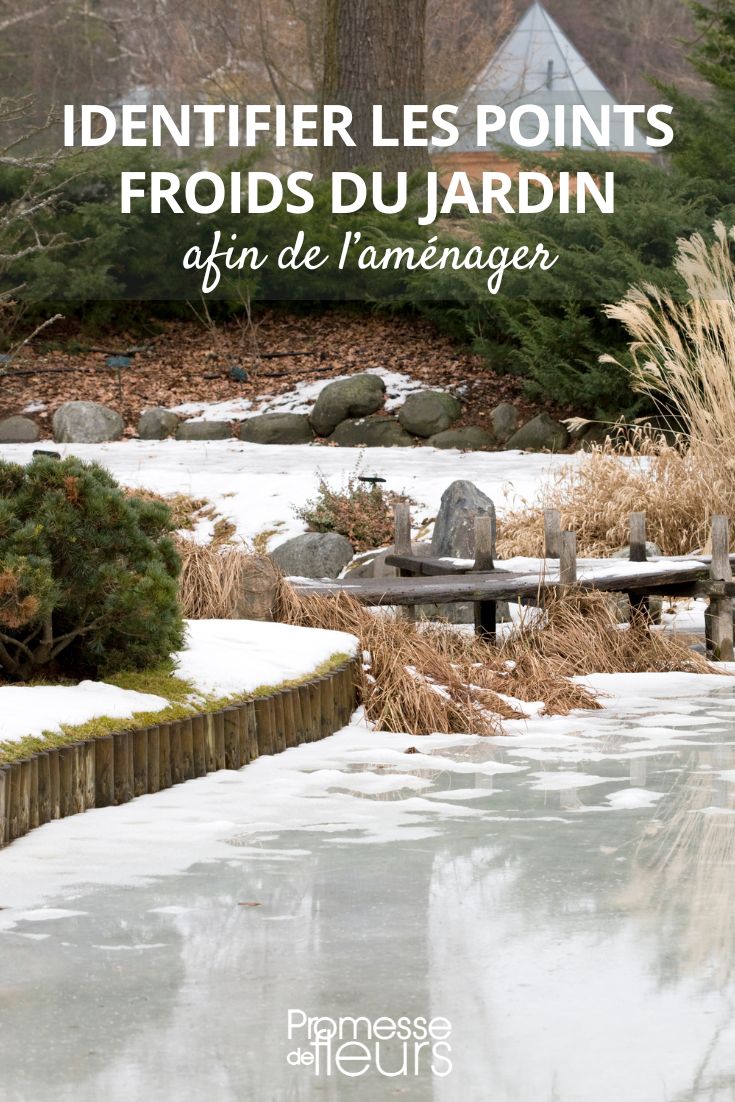
- The coldest zones are inevitably those where frost or snow lingers the longest. So you should avoid planting frost-prone or cold-sensitive plants there. Especially if the soil is particularly damp. Indeed, the conjunction of cold and soil moisture increases the fragility of the root system and affects the hardiness of the plant.
- Drafts intensify the sensation of cold; cold winds can lower the temperature by several degrees. In light of this, simply observe the movement of dead leaves in autumn to identify the most wind-exposed areas of the garden. Areas where leaves tend to accumulate correspond to the most sheltered spots. Conversely, in wind-swept areas, leaves swirl and are blown away. It is therefore not advisable to plant cold-sensitive plants there.
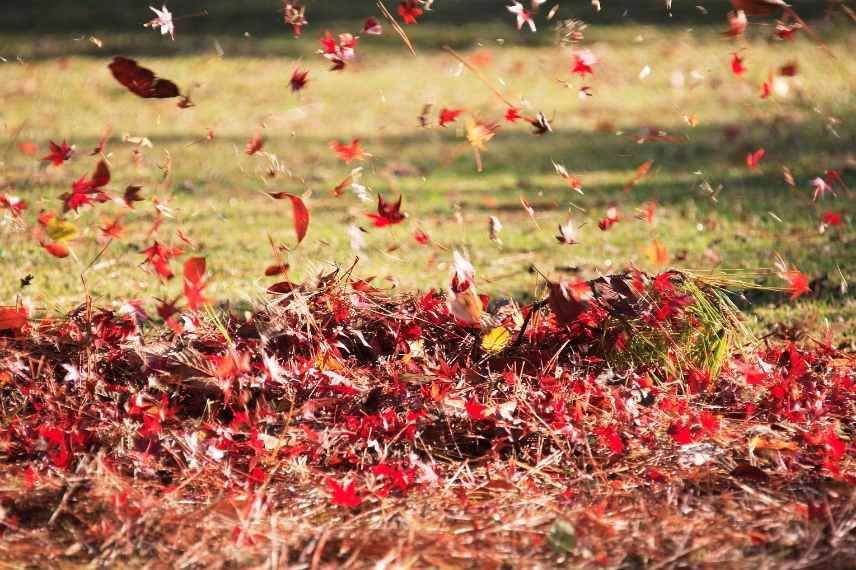
Watching dead leaves swirl in the wind helps identify sheltered areas and the cold zones
- To support your observations, it suffices to scatter several thermometers around your plot and take temperature readings at the same times, early in the morning and late in the day, for a month. You are likely to be greatly surprised by the temperature variations between different corners of the garden.
Take orientation and the built environment into account, as well as trees or hedges.
Identifying the coldest zones in a garden is also a matter of logic.
Indeed, exposure plays a major role, in both summer and winter. South-facing corners and alcoves benefit from higher temperatures in winter. Even so, the sun’s rays, however faint, will still warm the air. This is why it is often recommended to group all potted plants in a south-facing spot in winter to protect them from the cold. By contrast, north-facing areas are decidedly cooler, as in winter the sun’s rays are very faint. But in summer, this exposure can be ideal for plants that fear the scorching sun, such as rhododendrons and azaleas, the camellias… To the east, frosts can be damaging, while to the west they are less impactful.
The built features that punctuate your garden are also essential. Starting with the house. At the base of south-facing façades, temperatures are milder, as plants can benefit from the sun’s reflected heat. However, if the plants enjoy this winter warmth, they must also be able to withstand the strong summer heat. Conversely, a north-facing wall provides a beneficial shade in summer, but a certain chill in winter, which may be intensified by stagnant humidity. Nevertheless, a wall can shield against cold winds. It is therefore important to consider the vertical and mineral surfaces of the dwelling, as well as the garden shed, and the walls surrounding the plot. A simple fence can also alter the situation, blocking winds and air currents.
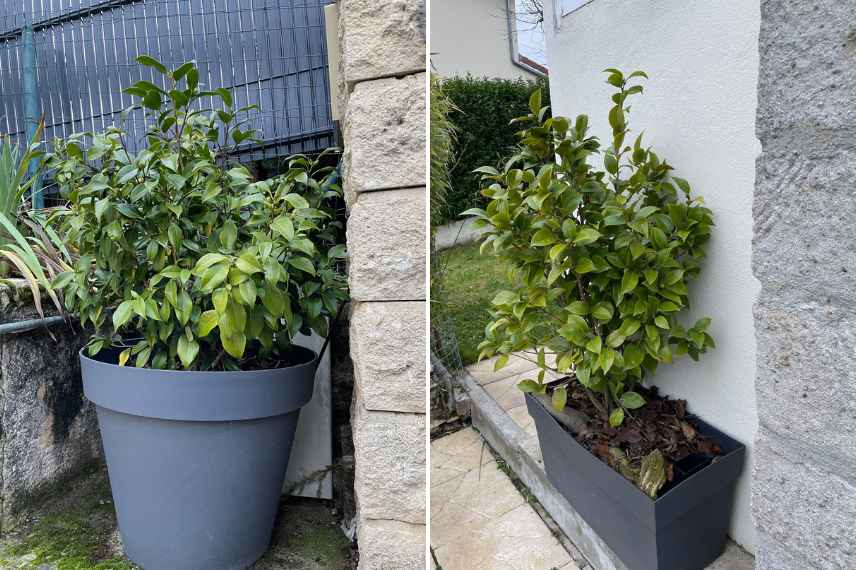
My two camellias benefit from the warmth and shelter provided by the house wall and the fence
Hedges can also play this role. Especially if they are composed of species with evergreen foliage. This hedge will form a barrier against the cold in winter, protecting the plants from gusts.
For trees, it’s the same. Evergreen-leaved trees such as conifers, eucalyptus, or Magnolia grandiflora provide a reliable shelter in winter against inclement weather or frost. However, deciduous trees do not protect plants from the cold. But they let through the timid rays of winter sun.
- Subscribe!
- Contents
Comments