





























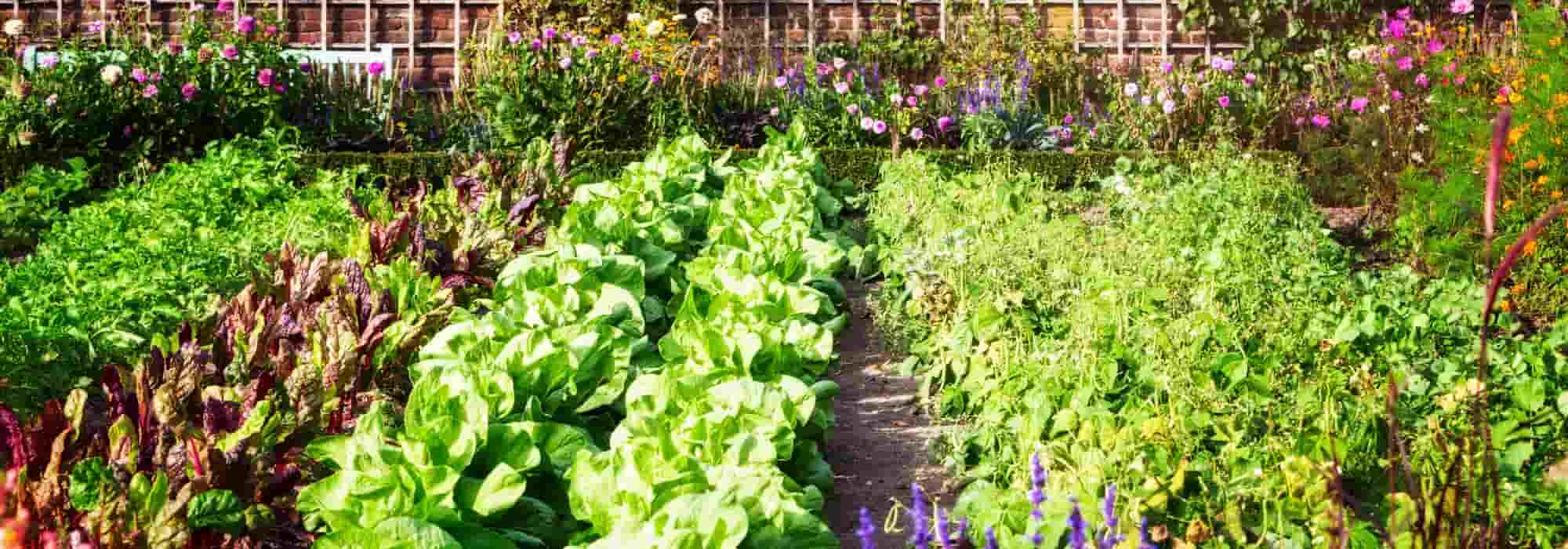
How to naturally improve yields in your vegetable garden?
All our tips to enrich your vegetable garden
Contents
For a gardener, is there a greater joy than harvesting the fruits (and vegetables) of their labour? The first radishes or the first salads of the season always have a special flavour, just like the strawberries or raspberries that one nibbles on at will. Beyond simple happiness, it is often pride that drives the gardener who feeds their family with healthy, naturally grown, nutritious produce that allows them to (re)discover the taste of good fruits and vegetables. Growing your vegetable garden thus becomes a rewarding, fulfilling activity, and sometimes even a militant act to preserve one’s health and/or the environment.
However, success is not always guaranteed. A gardener can also feel great disappointment when faced with vegetable plants that are languishing, others that do not bear fruit or do so poorly, or even a crop completely overrun by pests. We provide you with key tips to improve the soil, nourish your plants, and create barriers against pests.

Knowing Your Vegetable Garden Well to Grow It Successfully
Whether you are starting your vegetable garden or have been cultivating it for a long time, have you taken the time to observe it closely? Because that is the foundation. To grow a vegetable garden well, you need to know it well. And above all, understand its various components, namely the soil, exposure, wind influence, and less fertile areas…
Understanding the Nature of Your Soil
To begin with, observing your soil is very important not only to understand its structure but also its nature. Thus, you do not cultivate in the same way in heavy clay soil as in light sandy soil, or even stony soil. Similarly, soil can be acidic, calcareous… and you will not be able to plant the same vegetables with the same success. 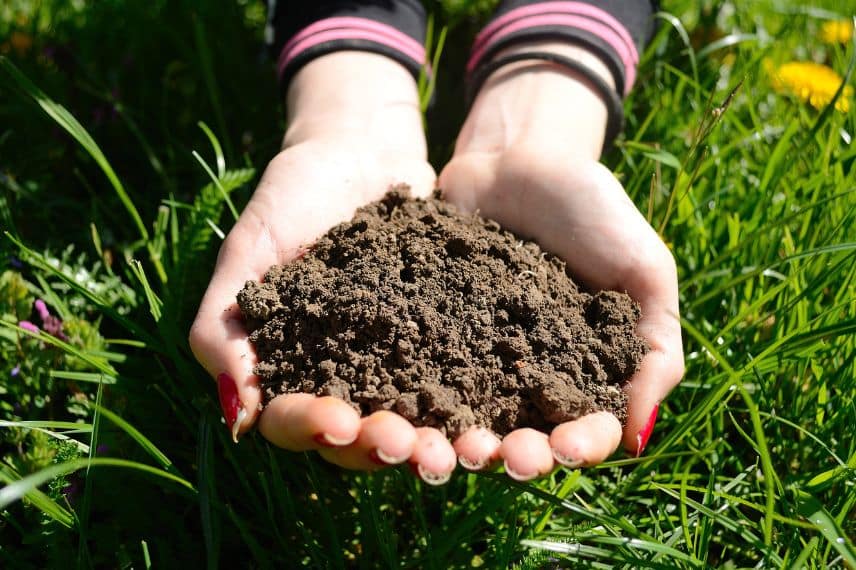
Several tests can therefore be conducted to understand the nature and texture of your soil:
- The spade test (to be done in spring or autumn) involves taking a spadeful of soil and breaking it into clumps. By looking closely, you will discover plant debris, signs of earthworm presence through their droppings… Similarly, if the soil breaks easily into clumps, your soil is alive. Conversely, if the clumps do not separate well, the microorganisms are either inactive or absent. Dark soil is also a sign of soil rich in humus.
- The ribbon test helps determine the texture of the soil. Simply take a handful of soil and slightly moisten it. You can then tell if it is silty and clayey or granular and sandy.
- The vinegar test involves pouring a few drops onto a bit of soil. If bubbles form, it is alkaline and contains lime, with a pH above 7.5. If nothing appears, it is neutral or acidic.
- The baking soda test allows you to see if the soil is acidic. You need to wet the soil and add a bit of baking soda. If bubbles form, the soil is acidic with a pH below 6.5.
- The hydrogen peroxide test helps determine if your soil is rich in organic matter. Olivier explains how to do this in his article Soil Fertility: Rich or Poor, How to Tell?
Also, remember to observe the soil after heavy rain to assess drainage. If puddles remain, the soil is not very well drained. You may need to add some sand.
Observing the Exposure of Your Vegetable Garden
It is essential to know the exposure of your vegetable garden to optimise crops and thus the harvests. This observation is made throughout the four seasons of the year.
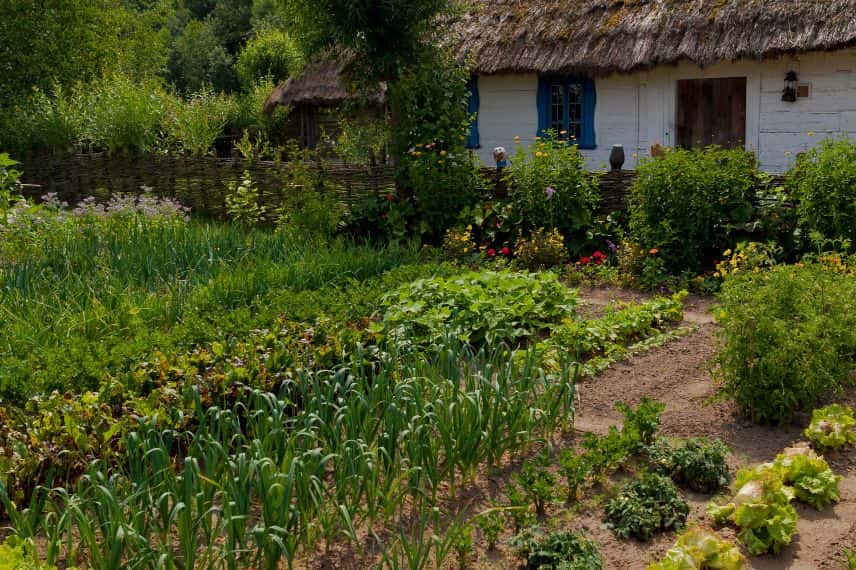
Thus, a vegetable garden exposed to the south or west is ideal. Otherwise, if your soil receives at least 6 hours of sunlight per day, that is perfect. Also observe the shadows that in summer, during heatwaves, can be very useful for vegetables sensitive to drought. In winter, identify areas exposed to cold winds or waterlogged.
Enriching your soil for beautiful harvests
A good soil, rich and fertile, is the key to beautiful vegetables or fruits. However, over the years, soil can quickly become depleted. Therefore, it is crucial to enrich and fertilise it to nourish the soil and the micro-organisms that make it up. It is important to remember that the addition of organic matter must be properly balanced: it is essential to fertilise the soil with both carbonaceous and nitrogenous materials.
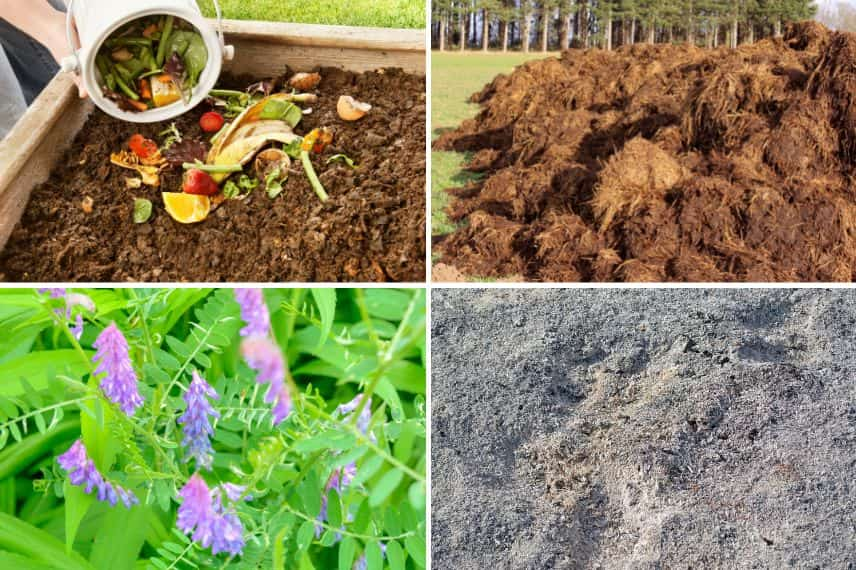
Some amendments for a fertile vegetable garden
There are numerous ways to amend the soil:
- Compost made from plant-based organic waste, transformed by bacteria, fungi, and insects, is an excellent fertiliser for the vegetable garden. Ingrid explains How to make your compost in 5 steps, while Olivier discusses, in a video, surface composting.
- Manure, rich in mineral elements, complements compost additions. However, it is important to choose the right manure and the right time to spread it… I explain everything about the proper use of manure and answer 10 questions you may have about manure. Virginie T. warns you about the mistakes to avoid with manure.
- Wood ash, rich in potassium, calcium, magnesium, and silicon… can also be incorporated into the vegetable garden, but in measured doses. Discover how to use wood ash in the vegetable garden with Virginie D.
- Green manures are sown in spring or autumn to enrich the soil. They are then mown and/or incorporated into the soil to release mineral elements and serve as fertiliser. Everything you need to know about green manures with Ingrid. Legumes play the same role by providing nitrogen. I explain everything here.
- Nettle and comfrey manures have stimulating and fertilising effects not on the soil, but on the plants. We provide the recipes for nettle manure and comfrey manure.
- Dead leaves and grass clippings will provide organic matter to the soil as they decompose. Ingrid shows you how to use dead leaves in the garden.
- Mycorrhizae refer to a symbiosis between a fungus and a plant that allows for the exchange of nutrients. They act like fertilisers. Discover the strange world of mycorrhizae and their usefulness with Alexandra.
- Natural fertilisers such as crushed horn, dried blood, and sea guano provide sustainable nourishment for the soil. Virginie T. tells you more about natural fertilisers in the vegetable garden.
- Urine proves to be a good nitrogen and phosphate fertiliser. Olivier details the various uses of urine in the vegetable garden.
Discover other Vegetable gardens
View all →
Available in 1 sizes
Available in 1 sizes
Available in 1 sizes
Available in 1 sizes
Available in 1 sizes
Available in 1 sizes
Available in 1 sizes
Available in 1 sizes
Available in 1 sizes
Available in 1 sizes
Adopt the right practices in the vegetable garden
To succeed in your vegetable garden, there are essential actions that can be summarised in a few verbs: work the soil with care, mulch, water, prune… to reap the fruits of your labour.
Work the Soil with Care
The less aggressive you are with the soil, the better it will respond. And you’ll feel better too! Rather than criticising gardeners who dig deeply into their soil, it’s better to work the soil without turning it over to preserve the small wildlife and the bacteria that thrive there. Using a grelinette (also known as a broad fork), the soil is worked deeply but gently. And also effortlessly. The croc can also be useful for soil work, just like the forked spade.
Olivier explains the function and benefits of the broad fork.
As for hoeing, weeding, and earthing up, they can be avoided by mulching, the second commandment for having a fertile vegetable garden.
Mulching the Soil: A Gesture with Multiple Benefits
In nature, soil never remains bare for long. Why should it be any different in your vegetable garden?
Mulching offers numerous advantages:
- It limits surface evaporation, allowing for less frequent watering and maintaining a certain level of moisture
- It slows the proliferation of weeds
- It maintains a constant temperature and prevents overheating during heatwaves
- It prevents soil compaction and the formation of a crust
- It protects vegetables from rainwater splashes, which can cause dirt and also spread fungal diseases like blight or powdery mildew
- It nourishes earthworms as it decomposes
- It creates a favourable ecosystem for beneficial insects
- It eliminates the need for hoeing and weeding
That’s all there is to it! Now all that’s left is to discover the best mulches for the vegetable garden.
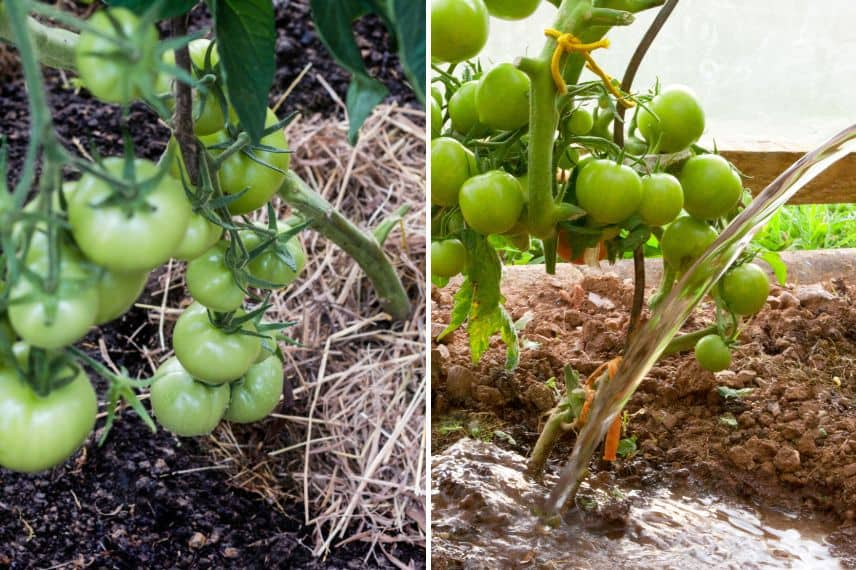 Mulching and watering, two essential actions
Water Wisely
Of course, it goes without saying that water is vital for the vegetable garden. If it doesn’t fall from the sky, watering becomes obligatory. However, you shouldn’t water indiscriminately any vegetable plant, in the same way or in the same quantity. Some vegetables are indeed thirsty, while others hardly need any.
Likewise, there are ideal times for watering, as well as actions to avoid.
Discover all our articles to understand everything about watering the vegetable garden:
- Watering the vegetable garden: our tips
- Successfully watering seedlings: beginner’s guide
- Watering the garden: how to do it?
- Water restrictions and watering: how to manage the crisis in the garden?
- Watering a garden during a heatwave
Pruning Vegetables
While not obligatory, pruning summer vegetables can lead to quicker, more balanced, and more abundant harvests. Some gardeners never prune and still have equally generous yields. I’ll let you conduct your own experiments and I’ll explain how to prune summer vegetables so you can make an informed choice.
Read also
10 tips for gardening on a budgetTo grow and maximise your chances of success
In the vegetable garden, two rules prevail for growing beautiful vegetables: companion planting and crop rotation. These two principles require some knowledge, a bit (or a lot) of diligence, and patience.
Companion planting involves planting different species next to each other (or not) so that they can mutually protect one another from pests. The most illustrative example is the pairing of carrots with leeks (or onions), as their scents deter each other’s pests, namely the leek moth and the carrot fly. To learn more about companion planting in the vegetable garden, read Ingrid’s article.
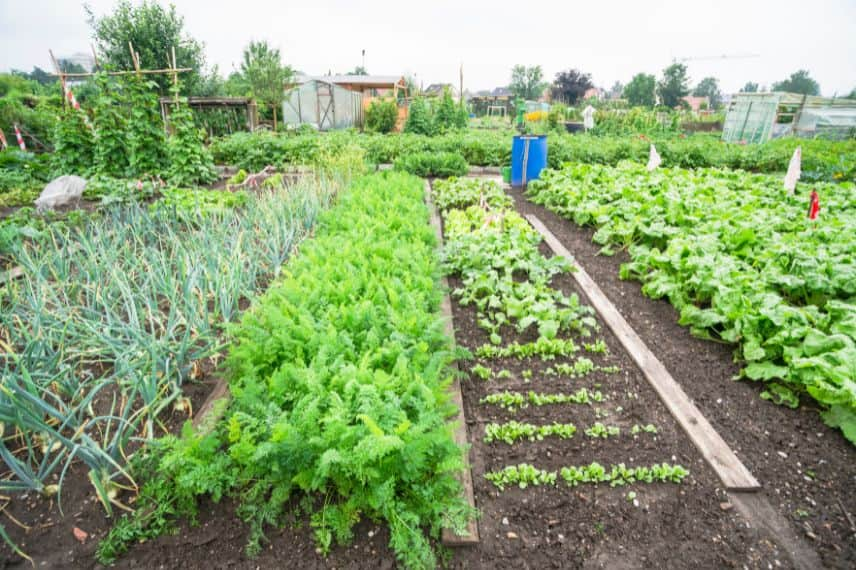
Associations of leeks and carrots that protect each other
As for crop rotation, it is defined as the succession of different families of crops in the same plot from year to year. This technique can be a bit complex on a small area, but it helps avoid many issues related to certain diseases or soil depletion.
Two articles to fully understand crop rotation:
- Crop rotation in the vegetable garden: Why and how?
- Planning your vegetable garden: rotations and associations in five steps
Protecting your vegetable garden from diseases and pests
A disease or pest can devastate a carefully cultivated, watered, mulched, and nurtured vegetable patch in just a few days. And as in the vegetable garden, it’s better to prevent than to cure, prevention is key.
To combat diseases, a few preventive measures are applicable in many cases:
- Space out the young plants to allow air circulation and prevent the spread of diseases among vegetable plants.
- Avoid wetting the foliage to reduce the risk of many fungal diseases. A watering can is ideal, as is drip irrigation or a porous hose.
- Grow the most rain-sensitive vegetables under cover or in a greenhouse.
- Boost the young plants with nettle manure, horsetail manure, or comfrey manure to make them less susceptible to diseases.
- Remove plants that show the first signs of disease.
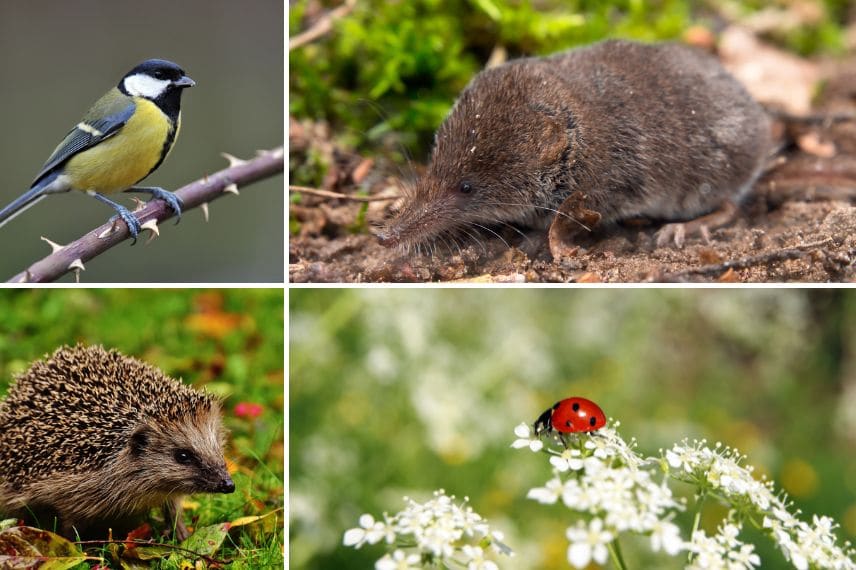
Some useful predators in the vegetable garden
To combat pests, you can install perfectly natural solutions in your garden, such as slug barriers, insect-proof nets, or beneficial nematodes and insects. Don’t forget the simple act of attracting natural predators such as birds, shrews, and hedgehogs by providing feeders, nesting boxes, or natural shelters.
For further reading:
- Subscribe!
- Contents
Comments