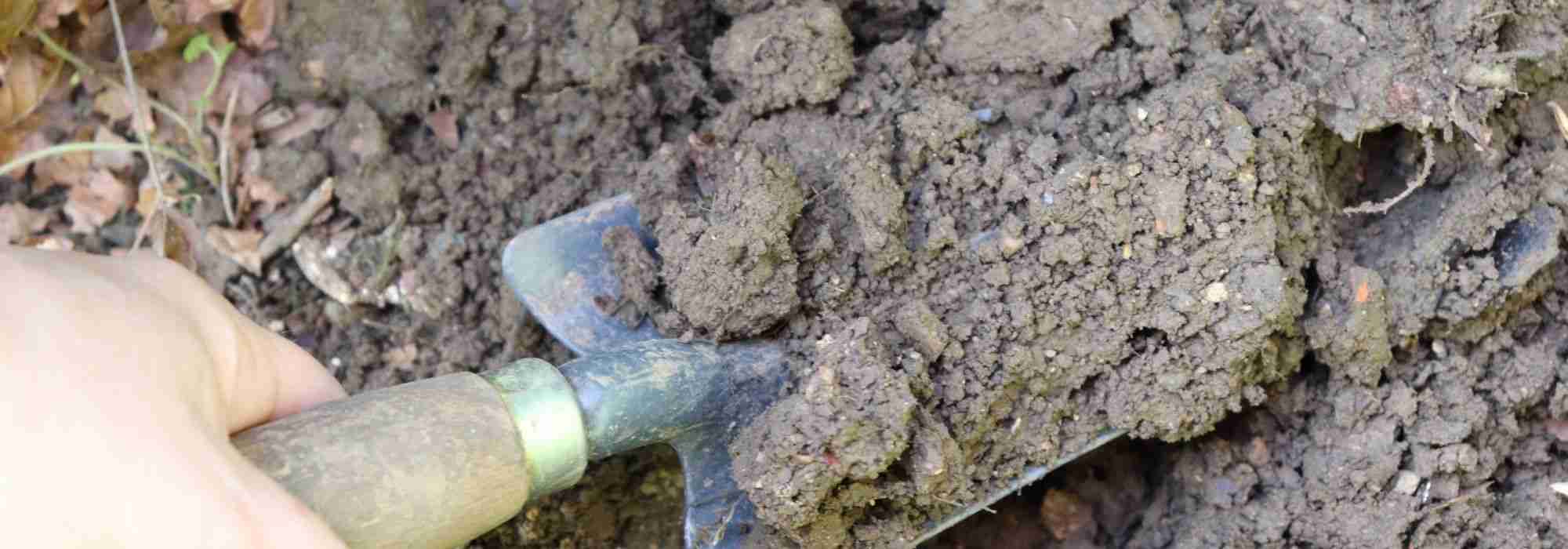
Soil fertility: rich or poor, how can you tell?
The simplest tests and observations, and the solutions
Contents
Soil fertility is not limited, as is often said, to its nitrogen content. This concept is far more complex and, in reality, it is difficult to define precisely.
Nevertheless, we can say that fertile soil is soil that is thriving, does not degrade too quickly and can support a large number of plants without deficiencies or disease.
→ Is your soil fertile enough? Is it really wise to apply large quantities of fertiliser? We tell you everything in this advice guide!

What is soil fertility?
Soil functions are complex, and the least vague definition of soil fertility might be this:
“The ability of a soil to meet the physical, chemical and biological needs required for plant growth, yield, reproduction and quality, in a way suited to the type of plant, the type of soil, the use of the soil and the climatic conditions.” (Abbot & Murphy: Soil biological fertility – 2003)
In short, soil fertility can be defined according to these different factors:
- its humus content: humus, the upper layer of soil created by the decomposition of organic matter, gives soil structure and retains water;
- soil depth: or, more precisely, subsoil depth, the layer beneath topsoil. It must be deep enough for plant root development;
- soil drainage: compacted, airless soil does not allow gases, water or nutrients to move properly;
- the level of available nutrients: plants need nitrogen, carbon and trace elements to grow and remain healthy. If the soil is deficient or the nutrients are unavailable because of soil compaction or excessive acidity, for example, plants will not be able to grow normally;
- its acidity level: most plants grow very well at a pH between 5.5 and 8;
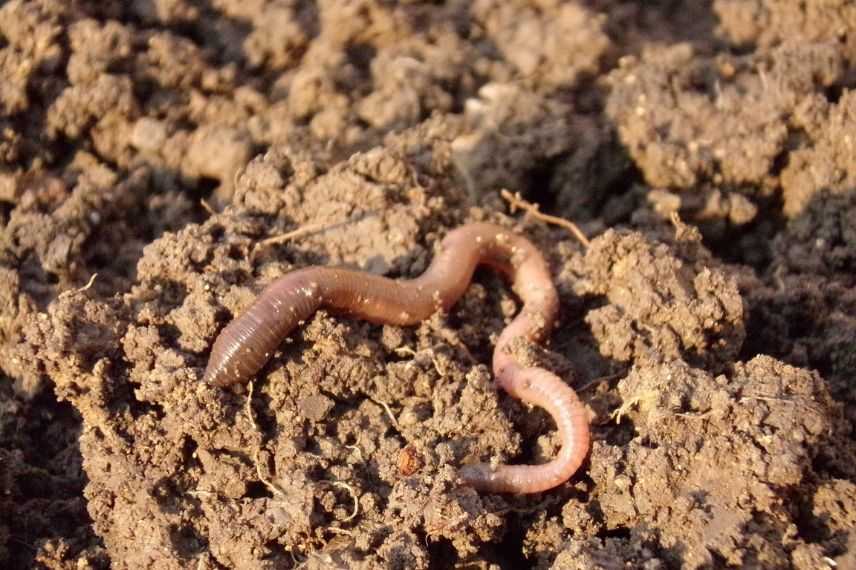
- soil life: insects, earthworms, micro-organisms and mycorrhizae… all help to create fertile soil. Dead soil, in which its inhabitants are no more than a distant memory, will not be fertile. Unless you turn it into a chemical factory with industrial fertilisers…
How can you tell whether your soil is rich or poor?
Observing your plants
To find out whether a soil is fertile, there is no need to embark on costly analyses. To begin with, you can simply observe what grows in your garden and how these plants grow. Observing your plants provides valuable information about the richness of your soil. If your soil is rich in humus, your plants will grow quickly, with attractive foliage and no excessive problems with diseases or pests.
Observing adventive and native plants
Plants do not grow in a particular place by chance. So-called nitrophilous native plants grow in nitrogen-rich soils: nettles, fat hen, couch grass, dead-nettles, annual mercury, hogweed and chickweed… If you see these plants growing in large numbers in your garden, you can be sure that your soil is rich enough to grow any plant.
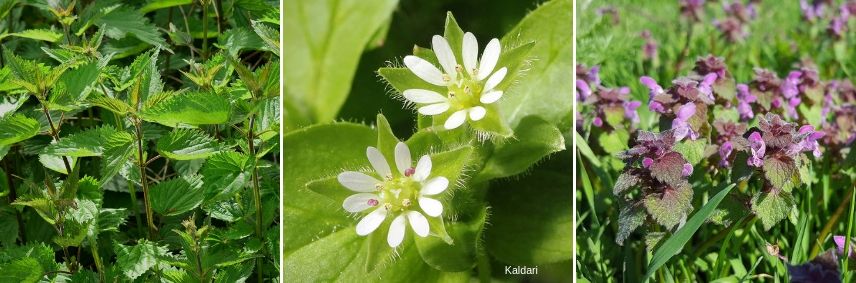
A few adventive plants: nettle, chickweed and red dead-nettle
Carrying out the hydrogen peroxide test
A good way to assess the level of organic matter present in the soil is to carry out a simple hydrogen peroxide test, using hydrogen peroxide (H2O2) available from pharmacies.
There are two types of organic matter: stable humus, which breaks down slowly, and transient organic matter, which breaks down quickly and therefore supplies minerals to plants rapidly. Every soil contains these two types of organic matter in varying proportions.
To carry out the test:
Place a little soil on a plate. Add a few drops of hydrogen peroxide to the soil. Three reactions are possible:
- The soil does not foam: there is a lot of stable humus, but very little transient organic matter. Mineralisation needs to be restarted, meaning that organic matter must be broken down into minerals, by supplying oxygen to the soil fauna in particular, for example by lightly scratching the soil.
- The soil foams a lot: the organic matter is mainly present in transient form. It breaks down very quickly and the C/N ratio (Carbon/Nitrogen) is unbalanced. Carbon needs to be added: twigs, straw, wood, RCW, untreated cardboard…
- The soil foams slightly: the organic matter is more stable and therefore retains more water. This is the best-case scenario. The C/N ratio (Carbon/Nitrogen) is perfectly balanced. The soil has good fertility and is fairly stable.
Please note: The Carbon/Nitrogen ratio is an important factor to consider when discussing soil fertility. It indicates how quickly organic matter breaks down. The higher the C/N ratio, the more slowly the organic matter breaks down, but the humus or compost created is then very stable. This is why, for example, layers of green waste (Nitrogen) and layers of brown waste (Carbon) are alternated in a compost heap.
How can you make soil fertile?
Understanding your soil and acting accordingly
There is no point fertilising soil that is already fertile but whose structure prevents nutrients from reaching the roots of our plants. The structural problems must therefore be addressed first, for example by lightening the soil, before adding a hypothetical fertiliser.
→ You will find a few suggestions in our advice sheet “Gardening in heavy, damp soil“.
In addition, soil that is too acidic does not allow nutrients to be transported properly to plant roots: applying a lime-based soil amendment can correct this. Conversely, soil that is too alkaline will need to regain a good humus-bearing layer to become fertile again.
→ Read these two articles on the subject: “Gardening in acidic soil” and “Gardening in calcareous soil“.
Adding organic matter
We all hope to have humus-bearing soil like that found in a forest. But to create soil rich in humus, and therefore rich in nutrients and with a good structure that retains water without becoming waterlogged, we need to “imitate” what happens in nature: this is precisely what advocates of agroforestry do by combining tree growing with more conventional agriculture, thereby protecting soil from degradation. The solution is therefore to add organic matter to the soil: dead leaves, green waste… and well-rotted compost, or even well-rotted manure.
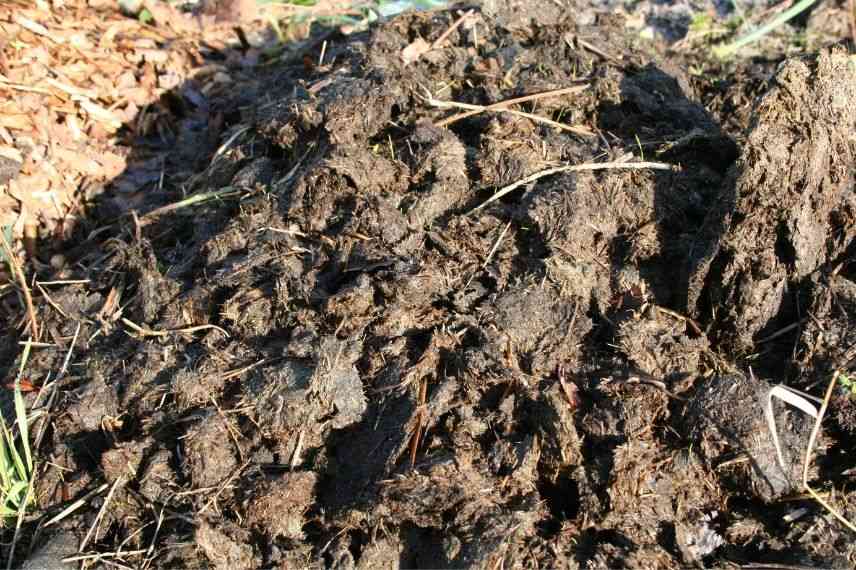
Well-rotted manure
Green manures and other ground covers
Green manures are aptly named. They are plants sown to prevent the soil from being left bare for too long: phacelia, rye, mustard, crimson clover… When the area is needed for a crop, simply cut down the green manure and incorporate it into the soil.
Other ground covers include grass clippings, RCW, straw and dead leaves… As well as protecting the soil, they too will be incorporated into it, but gradually, by soil decomposers (earthworms, insects, fungi… feeding on organic matter).
You can also leave part of your impoverished soil fallow. Plants will soon colonise the area and, over time, help to make it fertile.
Crop rotation
In a vegetable garden, crop rotation is an essential technique for maintaining soil fertility (among other things!). Legumes (the Fabaceae family), such as peas, broad beans and beans, are plants capable of fixing atmospheric nitrogen. They are therefore perfect for growing immediately after a nitrogen-hungry vegetable such as courgettes or other cucurbits.
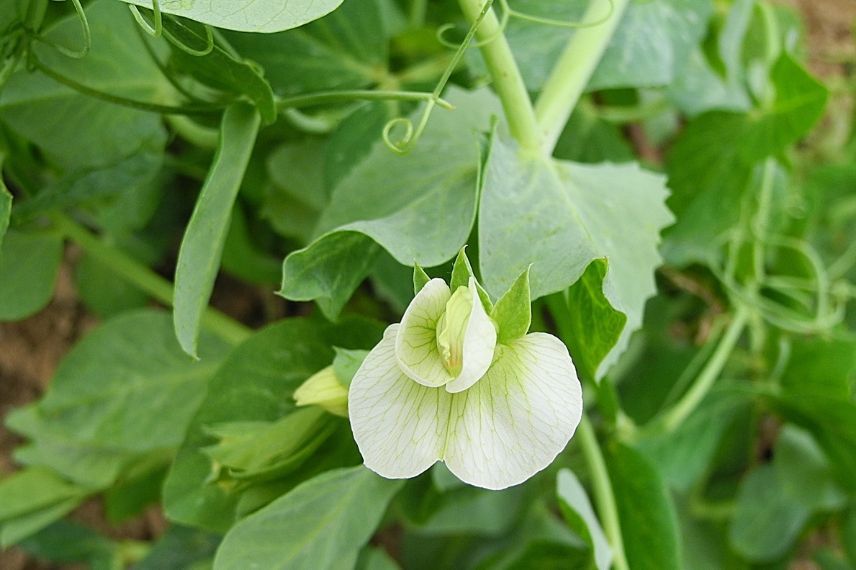
Legumes make excellent green manures!
Please note: Chemical fertilisers or soil amendments are not a good solution for addressing soil fertility problems in the medium to long term. The best approach is always to create natural soil with… natural materials: wood, RCW, dead leaves, organic waste…
Read also
What is soil pH?Does a garden necessarily have to be grown in rich soil?
Poor soil is sometimes a blessing
Paradoxically, biodiversity in botany, and therefore the resulting animal biodiversity, is greatly reduced in rich soil. In fact, on heavily amended or naturally rich soil, a short series of plants known as nitrophilous species (Hogweeds, Nettles, etc.) will take over from other species, reducing botanical diversity.
Some nature lovers work themselves to the bone or spend a fortune trying to impoverish part of their garden in order to create an area with high biodiversity value: this is known as a biodiversity “hotspot”. So, if you love nature and have poor soil, pop the champagne! It will be an opportunity to establish a wildflower meadow or simply let nature take its course and wait for native flowers to arrive naturally in your garden.
A vegetable garden on poor soil?
Growing vegetables requires a great deal of nutrients to provide us with quality produce. Imagine what a courgette plant must “eat” to produce a vegetable as long as your arm in just a few days! The quickest solution if you have poor soil is to… not grow on it. Instead, opt for alternative growing techniques: on raised mounds, using the lasagne method or in a raised bed filled with potting compost. There is no shortage of solutions…
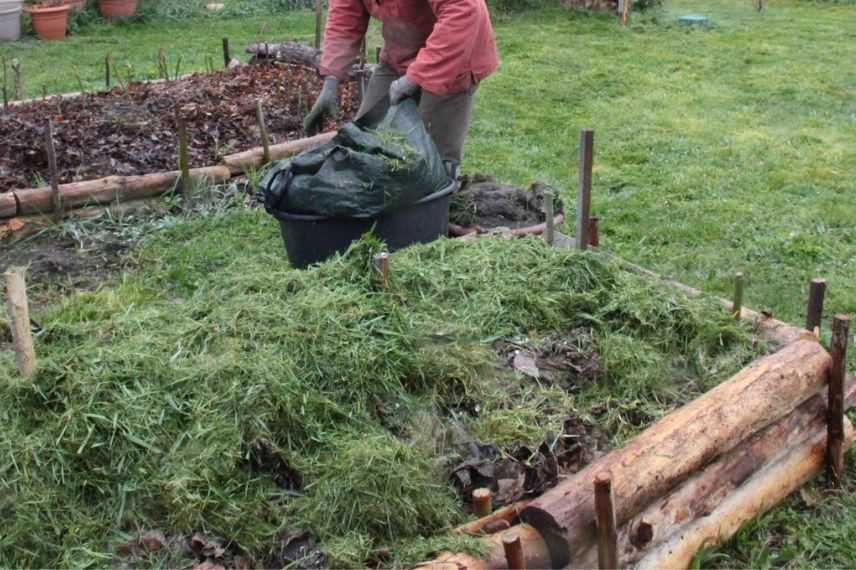
Creating a lasagne mound for growing vegetables
Plants suited to poor soils
Trees and shrubs
Some trees and shrubs like growing in poor soil: Scots pine, oak, juniper, broom, serviceberry, wayfaring tree, sea buckthorn and lavender…
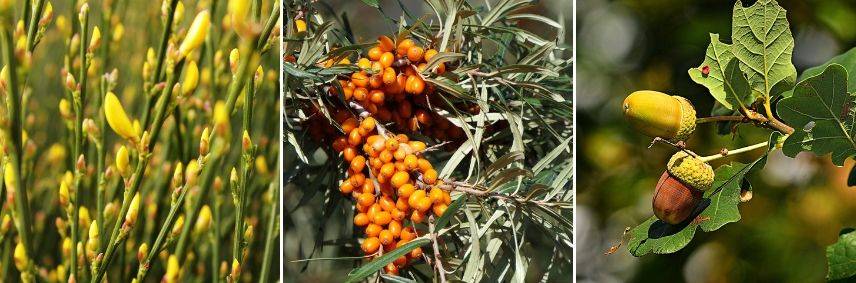
A few trees and shrubs suited to poor soil: Broom, Sea buckthorn and Oak
Not forgetting Mediterranean herbs: thyme, savoury, rosemary…
Perennials and annuals
Many flowers thrive in poor soil: rose campion, wallflower, dusty miller, spurge, honeysuckle, mullein, purpletop vervain, garden verbena, oregano… And even grasses: feather grass, fescue…
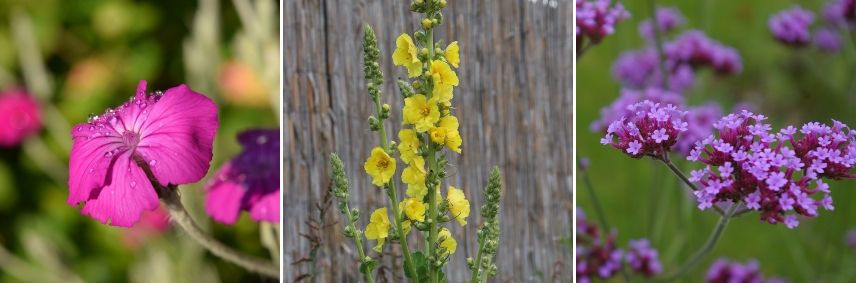
A few perennials and annuals suited to poor soil: Rose campion, Mullein and Purpletop vervain
In the vegetable garden and orchard
Some vegetables can still be grown successfully: garlic, onion, shallot, lettuce, asparagus, orache and goosefoot. When it comes to fruit, you could try strawberries, grapevines, of course, and why not a somewhat forgotten fruit tree from the French countryside, the cornelian cherry.
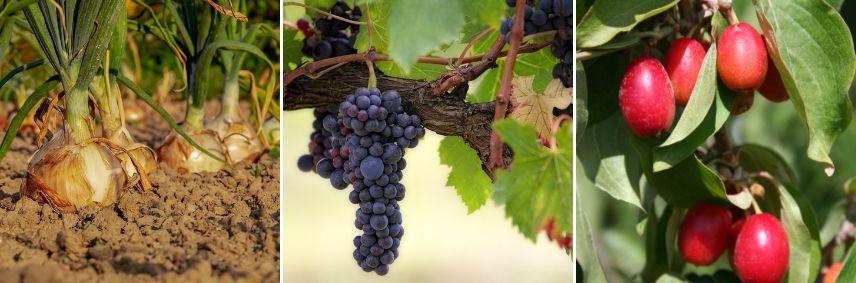
A few vegetables and fruits suited to poor soil: onions, grapevines and the cornelian cherry
- Subscribe!
- Contents
This form is protected by reCAPTCHA - the Google Privacy Policy and Terms of Service apply.

































Comments