Basil Cinnamon organic seeds - Cinnamon basil
Basil Cinnamon organic seeds - Cinnamon basil
Ocimum basilicum Cannelle
Basil
Back-to-school special offer!
Get €10 off for every €50 you spend! And get up to €40 off on a single order.
How does it work?
1. Shop your favourites
Add your favourite plants to your basket. For every €50 you spend (excluding delivery charges, store credit and the plastic-free option), you’ll receive a €10 voucher.
€50 spent = €10 voucher
€100 spent = €20 voucher
€150 spent = €30 voucher
€200 spent = €40 voucher
2. Place your order
Once your basket reaches one of the spending thresholds, place your order. You can even choose your delivery date!
3. Receive your voucher
As soon as your order has been shipped, you’ll receive an email containing your personal voucher code and its value.
4. Use it on your next order
Your voucher is valid for 90 days from the date you receive it. It can be used once only, on a new order worth at least the value of the voucher, excluding delivery charges.
Please note: Vouchers can be combined with other offers, but cannot be split or refunded.
Home or relay delivery (depending on size and destination)
Important: You may be charged customs duties by your country’s customs authorities upon delivery.
Schedule delivery date
and select date in basket
This plant carries a 6 months recovery warranty
More information
We guarantee the quality of our plants for a full growing cycle, and will replace at our expense any plant that fails to recover under normal climatic and planting conditions.
Description
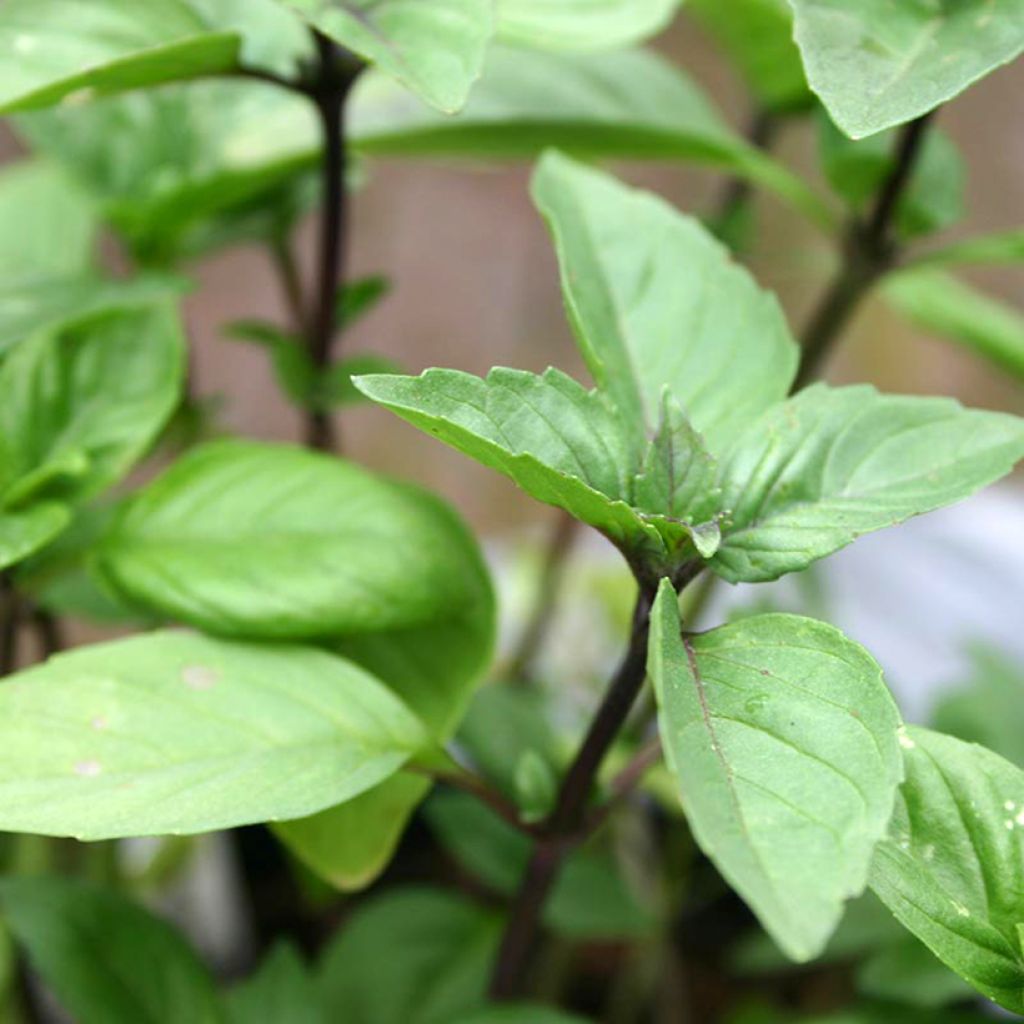
Organic Cinnamon Basil (Ocimum basilicum ‘Cinnamon’) is a decorative and flavoursome variety of aromatic basil, prized for its unique scent of spicy cinnamon. Its purple stems, narrow dark green leaves and nectar-rich flower spikes add a vibrant touch to the kitchen garden, herbaceous borders and balcony containers. In cooking, its warm, slightly sweet aroma pairs particularly well with fruits, herbal teas, desserts and Mexican-inspired dishes. Sow from March to April for a harvest from late May to October.
Cinnamon basil belongs to the Lamiaceae family, which includes mint, sages and thyme. The botanical species is Ocimum basilicum. This widely cultivated species is native to tropical regions of Asia and Africa, now naturalised and grown in many parts of the world, particularly around the Mediterranean basin. It is a herbaceous annual or short-lived perennial plant, very sensitive to cold.
The ‘Cinnamon’ cultivar, marketed as cinnamon basil, is one of the aromatic varieties. It is an old selection, widely distributed and extensively cultivated in Mexico and Central America, studied for its essential oil composition. Its main distinctive character compared to 'Large Green' sweet basil is the high methyl cinnamate content of its essential oil; this molecule is responsible for its cinnamon and clove fragrance.
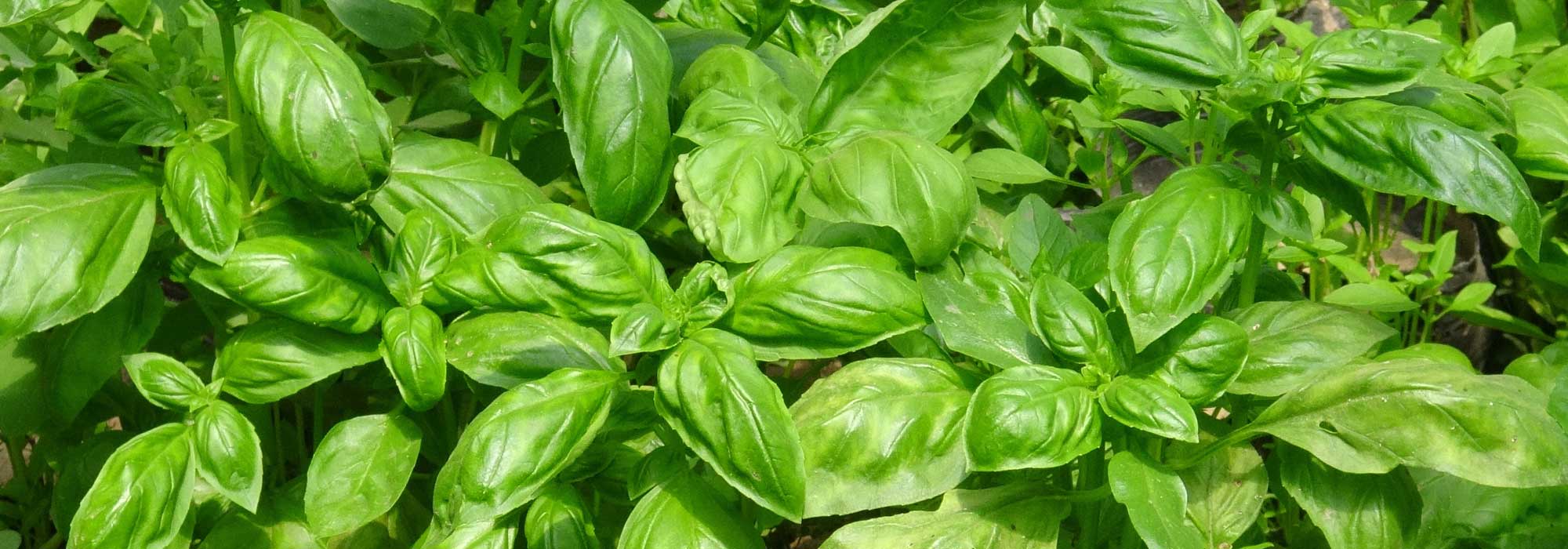
The plant has a bushy, upright habit, with square, fairly rigid, purple to brownish-purple stems. In open ground, it reaches 50 to 70 cm in height and 30 to 50 cm in width in one season. In a pot, its height is between 40 and 60 cm. The plant self-seeds if a few flower spikes are left to fruit. The leaves are single, opposite, elliptical to lanceolate in shape, quite narrow, with a finely toothed margin. They are medium to dark green, traversed by reddish-purple veins, with a slightly waffled surface due to the recessed veins. The entire above ground part is destroyed by frost. Flowering occurs from July to September. The small, pinkish to pale violet, tubular flowers are grouped into compact terminal spikes.
Cinnamon basil has an aromatic signature appreciated in herbal teas, desserts, and also some traditional Mexican preparations. In several regions of Latin America, fresh or dried leaves are used in digestive infusions and scented pot-pourri blends.
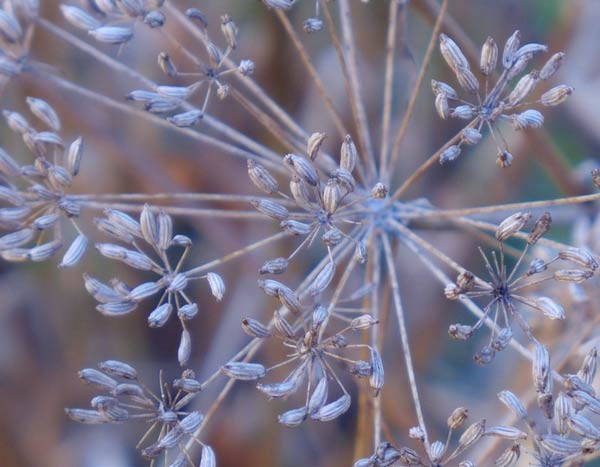
Harvest: Between July and October, harvest cinnamon basil as needed and as it develops.
Storage: basil keeps for a few days in a cool place in a glass of water. It can be dried in the shade and stored in an airtight jar, but then loses some of its scent.
The Gardener's Tip: Weed and hoe regularly. Pinch out flowering stems so that new shoots develop. The scent of its leaves repels mosquitoes.
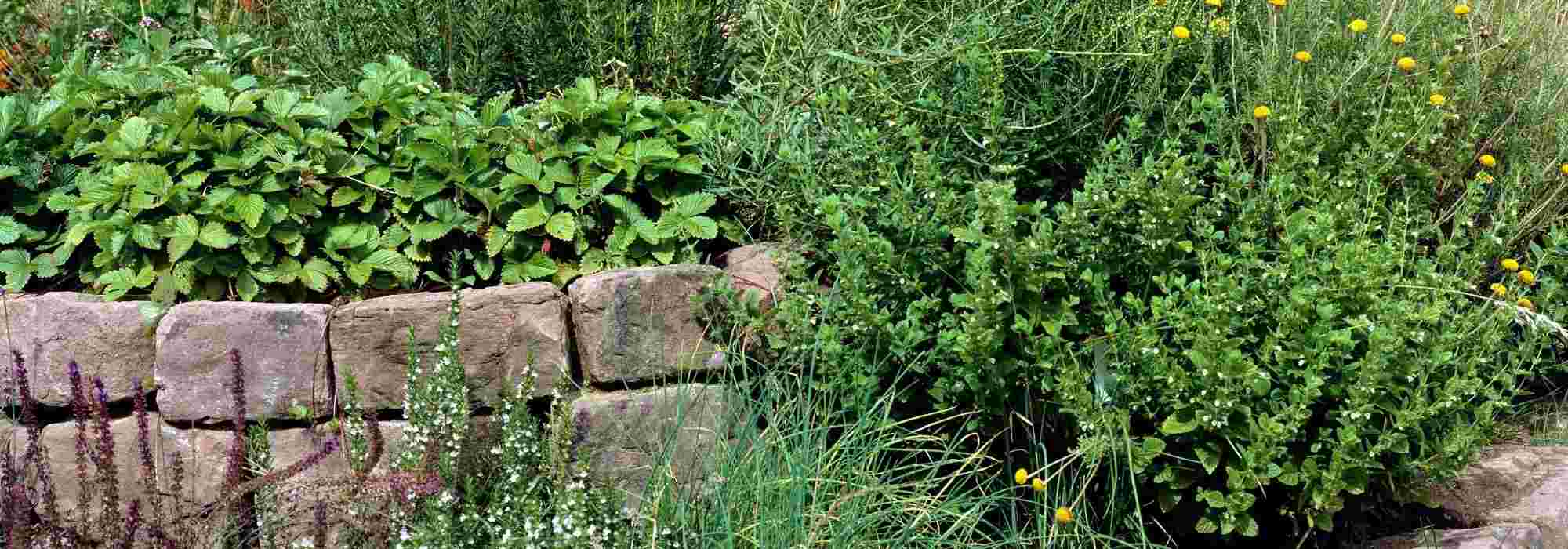
Uses in the garden or in pots: Place it near the house, in a herb square, a culinary kitchen garden or large containers on the terrace, to enjoy its scent at the slightest touch. Plant with tomatoes, peppers and aubergines. In a herbaceous border, it can be combined with a purple basil like ‘Dark Opal’, an anise hyssop ‘Golden Jubilee’, a lemon verbena (Aloysia citrodora) or a pineapple sage (Salvia elegans) to create a very fragrant display with warm colours. In a pot, pair it with edible flowers (nasturtiums, marigolds) for a flavoursome and ornamental blend within easy reach.
Harvest
Plant habit
Foliage
Botanical data
Ocimum
basilicum
Cannelle
Lamiaceae
Basil
Ocimum basilicum ‘Cinnamon’
Cultivar or hybrid
Perennial
Planting and care
Sowing and care:
Cinnamon Basil likes moist, loose soil, rich in humus. This plant also requires a partially shaded position to thrive. Basil is sensitive to direct sun, which tends to scorch the leaves. Basil is typically planted in the vegetable garden, but it adapts very well to a pot in a conservatory or on a balcony.
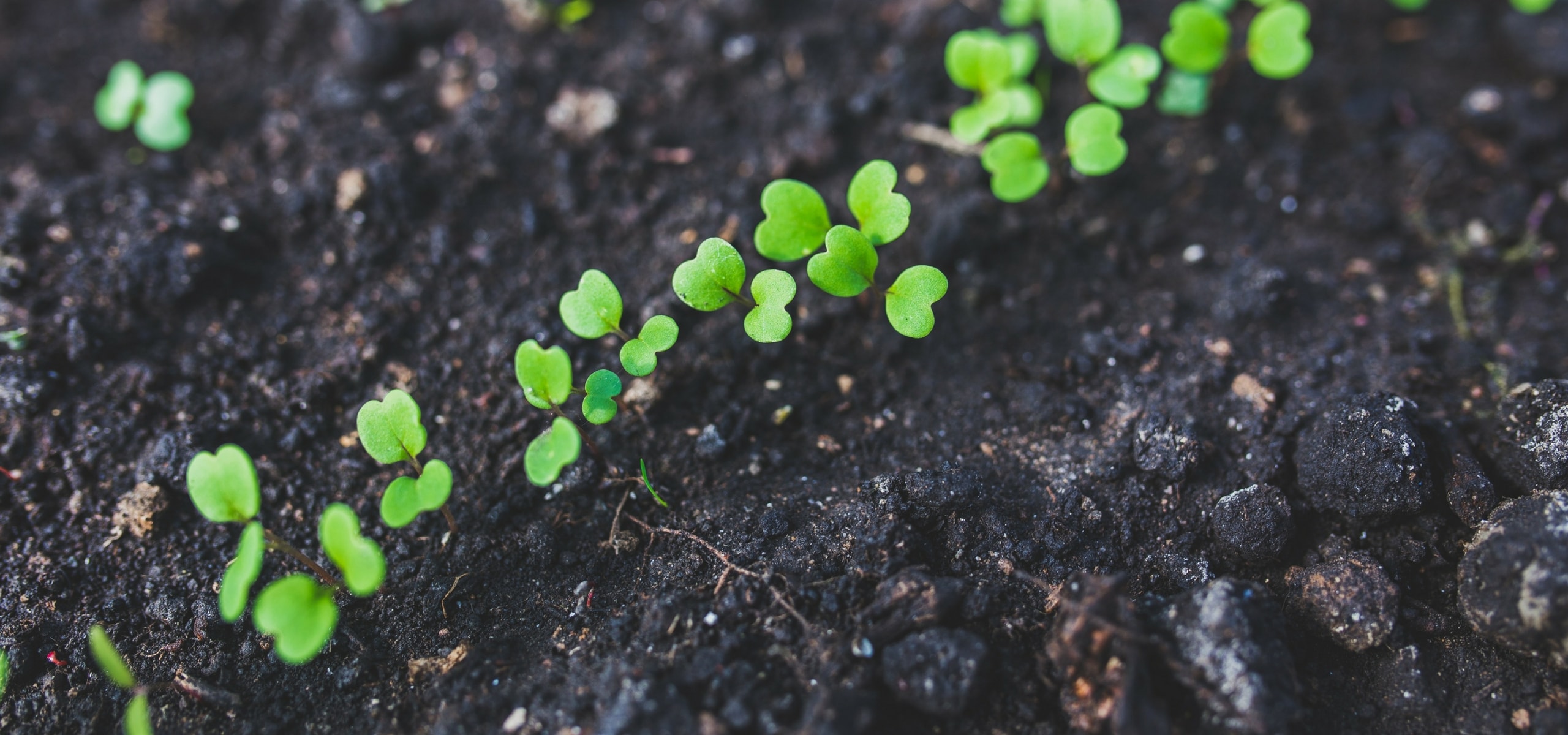
Sowing: Sow in spring, during March, April, and May, directly in situ. Sow well-spaced in a row, in a flat furrow approximately 10 cm wide and 2 cm deep. The rows should be spaced 25 cm apart. Cover the seeds with the soil removed along the furrow, then water. Germination takes between 10 to 15 days. As soon as the first young plants appear, thin lightly. The more you stagger the sowing, the longer the harvest period will be. You can sow in a pot for later transplanting, once the young plant reaches 10 cm (4 to 6 leaves) in height. Basil can remain in a pot to be readily available in the kitchen if it is well-lit.
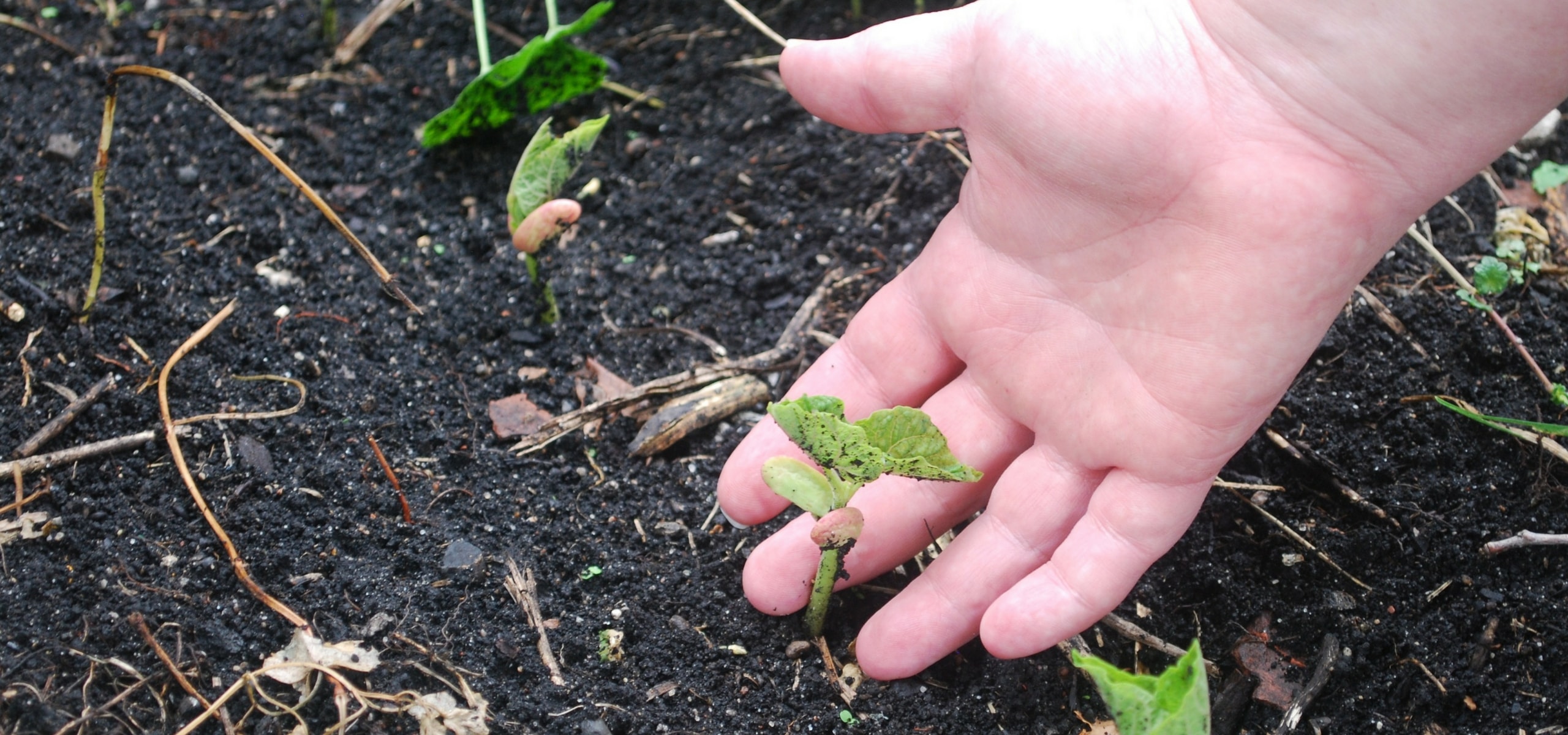
Care: Basil simply requires a watering (or a preventive mulch) when the soil dries out. It is the lack of water (water stress) that can cause basil to bolt to seed. Pinch off the inflorescences as soon as they appear to encourage leaf production. Basil is susceptible to powdery mildew, grey mould, and aphids. To protect against moulds and powdery mildew, reduce watering and thin out the planting. For aphids, you can treat the young plants with a mixture of water and olive oil.
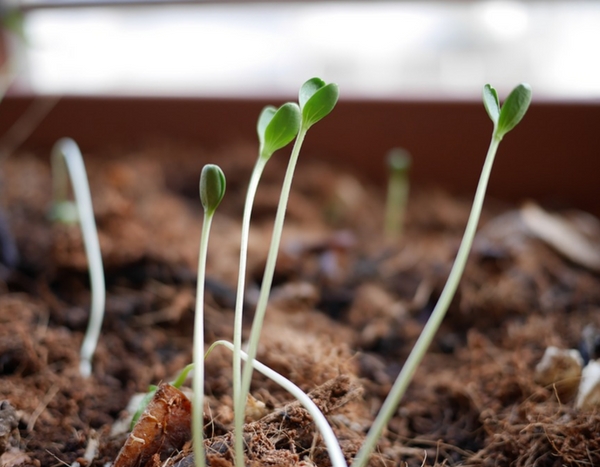
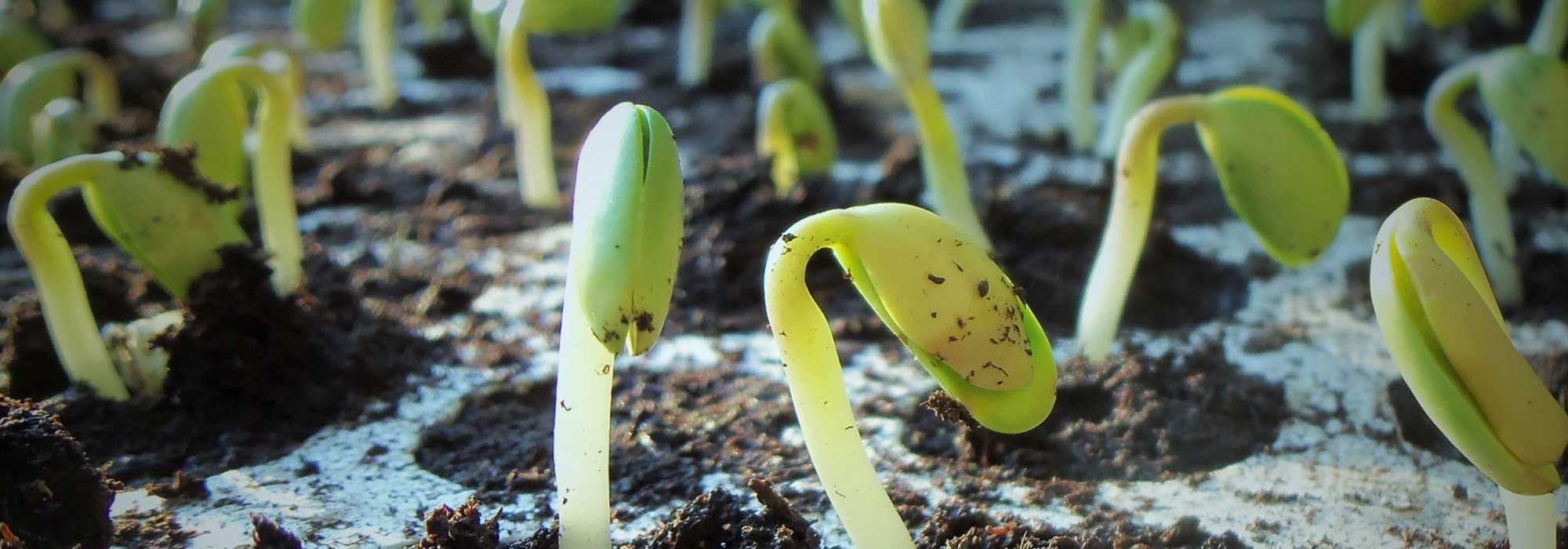
Seedlings
Care
Intended location
Planting & care advice
-
-
-
-
-
-
-
-
This item has not been reviewed yet - be the first to leave a review about it.
Recently viewed products
Haven't found what you were looking for?
Hardiness is the lowest winter temperature a plant can endure without suffering serious damage or even dying. However, hardiness is affected by location (a sheltered area, such as a patio), protection (winter cover) and soil type (hardiness is improved by well-drained soil).

The flowering period indicated on our website applies to countries and regions located in USDA zone 8 (France, the United Kingdom, Ireland, the Netherlands, etc.)
It will vary according to where you live:- In zones 9 to 10 (Italy, Spain, Greece, etc.), flowering will occur about 2 to 4 weeks earlier.
- In zones 6 to 7 (Germany, Poland, Slovenia, and lower mountainous regions), flowering will be delayed by 2 to 3 weeks.
- In zone 5 (Central Europe, Scandinavia), blooming will be delayed by 3 to 5 weeks.
In temperate climates, pruning of spring-flowering shrubs (forsythia, spireas, etc.) should be done just after flowering.
Pruning of summer-flowering shrubs (Indian Lilac, Perovskia, etc.) can be done in winter or spring.
In cold regions as well as with frost-sensitive plants, avoid pruning too early when severe frosts may still occur.
The planting period indicated on our website applies to countries and regions located in USDA zone 8 (France, United Kingdom, Ireland, Netherlands).
It will vary according to where you live:
- In Mediterranean zones (Marseille, Madrid, Milan, etc.), autumn and winter are the best planting periods.
- In continental zones (Strasbourg, Munich, Vienna, etc.), delay planting by 2 to 3 weeks in spring and bring it forward by 2 to 4 weeks in autumn.
- In mountainous regions (the Alps, Pyrenees, Carpathians, etc.), it is best to plant in late spring (May-June) or late summer (August-September).
The harvesting period indicated on our website applies to countries and regions in USDA zone 8 (France, England, Ireland, the Netherlands).
In colder areas (Scandinavia, Poland, Austria...) fruit and vegetable harvests are likely to be delayed by 3-4 weeks.
In warmer areas (Italy, Spain, Greece, etc.), harvesting will probably take place earlier, depending on weather conditions.
The sowing periods indicated on our website apply to countries and regions within USDA Zone 8 (France, UK, Ireland, Netherlands).
In colder areas (Scandinavia, Poland, Austria...), delay any outdoor sowing by 3-4 weeks, or sow under glass.
In warmer climes (Italy, Spain, Greece, etc.), bring outdoor sowing forward by a few weeks.
Shipping country and language
Your country of residence may be:
Your country of residence is:
For a better user experience on our website, you can select:
Your shipping country:
-
 Austria
-
 Belgium
-
 Bosnia & Herzegovina
-
 Bulgaria
-
 Croatia
-
 Cyprus
-
 Czechia
-
 Denmark
-
 Estonia
-
 Finland
-
 France
-
 Germany
-
 Greece
-
 Hungary
-
 Iceland
-
 Ireland
-
 Italy
Italy
-
 Latvia
-
 Liechtenstein
-
 Lithuania
-
 Luxembourg
-
 Malta
Malta
-
 Netherlands
-
 Poland
-
 Portugal
-
 Romania
-
 Serbia
-
 Slovakia
-
 Slovenia
-
 Spain
Spain
-
 Sweden
-
 Switzerland
Language:
-
French
-
 English
-
Spanish
-
Italian
-
German
-
Portuguese
-
Dutch
-
Finnish
My Account
Hello
My wish lists
My cart
Log in / Register
Existing customer?
This form is protected by reCAPTCHA - the Google Privacy Policy and Terms of Service apply.
New customer?
Create an account to track your orders, access our customer service and, if you wish, make the most of our upcoming offers.