





























How to pair the Parrotia or Iron Tree?
A multicoloured tree in autumn
Contents
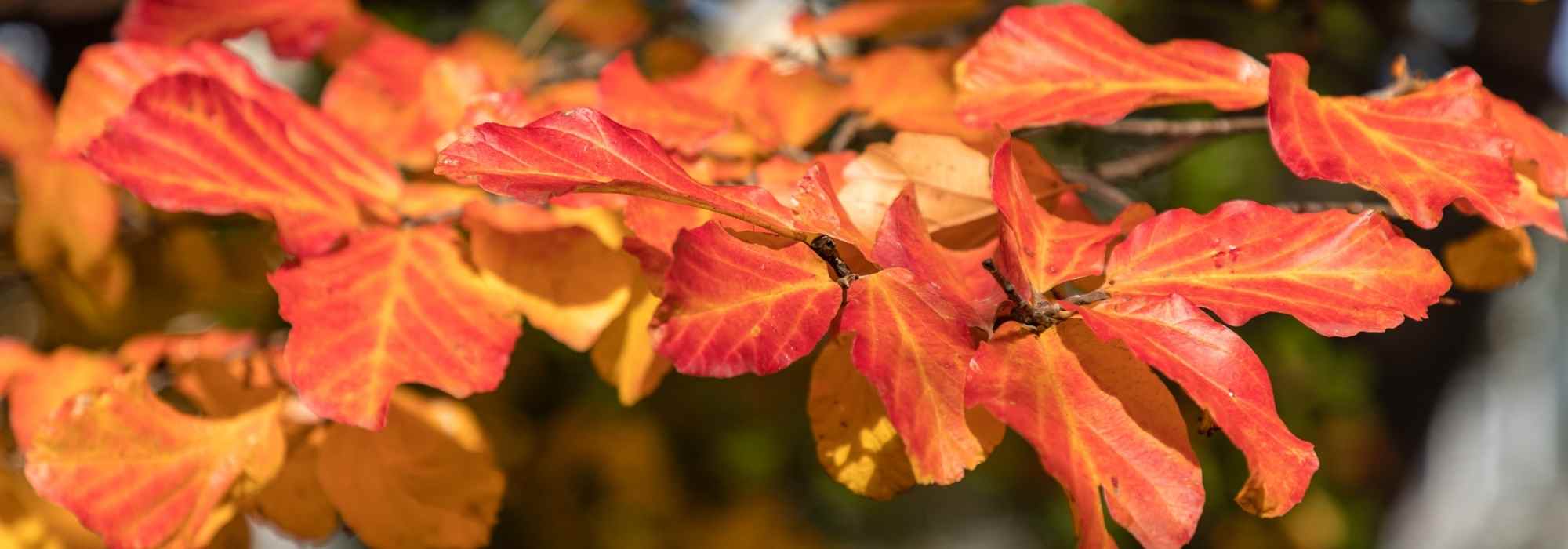
The Parrotia persica or Persian Ironwood is one of the most remarkable small trees in autumn: its foliage turns green, yellow, red, and orange. However, it also adds presence to the garden during other seasons, thanks to its particular habit, broader than tall, its bark that exfoliates over the years, and its subtle flowering that occurs very early in spring.
With unwavering hardiness, free from diseases and requiring virtually no maintenance, the Persian Ironwood adapts to all good fresh, well-drained soils. It fears only two things: extreme heat and lack of water!
→ In a grove, as part of a hedge, or as a specimen, let’s discover how to associate the Parrotia persica!

Breathtaking colours in autumn
If you appreciate the warm tones of autumn, why not create a grove of trees and bushes solely for their autumn colours? The idea is to choose varieties that are, if possible, more compact than the typical species.
In this regard, the Parrotia persica ‘Persian Spire’ takes up little space in width, making it perfect to insert into a grove alongside a Liquidambar styraciflua ‘Gum Ball’, a variety with reduced growth and multicoloured foliage in autumn. A Fothergilla major will complete the picture while also enhancing spring with its charming flowering. If you are looking for another representative of the Hamamelidaceae family to accompany the Parrotia and Fothergilla, obviously opt for a Hamamelis. Like this lovely Hamamelis vernalis ‘Amethyst’ with scarlet foliage in autumn followed by purple-pink winter flowering.
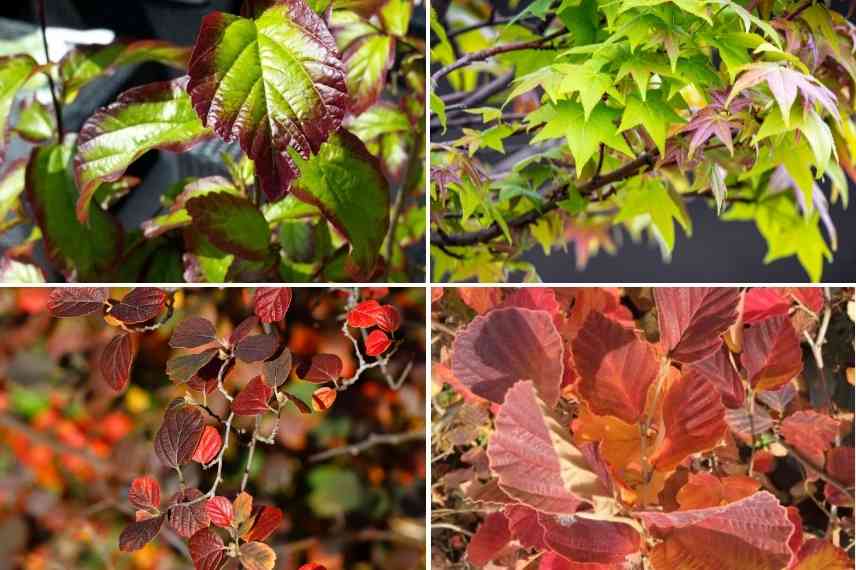
Parrotia persica ‘Persian Spire’, Liquidambar styraciflua ‘Gum Ball’, Fothergilla major and Hamamelis vernalis ‘Amethyst’
Read also
The flowering of Parrotia persicaA four-season hedge
It is entirely possible to incorporate an ironwood tree into a free and slightly wild hedge. The Parrotia persica ‘Vanessa’ takes up little space in width, making it perfect for a free hedge of colourful shrubs with its foliage and flowering.
The season of interest for Parrotias is primarily autumn. Therefore, to maintain year-round interest in your hedge, you will need to play on spring and summer flowering, autumn foliage colourations, and winter presence through colourful bark or unique habits.
The Amelanchier in spikes is perfect for a free hedge: it is beautiful during flowering and bud burst in spring, and its foliage takes on lovely hues in autumn. For summer, a simple yet effective Buddleia davidii ‘Empire Blue’ will do the trick. This superb variety blooms from July to September with long blue spikes. Almost beautiful all year round, the Sambucus nigra ‘Black Lace’ features almost black, finely cut foliage, a lovely pink spring flowering, followed by black, edible fruits. To complete the ensemble, you can abundantly plant any decorative wood and foliage dogwoods that come to hand: a Cornus alba‘Aurea’ with golden foliage all season and bright red branches in winter, and Cornus sericea ‘Cardinal’ whose fresh green foliage eventually takes on reddish hues in autumn before also giving way to red wood in winter.
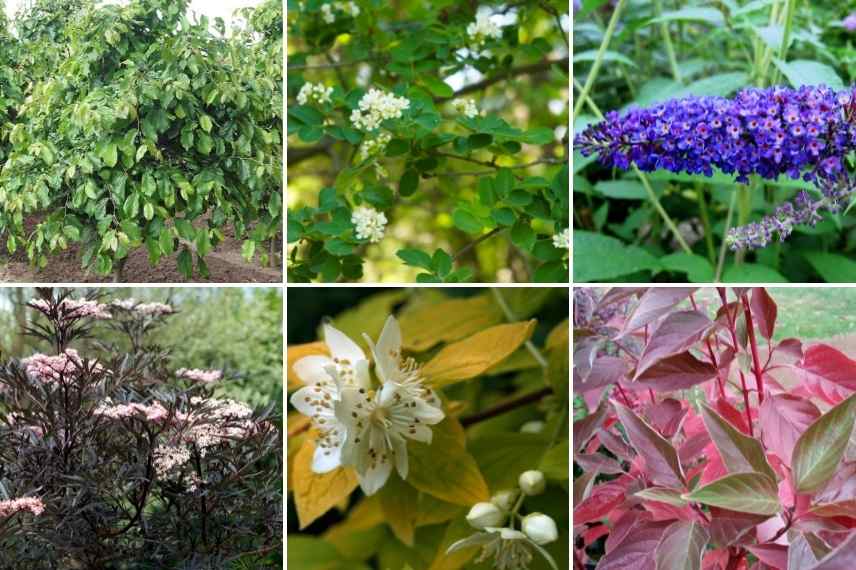
Parrotia persica ‘Vanessa’, Amelanchier stricta, Buddleia davidii ‘Empire Blue’, Sambucus nigra ‘Black Lace’, Cornus alba ‘Aurea’ and Cornus sericea ‘Cardinal’
Discover other Parrotia - Persian Ironwood
View all →
Available in 2 sizes
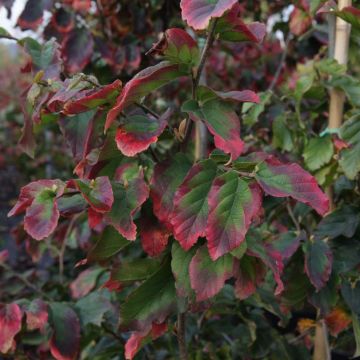
Available in 2 sizes
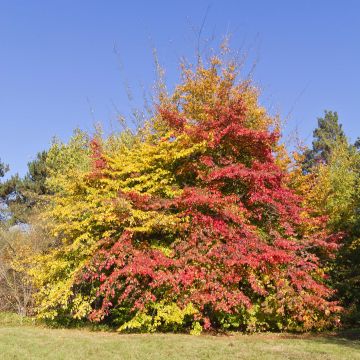
Available in 2 sizes
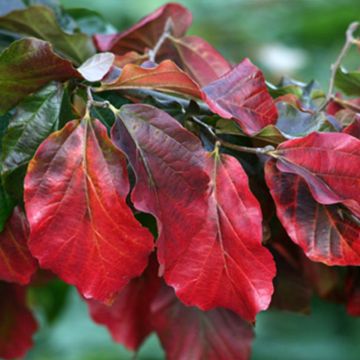
Available in 1 sizes
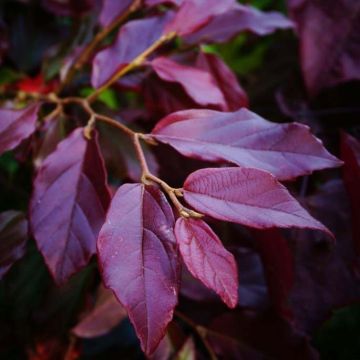
Available in 2 sizes
Available in 2 sizes
A beautiful tree in isolation
The type species Parrotia persica takes up a bit of space in width over time (10 metres!) but it is also a very beautiful small tree to grow in isolation to allow it to reach its full extent.
Proudly standing in the centre of an open area in your garden, it will quickly become a focal point that will warm our hearts in autumn when it is covered in gold and fire. Moreover, it will provide beneficial shade for many lovely plants or even a nice bench where you can rest.
If the soil is sufficiently acidic, you can enhance its base with heathers, azaleas, Leucothoes, or Pieris that will thrive in the shade of this beautiful tree. Simple perennial groundcovers like creeping bugle, Geranium macrorrhizum, or lesser periwinkle (Vinca minor) will also do wonderfully.
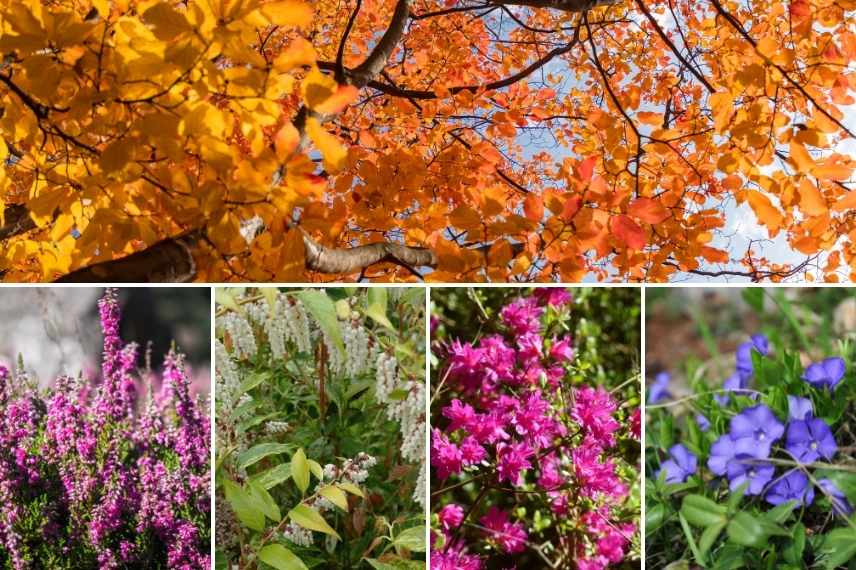
Parrotia persica in autumn. Below, heather, leucothoe, azalea, and periwinkle
Sycoparrotia: a rarity closely related to Parrotia persica
The Sycoparrotia semidecidua ‘Purple Haze’ is perfectly suited for this guide on “how to associate Parrotia?”. Indeed, it is a hybrid derived from the Chinese species Sycopsis sinensis and… the Parrotia persica. From its two parents, it has retained the best features, namely an autumn semi-evergreen foliage of stunning beauty ranging from golden yellow to bright orange, scarlet red, and even purple.
Like ironwood trees, the Sycoparrotia can be planted as a specimen in a small garden, in a free-form hedge, or even in a shrubbery. It will grow up to 4 m tall and about 5 m wide.
We have already discussed a pairing for acidic soil, but if your soil is not acidic, you can still accommodate a Parrotia or a Sycoparrotia.
In neutral or slightly calcareous, well-drained soil, pair it for example with a Cotinus coggygria ‘Grace’, with a Cercidiphyllum japonicum ‘Rotfuchs’ (more compact than the typical species), with a Winged Spindle (Euonymus alatus), a few Nandinas, large autumn asters, and Japanese anemones to create a vibrant thicket from September to November.
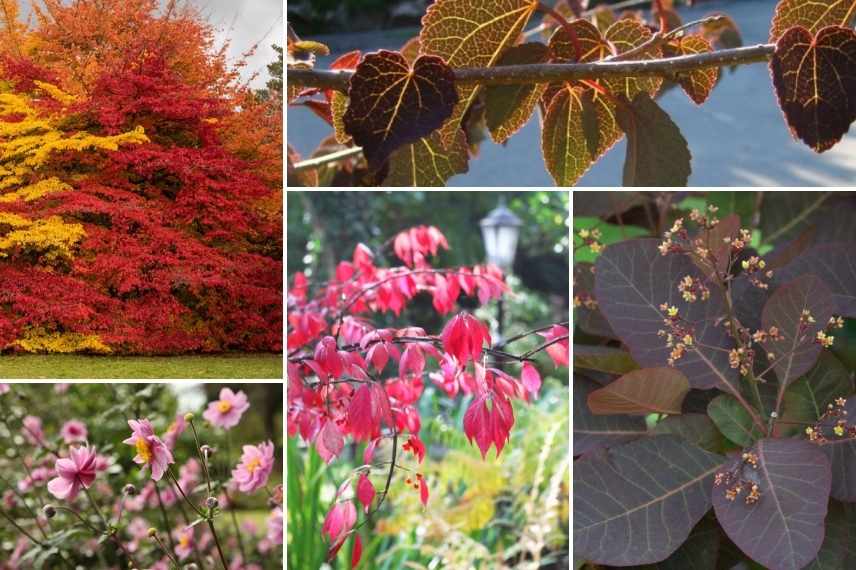
Sycoparrotia semidecidua ‘Purple Haze’, Cercidiphyllum japonicum ‘Rotfuchs’ (© Wendy Cutler), Japanese Anemones, Euonymus alatus, and Cotinus coggygria ‘Grace’
- Subscribe!
- Contents
![[plant id="1234" placement="garden"]](https://en.promessedefleurs.eu/blogwp/wp-content/uploads/2022/08/Associer-le-Parrotia-ou-Arbre-de-fer.jpg "Associate the Persian ironwood or Iron Tree.")
Comments