





























How to plant a mycorrhizal truffle tree?
All our tips for a successful truffle orchard
Contents
Planting a mycorrhizal truffle tree requires specific knowledge to ensure the success of a truffle orchard. Indeed, the cultivation of truffles must face a number of constraints: choice of the host tree and truffle species, quality and type of soil, climate, and exposure. Furthermore, one must be patient to finally harvest the first fresh truffles! While the truffle oak is the most famous, be aware that many other trees can be used in truffle cultivation. Discover our tips for the preparation of your truffle orchard and for planting your mycorrhizal tree.

The host tree and the truffle
Use high-quality truffle plants, certified by INRAE (formerly INRA) or CTIFL, to ensure a good yield from your truffle orchard. Many species of mycorrhizal truffle trees are available. The most commonly used are oak and hazel, but you can also opt for Atlas cedar, common hornbeam, white rockrose, common beech, Austrian or Aleppo pine, and small-leaved lime. Preferably choose species that are naturally present in your region. You can find your mycorrhizal truffle tree from certain specialised nurseries. Truffle plants aged between 1 and 3 years are available in clumps or pots of various sizes. Depending on the nature and composition of your soil, the climatic conditions of your geographical location, and the species you are planting, you may be able to harvest your first truffles after 5 to 8 years.
There are different types of truffles: the black truffle from Périgord or black diamond (Tuber melanosporum), the Burgundy truffle (Tuber uncinatum), the summer truffle (Tuber aestivum), and the white truffle (Tuber magnatum). Each of these has its own soil preference (physical and chemical characteristics of the soil). To avoid making a mistake in your choice, specialised nurseries will be able to advise you.
⇒ To learn more about the different truffles, also check our sheet: How to grow truffles in the garden?
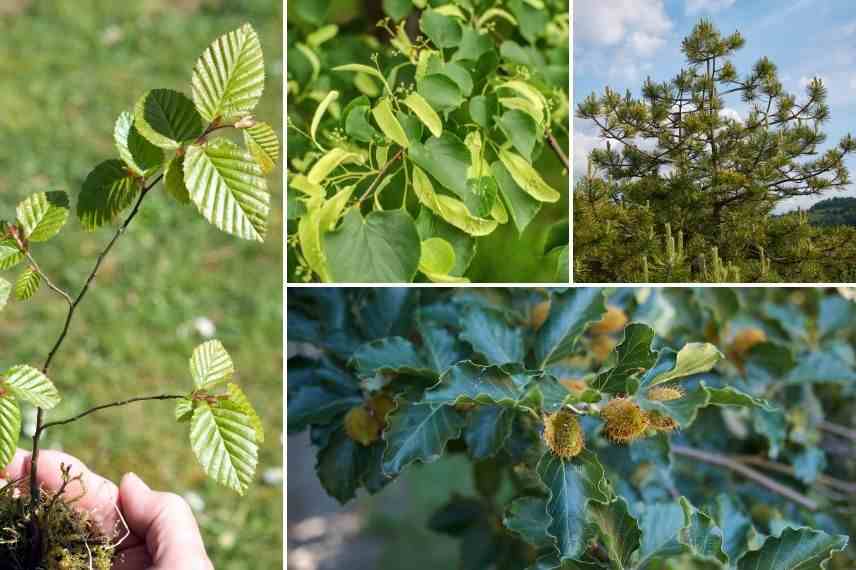
On the left, a common hornbeam (Carpinus betulus); above, foliage and flowers of the small-leaved lime (Tilia cordata) and silhouette of the black pine (Pinus nigra); below, leaves and fruits of the common beech (Fagus silvatica)
Read also
How to grow truffles in the garden?What type of soil for a mycorrhizal truffle tree?
The soil must be aerated, draining, and calcareous. The topsoil layer should be at least 20 cm thick, as well as having excellent biological activity (presence of earthworms, insects, microfauna…). An acidic soil is not conducive to planting a truffle tree. Also consider the previous cultivation history of your land (use of plant protection treatments). A soil study is essential to select the genus of your truffle tree and the species of truffle best suited to your plot. Initially, conduct a test yourself to see if your soil is sufficiently calcareous. For this, use a soil pH testing kit. If the test reveals an alkaline result, you can then further your efforts and request a detailed soil analysis (measurement of pH, calcium content, and organic matter, among others) from a specialised laboratory. Expect to pay around 100 euros for a soil analysis in preparation for planting truffle trees.
What climate and exposure are suitable for planting a mycorrhizal truffle tree?
The geographical situation, topography, and climate are essential conditions to consider for successfully cultivating this mushroom that lives in symbiosis with trees.
- Prefer a calcareous soil located on a plateau or slightly sloping to avoid soil waterlogging due to rain runoff. Indeed, excess water is not conducive to the proper development of truffles.
- Ensure that the plot receives good sunlight for Périgord truffles (south, south-east, and south-west orientation). In contrast, Burgundy truffles grow in all exposures.
Truffle cultivation is possible in regions where weather conditions are moderately marked throughout the seasons. A temperate climate is suitable:
- no severe consecutive frosts or intense cold in winter,
- occasional rain in summer and short periods of drought (maximum 3 weeks),
- an autumn and spring without early or late frosts, where the soil does not dry out too much.
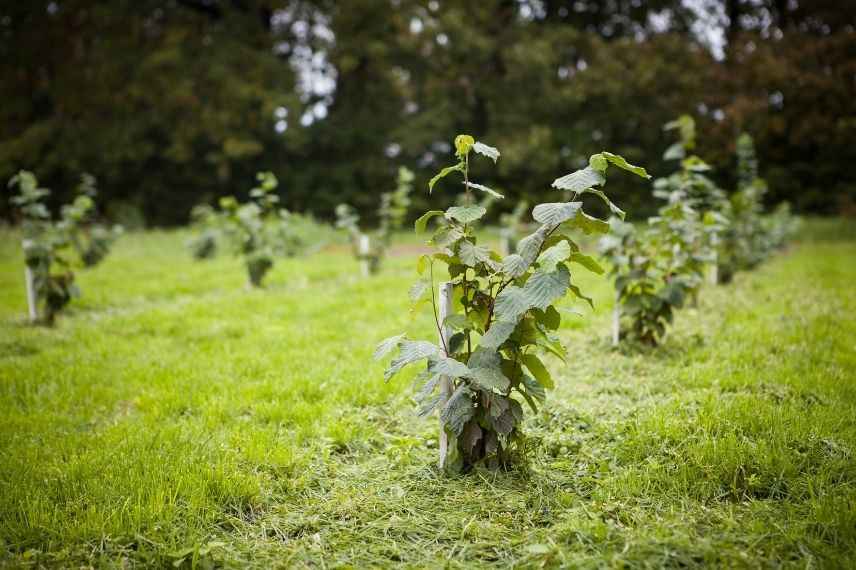
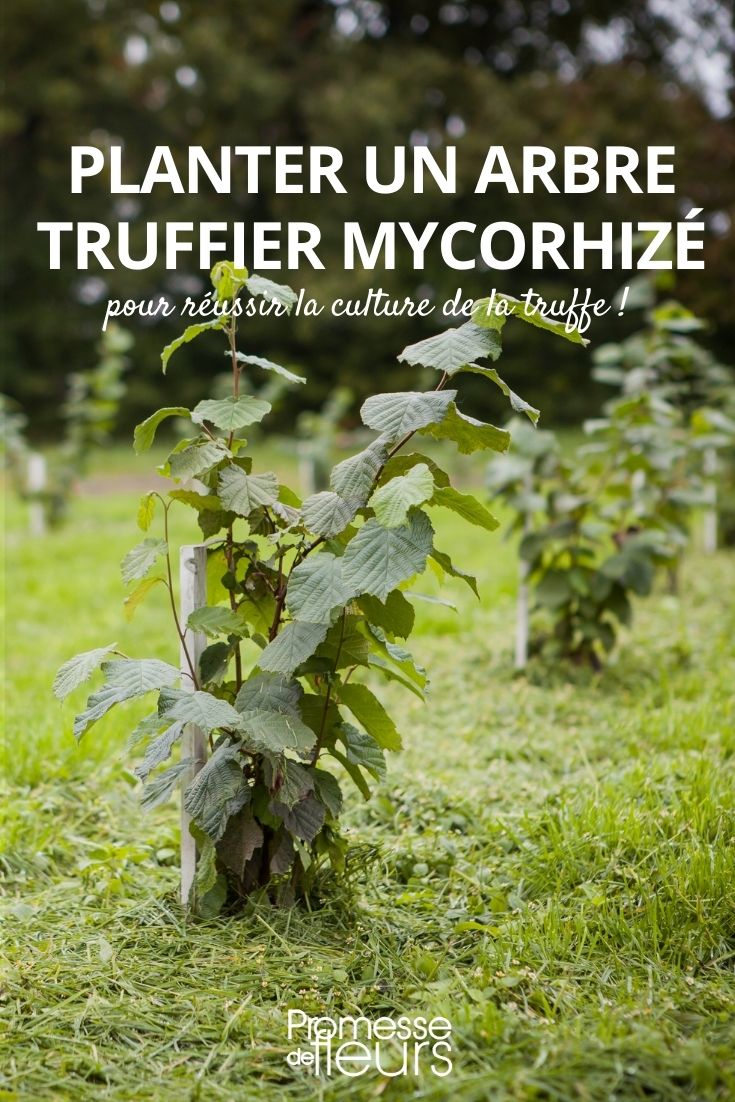
A hazelnut truffle field
How to plant a mycorrhizal truffle tree?
When to Plant a Truffle Tree?
Truffle trees are generally planted in autumn or at the end of winter, outside of frost periods (November-December or February-March).
Soil Preparation
If possible, two weeks before planting, dig the soil to a depth of 30 cm and over an area of 1 m² to aerate it well. Remove the larger stones. Refine the soil with a rake to achieve a crumbly texture. If necessary, use a tiller. Weed the area.
Be aware that you will achieve better results by planting several truffle trees in the same area, as this promotes the development of mycelium. In this case, maintain planting distances:
- For black truffle (Tuber melanosporum), summer white truffle (Tuber aestivum), and winter white truffle (Tuber magnatum), allow approximately 4 m between plants and 6 m between each row.
- For Burgundy truffle (Tuber uncinatum), space the plants 4 m apart in the row and allow 3 m between each row.
Planting the Truffle Tree
If you cannot plant your mycorrhizal truffle tree immediately after receiving it, store it in a dry place, protected from frost and not too warm (between 5 and 15 °C).
- Before removing your plant from its pot, soak it in a basin of water to moisten the root ball.
- Meanwhile, dig the planting hole. It should be approximately twice the volume of the root ball or container of the tree to be planted. If your soil is not stony, you can add fine gravel to the bottom of the hole for better drainage.
- Remove the root ball carefully so that it remains intact, to avoid damaging the mycorrhizal filaments.
- Gently place it in the hole without disturbing it. The collar should be level with the soil surface.
- Install a stake about ten centimetres from the plant.
- While holding the stake, fill the hole with fine soil from the location. Firm it down by hand and add soil to cover the collar with about 5 cm of soil. This hilling helps prevent the tree from producing too many suckers.
- Do not add any potting soil or fertiliser to your calcareous soil.
- Form a watering basin around the base and water generously (approximately 10 litres for a tree), but gently to avoid breaking the soil mound.
- Mulch around the base of the tree to prevent the growth of adventive plants (weeds) and water evaporation. Use biodegradable mulch mats that you will leave in place for the first 3-4 years after planting.
- Protect the young plant with a protection sleeve against rodents (hares, rabbits). If your area is regularly visited by larger game (wild boars, deer, etc.), the best protection is an electric fence.
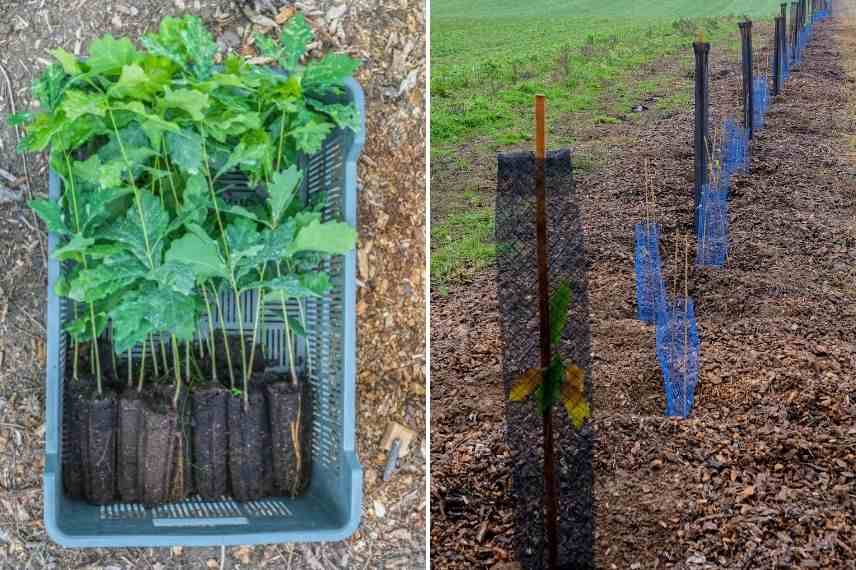
Take care not to damage the root ball of your truffle tree during planting. Remember to protect your young plants.
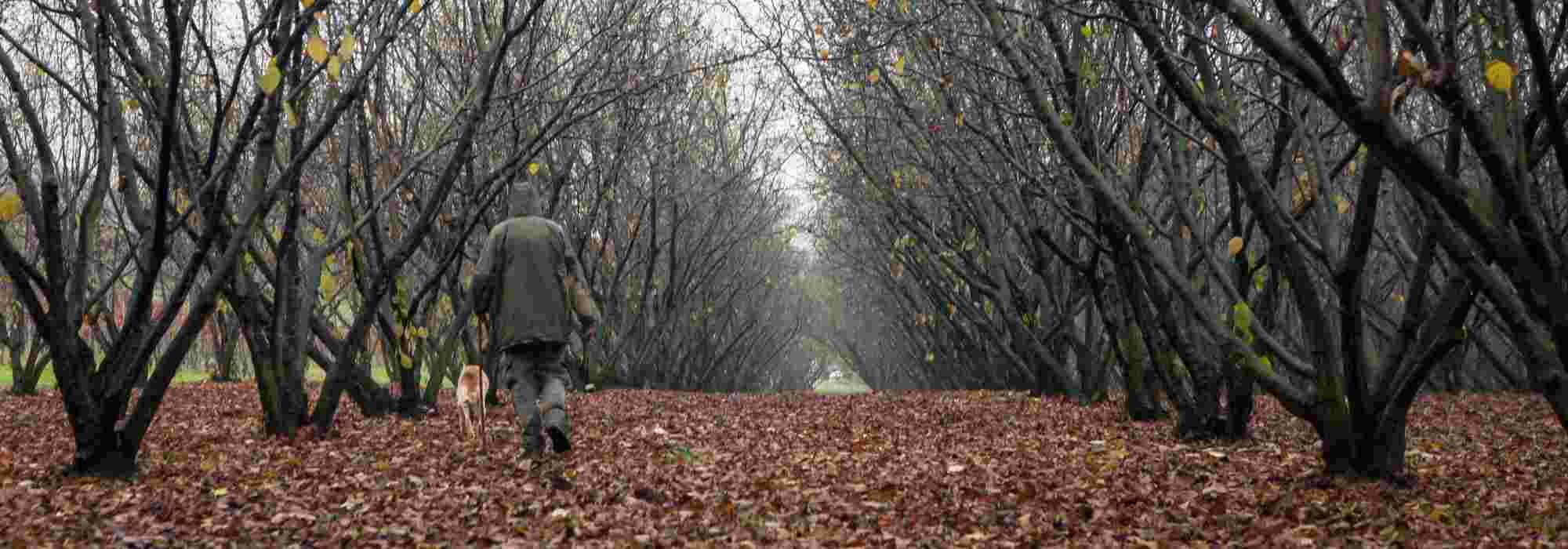
All that’s left is to nurture your truffle tree with patience. In the meantime, you can also adopt and train a good companion to help you find these treasures!

Truffle hunting with the help of dogs is called cavage.
- Subscribe!
- Contents
Comments