





























How to plant and care for water irises?
Where, when and how to plant different species?
Contents
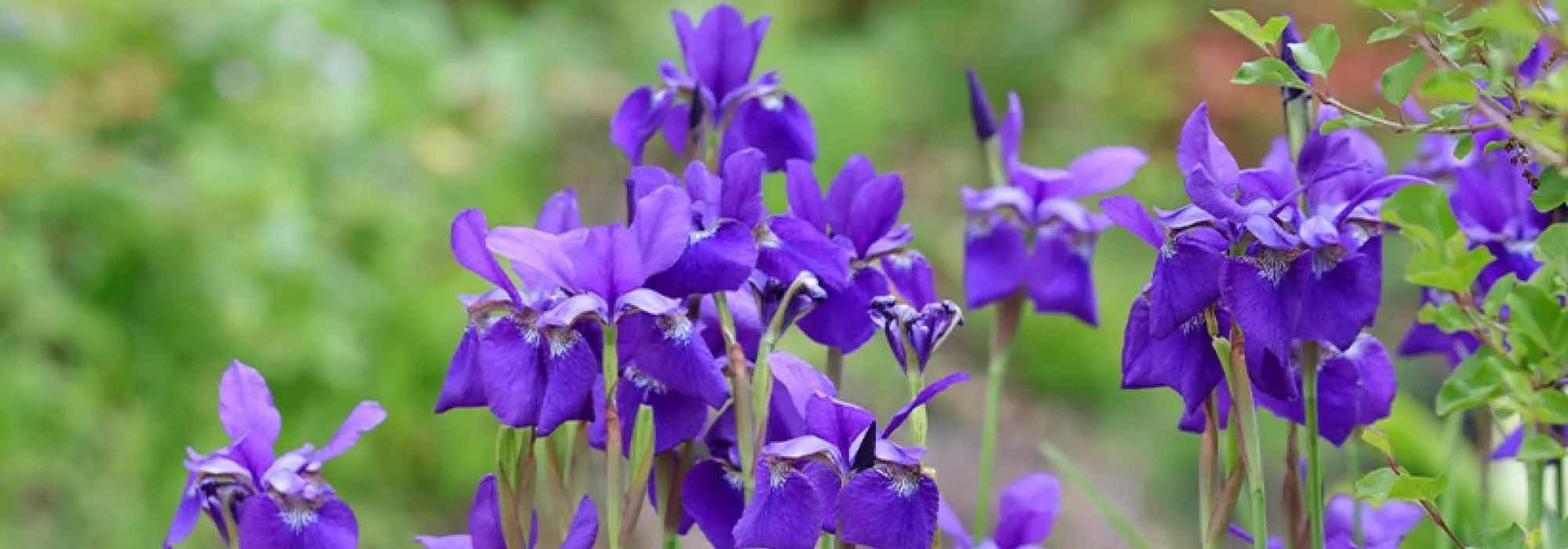
Among irises, various water iris species are an ideal choice for adding colour and structure to wetlands or a water garden. They offer delicate, graceful flowering in spring and summer. Among species that tolerate moist to waterlogged conditions, you’ll find Iris ensata or Japanese iris, Iris laevigata, Iris sibirica, Iris versicolor, Iris pseudacorus and Iris setosa. Each of these species has its own cultivation requirements, but all share a common need for moist soil and a certain amount of direct sunlight. This article guides you through the essential steps to choosing where to plant and how to care for these attractive irises.

When should you plant water irises?
The first question is simple: all water irises are planted at the same time. Water iris planting is ideally carried out in autumn, between October and November, to achieve flowering the following summer and to allow the rootstocks to establish well before winter. It is also possible to plant them in spring, between February and April, after the last frosts.
More precisely, it is best to plant during the irises’ rest period, from late September to mid-April, avoiding frost periods. In regions with cold winters, it is recommended to plant at the start of the growing season, late March or April, with flowering the following year. Planting in August can also be an alternative.
These guidelines also apply to semi-aquatic irises planted in ponds.
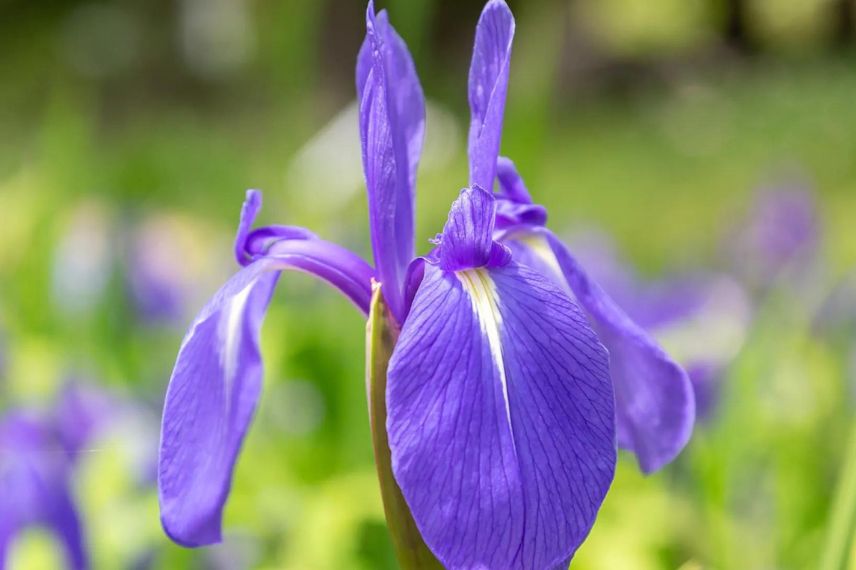
Iris laevigata is closely related in cultivation to Iris ensata, but it tolerates being slightly submerged
Read also
Japanese iris: to grow and care forWhere to plant them according to different species?
That is the question at the heart of the differences. Not all water iris species tolerate being submerged. Some are shoreline plants. They all share the trait of disliking calcareous soils. Some grow in light, well-drained soil, while others thrive in heavy clay soils.
Japanese iris or Iris ensata
The Iris ensata are easily planted in the garden. Marsh plants, they prefer damp, clayey or loamy soil, but can also thrive in good garden soil, provided that it remains constantly moist. However, they do not tolerate permanent immersion and must keep their roots dry during winter. On the bank, they can be planted 5 to 10 cm above water level. These irises prefer soils free of lime and slightly acidic. Plant Iris ensata in full sun, though they will also tolerate light shade. They require at least six hours of sun per day.
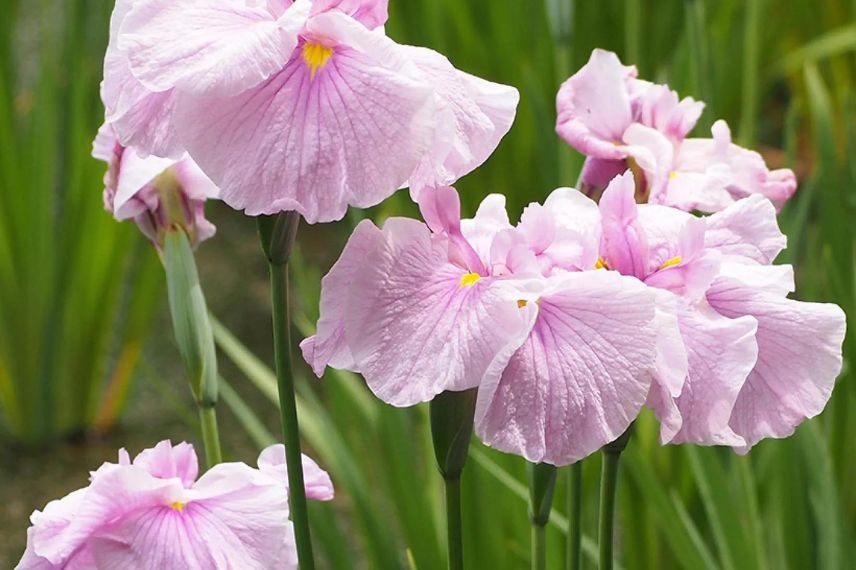
The Iris ensata ‘Dinner Plate Tub Tim Grob’ with large flowers
Iris laevigata
The ‘Iris laevigata tolerates having its feet in the water, even in winter. It can be submerged up to 10 cm deep. It should be planted in sun or light shade, where it will be more floriferous, in non-calcareous soil. It grows very well in clayey or loamy, marshy and waterlogged soils. A humus-rich and cool or peaty soil also suits perfectly.
Iris sibirica
Iris sibirica thrives in rich, moist soils. It tolerates full sun, but its flowering is longest-lasting in partial shade. Resistant to cold and damp, it does not appreciate its rhizome being submerged underwater during winter. Plant it along the edge of a pond, ensuring you position it away from flood-prone zones, or in a bed that stays cool and moist, even in summer.
Iris versicolor
L’Iris versicolor is mainly suited to marshy, cool to wet soils, but it can also adapt to garden soil that is slightly drier, which reduces its growth. Although it tolerates partial shade, it prefers open and well-lit sunny spots. It can be planted in the ground or in a perforated pot, submerged in shallow water.
Iris pseudacorus
The Iris pseudacorus thrives in soils ranging from cool to moist and can tolerate constant submergence up to 20 cm. It thrives best in full sun. To control its spread, consider planting it in a pot or basket that you then place in a submerged border.
Iris setosa
Iris setosa is planted in soil that is preferably non-calcareous, cool but well-drained and light, in a sunny position. It prefers soils that stay cool and moist in summer, but tolerates dry soils provided it is not planted in an area that is too arid. This cold-climate plant needs pronounced winters to flower well and is susceptible to heatwaves. It tolerates the seaside very well but wilts in very heavy, clayey soils that are dry in summer.
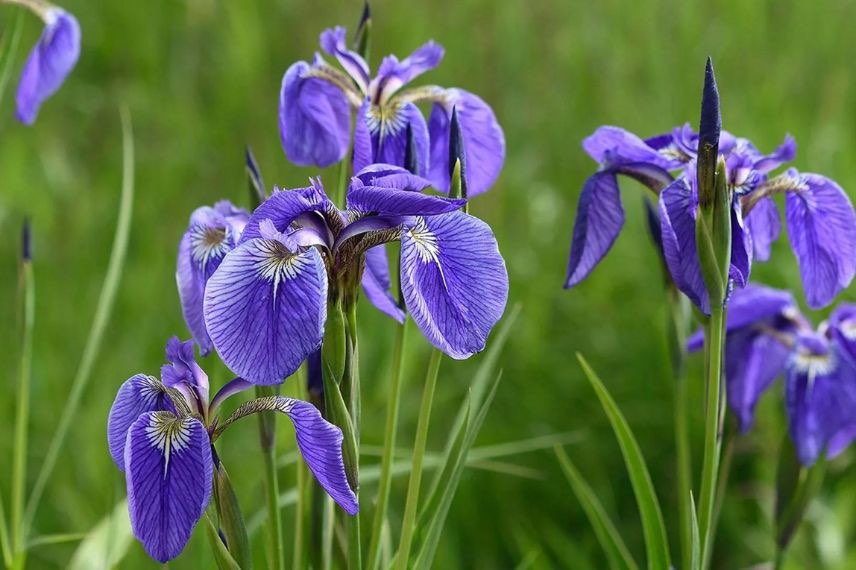
Iris setosa
Note that:
- Only Iris pseudacorus, I. versicolor and I. laevigata can be submerged year-round.
- For partial shade, favour Iris sibirica and I. laevigata
- In garden soil that is cool to moist in summer, without a pond or bank, you may plant Iris setosa, I. versicolor, I. sibirica, I. laevigata, I. ensata. Note a few differences nevertheless; some require the soil to remain constantly moist.
- Iris setosa needs a well-drained and light soil, whereas the others grow well in marshy, clayey and heavy soils.
How to plant water irises?
In open ground
- Dig a hole large and deep enough, at least 30 cm across in all directions
- Loosen the soil
- Remove stones and weeds from it
- Fill the planting hole with the excavated soil, mixed with a little heather soil and potting compost
- Bury the rootstocks only 7–12 cm deep so that they sit flush with the surface
- Space them 25–40 cm apart
- Gently firm the soil
- Water to help the soil settle around the roots, and thereafter every fortnight encourage rooting
- If air pockets form during watering, top up with potting compost
In a basin
Semi-aquatic irises have rootstocks that tolerate shallow immersion very well.
- Plant the rootstocks in perforated pots filled with a mixture of heather soil and garden soil
- Immerse each pot to a depth of 2–20 cm, depending on the species (see previous paragraph)
- Keep a spacing of 25–40 cm between plants
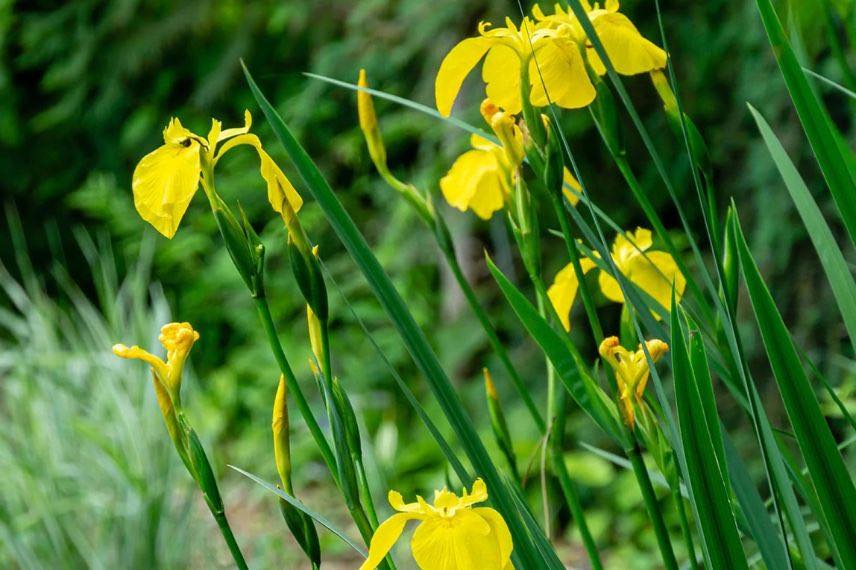
Iris pseudacorus and their distinctive yellow colour
How to look after?
Water irises require little maintenance, these flowers needing only modest care, though they require plenty of water.
For irises in moist soil that are not submerged
Keep soil moist before and after flowering. If your soil tends to hold water in winter, ensure excellent drainage to keep their roots dry.
After flowering, they become more drought-tolerant. A light top-dress of compost during the summer helps retain moisture in the substrate. Remove spent flowers before they form seeds that could germinate outside the desired area.
Also remove yellowing leaves to keep the bed looking its best, and regularly weed the centre of the clumps.
In spring and autumn, enrich the soil with a few scoops of compost and turf.
Every two to four years, divide clumps to prevent rootstocks from becoming too crowded and thereby limit flowering.
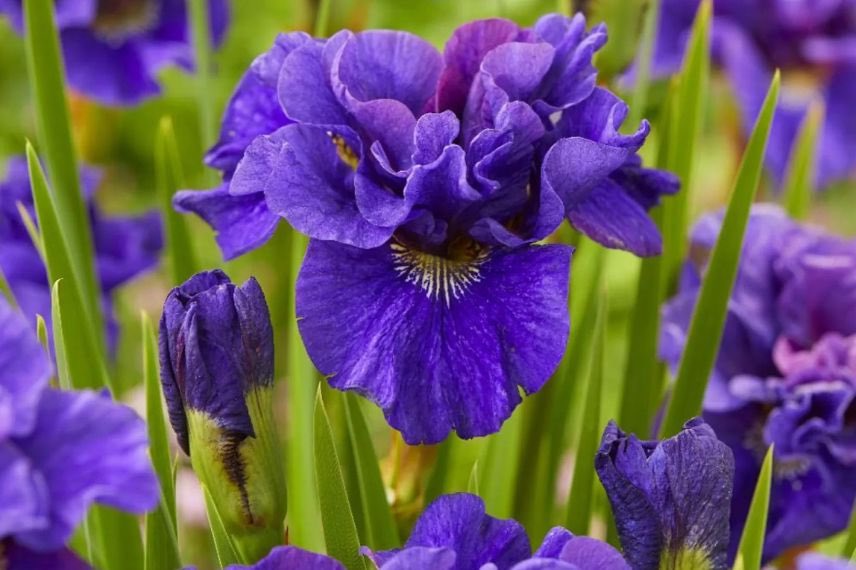
The Iris sibirica ‘Concord Crush’, for sun or partial shade
For submerged irises
Water irises are very hardy; you can leave them in your pond all year round.
After flowering, remove spent flowers to prevent seed production, unless you want them to multiply. Cut away dead or damaged leaves to prevent decay.
An annual application of compost or organic fertiliser in spring can help stimulate growth and flowering. This is particularly useful for plants in ponds where nutrients may be limited.
Every two to four years, divide clumps to revitalise the plants and control their spread. Division is best carried out in late summer or early autumn.
Further reading
To care for submerged irises in the specific habitats that are ponds and basins, and to discover their role in maintaining the balance of the ecosystem, explore our articles:
- Subscribe!
- Contents
Comments