






























How to protect biennials from frost to extend their flowering?
Tips to protect them against cold and frost
Contents
Autumn biennials, such as pansies, carnations or forget-me-nots, are plants that brighten our gardens through the seasons. They are planted in autumn and have a two-year life cycle, with a generous flowering occurring in the second year of growth, in spring. To enjoy their flowering for as long as possible, it is essential to protect them from frost. With good practices, you can not only extend their flowering into autumn, but also set the stage for renewed flowering in spring. Discover our tips for protecting your autumn biennials from the rigours of winter.

Hardiness of autumn biennials
Hardiness of a plant denotes its ability to withstand cold temperatures, particularly frost. Autumn-biennials have varying degrees of hardiness depending on the species. Some tolerate cold very well, while others may be more sensitive to sub-zero temperatures.
Autumn-biennials such as pansies, forget-me-nots, garden primroses, honesty and daisies are reputed for their good frost resistance. The pansies have an average hardiness of -15°C, the forget-me-nots -25 to -30°C, the garden primroses -15°C, honesty -15°C to -20°C, the daisies -15°C, the carnations -15°C. The florist’s ranunculus show greater sensitivity to cold around -5 to -10°C.
It is therefore important to know the hardiness of each plant to adjust protection accordingly. In regions where winters are harsh, protecting your autumn-biennials helps not only to maintain their flowering but also to preserve their roots and their resurgence in spring.
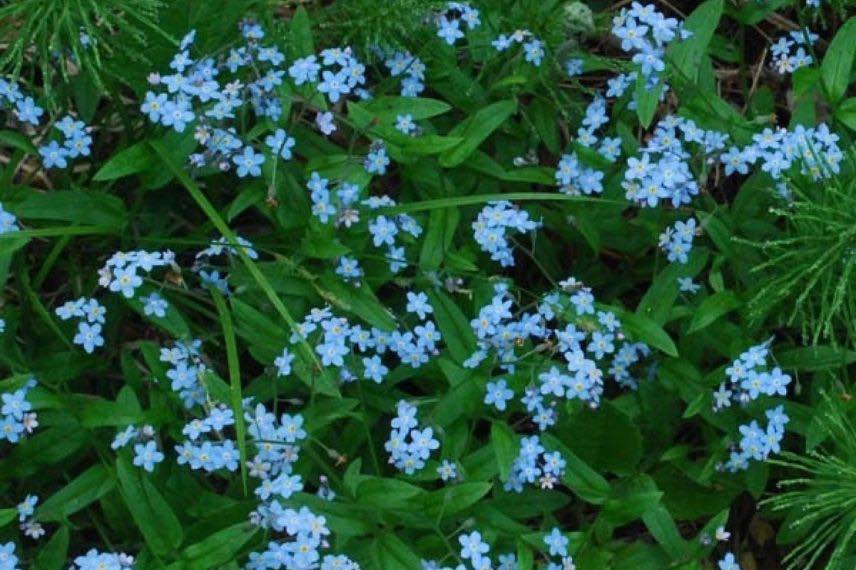
Forget-me-nots are short-lived perennials, very hardy, grown as annuals or biennials, and readily self-seed
Vernalisation of autumn-biennials
Vernalisation is a natural process by which some plants, including autumn-biennials, require a period of cold to trigger their flowering. This mechanism allows autumn-biennials to prepare their life cycle: they develop in autumn, overwinter, then flower in spring. However, if the cold is too severe or prolonged, it can damage the plants.
To ensure vernalisation proceeds correctly, avoid exposing your autumn-biennials to extreme temperatures that could damage them. Protecting your plants from excessive frost therefore helps ensure proper vernalisation without compromising their future flowering. Winter protections such as mulching or fleece can maintain cold, but controlled, conditions, thereby avoiding thermal shocks.
Thus, the challenge is to protect autumn-biennials from frost that is too harsh while allowing them to overwinter in conditions conducive to future flowering.
Drain them to protect them effectively
Good drainage is essential to extend lifespan of autumn-blooming biennials by a year, as these plants are sensitive to excess moisture, particularly in winter. Well-drained soil allows water to drain away easily, preventing roots from rotting, which can weaken or kill the plant. Using a high-quality, well-draining yet rich potting mix for flowering plants is one of the key conditions for success. Adding organic compost to the soil also improves its structure and its ability to drain water. Compost also helps retain moisture while preventing waterlogging. If your soil is heavy and clayey, adding coarse sand or perlite can improve its drainage, reducing the risk of standing water. With good drainage, you give your autumn-blooming biennials the best conditions to survive longer and perhaps even push on for a third year if the climate allows.
Mulching to protect roots
Mulching is a simple, yet effective technique for protecting your biennials from frost in winter. By applying a layer of insulating material to the soil around your plants, you help retain soil warmth and protect the roots from the cold. Mulching also helps limit water evaporation and maintain good soil moisture.
To mulch your biennials effectively, use natural materials such as straw, dead leaves, compost or wood bark. A layer of mulch around the base of the plants helps protect the roots. The layer of mulch can be thicker or thinner depending on the climate of your region and the plant’s hardiness. Be sure not to cover the collar of the plant (the base of the stem) to prevent moisture from causing it to rot.
Mulching is particularly recommended in regions where winters are cold, but not excessively harsh. It helps to insulate the soil while allowing the plant to benefit from the cool temperatures required for vernalisation. In spring, the mulch can be removed or incorporated into the soil to enrich the soil with organic matter.
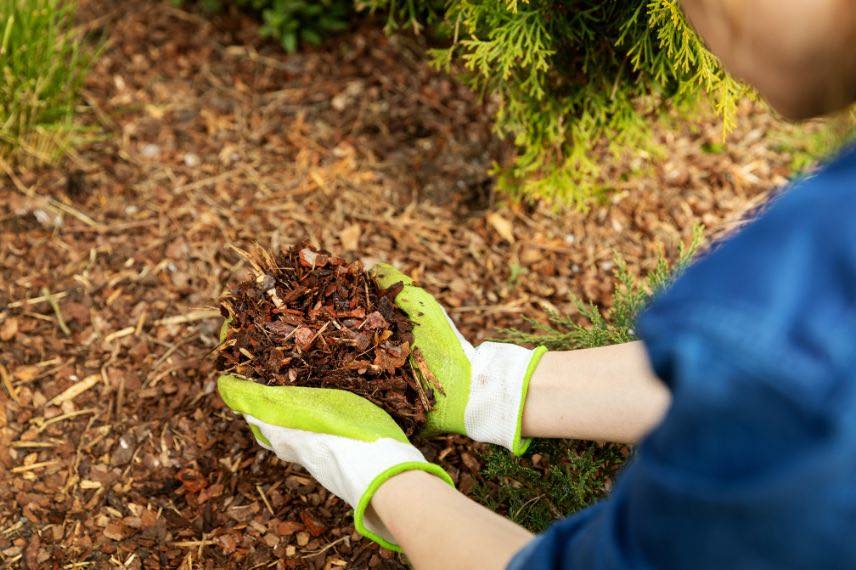
Mulching has many advantages, including protecting plants from cold winter weather
Use a frost-protection fleece to protect the foliage
In addition to mulching, the use of a fleece for winter protection is an effective method for protecting your biennials from frosts, especially the foliage. This lightweight, non-woven and breathable fleece creates a barrier against the cold while allowing air and light to pass through, which helps maintain favourable growing conditions for the plant without suffocating it.
To install a fleece properly, ensure you cover the foliage and all above-ground parts of the plant in their entirety. You can also secure the fleece to prevent it from blowing away in strong winds. The fleece for winter protection is particularly suited to the frost-sensitive biennials, or when a frost is forecast.
It is important to regularly check the condition of the plants under the fleece, especially during a thaw, to prevent moisture build-up that could promote the development of fungal diseases. When the cold and frost period has passed, usually in early spring, the fleece can be removed to allow the plant to benefit fully from light and air.
Bring the autumn biennial pots indoors
Autumn-biennials grown in pots are more vulnerable to frosts, as their roots are less well protected than those of plants in open ground. If you grow autumn-biennials in pots, it is recommended to bring indoors any that are sensitive to cold before the first frosts. This method is particularly suitable for regions where winters are harsh and frosts are frequent.
Place your pots in a cool, bright place, such as a cold greenhouse or a conservatory. Avoid spaces that are too warm, as this could disrupt vernalisation. During this overwintering period, reduce watering to prevent standing moisture from causing root rot.
If you cannot bring the pots indoors, you can protect them by wrapping them in fleece or placing them in a sheltered spot, against a south-facing wall for example. Another option is to insulate the pot with mulch or to elevate it to prevent frost from reaching the roots.
In spring, once the frost risk has passed, you can again take your autumn-biennials in pots outside. Be sure to acclimatise them gradually to avoid a thermal shock that could compromise flowering.
For further reading, see our articles: “Biennial plants: everything you always wanted to know!” and “Protecting plants from cold and frost in winter.”
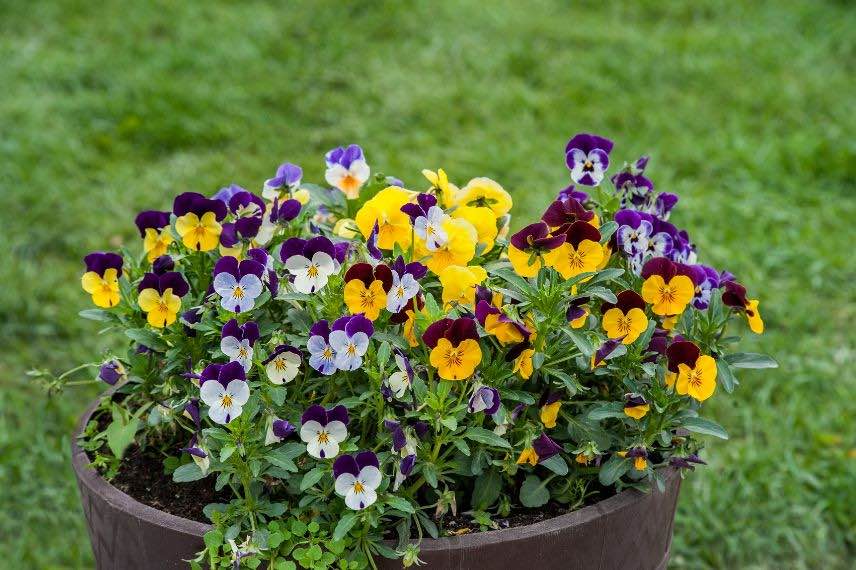
Pot-grown biennials are more sensitive to cold than those grown in open ground
- Subscribe!
- Contents
Comments