





























How to protect your lilies from parasitic diseases and pests?
Tips for combating parasitic pests and lily diseases
Contents
The lily, with its refined and fragrant flowers, is an essential plant for the garden and for cut flower arrangements. It features colourful flowering, ranging from white to purple, including pink, orange, red and yellow. Its flowers are trumpet-shaped, star-shaped or bell-shaped, and appear between May–June and September, depending on the species. Highly regarded by florists, the lily is a bulbous plant to be planted in full sun in well-drained soil, as it dislikes excess moisture and tends to prefer acidic soils, with a few exceptions. Vigorous, it can, like all plants, be susceptible to diseases and pests that affect its growth and flowering, the most dreaded being the lily beetle.
Discover how to identify, prevent and treat lily diseases and pests naturally to obtain beautiful flowers that last a long time.

Asparagus beetle
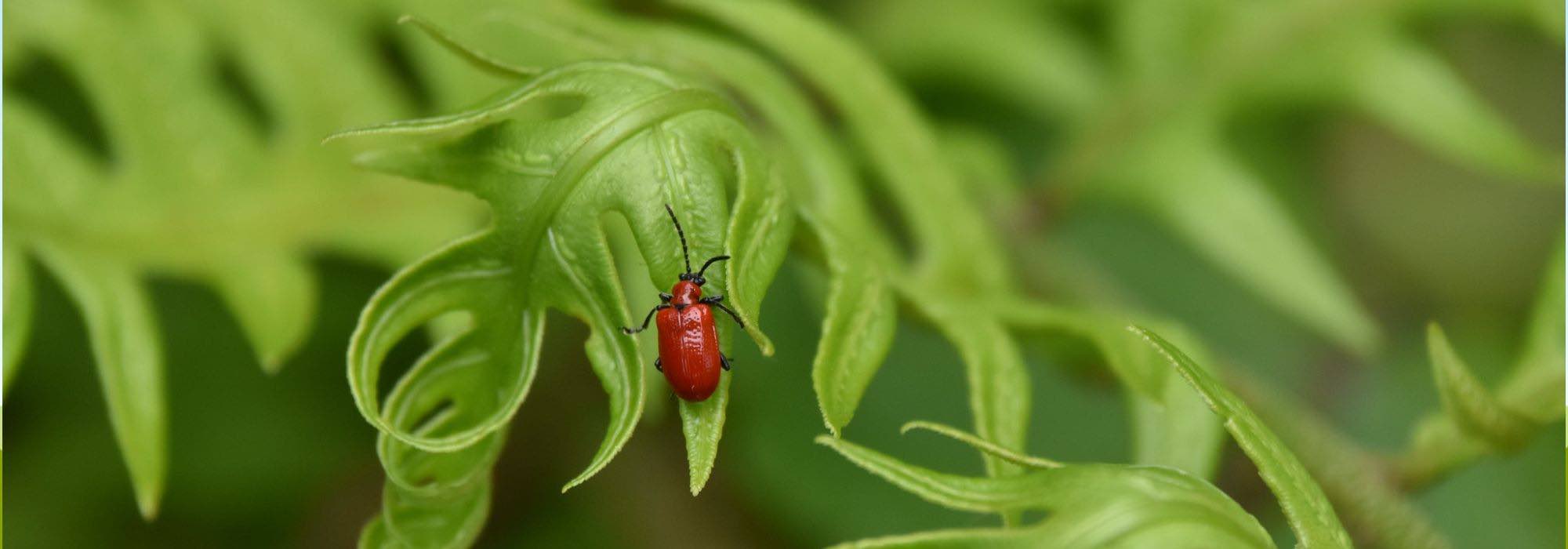
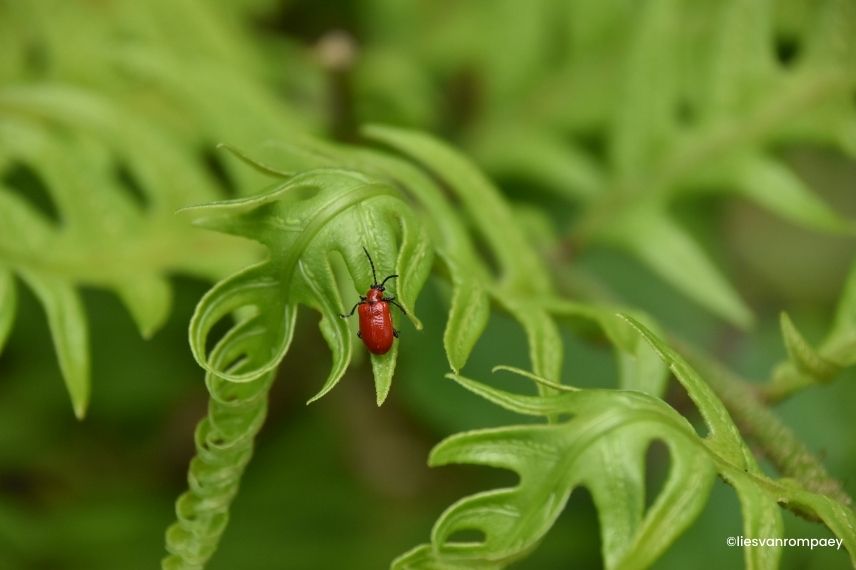
A dreaded enemy of lilies, the lily beetle is a small red beetle that eats the leaves, flowers and buds of the young plant and can cause serious damage to your plantings. Madonna lily (Lilium candidum) is the lily most affected by the lily beetle, while Martagon lily is the least touched by this beetle.
Symptoms
This bright red beetle has a black head and legs and measures just under one centimetre in length. The larvae are black and the eggs are orange. Holes made by these insects in lily leaves and flowers are also visible.
Prevention methods
The best way to prevent lily beetle establishment is to inspect the plants regularly, especially the undersides of the leaves, to spot any small insects, larvae or eggs. This monitoring should begin in spring.
Treatment
To get rid of lily beetles, remove them by hand and destroy them. As collecting these insects isn’t always easy, you can also cut away the affected leaves and flowers and burn them.
For more information, consult our advisory sheet “Lily beetle: dealing with attacks”.
Lily beetle
Read also
10 tips to successfully grow liliesSlugs and snails
Lilies can also be attacked by slugs and snails that relish their foliage. The Madonna Lily is still the variety most likely to attract slugs and snails.
Symptoms
Slugs and snails are most active in wet weather. They devour the leaves of plants.
Prevention methods
There are many ways to protect your plants from slugs. You can deter them from reaching your lilies by placing ash at the base, small pieces of eggshell, hemp flakes, lava rock or a collar. Another option: trap them with a beer-filled bottle with a hole in it. Also consider sowing repellent plants such as borage, yarrow and calendula.
Treatment
Here too, you have various treatments available to eliminate slugs and snails. You can hand-pick them and dispose of them. You can also use Ferramol-based granules, safe for the environment and pets. Another option, in case of a severe slug invasion: resort to biological control with beneficial nematodes such as the nematodes Phasmarhabditis hermaphrodita, microscopic worms to introduce into the soil that will parasitise slugs.
For more information, see our advisory sheet ‘7 ways to fight slugs naturally and effectively.’
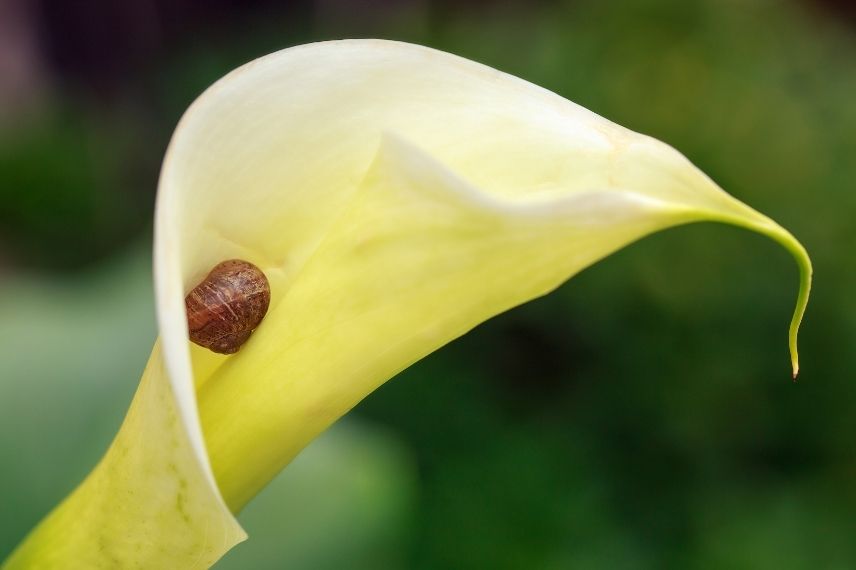
Snails and slugs eat the leaves of plants
Aphids
These small green, brown or black insects can attack young shoots and leaves, from which they suck sap. Attacks can cause deformation of leaves and general weakening of the plant, which becomes more susceptible to diseases.
Symptoms
Aphids appear in spring and summer, usually on the undersides of leaves. They produce a sticky honeydew that may be coated with a black dust called sooty mould, a cryptogamic disease caused by a fungus. Ants are often seen with aphids.
Prevention methods
Introduce ladybirds, natural predators of aphids. Do not use nitrogen-rich fertilisers which promote aphid outbreaks.
Treatment
You can remove aphids by hand if they are few in number or by using a jet of water on the leaves and the plant. For a more thorough treatment, spray a mixture of water and black soap on the different parts of the plant. Dissolve 15 to 30 grams of black soap in 1 litre of water and repeat the treatment as often as necessary.
For more information, see our article: “Aphid identification and treatment”.
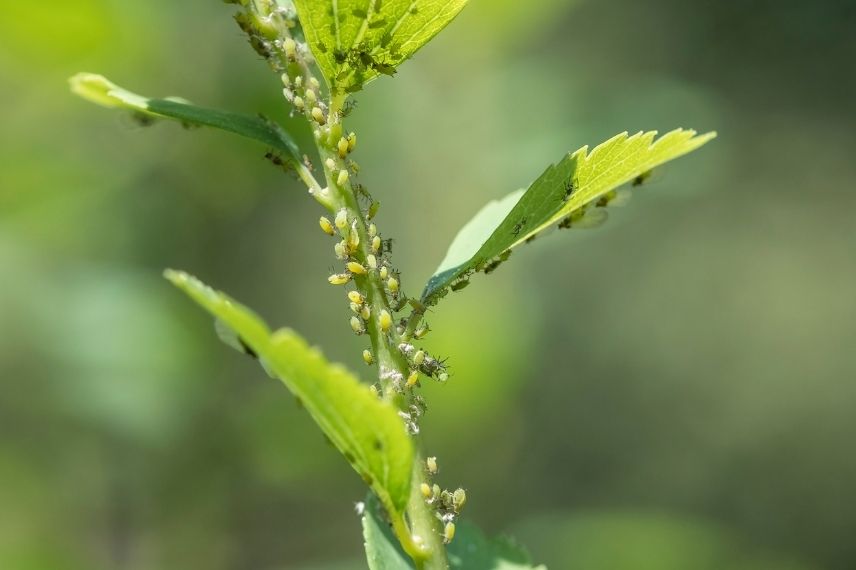
Green aphids on leaves and stems
Thrips
These tiny insects, 1 to 2 mm in length, are difficult to see with the naked eye. Adults may have wings. They pierce the plant and suck its sap. Their development is favoured by dry, warm weather or by a confined atmosphere such as in a greenhouse or indoors. They rarely kill a plant, but they promote diseases.
Symptoms
Small insects and elongated larvae can be observed, coloured black, brown, yellow or red. The leaves of the plant become covered with silvery-grey spots and eventually dry up and drop. The new shoots deform, and the flowers may experience necrosis.
Prevention methods
The best way to prevent thrips establishment is to create a humid atmosphere that drives them away; however, lilies, being sensitive to excess humidity, spraying them with water could invite other diseases.
Treatment
Use biological control by introducing thrips predators such as predatory bugs from the genus Orius, the mites Amblyseius cucumeris and the nematode Steinernema feltiae. Place traps such as a thrips attractant. In the event of a heavy infestation, use neem oil, a garlic decoction added to a soap solution, or pyrethrum.
For more information, see our fact sheet “Thrips: Identification and Natural Treatment”.
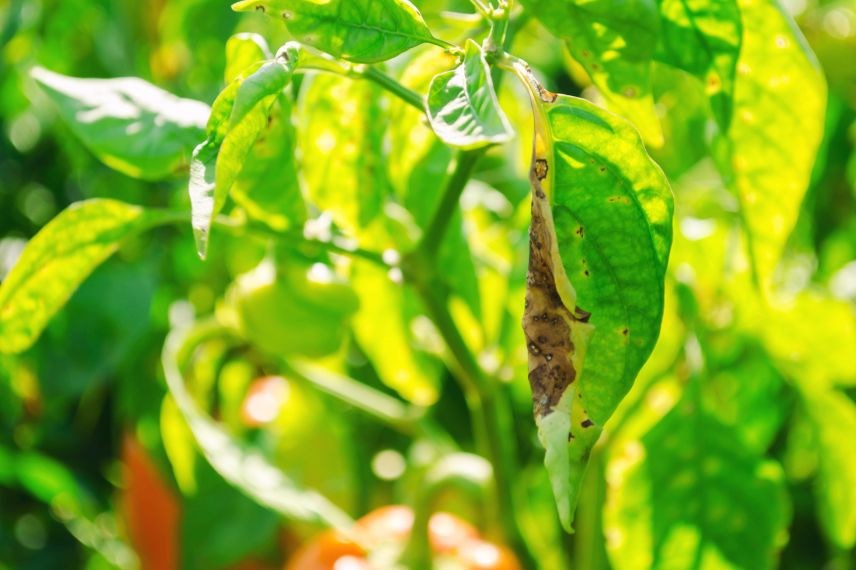
Typical thrips damage on leaf
Botrytis or grey mould
Botrytis, also known as grey mould, is a disease caused by fungi. It occurs under conditions of excessive humidity.
Symptoms
Botrytis manifests as brown spots on the leaves, stems and flowers, which eventually become covered in a grey mould and cause the plant to rot.
Prevention
Prevention consists of ensuring good air circulation between plants and avoiding excess humidity by regulating watering. Do not plant too closely together; avoid overwatering. Water preferably in the morning and avoid wetting the leaves. As a preventive measure, you can also spray a decoction of horsetail or nettle manure.
Treatment
When Botrytis is established, remove infected parts and dispose of them, because Botrytis is highly contagious. Ensure good air circulation around the plant and apply a decoction of horsetail or nettle manure.
To learn more, see our advice sheet “Botrytis or grey mould”.
Additionally, discover our article: Identify the main parasitic insects and plant diseases, as well as our comprehensive guide on the lily planting, growing and care.
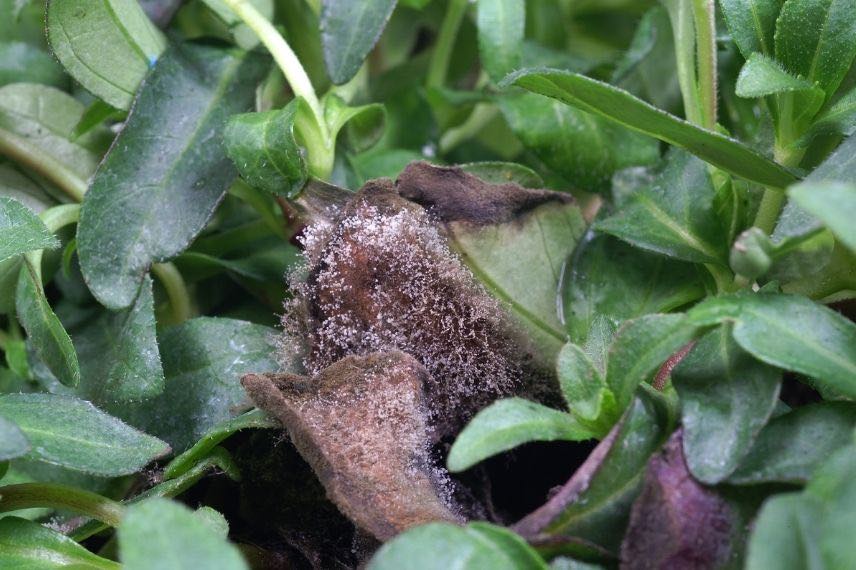
Grey mould on leaf
- Subscribe!
- Contents
Comments