





























How to winter non-hardy perennials?
To keep them from one year to the next
Contents
Potted plants and window box plants such as geraniums, begonias, petunias, fuchsias, and other osteospermums are invaluable for brightening up summer with their vibrant flowering, often in a variety of colours. They add colour to balconies, terraces, and window sills! They are typically grown year-round, but did you know that it is possible to winter them so you can enjoy them again the following year? Although frost-sensitive in our climates, these plants are actually perennials, as long as they are not exposed to the cold. Discover our tips for protecting them in winter and keeping them for several years: when to bring them in, how and where to store them in winter, what care to provide… We explain everything!

What are non-hardy perennials?
These are plants that are usually grown as annuals in our climates, as they are frost-sensitive. They often have spectacular and very colourful flowerings. Most of the time, they are purchased in spring to enhance window boxes, pots, and hanging baskets placed on balconies and window sills. These include pelargoniums (balcony geraniums), fuchsias, begonias, osteospermums, petunias and surfinas, lantanas, impatiens, coleus, calibrachoas, nemesia, bacopa… They are considered annuals simply because they are sensitive to cold, but keeping them sheltered in winter allows them to survive from one year to the next.
However, in regions with a mild climate, such as the Mediterranean basin or the Atlantic coast, where the risk of frost is low, it is possible to keep them outdoors all year round.
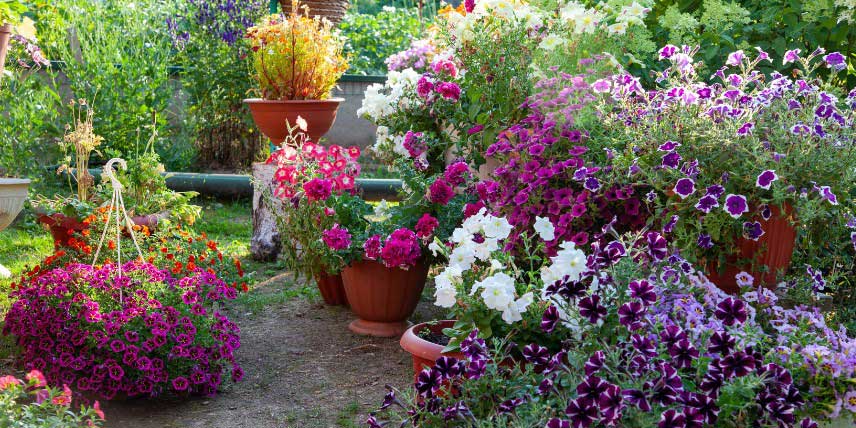
Non-hardy perennials often offer abundant and very colourful flowerings!
When to bring these plants indoors?
Bring them indoors in autumn, before the first frosts, between mid-October and mid-November, depending on your region and the hardiness of your plants. Generally, it is advised to bring them in when night temperatures start to regularly drop below 10 °C.
How to prune them for winter?
Some of these plants need to be pruned during wintering. Prune the Pelargoniums and fuchsias by cutting their stems back to 10-15 cm in height. For tuberous begonias, once the leaves have dried, cut the stems at the base, then bring the pots under cover or dig up the tubercles to winter them. For dipladenia, you may trim the stems a little, but the most important thing is to prune it at the end of winter.
Also remember to clean the clumps by removing yellow, dry, or damaged leaves, as well as faded flowers. Perform a top dressing by adding potting soil to a depth of about 2 cm. Take this opportunity to inspect the plants and check for any parasitic pests, such as aphids or mealybugs. If you find any, spray with diluted black soap in water.
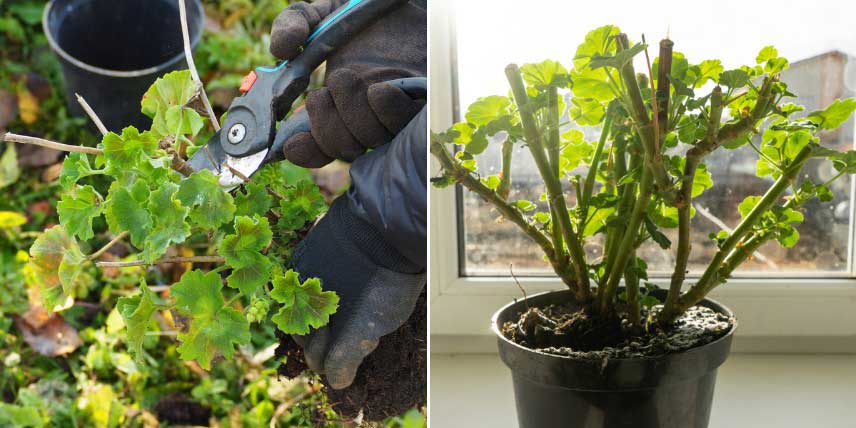
When bringing it under cover, cut the stems of the geranium back to 10-15 cm in height and remove any damaged leaves.
Read also
Fuchsia: how to overwinter?Where and how to store them during winter?
Most of them overwinter like greenhouse plants: place them in a bright, cool, and dry location, frost-free, such as a conservatory, a temperate greenhouse, or an unheated room in the house. Alternatively, a garage or garden shed can also be suitable, as long as it is adequately insulated. Generally, the ideal temperature is between 7 and 12 °C, although this varies depending on the plants you are growing: lantana and dipladenia prefer slightly higher temperatures, between 10 and 15 °C, while fuchsia enjoys cooler temperatures, around 5 to 8 °C.
Be sure to monitor that the leaves do not rot and ventilate occasionally to prevent the development of fungal diseases. Limit water supply (one to two waterings per month should suffice) and do not apply fertiliser. Be careful not to let water stagnate in the saucers. Watch for pests: when indoors, lantana is susceptible to whiteflies. Similarly, the dry air of a conservatory or greenhouse can encourage the appearance of red spider mites.
Plants in dormancy, such as tuberous begonias and fuchsias, should not be watered during wintering, as this may cause them to rot. They can be kept in a dark room, as they do not perform photosynthesis during this winter period.
New Guinea impatiens can be tricky to overwinter; they need a well-lit location and regular watering (allowing the substrate to dry briefly between waterings). They will also appreciate non-calcareous water sprays on their foliage, which will also reduce the risk of being attacked by red spider mites.
Regarding tuberous begonias, you have two options: the simplest is to bring the pot or container directly under cover. However, it is also possible (especially if they are in the ground) to dig up the tubers, clean them with a cloth, and then store them in turf, in a dry and sheltered place. You will just need to replant them in spring.

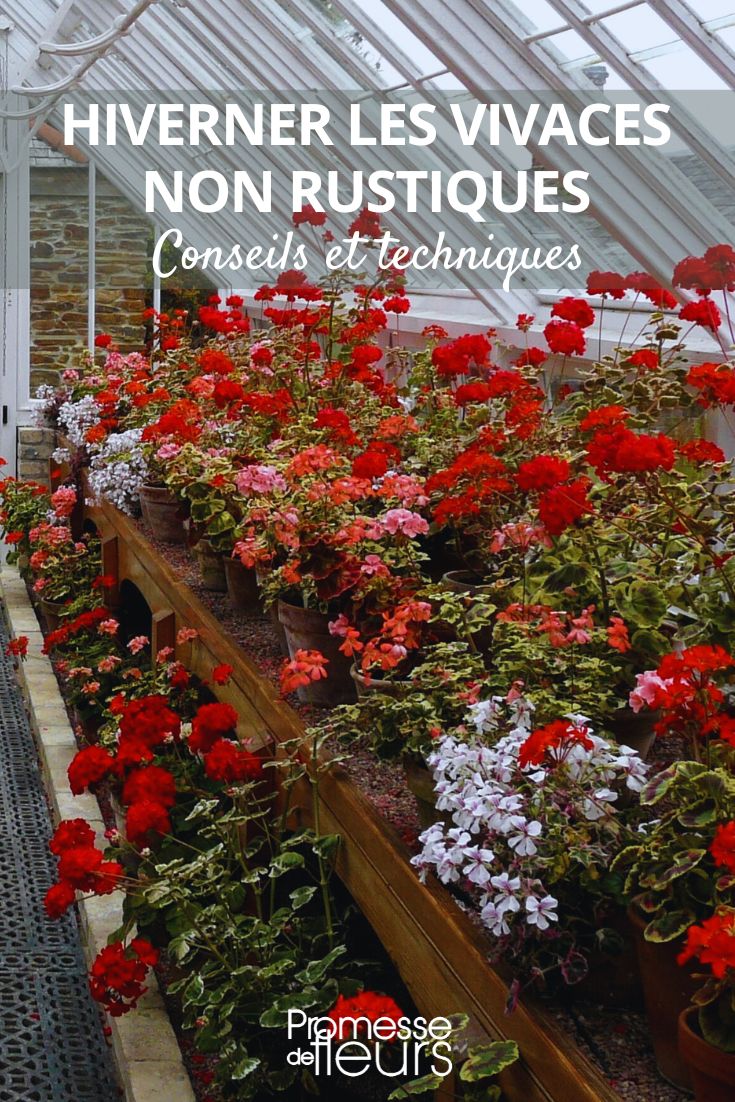
Greenhouses and conservatories are perfect for overwintering them, but it is also possible to keep them at home or in a frost-free, bright location.
When to take them out after winter?
Take your plants outside as soon as the risk of frost has passed, between April and May depending on your region. It is important to acclimatise them gradually, slowly getting them used to the light and outdoor temperatures. At first, take them out for just a few hours each day and bring them back in at night; after two weeks, you can leave them outside permanently.
What care should be provided after wintering?
Take advantage of the end of winter to repot your plants into slightly larger pots or containers, which will allow you to refresh the substrate. You can repot them in a good geranium compost, possibly mixed with garden soil, a bit of sand, and an organic fertiliser. Make the most of it to create beautiful flowering displays in a container or large pot, for example by combining geraniums with calibrachoas and lobelias, as well as decorative foliage like that of grasses, to add a touch of lightness and graphic appeal!
Also, remove any damaged parts and inspect your plants for signs of pests. Resume watering and add a bit of liquid fertiliser to help them get back on track.
Some plants should be pruned at the end of winter. This is particularly true for dipladenia, for which you should cut back the stems to the third or fourth node. We also recommend pinching osteospermums by manually cutting the tips of the stems. This will encourage them to branch out while stimulating flowering.
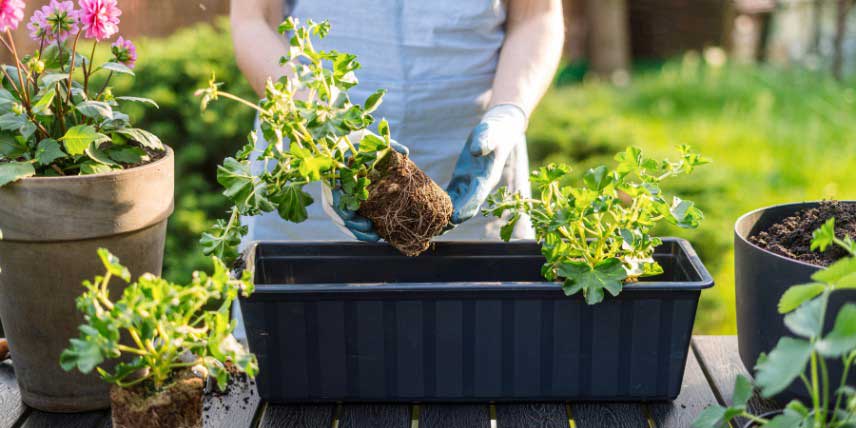
In spring, you can repot non-hardy perennials into large pots or containers, and create beautiful flowering displays!
- Subscribe!
- Contents
Comments