





























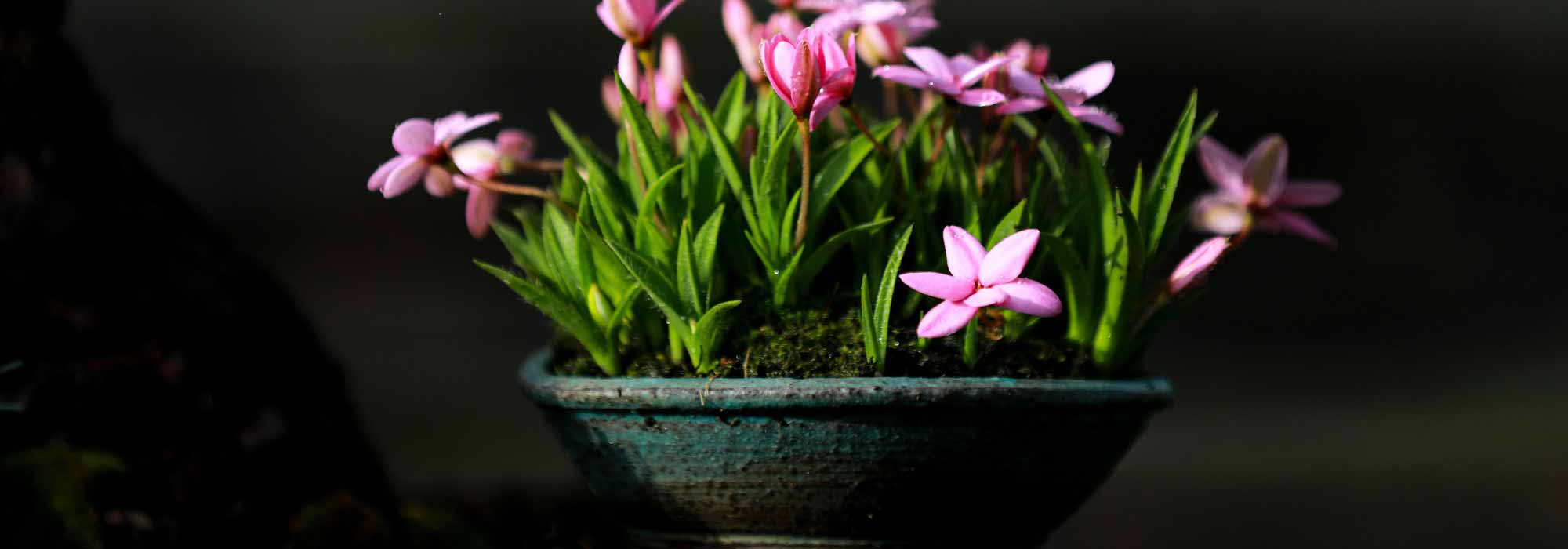
Kusamono: potted flowers displays from Japan
The art of Kusamono decoded
Contents
Kusamono is a form of Japanese plant art that features herbaceous plants in pots. Inspired by natural landscapes and seasonal changes, Kusamono captures the essence of nature in a minimalist and calming display. Unlike bonsai, which imitates miniature trees, and Ikebana, which involves a display of cut flowers, Kusamono evokes a natural environment through the harmonious arrangement of plants, in a variety of containers, to create miniature landscapes imbued with poetry. It is often used alone or as an accompaniment to a bonsai. Each display evokes an intimate connection with nature and invites calm contemplation. Don’t wait any longer to discover this delicate art and grow your own Kusamono!

Kusamono—what is it?
Kusamono, also known as “herb bonsai” or “Kusabonsaï”, a genuine botanical artwork rooted in the tradition of Japanese floral art, draws inspiration from wild nature. Literally meaning “herb thing” or “blade of grass”, This art features displays of grasses, herbaceous or wild plants, often arranged singly in a small container. Each display evokes a landscape or a specific season. This minimalist art form emphasises simplicity and the authenticity of nature. It can be used alone or as a companion to a bonsai. The objective of kusamono is to capture the spirit of nature without artifice, with a display that seems spontaneous and natural. Each display is designed to be ephemeral, changing with the seasons, and should convey a sense of serenity and harmony.
It differs from Ikebana, which is a more structured floral art, where cut flowers are arranged according to precise rules, symbolising harmony between heaven, earth and man. Another nuance is that Kusamono is displayed alone, but when presented with a bonsai, it becomes “Shitakusa”, a companion plant or accent plant that enhances the miniature tree.
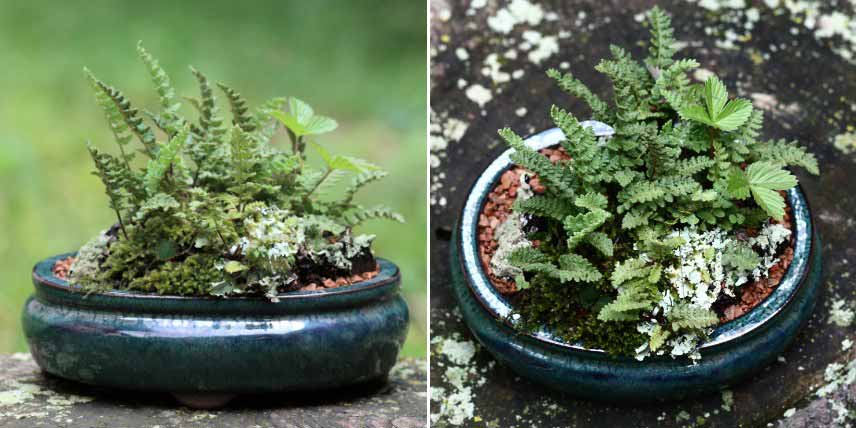
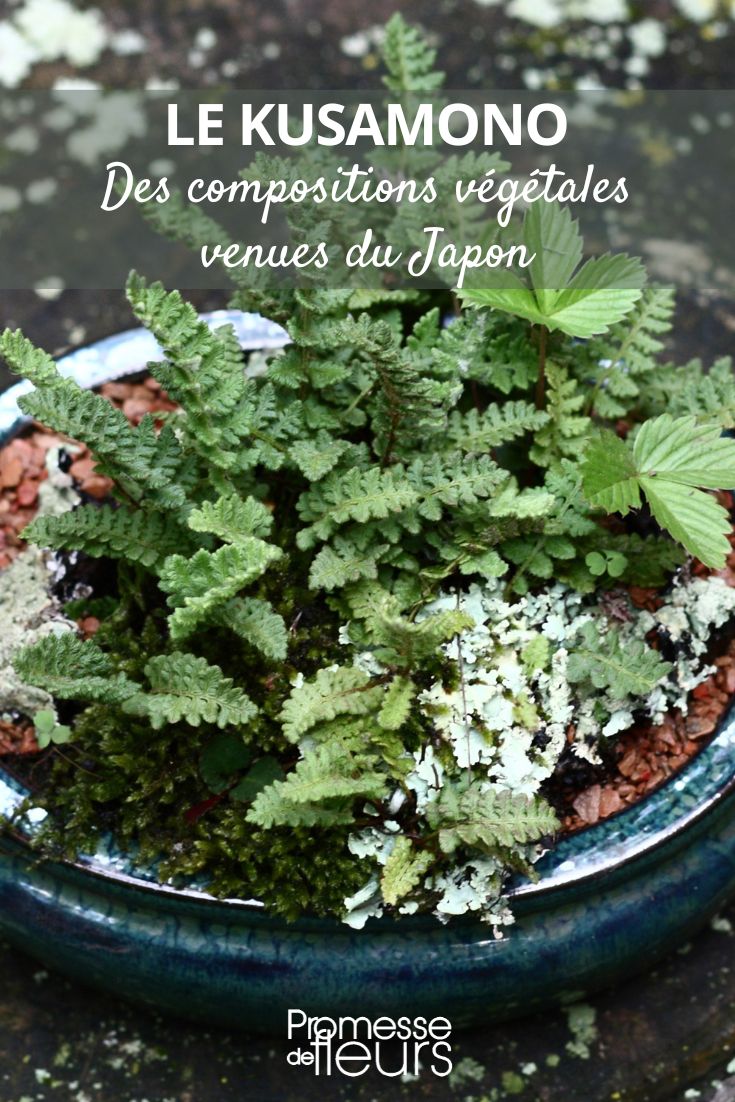
A kusamono with ferns, strawberry plants, moss and lichens
Read also
How to care for a bonsai?Why growing a kusamono?
The Kusamono embodies the Japanese concept of wabi-sabi, which celebrates beauty in imperfection, ephemerality, and the passage of time. By cultivating a Kusamono, one seeks to capture the spirit of nature, while embracing minimalism and impermanence, symbolised by wabi-sabi. Each display reflects this philosophy through single plants, alpine plants or meadows, grasses or flowering perennials that, as they grow, wilt or change with the seasons, reminding us of life’s fragility. The Kusamono should bear the marks of time, whether through the weathered look of terracotta pots, the appearance of moss, or the natural stripping-back of the plants. This is not merely about growing plants, but about celebrating nature in its most modest and authentic form.
What pot to use for a kusamono?
Pot choice is essential for a successful Kusamono. Choose shallow pots, wider than tall, and round or ovate. It is also important to choose a neutral colour that does not distract from the plants themselves. The pot should fade into the background to better enhance the display. As for material, prefer glazed ceramic. Sometimes driftwood, a tile, a piece of bark, a pot or a flagstone—a rough, flat stone—can also serve as a support. Also ensure that the pot has drainage holes to prevent water from stagnating at the roots.
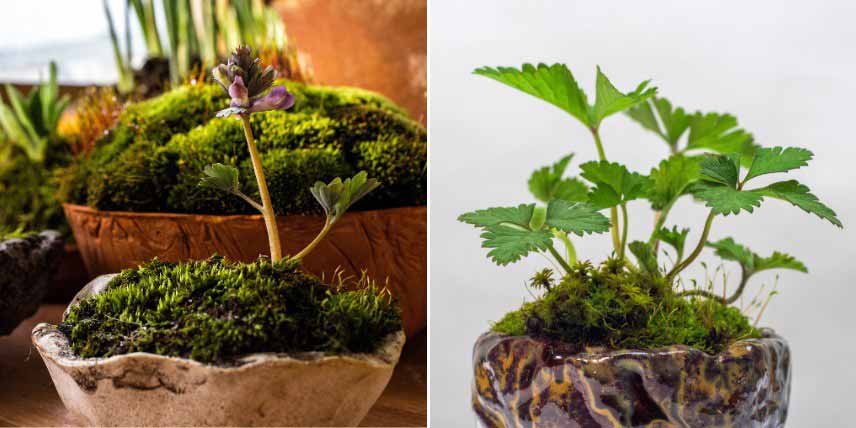
Corydalis and strawberry
Read also
How to train a bonsai step by step?How do you make a kusamono?
Creating a Kusamono requires patience and a certain sensitivity to natural aesthetics. The key is to choose plants in line with the season and to arrange them in a balanced display, without rigidity.
- Start by preparing your pot to ensure good drainage. Place a thin layer of gravel at the bottom, then add a substrate suited to the needs of the chosen plants. It will be light, composed of a mix of potting compost (or blonde peat, with a little pine bark for acidophilous plants) and sand to ensure good drainage.
- Position your plants, taking into account their height and shape to create a harmonious display. They should be arranged in odd numbers. Place the tallest at the back, and the smallest in the foreground.
- Install your Kusamono in shade or filtered sunlight.
- Watering should be regular but not excessive, to prevent the roots from rotting.
Which plant to use for a kusamono?
To create a Kusamono that is well suited to each season, it is important to choose plants whose needs are compatible. We will therefore select species from the same natural habitat, which share the same care requirements (water, light, substrate), so that your display remains durable and easy to maintain. Finally, favour small plants that are well suited to growing in pots, to maintain balance and harmony in the display. The ideal is to combine different textures (matte, smooth, glossy or dentate) and heights (tall grass, medium plant, and groundcover) for a natural and spontaneous effect. The choice will fall on alpine or meadow plants, mosses or ferns, flowering perennials, wild plants gathered from the wild: wild strawberries, clovers, elf’s flower (Epimedium), violets… and grasses. To complete your display, you can use mosses and a pine bark. Mosses evoke a woodland floor or a damp landscape, while pine bark adds a rustic and natural texture, creating an interesting contrast with the plants. They also help retain moisture around the plants. Here is a non-exhaustive selection of plants to compose a Kusamono for the four seasons:
- Grasses: Carex, Festuca, Hakonechloa, Paturin, Ophiopogon japonicus
- Wildflowers: Viola (violet), Bellis (daisy), Primula (primrose).
- Perennials: Alchemilla, Anemone, Armeria, Bergenia, Calluna, Campanula, Cyclamen, Gaura, Heuchera, Hostas, Trifolium, Myosotis, Saxifraga, Iris japonica.
- Bulbous: Crocus, Galanthus nivalis, Muscari, Oxalis, Narcissus.
- Succulents: Crassula, Delosperma, Sempervivum (houseleek), Sedum, Umbilicus rupestris.
- Ferns (Dryopteris, Selaginella) and lichens.
- Alpine perennials: Androsace, Saxifraga, Gentian, Draba, Aquilegia.
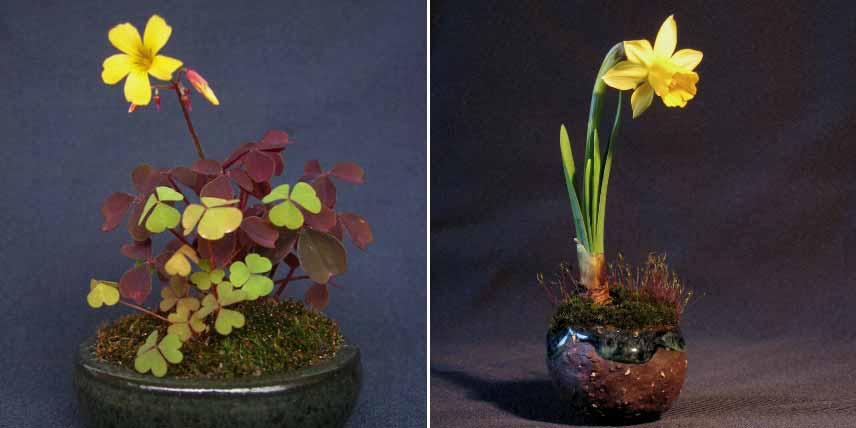
Oxalis and Narcissus
Kusamono care
Maintaining a Kusamono requires care and regularity, as these are living displays that evolve with the seasons.
Watering
Watering is essential, but it must be measured. Kusamono plants grow in shallow pots, which means the substrate dries quickly. It is therefore important to regularly check soil moisture. Water when the surface of the substrate begins to dry, but without waterlogging the roots. Prefer gentle watering with a spray bottle or a fine-tipped watering can to avoid disturbing the arrangement of the plants.
Light and placement
Kusamono requires moderate light. A well-lit position with no direct sun is ideal. Avoid overly exposed spots, as this could burn the leaves, especially for delicate plants such as ferns or mosses. Indoors, place it near a well-lit window, while ensuring not to subject it to draughts or extreme temperatures.
Pruning and cleaning
Like any plant, Kusamono requires a little pruning to maintain its harmonious appearance. Regularly remove dead or withered leaves. If some plants become too invasive or disrupt the display, don’t hesitate to prune them lightly.
Seasonal care
Kusamono follows nature’s cycles. It is therefore important to adjust care for each season. In winter, reduce watering and place it in a cooler location to respect the plants’ vegetative rest. In spring and summer, increase watering and monitor nutrient needs. A light application of organic fertilizer at the start of spring can help your plants get back to full strength.
- Subscribe!
- Contents
Comments