





























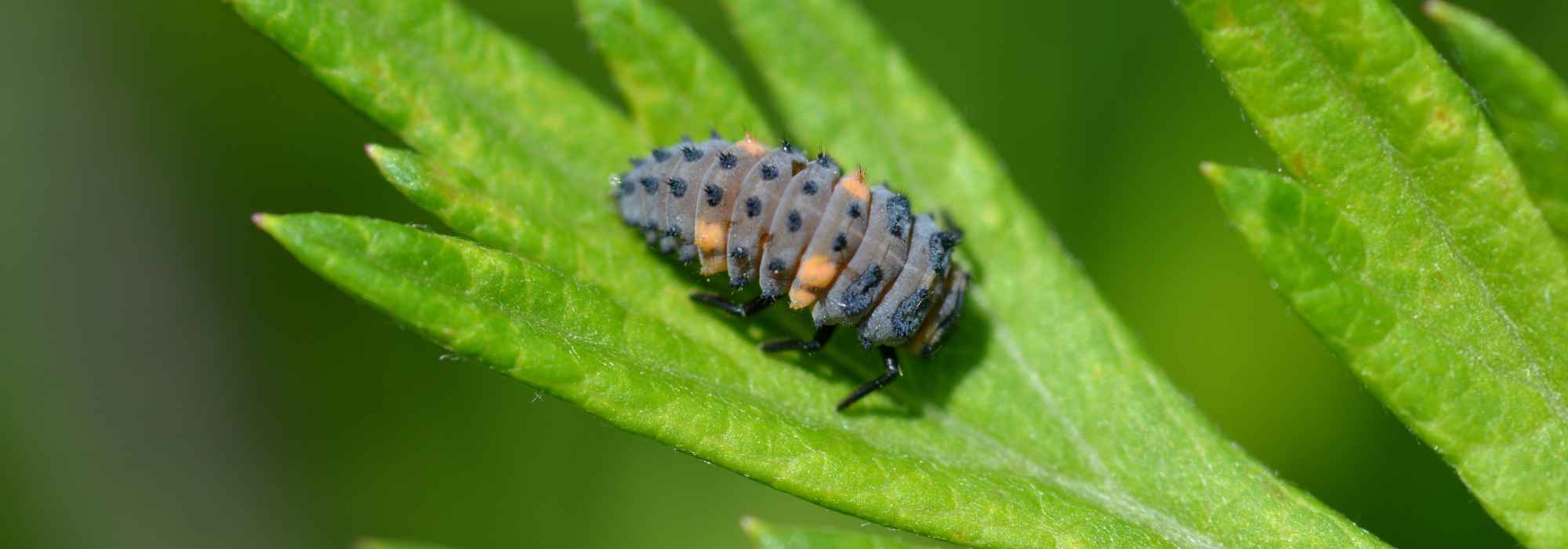
Ladybird larvae: when and how to use them in the garden?
To grow a healthy and eco-friendly garden
Contents
Ladybird larvae are valuable allies for gardeners looking to combat pests effectively in an ecological and natural way. Particularly voracious, these “God’s creatures” serve as a natural and easy-to-use aphid deterrent. These auxiliaries are formidable predators of aphids (black, yellow, or green), as well as scale insects and other pests that attack plants. They are useful in ornamental gardens to protect flowering plants, trees, and even vegetables in the kitchen garden. Their use helps reduce the reliance on chemical treatments and promotes biodiversity. Discover when and how to use them, along with their benefits!
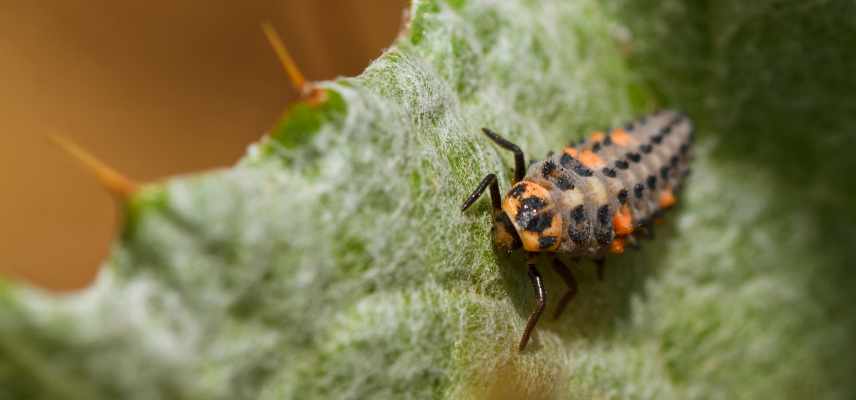

Where to find ladybird larvae?
Goodbye aphids! Today, it is possible to purchase European and native ladybirds (not Asian ones!) in the form of larvae from our online nursery. They are packaged in a box. We offer a maxi format, containing 250 ladybird larvae, ideal for those with a large garden or in cases of massive infestation. The box includes food in the form of butterfly eggs, as well as popcorn to increase the available contact surface (to prevent them from eating each other) and regulate humidity. Order them and we will send them to you quickly!
When to buy ladybird larvae?
Purchasing ladybird larvae should be done at the right time to maximise their effectiveness. It is preferable to buy the larvae in spring, between April and June, when aphids begin to invade the garden. This is when populations of aphids, their favourite prey, are most abundant. Ladybird larvae are then ready to feed and develop, ensuring rapid control of aphid populations.
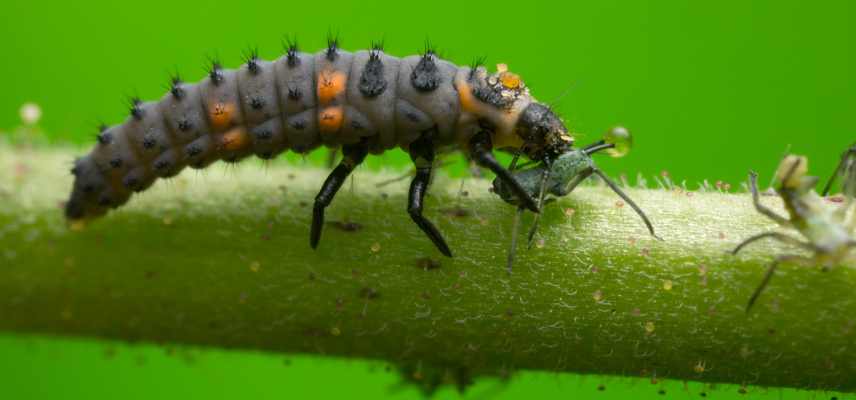
Which species of ladybirds to choose?
There are several species of ladybirds, but some are more effective than others in combating garden pests. Each species has its own specific characteristics. Some devour aphids on trees, while others are effective on low-growing plants (ornamental and vegetable). All larvae feed on aphids at all stages of their development and can consume up to 200 aphids per day. Three species of ladybirds are particularly recommended for controlling aphids:
- The eleven-spotted ladybird (Hippodamia undecimnotata): this ladybird has 11 black spots sometimes bordered in yellow. Its larvae are effective against yellow aphids, particularly those on the oleander (whose sap is toxic to other ladybirds). They are also formidable against rose aphids, low-growing plants, small bushes, hibiscus, and dipladenias, for example. Preferring low vegetation, this ladybird is useful in flower beds. In the vegetable garden, its larvae will protect herbs and vegetables such as beans, broad beans, soybeans, and melons from aphid appetites. Very voracious, they consume several species of aphids, including those that deter the seven-spotted ladybird. Polyphagous, they also feed on thrips, psyllids, leafhoppers, whiteflies, and mealybugs. This species enjoys sunny vegetable gardens and meadows, as well as grasses. It is not afraid of high temperatures. In its larval stage, it can eat more than 100 aphids per day.
- The seven-spotted ladybird (Coccinella septempunctata): This is the gardener’s ally! It primarily feeds on black aphids found on beans, broad beans, artichokes, as well as those on cabbages and courgettes. It is also useful against aphids on roses. A single larva of this species can consume up to 150 aphids per day.
- The two-spotted ladybird (Adalia bipunctata): it is very effective in orchards against aphids on fruit trees, although it also protects ornamental trees and shrubs. It feeds on many species of aphids that colonise tall trees and plants.
My advice: You can easily have these different species of ladybirds coexist. They are complementary, each consuming its preferred aphids. On large trees or shrubs or hedges, use adult ladybirds. They can consume up to 60 aphids per day. Females can lay up to 20 eggs per day, which, after hatching, will quickly give rise to very voracious larvae that devour thousands of aphids. There is a three-week period between the hatching of the eggs and the emergence of adult ladybirds.
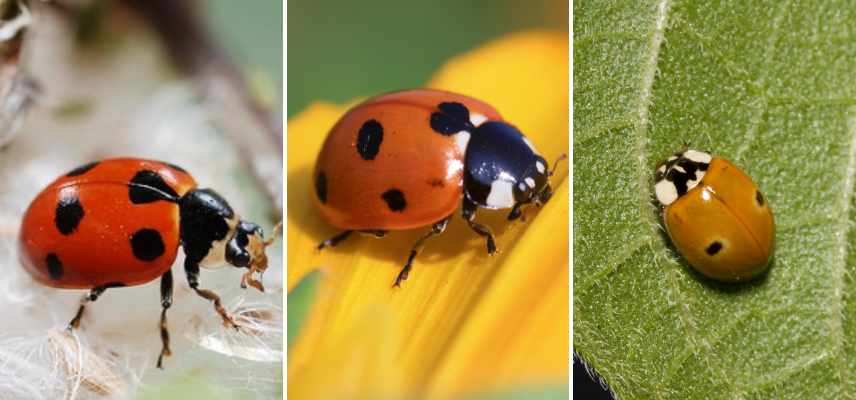
Hippodamia undecimnotata (© Gilles San Martin), Coccinella septempunctata, and Adalia bipunctata
When to release ladybird larvae?
Ensure that weather conditions are favourable: ladybird larvae are sensitive to temperatures that are too cold or too hot, as well as to excessive humidity. Avoid windy and rainy days. Only release them in the presence of aphids and outside of frost periods. Most are active as soon as the temperature reaches 12°C, allowing for use from early spring until the end of autumn depending on the regions. Choose a sunny and mild day to introduce the larvae into your garden, and do so early in the morning or in the early evening.
How to preserve ladybird larvae?
Once the ladybird larvae are purchased, it is essential to keep them in good conditions to ensure their survival. You can store them for 2 or 3 days in the refrigerator, in the vegetable drawer, at 6-8°C. It is recommended to keep them away from light, heat, and chemicals, and to use them within 48 hours of receipt to guarantee their effectiveness.
How to feed ladybird larvae?
While waiting to be released into the garden, don’t worry, they have their grub in their box: butterfly eggs on the menu! However, to transform into beautiful ladybirds, the larvae will need to quickly set off in search of aphids!
Where to place ladybird larvae?
To optimise the action of ladybird larvae, it is important to place them in the right location. The larvae will be released on the infested plants. Choose areas of the garden where aphids are present in large numbers. You can also distribute them across different plants to ensure better coverage and more effective control of pests. The larvae get to work immediately and spread across the entire plant to be treated.
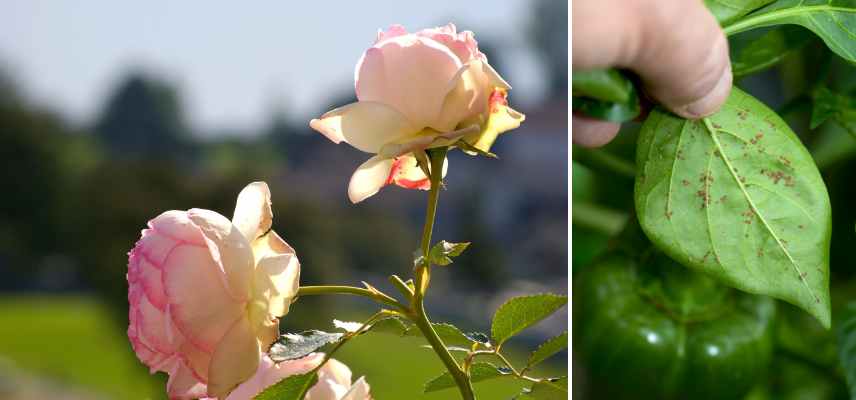
In the ornamental garden or vegetable patch, place the larvae where the plants are under attack
How to use them in the garden?
Beforehand:
- Address ants before releasing the ladybird larvae: aphids secrete honeydew, which ants love, so they protect their aphid colonies from ladybirds, their natural predators. Therefore, ensure you do not place them near an ant colony.
- Place the larvae on plants where aphids are present; otherwise, they will quickly starve.
- Do not release the larvae on plants treated with chemical treatments before, during, and for several weeks after their application.
In practice:
- Wear gloves to handle the larvae and avoid injuring them.
- Gently open the packaging containing the larvae.
- Place them as close to the aphids as possible using the provided brush, or with your finger, and position the popcorn grains with the ladybird larvae in the axil of the leaves of the infested plants.
- Allow the larvae to feed and develop, ensuring you do not disrupt their action by using chemical pesticides that could kill them.
- Regularly observe the situation and, if necessary, repeat the introduction of ladybird larvae.
→ Results are visible within 2 to 5 days, after which the larvae leave their dried skins behind.
Dosage:
Count 1 to 3 larvae per aphid colony, or 5 to 10 larvae per m². For 50 roses or bushes: plan for 1 box of 250 larvae.
What are the benefits of ladybird larvae in the garden?
These little ladybirds bring good luck and are formidable aphid eaters! The ladybird larvae are a natural and easy-to-use aphid control method for protecting ornamental or vegetable crops from pests. Their great voracity and effectiveness offer numerous advantages:
- With them, there’s no need for polluting phytosanitary treatments! It’s an excellent alternative to chemical treatments!
- These “aphid ogresses” rid plants of these sap-sucking insects that weaken them by draining their sap and are vectors of diseases.
- They are perfect biological control agents: by feeding on aphids and other pests (whiteflies, scale insects, thrips…), ladybird larvae help reduce populations of these nuisances without resorting to harmful chemical treatments for the environment and human health.
- By encouraging the presence of ladybirds, you contribute to developing biodiversity in your garden. Once they reach adulthood, ladybirds promote pollination, as when they can’t find aphids for a snack, they feed on the nectar and pollen of flowers. Ladybirds are also prey for other animals, thus contributing to the balance of the ecosystem.
- Subscribe!
- Contents
Comments