


Lawn and Dog Urine: How to Maintain a Beautiful Lawn?
The damage that dog urine can cause and solutions to prevent risks
Contents
Having a beautiful lawn when living with a dog—an impossible equation? Dog urine can indeed quickly cause damage to a lawn, even one that is initially healthy. Let’s explore how to act in the case of a lawn damaged by dogs and how to prevent risks to maintain a healthy lawn.

Dog urine and lawn: what are the consequences?
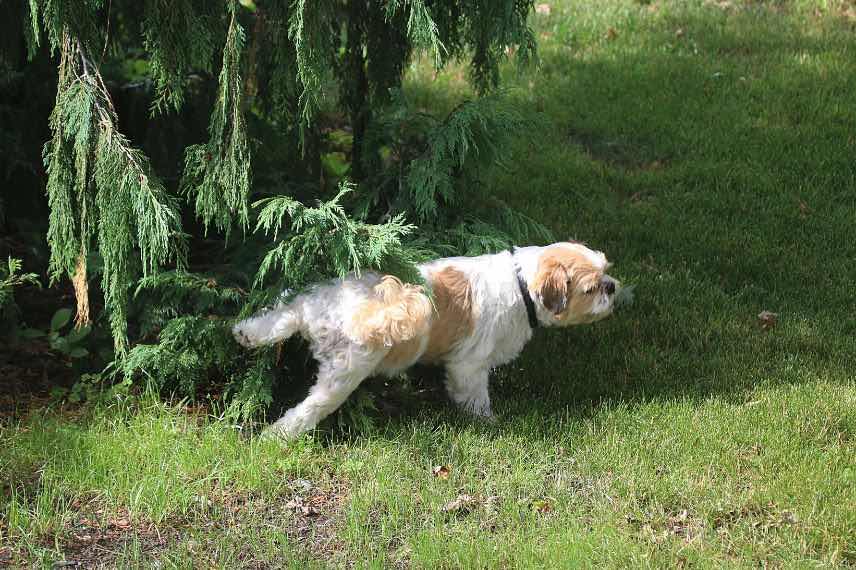
The composition of dog urine (as well as that of other animals like cats) can be harmful to lawns. It is indeed rich in mineral salts and nitrogen. In small quantities, this can simply stimulate lawn growth, acting as a fertiliser. However, when too concentrated, dog pee almost instantly burns the roots of the grass, causing them to wither. Symptoms become noticeable quite quickly, as the lawn changes colour. You may then observe unsightly yellow patches surrounded by green, measuring about 10 to 20 cm.
The problem is even more common with large dogs (as the amount of urine is greater) and with females, who urinate in a sitting position directly on the ground.
Weather conditions can also intensify the yellowing of the lawn due to dog pee. In dry weather and in the absence of rainfall, the concentrated nitrogen burns the grass and cannot be diluted by rain or ambient humidity. This phenomenon is particularly noticeable in late spring and summer.
Read also
Burnt lawn: what to do?How to prevent the lawn from yellowing due to urine?
If you catch your dog peeing on the lawn, you can still take action to prevent it from turning yellow. All you need to do is dilute the urine by generously watering the area targeted by your pet (using a watering can or a hose). The quicker the urine is diluted, the less chance the lawn has of being burnt and turning yellow.
Of course, this solution will only be temporary: it’s difficult to follow your dog around all day with a watering can in hand to prevent damage to the lawn.
Hard to keep track of your dog
Discover other Lawn
View all →
Available in 1 sizes
Available in 3 sizes
Available in 1 sizes
Available in 2 sizes
Available in 1 sizes
Available in 2 sizes
Available in 3 sizes
Available in 1 sizes
Available in 1 sizes
Available in 1 sizes
How to achieve a beautiful lawn?
If it’s too late and one or more yellow patches have appeared on the lawn, you will need to remove the affected areas before sowing new grass to replenish the lawn. Ideally, intervene in early spring or autumn, as natural rainfall encourages recovery.
- Start by scraping the damaged area with a claw, a rake, or a simple fork if the area is not too large.
- Sow a re-seeding lawn mix specifically designed to fill in holes and damaged areas.
- Lightly bury the seeds using your tool.
- Cover with sand or fine compost.
- Compact using a board or a lawn roller.
- Water with a fine spray, then regularly, especially in the absence of rain, until the seeds germinate.
For more tips, we invite you to check out our article “How to Renovate a Lawn: A Guide.”
There are also dog-friendly lawn renovators. These are ready-made, quick solutions consisting of:
- a mix of seeds more tolerant to the salt found in urine;
- coconut fibre compost that retains water;
- gypsum (plaster stone) rich in calcium.
You can find these products in specialist shops or online.

Damaged lawn
Read also
Topdressing a lawn: why and how?Preventing Dog Urine Damage on the Lawn
Some preventive measures can help limit the risk of your lawn turning yellow due to dog urine.
Dog Training
The ideal is, of course, to train your dog from a young age to prevent it from relieving itself on the lawn. During the house training phase, reward it when it gets into the habit of urinating elsewhere than on the grass.
An adult dog can also be retrained, although this will require time and patience. If you need assistance, you can consult a dog trainer.
Creating a Specific Area for Toileting
You can designate a specific area for your dog to relieve itself. A layer of gravel, sand, or organic mulch can encourage it to prefer this zone over the lawn. In the meantime, you can also fence off the part of the garden usually frequented by your pet, so it can develop new habits.
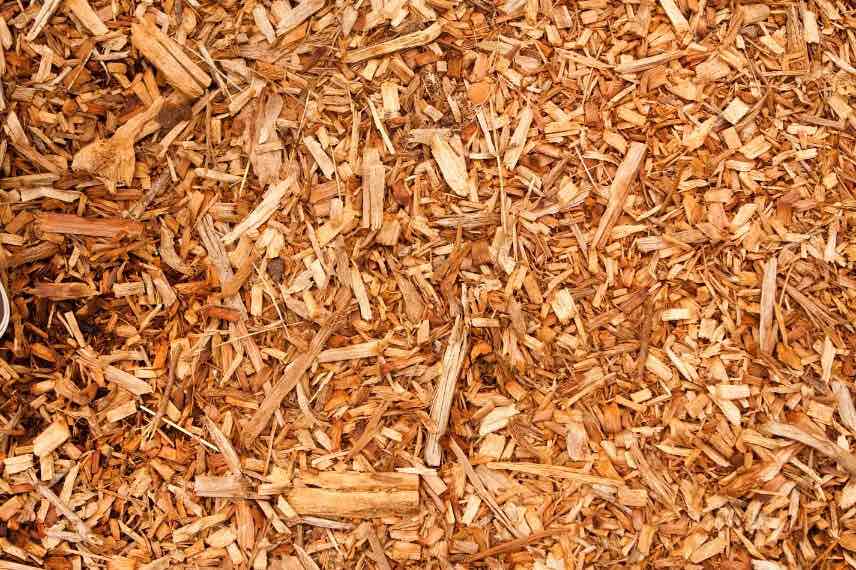
A designated area with organic mulch
Maintaining a Moist Lawn
As we have seen, dry soil and lack of rain are aggravating factors, as urine cannot be diluted by water. You can therefore keep your lawn consistently moist as a preventive measure. This will require regular watering or setting up an automatic irrigation system, which is more self-sufficient and less time-consuming. For optimal watering, prefer early morning or late evening to limit evaporation risks. However, this solution is difficult to maintain during heatwaves and water restrictions.
Choosing Alternatives to Lawn
Some plants also make good groundcovers, which can be true alternatives to lawn. They can withstand foot traffic, require little watering and maintenance, and may even be less sensitive to dog urine. This would be the case for white clover (Trifolium repens).
Additionally, check out our dedicated article: “Alternatives to Lawn: 10 Groundcovers to Replace Short Grass Meadow”.
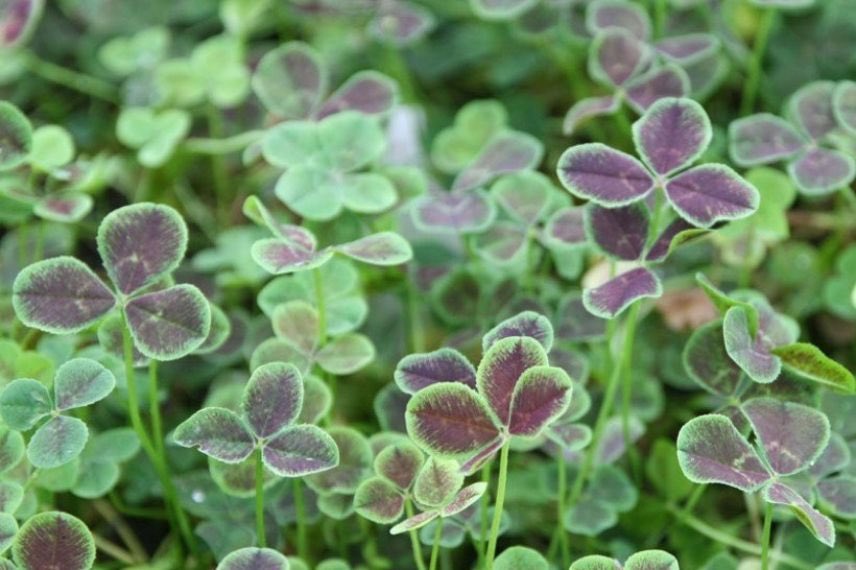
Trifolium repens ‘Pentaphyllum’
Adjusting Your Dog’s Diet
Ensuring your dog stays well-hydrated will impact the composition of its urine: richer in water, it will be more diluted and less concentrated in harmful elements for the lawn. Provide multiple bowls placed in various locations around the home to encourage your pet to drink more.
There are also natural stones to place in your dog’s water bowl: these are said to neutralise the nitrates present in urine, making them less harmful to the lawn. You can easily find them at pet shops or online.
- Subscribe!
- Contents
Comments