


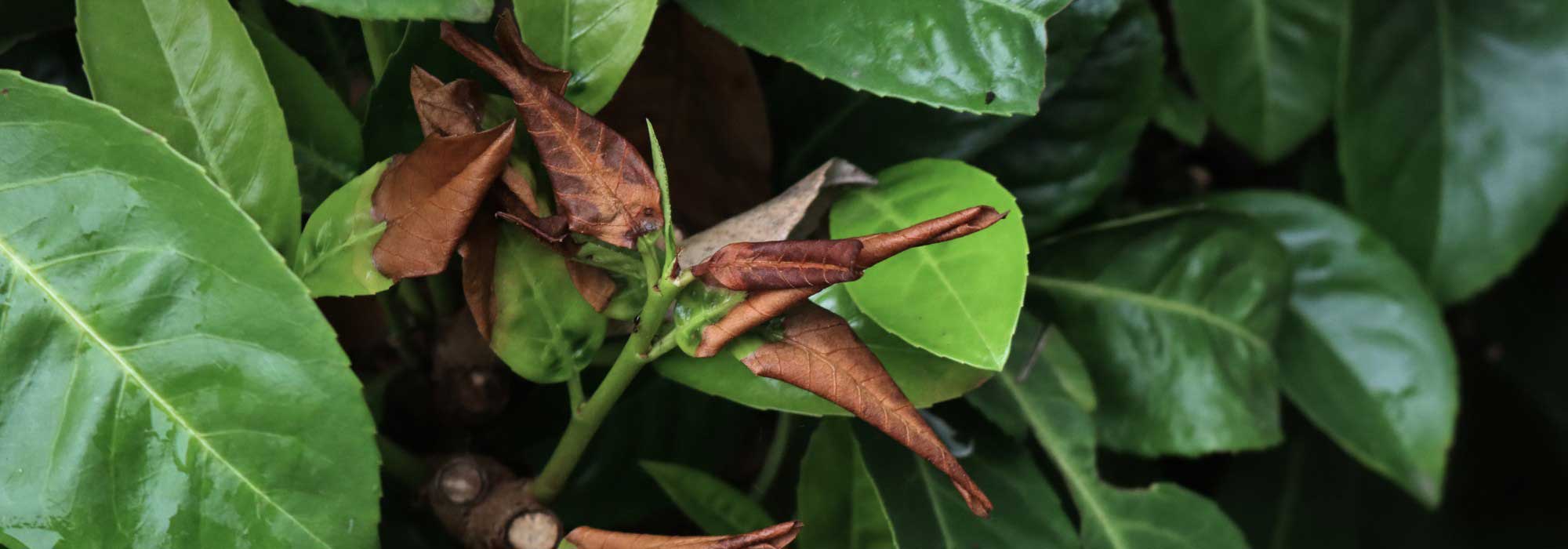
Leaves on my shrub are changing colour and dropping off: why?
What are the reasons behind it, and how can they be addressed?
Contents
Your shrub seemed to be in good health so far, but for some time you have noticed its leaves discolouring and starting to fall… Is it ill or attacked by parasitic infestation? Is it about to die? It is essential to understand what is happening in order to act effectively. We explain the main reasons for these changes and provide you with solutions to keep your shrubs in good shape and leafy!

My shrub is experiencing water stress
Shrubs require an adequate amount of water to grow properly. A lack of water is one of the main reasons that can explain the discolouration and leaf drop. A shrub that is thirsty can be recognised by its leaves pointing towards the ground and curling in on themselves, before becoming dry and brown, then dropping. In case of doubt, check the moisture of the substrate by scraping away the top few centimetres of the soil. Water your plants regularly and apply a layer of mulch to keep the soil cool for longer. Be especially vigilant during heatwaves and prolonged droughts, as well as for shrubs grown in pots, because the substrate dries out more quickly than in the ground. You can also move your potted shrubs into the shade to protect them from the scorching sun.
Similarly, excess moisture can cause similar symptoms. Too much water deprives the roots of oxygen and can cause root rot, which manifests as yellow and soft leaves that eventually drop. Check that the substrate is well-draining. If not, you can add well-decomposed compost and coarse sand to improve drainage. If your shrub is potted, ensure it has adequate drainage holes and avoid letting water stagnate in the bottom of the pot. Always wait for the substrate to dry out before watering again.
For more information, consult our advice sheet: “My shrub is losing its leaves in summer: why?”
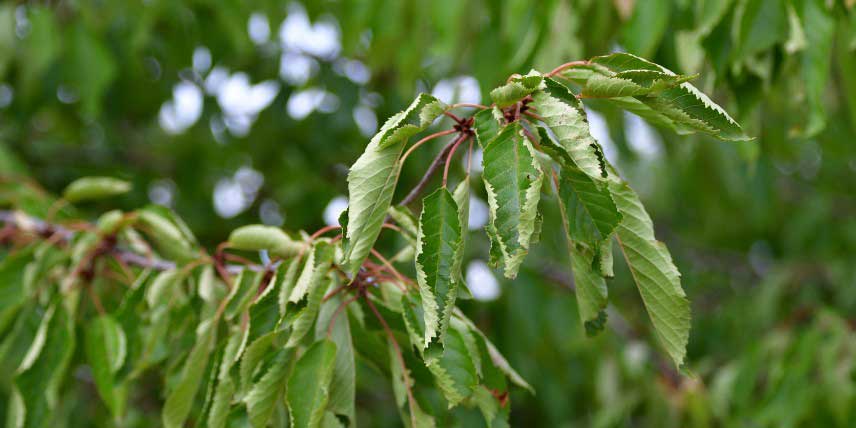
When a plant is thirsty, its leaves point toward the ground and fold in on themselves, before drying out and dropping
Read also
10 ways to naturally kill a plant!My shrub is chlorotic
Chlorosis manifests as the discolouration of the foliage due to a nutrient deficiency. It is most often an iron deficiency (ferric chlorosis). The leaves then turn yellow between the veins, while the veins themselves stay green. The yellowing is observed mainly on the younger leaves at the tips of the shoots. In time, the leaves may necrose and drop. The shrub is weakened and its growth is slowed. Chlorosis is often caused by an alkaline pH or an excess of lime in the soil. The presence of lime prevents the shrub from absorbing iron, and this element is essential for chlorophyll synthesis: that is why the leaves turn yellow. However, chlorosis can also be caused by an excess of phosphorus or potassium, waterlogged or too compact soil, or watering with water that is too calcareous. Chlorosis is frequently observed in ericaceous plants (rhododendrons, camellias, hydrangeas…) planted in soil with too high a pH (which prevents the shrub from absorbing iron), but it can also affect citrus trees, strawberries, and many ornamental shrubs and plants.
To prevent chlorosis, it is important to choose plants suited to the nature of your soil: avoid ericaceous shrubs if your soil is calcareous. Likewise, if your soil is heavy and tends to retain water, you will need to improve drainage at planting time (adding organic matter, coarse sand…). Regular applications of compost or manure will nourish your plants naturally and help prevent deficiencies. We also recommend watering with rainwater, as mains water can be too calcareous for your plants. You can also use anti-chlorosis treatments, notably iron chelates that are sprayed onto the foliage, as well as nettle manure: rich in iron and minerals, it has a genuine anti-chlorosis effect.
For more information, see our guide to ferric chlorosis as well as our video tips: “How to combat chlorosis?”
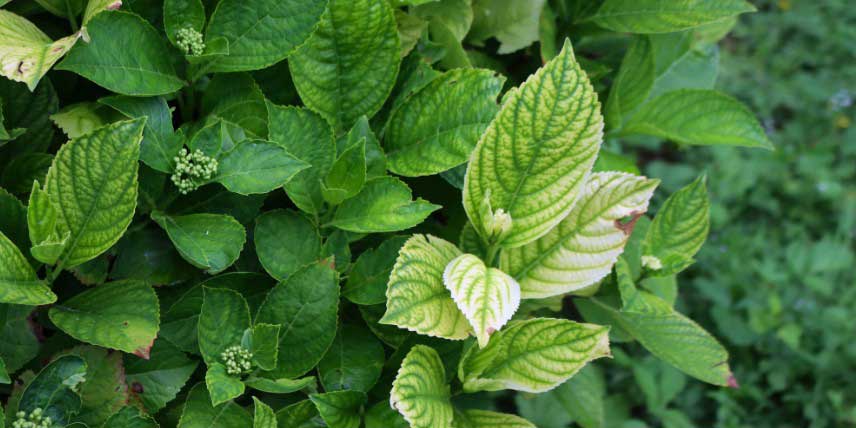
Chlorosis is easy to recognise by the yellowing of the foliage, with the veins remaining green.
My shrub is ill or affected by a parasitic infection
Diseases and pests can cause leaf discolouration and leaf drop. Cryptogamic diseases (caused by a fungus) can cause spots, yellowing, as well as premature leaf drop. It is therefore important to recognise them and intervene before it’s too late. Among them, powdery mildew is characterised by the appearance of a white powdery coating on the leaves, which can eventually dry out and drop, while the rust causes the appearance of orange spots on the leaves. In the case of sooty mould, the leaves become coated with patches of black, soot-like marks. Your shrubs can also be affected by the anthracnose, downy mildew, the entomosporiosis… as well as by bacterial or viral diseases (fire blight, Xyllela fastidiosa…).
Your shrub can also be attacked by parasitic insects, such as the thrips. These tiny insects pierce the leaves to feed on the sap, which leads to leaf discolouration, marked by small patches or silvery-grey marbling. In time, they dry out and fall off. Parasitic insects such as aphids and scale insects can also trigger the appearance of sooty mould, which grows on the honeydew secreted by these insects. Remember to inspect your plants regularly, also checking the undersides of the leaves: pests (or their eggs) often hide there.
Feel free to consult our fact sheet: “Identify the main parasitic insects and plant diseases”
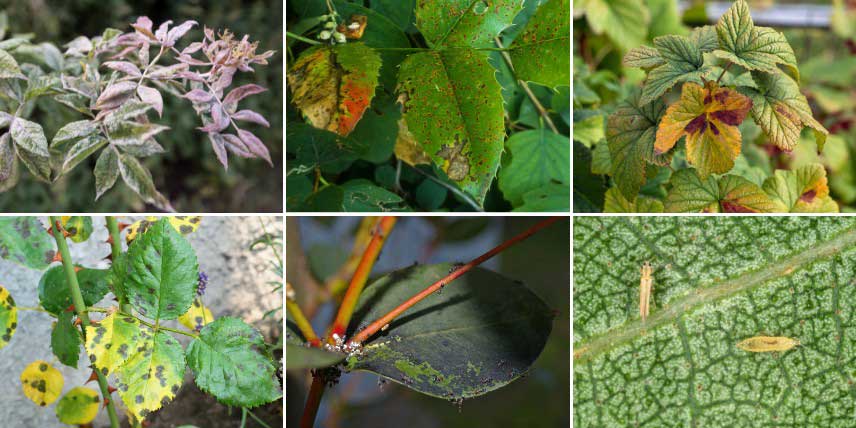
Different diseases and pests can cause leaf discolouration: powdery mildew, rust, anthracnose, downy mildew, sooty mould and thrips
The leaves of my shrub are burnt
Excessive sun exposure and heat can cause discolouration and leaf drop in your shrubs. Leaves may turn yellow or brown, and drop prematurely. To avoid this problem, ensure you plant your shrubs in an appropriate spot, according to their light and heat requirements. If your plant is placed in unsuitable exposure (for example, a shade-loving plant placed in full sun), its foliage may scorch and discolour.
Even if placed in an appropriate exposure, your shrub may have suffered heat stress during a heatwave. Its leaves then become soft, turning yellow and dry, scorched by the sun. To avoid this problem, do not hesitate to shade your plants in midsummer, either by moving the potted plants into the shade, or by installing shade sails, or by using climbing plants trained over a pergola, for example. Also remember to water them generously (avoiding wetting the foliage, as droplets can act as a lens and scorch the leaves). We also recommend laying a layer of organic mulch around the base. Finally, prune the burnt areas, the damaged stems and the dead leaves: this will help the shrub conserve its energy and regenerate more quickly.
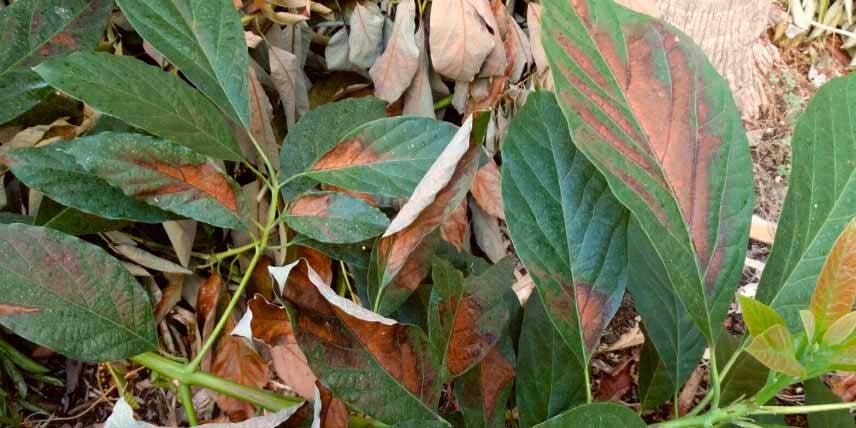
Leaves scorched by the sun
My shrub is thriving: the cause is natural!
Deciduous shrubs go into dormancy in autumn, as temperatures drop and days shorten. They reduce their chlorophyll production; their leaves then begin to change colour and fall. With prolonged drought periods and increasingly frequent heatwaves in recent years, plants may enter dormancy earlier, in late summer rather than autumn. They protect themselves by limiting photosynthesis and evapotranspiration, which helps them conserve water. This is a natural phenomenon that will not prevent them from restarting in spring, as soon as climate conditions are more favourable. However, by entering dormancy earlier, they risk having fewer nutrient reserves and being more susceptible to diseases and parasites, as well as to weather-related hazards.
Some preventive measures to keep your shrubs healthy
- Plant shrubs suited to your soil type and climate, and take care with planting, by incorporating compost, along with coarse sand or gravel in heavy soils.
- Adjust watering. Water your plants regularly, but allow the growing medium to dry between waterings.
- Water preferably with rainwater to limit the risk of chlorosis.
- Mulch around the base of your shrubs to keep the soil cooler for longer.
- Regularly inspect your plants for diseases and parasites, which will allow you to address them at the earliest opportunity.
- Apply compost at the base of the shrubs to feed them. You can superficially incorporate it into the soil with a light raking.
- In the case of potted shrubs: ensure the pot has drainage holes and do not let water stagnate in the saucer. Reduce watering in winter. Consider repotting your shrubs or performing a top-dressing each year to refresh the growing medium.
- Prune to thin the foliage and allow better air circulation. Remember to sanitise your pruning tools and apply wound sealant to the larger cuts.
- Remove diseased or damaged leaves as soon as you see them.
- Strengthen your plants’ defences. Discover our tips for making horsetail manure and for nettle manure, as well as for preparing a garlic decoction.
- Subscribe!
- Contents
Comments