


Bean weevil: what is it? How to get rid of it?
Our guide to identifying and treating naturally
Contents
The bean weevil is a scourge, more feared by professionals who manage large quantities of legumes, but that one can also encounter it in the kitchen garden. These small insects, though discreet, can cause damage considerable, notably on beans, broad beans and lentils. Their presence in gardens, fields and especially in storage areas should not be taken lightly.
Controlling the legume weevil is essential to safeguard the health and productivity of crops. Whether you grow beans, broad beans or lentils, this article guides you in protecting these precious crops. Let us explore how to identify this pest and the signs of infestation, and offer some practical solutions to combat this pest, favouring environmentally friendly methods.

Identifying
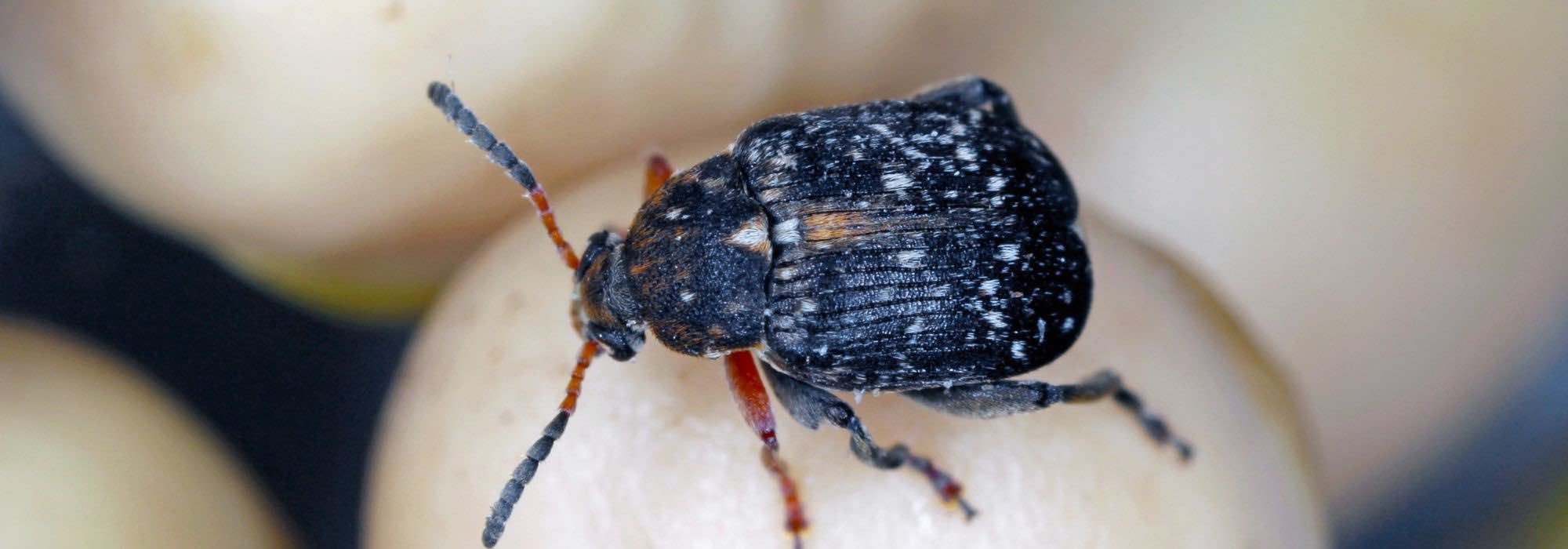
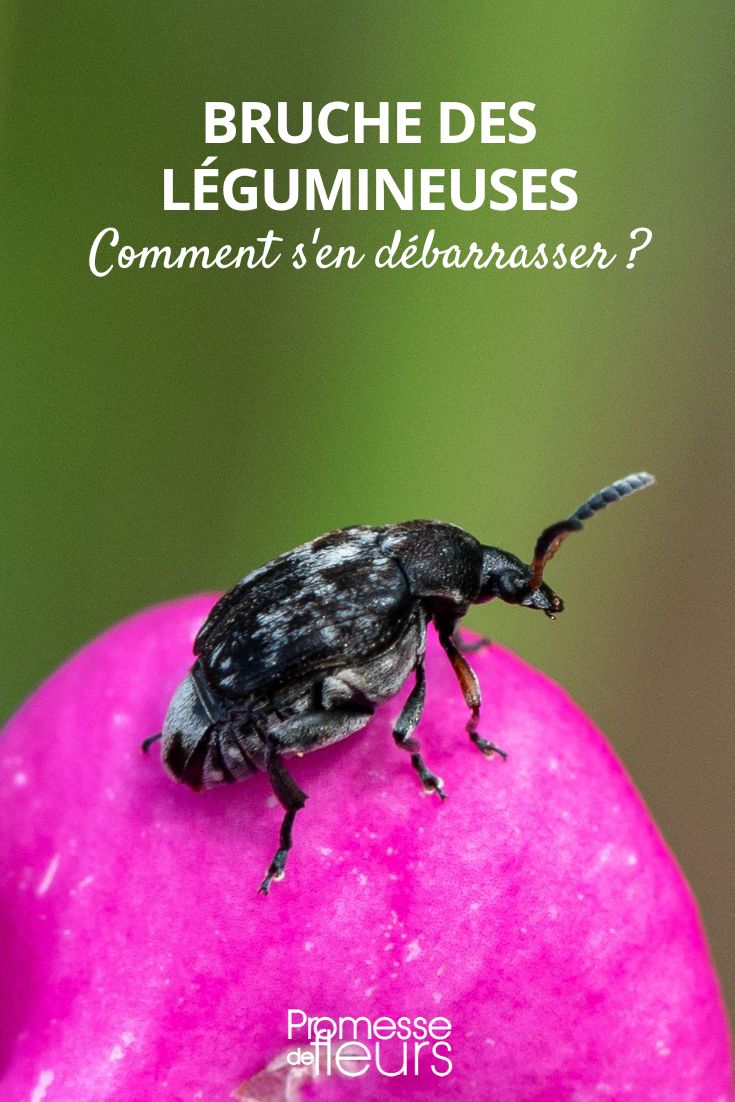
Correctly identifying the bean weevil in legumes is the first crucial step for effective control. This insect, belonging to the beetle family, is characterised by its small size, typically between 3 and 5 mm, and its colour ranging from brown to black. Adults have wings and can fly, while the larvae, whitish and wingless, develop inside the seeds.
Infestation signs are often subtle at first. Gardeners should watch for several indicators, mainly in stored seeds, but also in cultivation:
- Holes in seeds: a small round hole on a seed is an obvious sign of the bean weevil’s presence. This hole is created by the larva as it emerges from the seed.
- Damaged seeds: seeds infested by the larvae may show signs of deterioration, such as cracks or deformations.
- Presence of adult beetles: finding small beetles near legume plants is an infestation indicator.
It is important to note that bean weevils prefer certain species. The beans, broad beans and lentils are their favourite targets. Regular monitoring of these crops is therefore essential, especially during hot, dry periods that are conducive to their development.
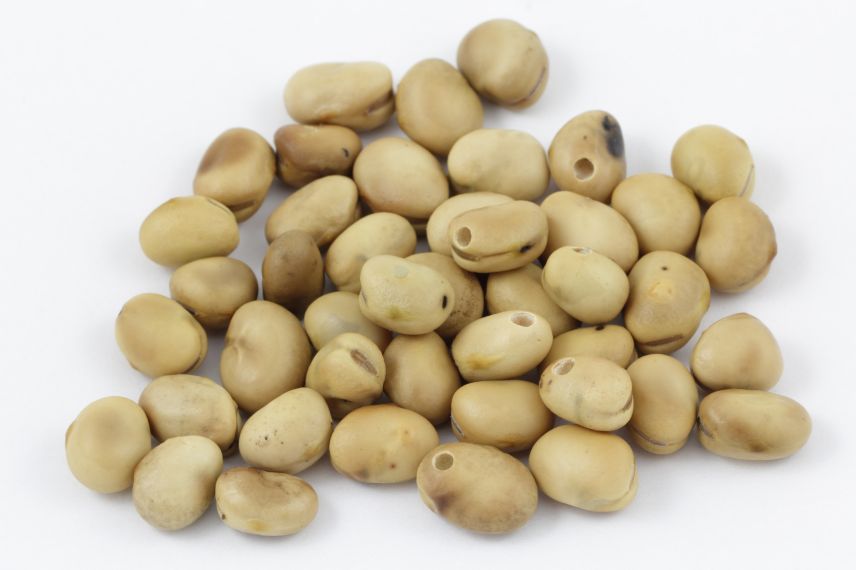
Bean weevil damage includes, among other things, holes in seeds
What is it?
To effectively combat the bean weevil, it is essential to understand its life cycle and host preferences. This knowledge allows for more targeted control and prevention strategies.
Legume species most affected
-
- Beans: Beans are particularly susceptible to the bean weevil. Stored dry varieties are often the most affected, but field crops can be as well. Moreover, the bean weevil can have several generations in a year.
- Broad beans: Broad beans, with their large seeds, are a prime target for the bean weevil. Infestation can occur in both the kitchen garden and storage.
- Lentils: Lentils, due to their small size, can be seriously damaged by the larvae of the bean weevil.
Life cycle
The bean weevil goes through several stages: egg, larva, pupa and adult. Females lay their eggs directly on the seeds. The larvae, once hatched, penetrate the seeds in which they feed and develop. After pupation, the adults emerge from the seeds, ready to reproduce. This cycle can vary in duration depending on environmental conditions, particularly temperature.
- Bean weevil: When temperatures reach 11 °C, the bean weevil adult, having spent the winter inside the seeds, begins to move into stores or fields. In dry, sunny conditions, and at a temperature of 21 °C, it can even fly. The female bean weevil can lay up to 40 eggs, which she deposits in groups of 2 to 20, either on the pods in the field or directly on the seeds in storage. The eggs hatch after an embryonic period of 3 to 15 days, and the larva then penetrates a seed. Its growth phase lasts approximately three weeks. Thereafter, it creates a circular opening in the seed to pupate. After 12 to 25 days, it emerges as an adult ready to reproduce.
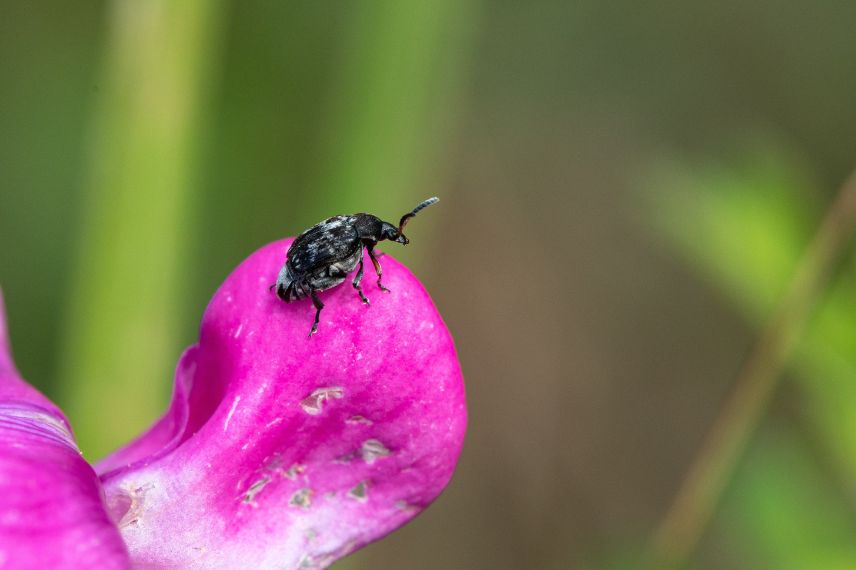
- Bean and pea weevil: Adult bean and pea weevils spend the winter nestled in seeds or in various refugia. At the return of spring, they fly in search of their host plants. On these, they feed on pollen and consume a few flowers. The reproduction period then comes, during which they lay eggs on the pods. These weevils are characterised by high fecundity, capable of up to 400 eggs, but there is only one generation.
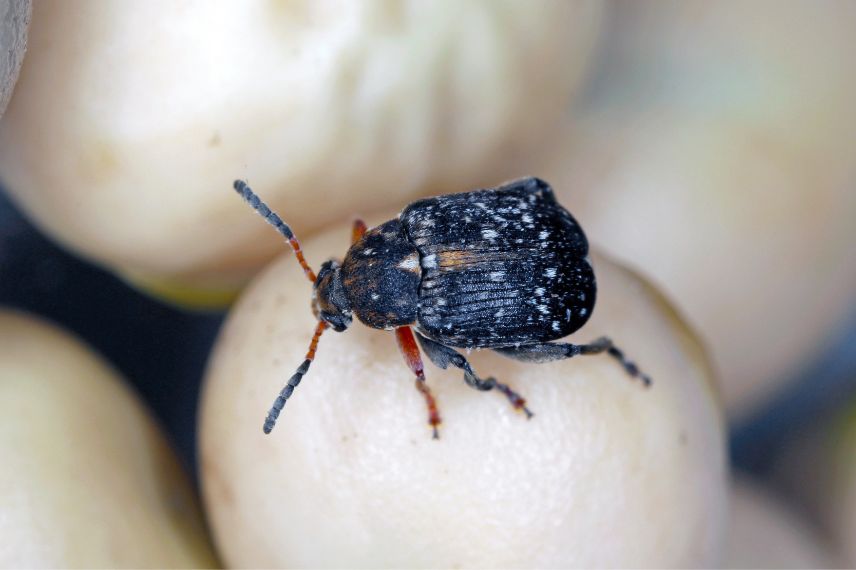
Bean weevil
Treating an active infestation
Read also
5 good reasons to grow legumesPreventing
Here are preventive strategies to integrate into your gardening practices:
- Crop rotation: Alternate legume crops with other types of plants from year to year. This practice disrupts weevils’ life cycle and reduces risk of infestation.
- Garden cleanliness: Keep your garden tidy. Remove harvest residues and weeds that can provide shelter for weevils.
- Proper seed storage: Store harvested seeds in dry, cool conditions. Use airtight containers to prevent access by weevils.
- Subscribe!
- Contents
Comments