





























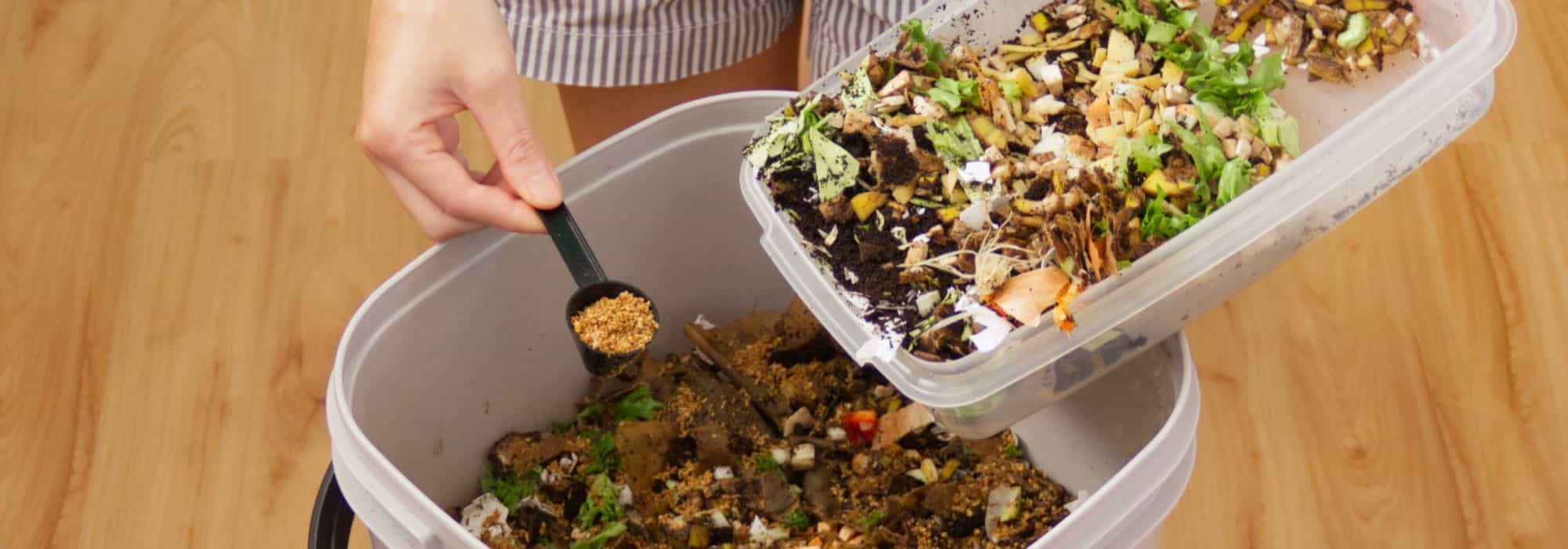
Making compost on your balcony
For ecological gardening
Contents
People often think of composting in a garden rather than on a balcony. There are several reasons for this: lack of space and potential inconveniences such as odours or fruit flies. If you have a balcony and the desire to recycle your food waste yourself and want to learn more about this topic, here are some suggestions on the solutions available to you.

Why compost on your balcony?
Making compost on a balcony, just like in a garden, is an eco-friendly approach. On one hand, it allows for the recycling of biodegradable waste, including plant food scraps, that we generate every day. This is significant since biodegradable waste accounts for 30% of what is thrown in the bin. On the other hand, composting enables you to create a quality natural fertiliser that is inexpensive and can be reused to nourish your own plants.
Another fact to consider: the law against waste and for the circular economy from February 2020 states that all individuals must have a practical solution for sorting their biodegradable waste by 1st January 2024. It stipulates that each household will sort its food waste into a specific bin, which will be collected by dedicated trucks. All of this is, of course, still being implemented, but since not everyone lives in the countryside, it adds even more significance to the question: how to make compost on your balcony?
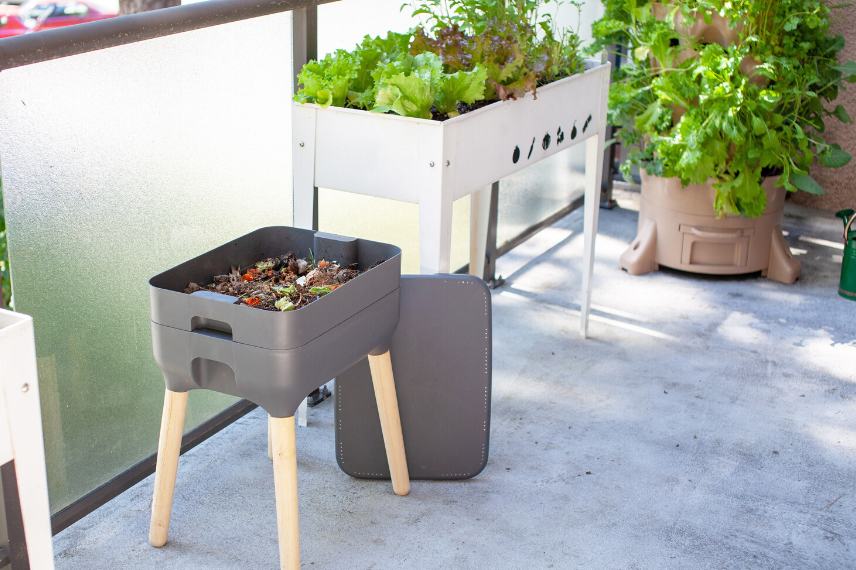
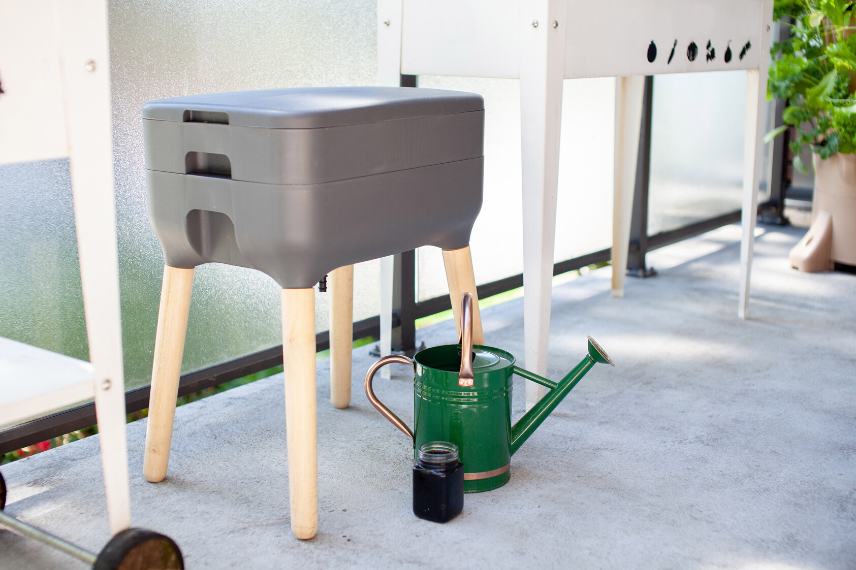
a worm composter on a shaded balcony
Read also
Succeeding with composting in 5 StepsWhich composter for a balcony?
A balcony, no matter how large, can only accommodate a small composter, depending on the space available. Additionally, the composter will not be in direct contact with the soil, as it would be in a garden.
Several solutions are possible: acquire a worm composter or a small composter suitable for use on a balcony that can be found commercially.
The composter can be made of wood (a material that degrades outdoors after a few years), plastic (a lightweight and durable material), or metal (ensuring it does not rust).
The worm composter allows for the decomposition of plant waste, thanks to the action of worms called Eisenia, which ingest and then excrete it, forming humus or compost. Contrary to what one might think, Eisenia are not the earthworms found in garden soil. To carry out this decomposition work, the worms need certain conditions: oxygen, a temperature between 15 and 20°C, and not too much moisture.
The advantage of this option is that you do not have to turn and aerate the compost, as the worms take care of this work. Indeed, the worm composter consists of several stacked bins, and the worms will move from one to another, from the bottom to the top, as the decomposition of the waste progresses. The lowest bin is used to collect the “compost juice,” while the bins above collect the mature compost. For more information, check our tips in this article on the worm composter.
This solution is particularly recommended for composting on a balcony by ADEME (the French Agency for Ecological Transition) and the city of Paris. According to ADEME, worm composting does not generate unpleasant odours if used correctly. Worth a try!
Another option is to purchase a mini composter from the market. There are models that are specifically designed for balconies or for indoor use, such as the Bokashi composter. This method, originating from Japan, allows for the decomposition of food scraps in a sealed bucket by adding specific ferments.
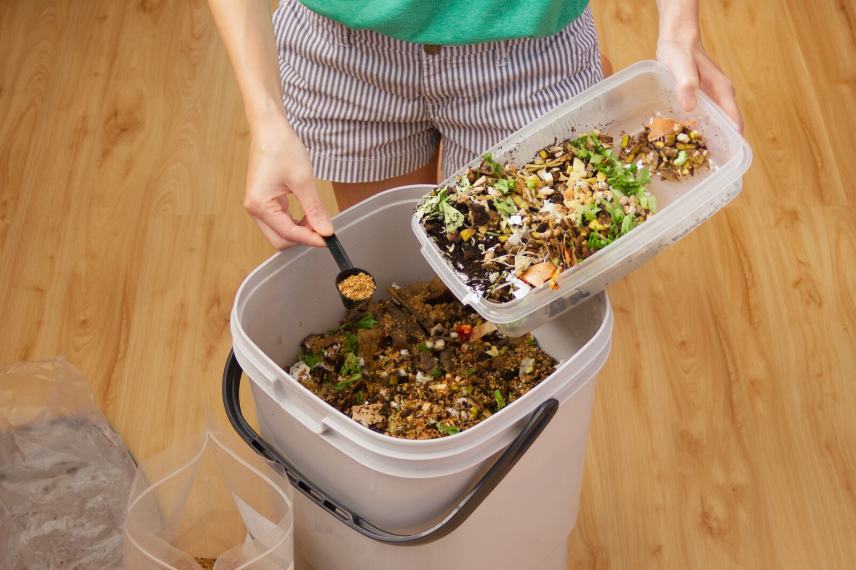
A “Bokashi” composter
What foods to put in a composter on a balcony?
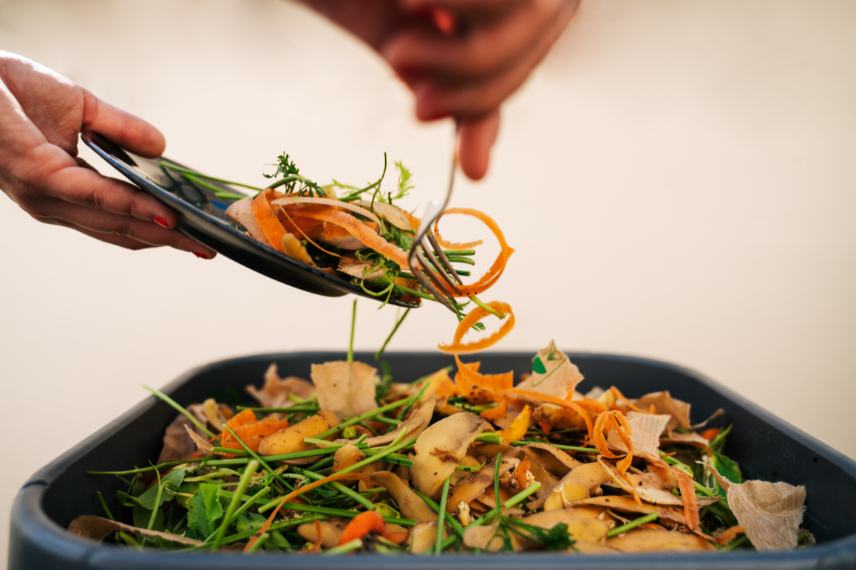
You can compost vegetable and fruit peelings, crushed egg shells, tea bags or coffee grounds, untreated plant leftovers, twigs, or leaves from your balcony. All these items should be cut into small pieces to make it easier for the small animals that will ingest them. You will also add dry material such as cardboard and paper to balance the mixture.
Avoid: For the worm composter, do not include citrus trees, onions, or garlic as they release acidity, which can kill the worms that work to create the compost. Do not add meat, fish, leftovers from cooked dishes, dairy products, or bread either.
Bokashi composters, on the other hand, accept citrus trees, onions, meat and fish leftovers, dairy products, and bread, as the waste is decomposed using a ferment that the user sprinkles over them.
Read also
Vermicompost, midrib practicalHow to proceed?
First of all, the composter should be placed in the shade or partial shade, which is not always the case on a balcony. Therefore, you will need to find a suitable location if you want the decomposition process to work.
Next, follow the instructions for the purchased worm composter or composter.
To obtain good compost, it is essential to find a balance between nitrogen-rich materials (peelings, leaves, green grass…) and carbon-rich materials (cardboard, paper, straw, twigs…). You can add a thin layer of nitrogenous waste, followed by a thin layer of dry waste (cardboard, paper), and alternate the layers. The right balance of air and moisture is also important. Therefore, it is advisable to regularly monitor your compost, turn it, and water it if necessary.
Find in this article our tips for successfully composting in the garden, as well as for using a worm composter.
To avoid gnats or if the mixture is too wet, some recommend adding or covering with cardboard. Another option is to avoid sweet peelings.
How to make a small compost bin yourself?
If you want to start making a small compost bin at home, you can begin with a miniature trial using very simple elements, such as a flower pot (large enough), a saucer to place underneath to collect the compost juice, and a lid to cover the compost.
For the more adventurous DIY enthusiasts, you can find tutorials online to make a small worm composter from rot-resistant wood or plastic. Experiences on this subject vary quite a bit.
Here’s the general idea. To make a worm composter, one possible option is to take stackable opaque plastic bins, in which you make holes so that the worms can move from one level to another. It is also possible to build the frame of the bins from wood and use mesh as a base, allowing the worms to circulate. Then, place a lid on the top bin and you can add a tap to the bottom bin, which will allow you to collect the compost juice.
Another option is to inquire with your local council about their composting initiatives, as the city of Paris, for example, organises campaigns to donate worm composters to residents.
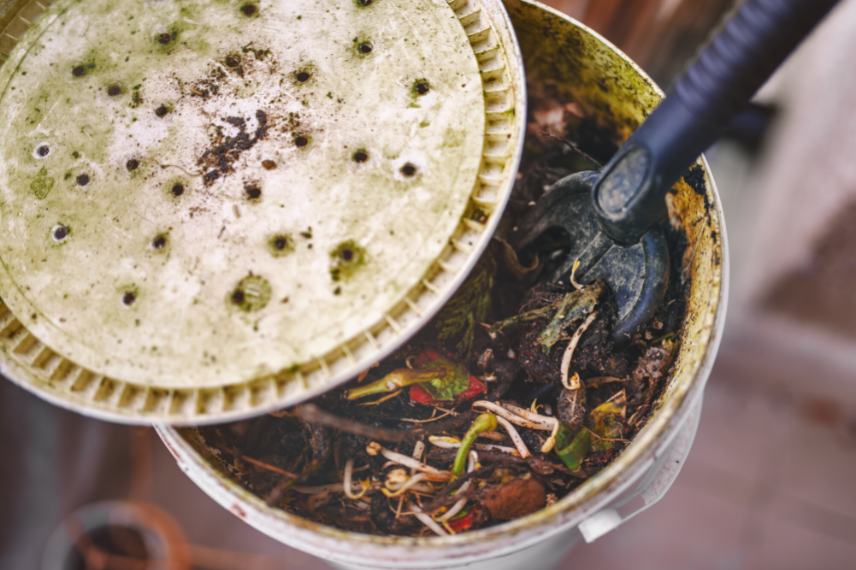
example of a small homemade worm composter
How to use compost on your balcony?
The worm composter, along with some composters, features a tap that allows you to collect the juice or compost tea. This liquid can be used as a fertiliser in watering, provided it is diluted to 1/10.
You can also collect the mature compost to place a little at the base of the plants, without pushing it too deeply into the substrate. Mature compost is recognised by its crumbly structure, black colour, and earthy smell. To obtain it, you should allow several months (between 3 and 8 months, depending on the methods used).
Finally, for those who struggle with composting or do not wish to do it, you can participate in a community composter near you. Also, be aware that there is ready-made worm compost available for purchase in bags.
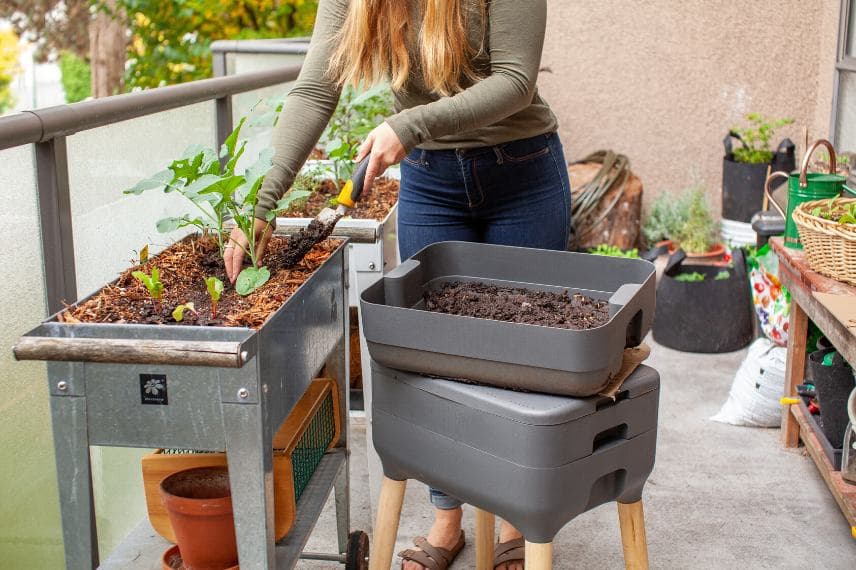
Once mature, compost can nourish balcony plants
- Subscribe!
- Contents
![[plantnet_composting_guide title="Composting on balcony" intro="Discover how to compost on your balcony with our practical guide!"]
Are you dreaming of composting but don't have a garden? No worries, you can also compost on your balcony! With a {glossary}compost bin{glossary} specially designed for small spaces, you can turn your kitchen scraps into nutrient-rich compost for your potted plants. Follow our tips to get started:
1. **Choose the right compost bin**: Opt for a compact compost bin that fits your balcony size. Look for models with a lid to prevent odors and pests.
2. **Layering**: Alternate layers of green materials (fruit and vegetable scraps, coffee grounds) with brown materials (dried leaves, shredded paper). This balance will help aerate the compost and speed up decomposition.
3. **Moisture**: Keep your compost moist but not soggy. Add water if it looks too dry, or mix in dry materials if it's too wet.
4. **Aeration**: Stir your compost regularly to introduce oxygen, which is essential for the composting process. Some compost bins come with aeration tools for easy mixing.
5. **Patience**: Composting takes time, so be patient. In a few weeks to months, depending on the conditions, you'll have homemade compost ready to nourish your balcony plants.
By composting on your balcony, you not only reduce waste but also create a sustainable source of nutrients for your plants. Happy composting!](https://en.promessedefleurs.eu/blogwp/wp-content/uploads/2023/02/Faire-un-compost-sur-son-balcon.png "[plant_guide id=\"1234\" title=\"Making compost on your balcony\" image=\"compost_image.jpg\"]
To make compost on your balcony, you can use a [plant_common_name id=\"5678\"] bin. Fill it with a mixture of [plant_common_name id=\"9101\"] clippings, [plant_common_name id=\"2345\"] peels, and shredded paper. Make sure to turn the compost regularly to aerate it. After a few weeks, you'll have nutrient-rich compost to use in your container garden. Happy composting!")
Comments