


Miscanthus mulch: what are its advantages and disadvantages?
A natural mulch to protect your plants in the garden or in pots
Contents
We regularly extol the many benefits of mulching, and we always advise never to leave soil bare. But among the various mulches available, it can sometimes be difficult to tell them apart. Mulching can be organic, that is, of plant origin, but also mineral (gravel, pozzolana…) or synthetic (fabrics, rolls…). Miscanthus is among organic mulches of natural origin. Let’s take a look at its pros and cons to know how best to use it in the garden.

Miscanthus: what is it?
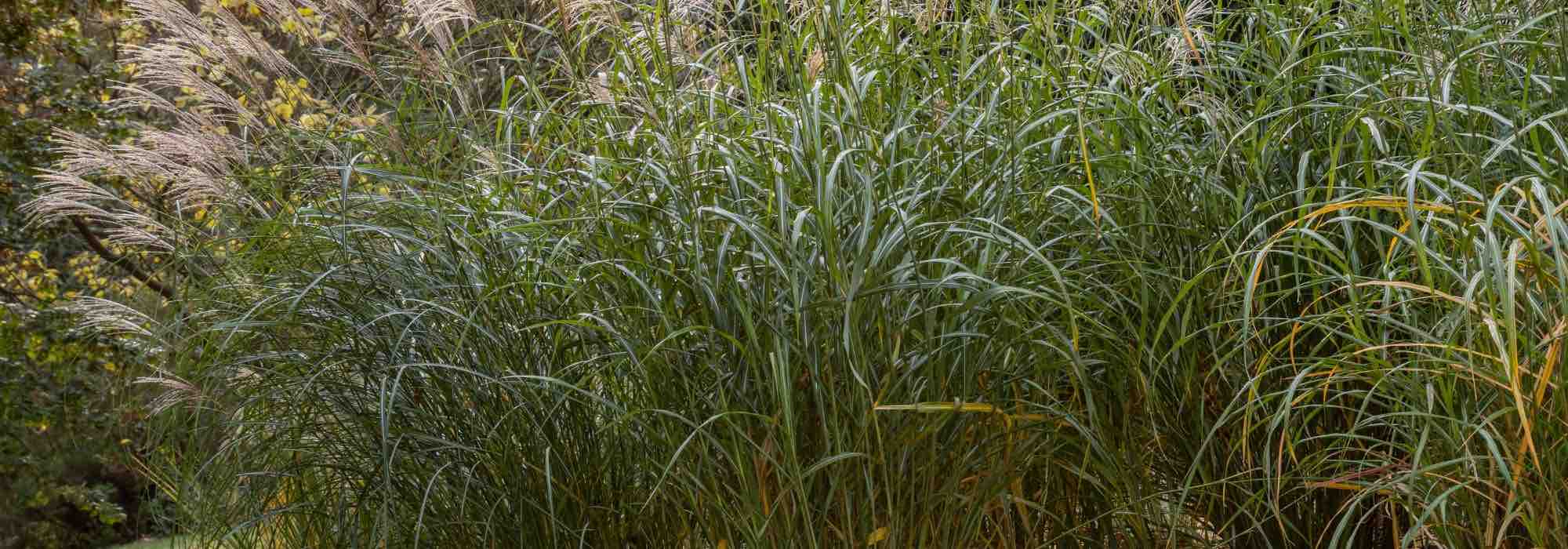
Miscanthus, also known as Chinese reed or elephant grass, is a grass native to Asia. It produces tall stems that can reach nearly 3 metres, valued for the graphic and architectural touch they bring to the garden. They stay put once dried, even in winter. Its graceful clumps sway and rustle in the breeze, adding a rustic, wild note to the garden. In summer or autumn, Miscanthus flowers, unveiling pretty feathery spikelets in colour.
Miscanthus mulch is made from the plant’s stems, which are chipped and dried to obtain small pieces of plant matter.
It can be bought commercially in bags (online or from garden centres), or collected yourself after growing Miscanthus in the garden.
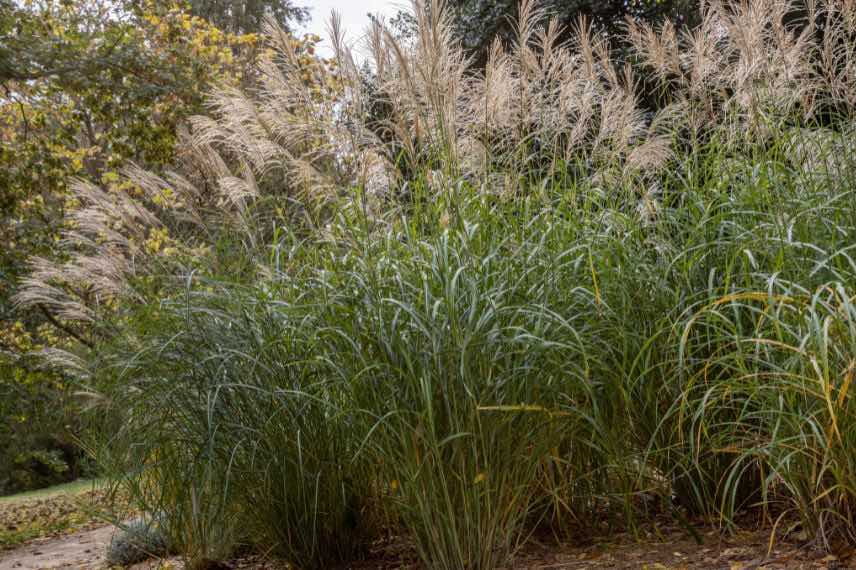
Beautiful Miscanthus clumps with foliage still very green in autumn
Read also
The different organic mulchesThe benefits of this type of mulch.
In general, mulching the soil has several benefits.
- Protect the soil from weather and temperature extremes : wind, rain or scorching sun rays are all assaults that damage the soil and promote crusting, which creates a hard, compacted layer at the soil surface. Mulching helps to insulate the soil and protect the plant’s rootstock from high heat in summer, but also from cold and frost in winter.
- Keep the soil moist for longer. Mulching will retain more water and limit evaporation, which reduces the number of waterings and allows them to be spaced out. The Miscanthus stems are naturally hollow, which further enhances water retention.
- Limit the growth of adventive weeds (« unwanted » weeds), which can compete with the existing crop for resources, especially during the establishment of a new plant. Mulching effectively prevents certain unwanted seeds from accessing light to develop, which eliminates or greatly reduces the need for weeding.
- Add a decorative touch: the colour and texture of the mulch give a neat and warm finish.
As with all natural mulches, the Miscanthus-based mulch also offers additional advantages. First, it comes from a renewable and biodegradable natural resource, making it an eco-friendly mulch. Miscanthus is an easy-to-grow plant, which proves hardy and relatively resistant to diseases and pests. Therefore it requires little or no chemical treatments (plant protection products) to thrive. Most of the mulches derived from this plant are therefore free of harmful products and can be used in organic farming (if you buy your mulch commercially, do remember to read the labels to check this point).
Its ease of cultivation also allows you to grow it in the garden to make your own mulch, which helps you gain autonomy. Take advantage of late-winter pruning to collect the dried stems. Otherwise, this type of flake mulch is easy to find in shops.
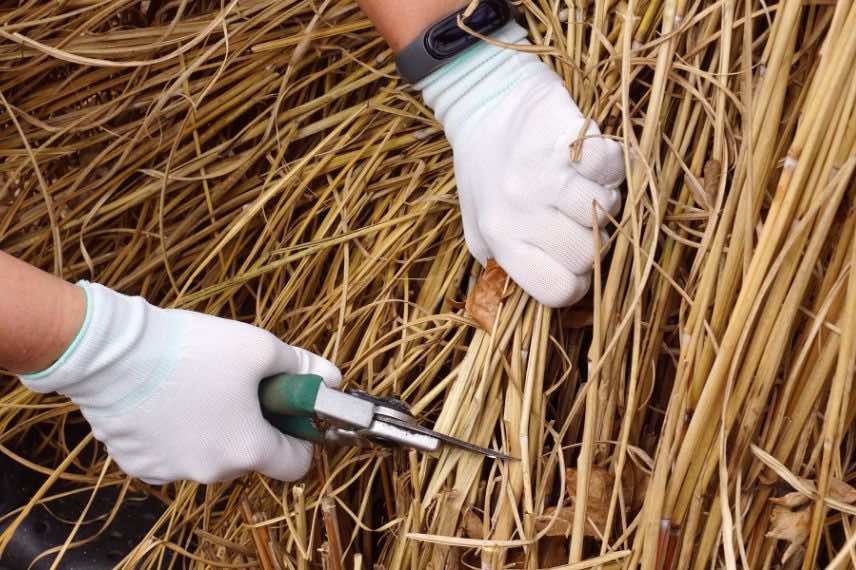
Take advantage of late-winter pruning of your Miscanthus to recycle them into home-made mulch
As it decomposes, Miscanthus will gradually improve the soil: this reduces the need for fertilisation (except for very hungry plants) and provides nutrients that can gradually be absorbed by the plant (minerals such as potassium in particular). But its light texture also helps to aerate heavy substrates.
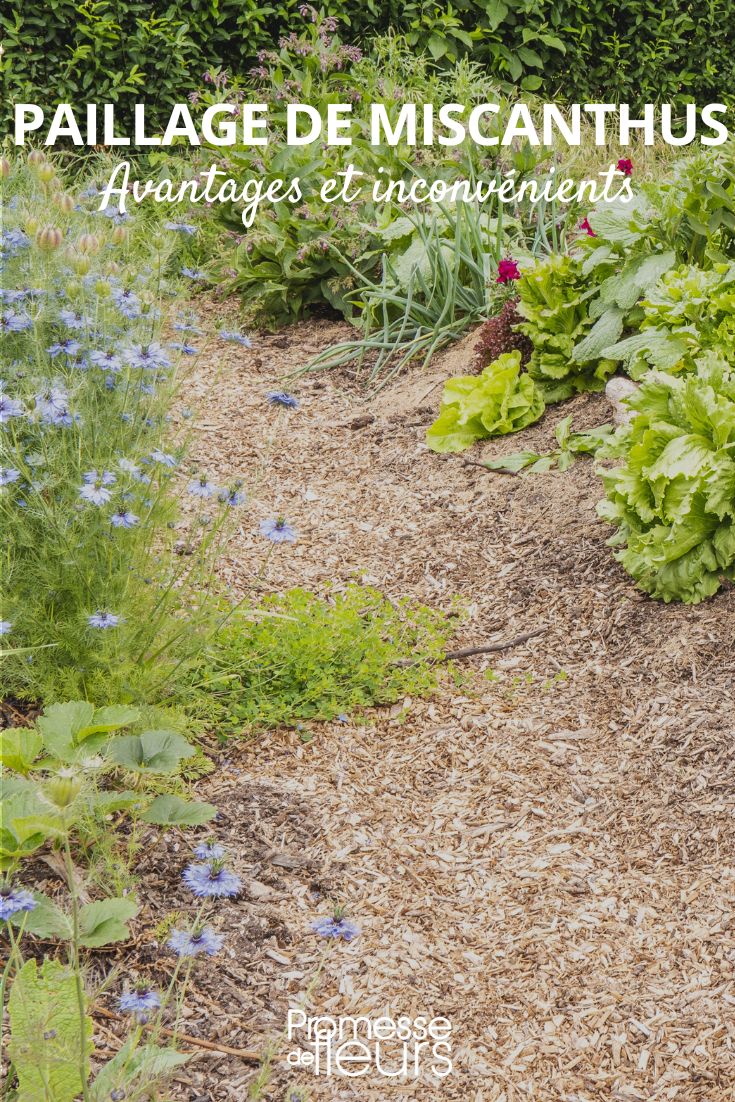
Miscanthus is also appreciated for its light beige colour, which nicely sets off plants and provides a bright contrast. The flakes will naturally interlock with one another, giving a neat, homogeneous finish.
This type of mulch contains no seeds, which prevents the growth of unwanted plants (unlike hay, for example).
Finally, it is a lightweight mulch: it will be easy to store in sacks and move.
The disadvantages of Miscanthus
Although Miscanthus mulch has many advantages, it also has a few drawbacks.
Its pales are fairly light (but heavier than other mulches such as flax). They can therefore tend to scatter in gardens exposed to strong winds. A good watering at the time of installation will, however, help limit this risk and moderate winds will not be enough to move it.
As it will degrade over time, this mulch will need to be regularly renewed (on average once a year).
As with all natural mulches, it can offer welcome protection for snails and slugs (although its natural roughness is sometimes touted as being quite effective at repelling them).
Finally, Miscanthus mulch will prove a little more expensive to buy than other natural mulches, such as straw, hay or wood chips.
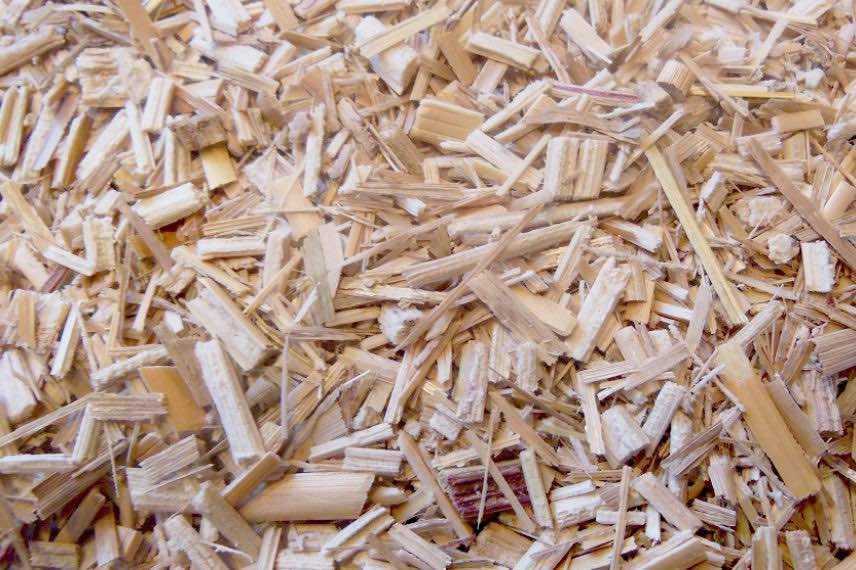
Miscanthus provides a light mulch, not always ideal in very windy conditions
Read also
Mulching: Why? how?What are the best uses for Miscanthus?
Miscanthus mulch can be used in ornamental gardening (flower beds, hedges, borders…) as well as in the orchard, the vegetable garden, or for container growing (pots, window boxes, tubs and hanging baskets…). It is especially suited to heat-loving plants, such as the nightshades (tomatoes, chillies, peppers, aubergines, etc.), courgettes, root vegetables or potatoes in the vegetable garden. Frost-tender plants will also be protected by Miscanthus mulch laid as a thick layer in autumn. Small fruits, such as strawberries, will be kept off the soil by Miscanthus mulch, reducing the risk of rot. Bulbs can also benefit from this type of mulch, as can annuals, biennials, perennials and aromatic herbs.
Approximately 70 litres of pale flakes to mulch a 1.5 m² area at a depth of 5–7 cm. This mulch will be laid after weeding the area and can be laid year-round, although spring is the preferred period as the soil warms up.
Like all natural mulches, Miscanthus tends to retain water and keep the growing medium cool. It will therefore not be suitable for plants that require dry soil, such as rock garden plants, cacti and succulents, or Mediterranean plants.
In very wet regions, its use is also discouraged for plants sensitive to moisture and rot, due to its water-retaining capacity. Sloped gardens should also avoid using Miscanthus, as it can shift about too easily.
- Subscribe!
- Contents
Comments