





























Old and local cherry varieties: fruit trees to plant and preserve
A fruit heritage worth preserving
Contents
The cherry tree has been part of our fruit heritage for centuries. From its fruits, namely cherries, emerge not only unparalleled gustatory pleasures, but also cultural and agricultural wealth that testifies to an ancestral know-how. Yet, faced with the increasing standardisation of modern agriculture and biodiversity reduction, many ancient and local varieties of cherry trees have disappeared from orchards and markets.
These varieties, which have long nourished whole generations and shaped the landscapes of our countryside, are now endangered. They were, however, adapted to the climatic and geographical specifics of each region, with fruits with complex flavours and often greater resistance to diseases. In rediscovering these forgotten varieties, we have the opportunity to reconnect with living heritage and contribute to biodiversity conservation, while cultivating unique fruits.
In this article, we explore the history of the cherry tree, the ancient varieties that deserve preservation, and local initiatives that work to protect and promote this precious heritage.
A personal viewpoint: the most recent fruit varieties are selected to deliver a very sweet flavour, a criterion deemed essential to consumers’ taste. However, by favouring a sweet flavour as the sole totem of quality, we forget that tart flavours, to name but a few, are necessary to give a multidimensional, richer and more complex flavour.

History and origin of cherry trees
The earliest traces of the cherry tree
The cherry tree, long before it was valued in our gardens and orchards, has a long history dating back millennia. Its wild ancestors, belonging to the genus Prunus, grew naturally in temperate regions of Central Asia and Europe. Wild cherry species were notably found in the Caucasus Mountains and in parts of present-day Turkey.
These wild cherry trees produced small fruits often sour and less fleshy than those we know today, but they were already consumed by local populations for their vitamin content and refreshing taste.
The domestication of the cherry tree began in Asia Minor, and gradually spread to Europe through trade and cultural exchanges. The Romans, keen fruit lovers, played a major role in spreading the cherry tree across Europe during their conquests. The tree spread quickly across the Mediterranean basin and into regions further north, notably Gaul and Germania.
The development of local varieties
Over the centuries, cherry trees continued to diversify according to the climatic conditions and the specific soils of each region. This phenomenon gave rise to local varieties, adapted to particular terroirs. Each region, thanks to its microclimate and soil, influenced the natural evolution of cherry trees, as well as the selection carried out by farmers and local gardeners.
The role of farmers in diversification
The richness of local cherry varieties is not explained solely by nature, but also by human intervention. For centuries, peasants have played a crucial role in selecting the most productive, the most resistant, and the tastiest cherry trees. They took care to graft and grow the trees that produced the best fruits, thus creating precious genetic diversity. These cultivation choices addressed not only the dietary needs of families, but also economic and social considerations, notably the sale of cherries at local markets or the use of the fruits for the production of jams, liqueurs and other preserves.
This empirical selection led to the birth of varieties specific to each region, passed down from generation to generation. Some farming families have even given their name to local varieties, today preserved in conservatories or still present in family orchards.
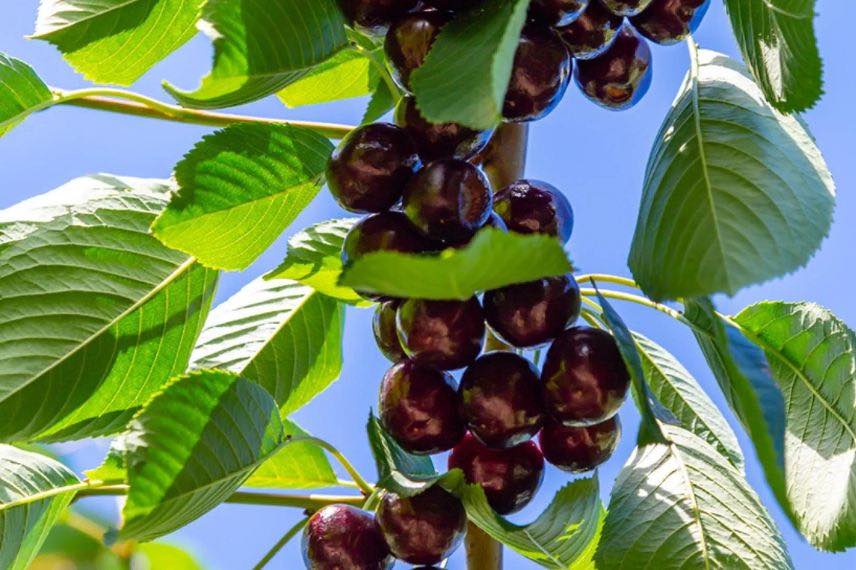
The Noir de Meched cherry, originally from Iran, has long adapted to southern France
Read also
Cherry tree: planting, pruning, careOld varieties of cherry trees: a heritage to rediscover
An old cherry variety stands out from modern varieties by its history, cultivation and characteristics. Generally, an ‘old’ variety is considered to have been cultivated for several decades, or even centuries, before the rise of industrial agriculture and mass modern breeding.
These old varieties have not been standardised through intensive cross-breeding for commercial production, which allows them to retain unique qualities: they are often better suited to local environments and offer richer and more complex flavours. Unlike modern varieties, selected mainly for their productivity and suitability for transport, old varieties emphasise characteristics such as taste, hardiness or disease resistance.
Old cherry trees are thus a reflection of local farming, adapted to artisanal cultivation practices and to consumption often closer to the terroir. They represent a genuine plant heritage that it is essential to preserve to maintain genetic diversity and authentic flavours.
Examples of iconic varieties
- Cœur de pigeon : this variety, one of the oldest, is highly valued for its large cherries with tender, sweet and tangy flesh. The fruits have a glossy skin, ranging from bright red to pale pink. Cultivated in France for several centuries, it is often associated with Provence. It is notable for its robustness and good adaptation to a variety of soil types.
- Montmorency cherry : a French variety originating from Montmorency, near Paris; this sour cherry is particularly valued for making jams, syrups and pastries. Small in size and with a bright red colour, the Montmorency cherry is, despite its acidity, very popular in France and in other European countries for culinary preparations and preserves. See also for processing the Guindoux des Charentes variety.
- Napoleon cherry: originally from Germany, this old variety is recognisable by its bi-coloured fruits, yellow and red, with firm and crisp flesh. The Napoleon cherry is particularly valued for its resistance to diseases and to climatic fluctuations. This cherry is versatile: it can be eaten fresh or used in jams and desserts.
- Meched Black Cherry : imported from Persia (modern-day Iran), this old variety has established itself in the south of France, where it is grown for its dark, almost black fruits and its very sweet flavour. While less well known than some other local varieties, it is a perfect example of the diversity of old cherry trees that, even coming from elsewhere, have adapted to our terroirs.
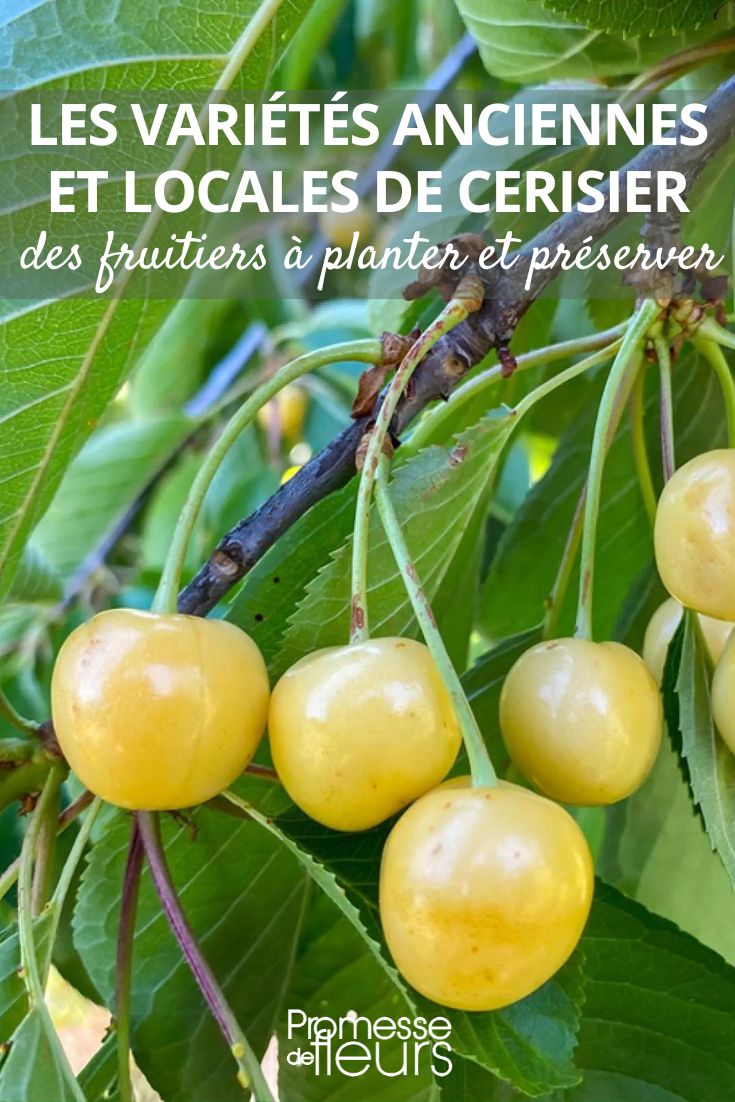
- White Bigarreau or Trompe-Geai : a variety originating from the Landes, with tasty pale-yellow fruits, not particularly attractive to birds.
- Toussaint Morello cherry : remontant (repeat flowering) and with a fruiting period from July to October, an ideal variety for processing.
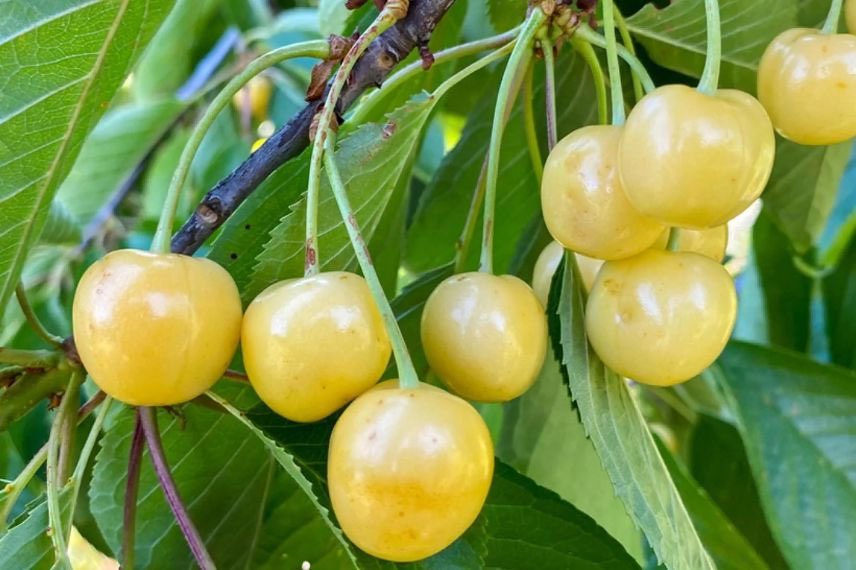
White Bigarreau cherries are not very attractive to birds
Importance of local cherry tree varieties
Local cherry varieties, sometimes known as heirloom varieties, are of great importance for biodiversity as well as sustainable agriculture. Preserving them is essential for several key reasons:
- Local varieties have evolved and become acclimated to the specific conditions of their regions over centuries. This gives them natural resistance to local diseases and pests, as well as better adaptation to climate variations unique to each terroir. For example, a cherry tree that thrived in the mountains will withstand spring frosts, while a southern France variety will be more resistant to summer droughts.
- Local varieties contribute to essential genetic diversity for agriculture. This diversity is vital for the future, as it helps us find solutions to emerging challenges such as climate change, new diseases or parasitic pests. By maintaining broad genetic diversity, we increase the chances of cherry trees being able to adapt to changing environments.
- Local and traditional varieties often offer unique flavours, far from the standardised fruits found in supermarkets. By growing these terroir-specific cherries, flavours are more varied, more intense, sometimes more complex, than modern varieties selected primarily for productivity or their suitability for transport.
- Unlike modern varieties, generally selected for mass production with high demands for chemical treatments, local cherry varieties commonly require fewer interventions. They are sometimes hardier, better able to tolerate more natural conditions, and can therefore be grown in agroecological systems or in permaculture gardens without the use of pesticides or chemical fertilisers.
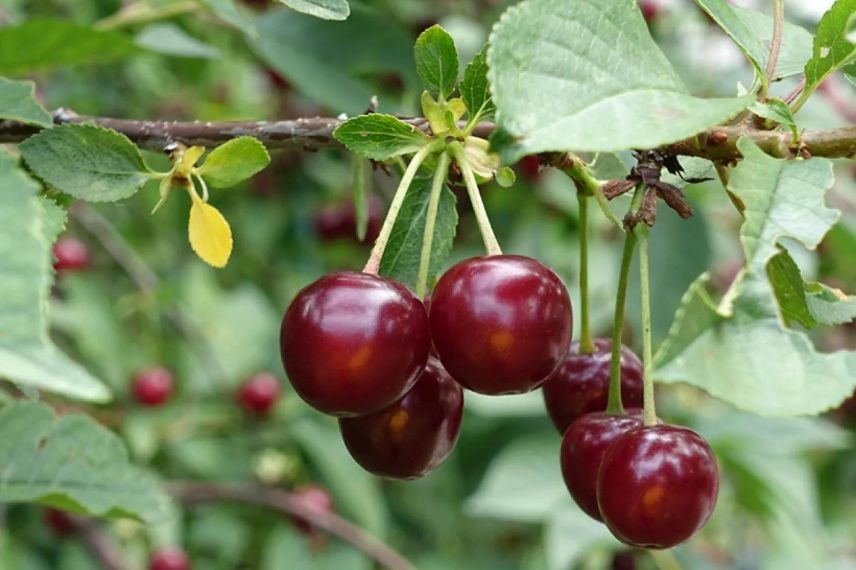
Guindoux des Charentes cherries, delicious when cooked
The challenges of preservation
Despite their advantages, local cherry varieties are today threatened by several factors:
- Standardisation of farming : modern agriculture favours high-yield, uniform varieties that are easy to market. Large-scale farms and distributors prefer fruits that withstand transport over long distances and can be grown intensively. Local cherry trees, often less productive on a large scale or whose fruit is more delicate, have been overlooked.
- Loss of know-how : selection and multiplication of local varieties were once passed down from generation to generation. Today, many of these knowledge areas are disappearing, making the preservation of local varieties more difficult.
- Climate change : changes in local climate regimes can affect the ability of traditional varieties to adapt. Some ancient varieties may be more vulnerable to droughts or prolonged heatwaves. On the other hand, some particularly hardy local varieties could offer solutions to these environmental challenges.
Benefits for gardens and family orchards
Growing local varieties in one’s garden offers many advantages, whether for hobbyists or for those aiming to create ecological orchards:
- Because they have long been adapted to their environment, local varieties often require fewer treatments against diseases or pests. This helps promote soil health and the surrounding ecosystem.
- Many local varieties have evolved in conditions where water and nutrients were limited. As a result, they typically require less irrigation and fertilisers than modern, more demanding varieties.
- Planting local varieties also adds visual and gustatory diversity to the garden. Some ancient cherry trees bear fruits or flowering colours that are unique, with distinctive flavours.
- By planting local varieties, we contribute to the preservation of a living heritage. Each tree becomes a link with the past, a legacy for previous generations and a symbol of the cultural and agricultural diversity of our regions.
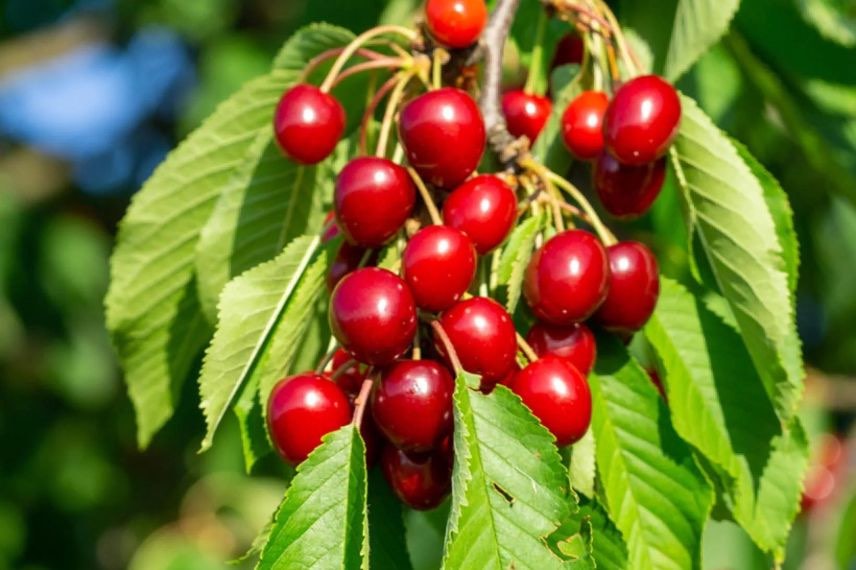
Toussaint Griottier cherries, renewing from July to October on a repeat-flowering tree
Local initiatives to safeguard cherry-tree varieties
Associations and Conservatories: Guardians of the Fruit Heritage
Numerous associations and conservatories play an important role in preserving old and local varieties of cherry trees. Their mission is to safeguard this living heritage, endangered by agricultural industrialisation and the standardisation of fruit varieties.
- Local and national associations : these organisations bring together enthusiasts, producers and researchers who work to protect old varieties. Among them, organisations such as the Croqueurs de Pommes (present across France) are dedicated to preserving old fruit varieties, including cherry trees. These organisations collect testimonies, compile inventories of local varieties that still exist, and organise events to raise public awareness of the importance of these trees. They often offer training on grafting, pruning and the cultivation of cherry trees to encourage individuals to plant and maintain these varieties.
- Botanical conservatories : These places are genuine genetic banks for old varieties. For example, the Verger Conservatoire de Cerises in Westhoffen, Alsace, houses living collections of hundreds of cherry tree varieties, sometimes no longer available through traditional trade. These conservatories work on both conserving the trees themselves and on the transmission of agricultural know-how. They allow amateur gardeners to access grafts or young plants of these rare varieties, thereby promoting their multiplication and distribution in home orchards.
- Subscribe!
- Contents
Comments