





























Our list of the tastiest citrus trees
Discover delicious citrus trees
Contents
In the world of citrus trees, the diversity of flavours, aromas and textures offers a genuine tasting journey. From the lemon bursting with freshness to the sweet scent of the mandarin, each citrus fruit has its own signature that can transform a single dish into a memorable tasting or culinary experience. Through this article, we invite you to discover our list of the most delicious citrus trees, those that promise to enrich your palate with flavours and add a touch of exoticism and colour to your garden or balcony.

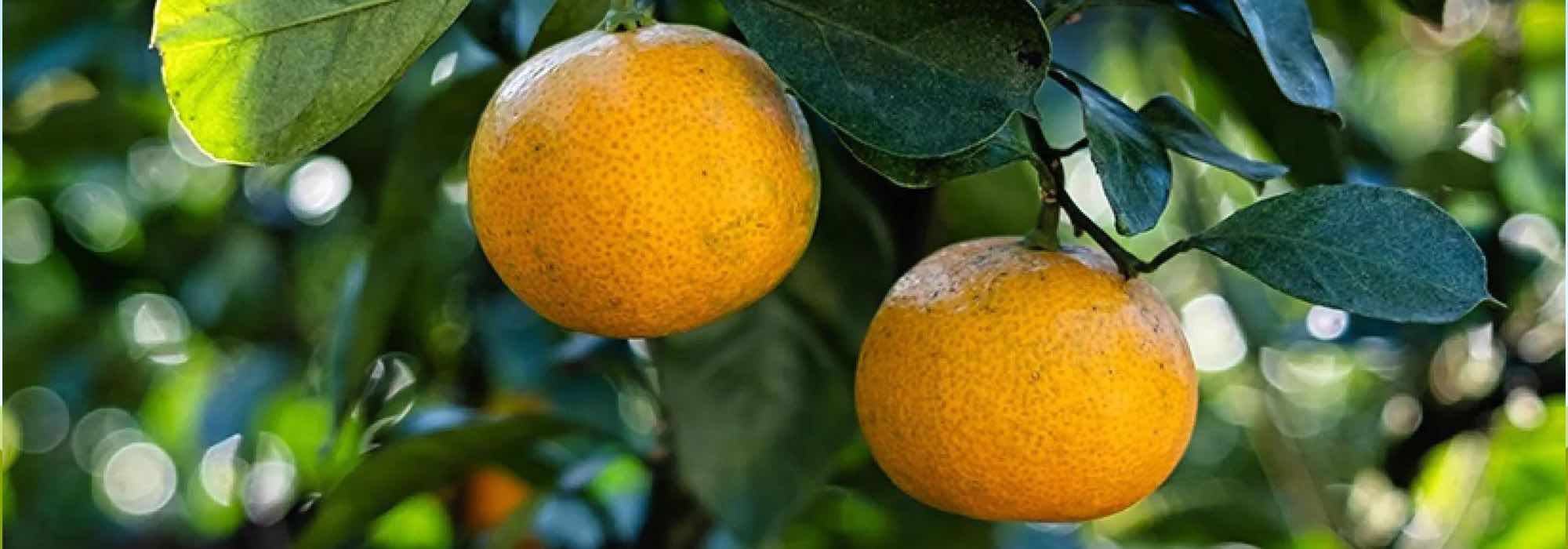
Satsuma mandarin tree
Satsuma mandarin tree, or Citrus unshiu, native to Japan, is characterised by high productivity and early ripening of its fruit. The mandarins produced, delicious, juicy and mildly acidic, are seedless and can be enjoyed even when they still show a green tint, before the first frost. The Satsuma mandarin tree tolerates temperatures down to -8 to -10°C. In spring it displays abundant and fragrant flowering, while winter highlights dense, dark-green foliage, complemented by an elegant and slightly pendulous habit. This mandarin tree is ideal for in-ground cultivation in regions with mild winters and can also be grown in a pot, provided it is protected from frost in winter.
This small tree, which typically reaches 2.5 m in height with a spread of about 1.5 m, bears large and juicy fruits, mainly harvested from September to November. To fully appreciate their flavour, it is recommended to let them ripen at 20°C for at least a week, during which the sugar content of the fruits increases significantly. For optimal growth and fruiting, it prefers a sheltered location and will thrive in a Mediterranean climate.
Yuzu or Citrus junos
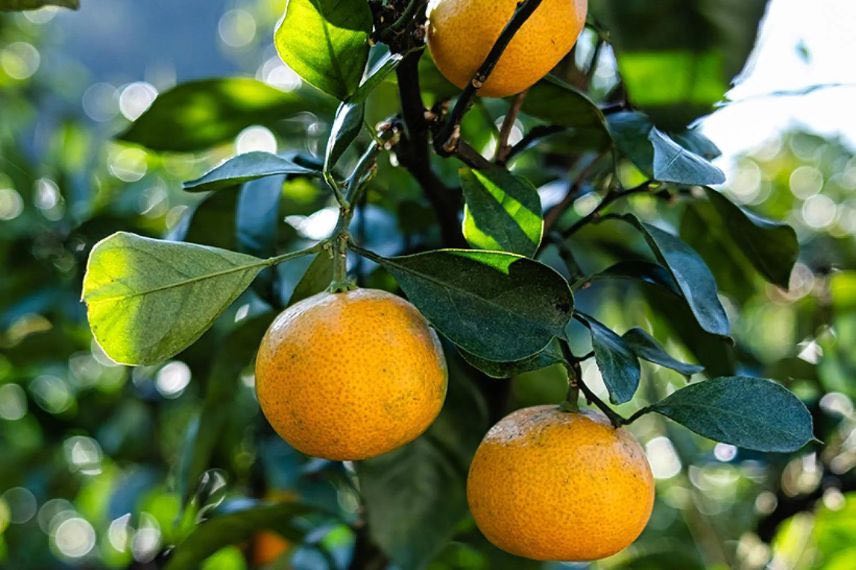
The Yuzu, or Citrus junos, is a citrus fruit of Japanese origin, known for the exceptional aroma of the juice and bark of its fruits. Essential in Japanese cuisine, it is used in the making of many condiments. Its fruits, slightly flattened and resembling yellow mandarins, are harvested between September and November.
The Yuzu lemon tree is a small tree, which can reach up to 4 metres tall and 3 metres wide. Robust, it is hardy to -10°C/-12°C, provided it is planted in a sheltered position from the wind. It is distinguished by its fragrant spring flowering and its thorny branches. The growth of this tree is slow, especially during its early years. It can be cultivated both in pots and in the ground in regions with mild winters.
The flowering of this Japanese yuzu tree typically occurs on plants over four years old, in March–April, with no guarantee of annual fruiting. Its white flowers emit a light, peppery fragrance, heralding the arrival of fruits with green skin turning yellow at ripeness, with a tart and spicy pulp, reminiscent of grapefruit and mandarin with notes of citron and lime.
Lemon tree 'Meyer'
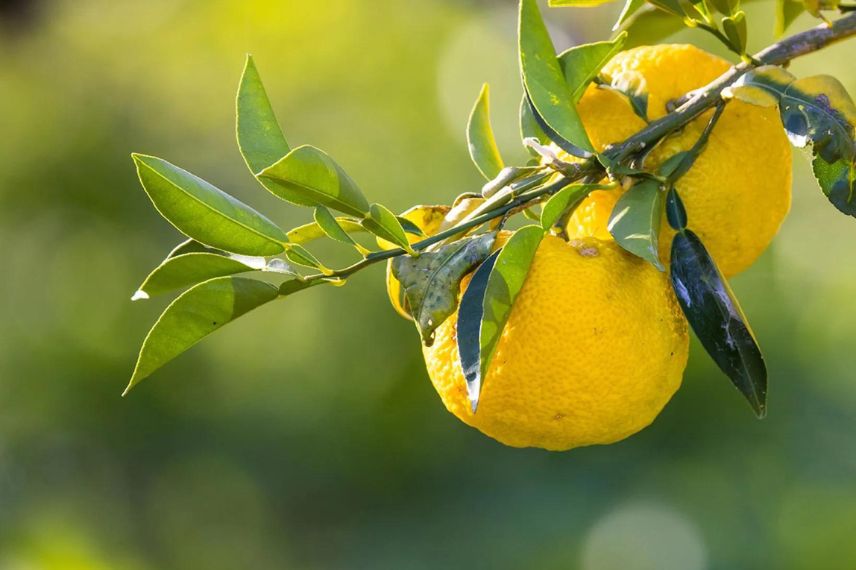
The Meyer lemon tree stands out for producing large, juicy fruits with a less acidic flavour than traditional lemons. Highly prized by cooks and bakers, these citrus trees, with their thin, smooth skin, ripen to a beautiful yellow-orange colour. Their harvest extends practically year-round, offering a one-week shelf life at room temperature once picked. In cooking, their use is versatile, ranging from savoury dishes to sweet desserts, such as lemon chicken or lemon meringue pie.
Hardy down to -11°C, the Meyer lemon tree is notable for its biannual flowering in spring and autumn, giving rise to small white, fragrant flowers that precede fruiting on the current year’s wood. During winter, in its vegetative rest period, the tree requires a cool location, between 0 and 5°C, or protection with a wintering fleece for those planted in the ground. The Meyer lemon tree is an evergreen tree that can reach 2 to 3 metres in height at maturity, with a bushy habit.
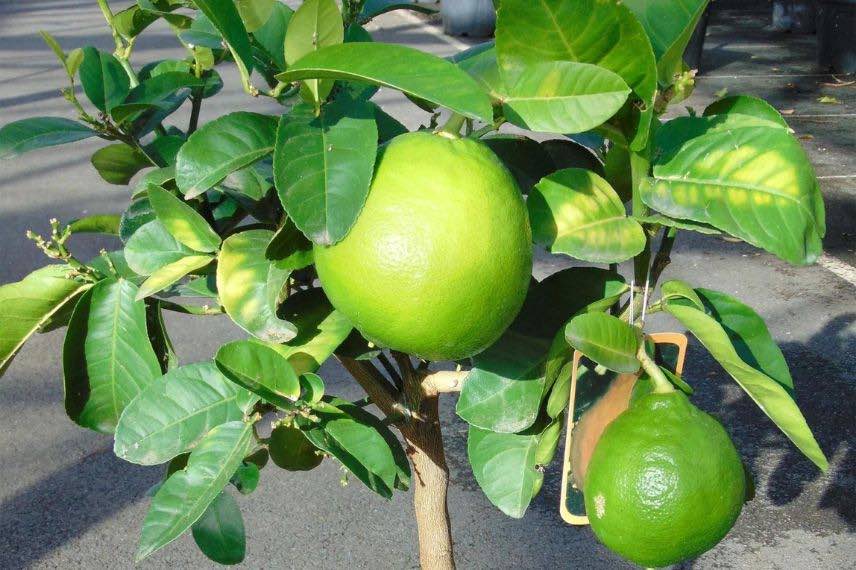
Pomelo or Citrus × paradisi
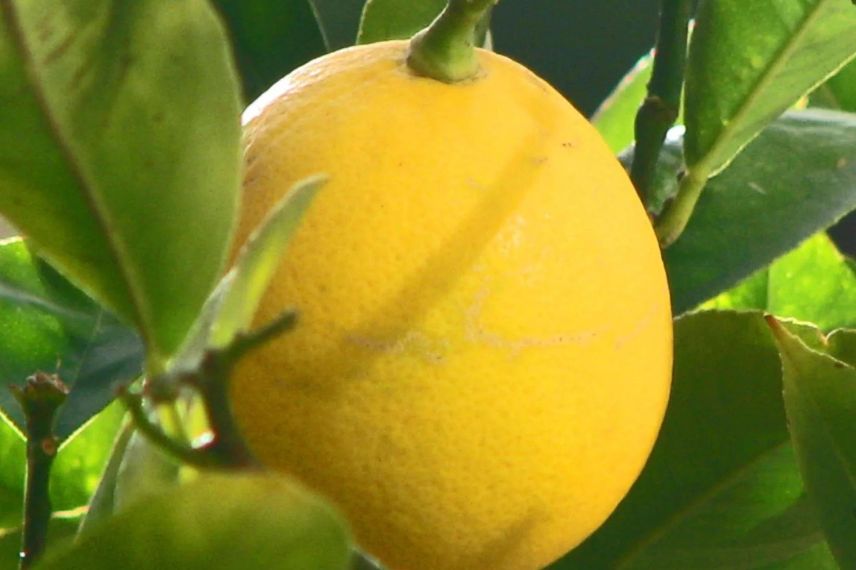
The Pomelo or Citrus (x) paradisi, is often confused with grapefruit, notably due to the thickness of the peel of its fruit, although it is a distinct hybrid. This majestic tree, reaching over 6 metres in height, blooms in spring with large white waxy flowers, exhaling a sweet fragrance. Everything about it is imposing, from its leaves to its fruits, which can reach diameters of over 12 cm. Their white, juicy flesh, rich in aroma, offers a balanced blend of sweetness, acidity and a slight bitterness.
Pomelo will not survive temperatures below -7°C. Nevertheless, it shows good tolerance to soil conditions, and can be grown in a large tub, with overwintering in a greenhouse during winter, or in the ground in warm regions sheltered from severe frosts.
For successful cultivation, Pomelo, like most citrus trees, prefers the soils of Mediterranean coastal regions, requiring constant exposure to warmth, as well as a regular supply of water and nutrients. Being a self-fertile bush, a single plant is sufficient to ensure good pollination and guarantee fruiting.
Citrus 'Kucle' or Kumquatine
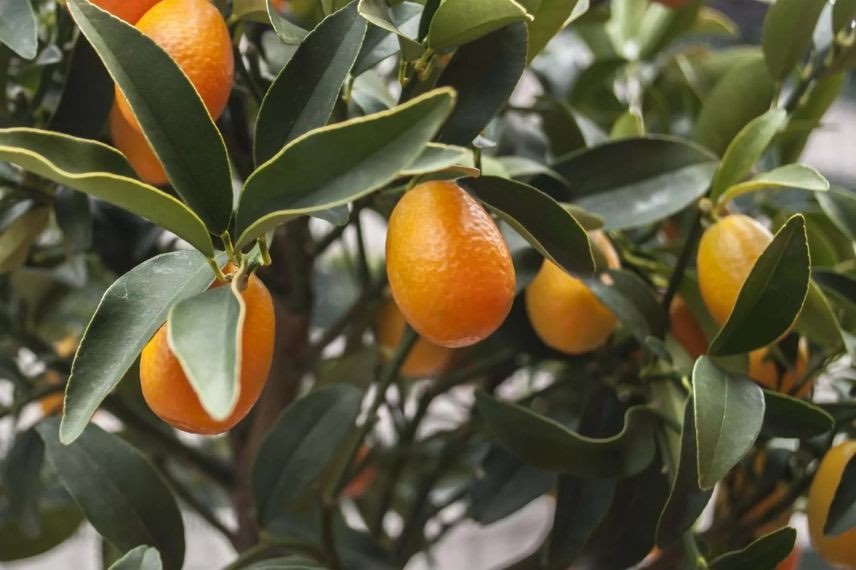
The Citrus ‘Kucle’ or Kumquatine, also known as Kucli, is the fruit of a successful hybridization between the kumquat (Fortunella margarita) and the Clementine (Citrus clementina). This vigorous, aesthetically pleasing bush is adorned with a multitude of orange fruits, slightly larger than those of the kumquat, offering a tangy flavour with a Clementine note at the finish. The habit of eating the Kucle with its skin, just like the kumquat, adds to its charm. Suitable for mild-climate regions, as frost tolerance is limited to -4°C, it can be grown in a pot elsewhere and stored in a greenhouse or conservatory in winter.
Kucle grows into a rounded, compact bush, without thorns. Its bushy, upright habit allows it to reach a mature height of around 3 metres and a width of about 1.5 metres in open ground.
The fruits of the Kucle are not only enjoyed raw for their flavour explosion, but they also feature in a range of culinary preparations, savoury as well as sweet, from jams to refined dishes such as tagines or duck in orange sauce. Sweet-and-sour sauces based on Kumquatine pair wonderfully with Asian specialties, taking advantage of this unique combination of sweetness and acidity.
Green caviar lime grains
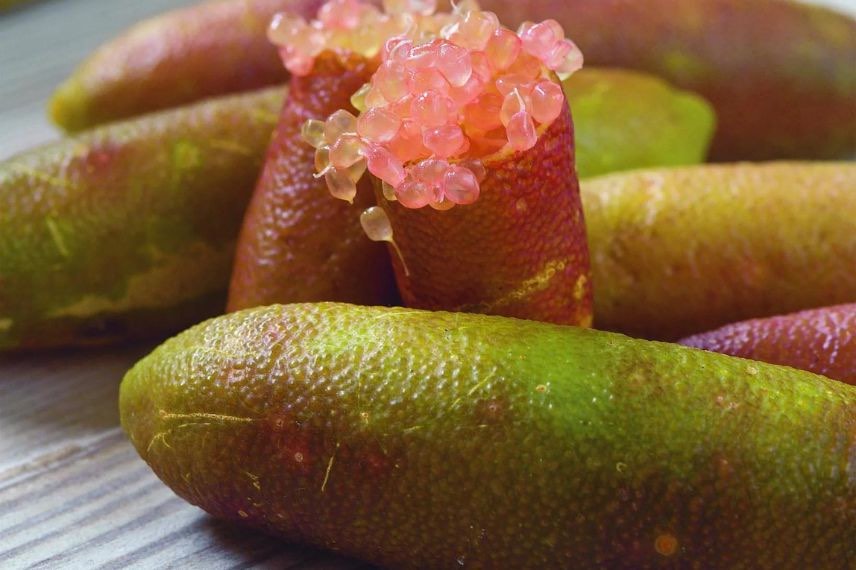
Green Pearls Caviar Lime is a selection of Microcitrus or Citrus australasica. It captures the attention of gourmets and gardeners with its pulp made up of crunchy, juicy beads that retain their green colour at ripeness. This citrus, still relatively unknown among amateur gardeners despite its playful appearance and its compact size ideal for pot culture, originates from Australia and adds a touch of exoticism and refinement to the plates of the world’s finest restaurants.
Originating from the humid, mild eastern regions of Australia, the Caviar Lime is distinguished by its compact habit, ideal for pot culture, and its moderate cold tolerance, surviving down to -4°C. This capacity allows its cultivation in open ground only in Mediterranean regions, or in pots kept frost-free for other regions.
The Caviar Lime wears small, fragrant white flowers in spring, foreshadowing the harvest of its elongated fruits, cucumber-like in shape, which enclose the precious green ‘caviar’. These tiny beads burst in the mouth, releasing tangy and aromatic flavours that are unique.
Cultivation requires slightly acidic soil and a humid atmosphere, conditions more easily achieved in pots.
In cooking, the fruit of the Caviar Lime is a true creative asset, for decorating or flavouring delicate dishes such as seafood, scallops, or salmon carpaccios. The beads can also adorn fruit salads or enrich cocktails, bringing a tangy and aromatic flavour of exceptional character.
Kumquat 'Nagami'
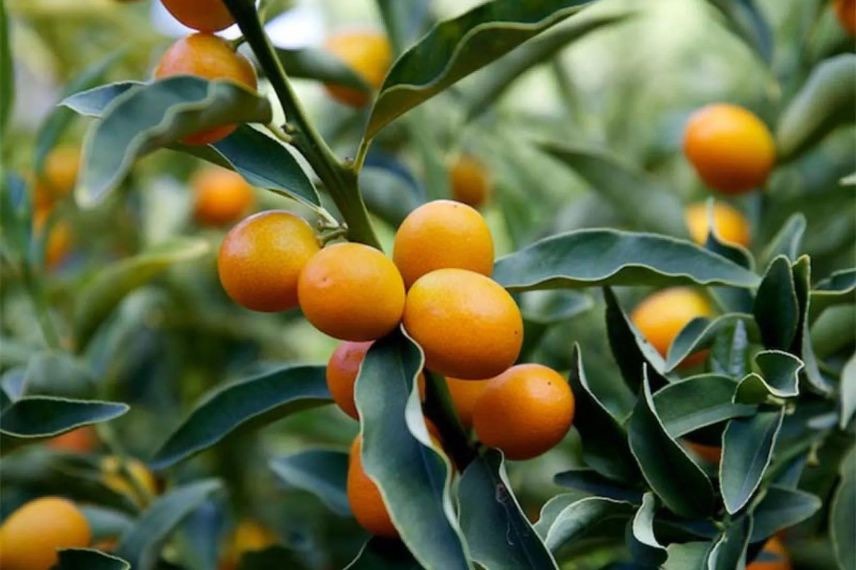
Kumquat ‘Nagami’, or Fortunella margarita, stands out for its ease of cultivation across a range of climates thanks to its cold hardiness. This variety is prized not only for its ornamental appeal but also for its edible, fragrant fruit, eaten with the skin on. The Kumquat ‘Nagami’, characterised by vigorous growth and abundant fruiting, produces elongated orange-coloured fruits at maturity, with a tangy flavour and a less sweet note than the round kumquat.
During summer, it brightens the garden or terrace with its small yet intensely fragrant citrus flowers, while in winter its fruits provide inspiration for making homemade jams and confections. Adapted to container culture for easy size management, Kumquat ‘Nagami’ can reach up to 2.5 m in height and 1.5 m in spread in our gardens, with moderate growth. Its hardiness of around -12°C allows it to acclimatise in the ground in regions free from severe frosts, although the fruits are sensitive to temperatures below -4°C, requiring protection to safeguard the winter harvest.
The kumquats, harvested generally from January to March, stand out for a moderately thick skin, free from the bitterness characteristic of other citrus, and a juicy and tart flesh.
- Subscribe!
- Contents

Comments