





























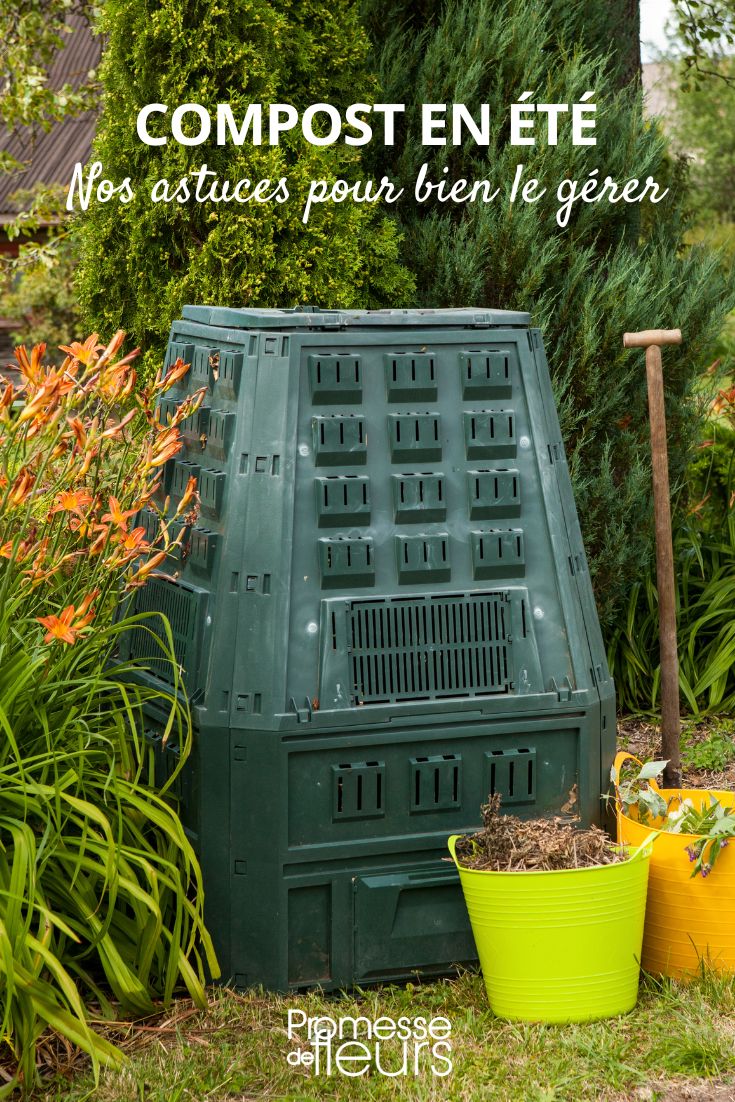
Our tips to effectively manage compost in summer
How to maintain moisture levels in the compost bin?
Contents
Composting is an eco-friendly and cost-effective method that enables the recycling of kitchen and garden organic waste into rich, fertile compost (the compost) for plants. However, during the summer months, high temperatures and a lack of moisture can make compost management more difficult. We explain why it must be prevented from drying out and provide all the tips for properly managing your compost bin during the summer!

Why does compost dry out in summer, and what are the consequences?
A balanced compost relies on a good ratio between moist waste (the ‘green’: vegetable peels and other kitchen waste, lawn clippings, fresh leaves…) or dry (“brown”: cardboard, paper, dead leaves…). During summer, one enemy threatens your compost bin: the drying-out. The heat of the sun can quickly dry organic matter in your compost bin. In addition, lack of rain and hot winds can also contribute to the drying-out of the compost. The outer edges of the walls dry the fastest. The degradation of matter in the compost bin is accelerated by heat only if moisture remains sufficient inside. If the compost is too dry, the micro-organisms that decompose organic matter cannot function properly, slowing the composting process. It is therefore important to maintain, throughout the year, appropriate moisture in the compost bin to enable effective decomposition of organic waste, but also good aeration and a proper carbon–nitrogen balance.
Discover also our article: Organic waste: what can be composted?
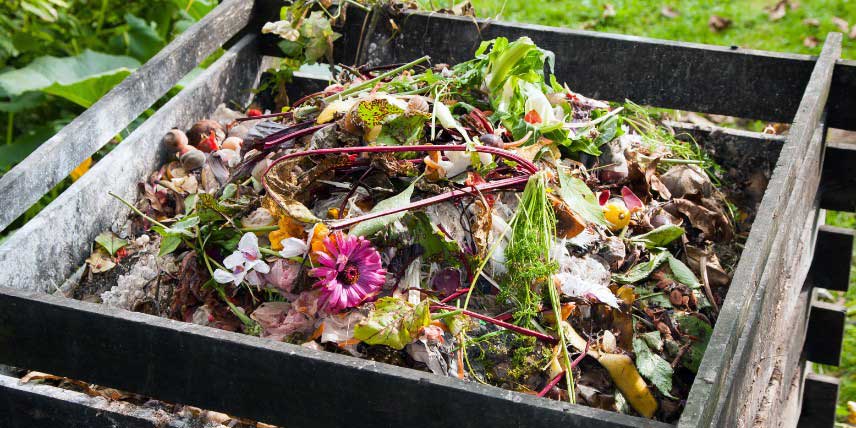
Compost should be balanced between moist organic matter (vegetable peels, green waste…) and dry matter (dead leaves, straw, etc.)
Read also
What is a compost aerator used for?How to manage compost in hot weather?
Here are some tips for maintaining good composting during summer:
- Add moist organic matter : in summer, micro-organisms need more nitrogen to function properly. To provide extra nitrogen, add nitrogen-rich organic matter such as kitchen waste, fresh lawn clippings and green leaves. They help to maintain adequate moisture in the compost, which promotes microbial activity.
- Avoid adding carbon-rich dry organic matter : reduce (or even omit) the addition of dead leaves, twigs and sawdust during summer. These can absorb moisture in the compost and contribute to its drying out, which slows the composting process.
- Water the compost between each addition. However, do not oversaturate it, as this can lead to poor aeration, unpleasant rotting and the proliferation of woodlice or fungi. Too much moisture prevents aeration of the compost.
- Turn the compost : Without air, there is no decomposition! To maintain good aeration, regularly mix the compost. Use a simple fork to distribute moisture evenly. A light mixing, or turning, every 15 days in summer is advised. Regular mixing of the compost also reduces unpleasant odours.
- Preferably place the composter in the shade to minimise the impact of the sun’s heat.
- Cover the compost : close the lid or cover the compost bin with a tarpaulin to reduce evaporation.
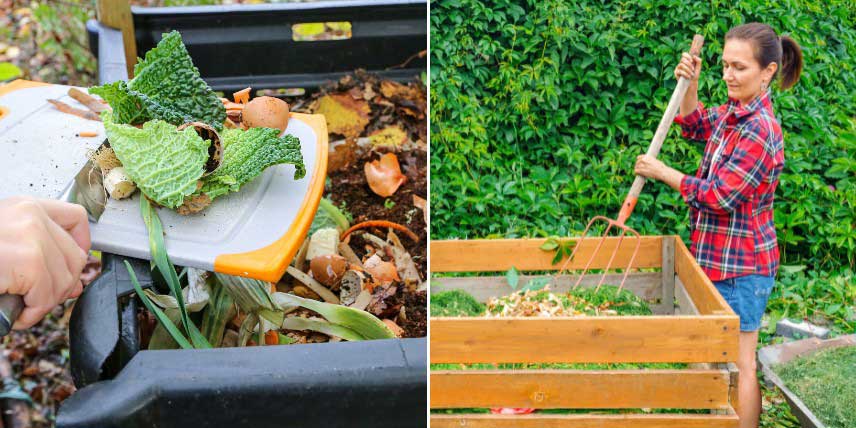
Add moist organic matter and remember to turn the compost from time to time
What are the signs of a lack of water in a compost bin?
Some signs indicate that your compost bin is drying out.
- Warm summer temperatures favour the transformation of organic matter into compost; however, when there is a lack of water, the volume of waste no longer decreases, and the decomposition process stops.
- If the compost is too dry, it can be difficult to mix, and it may have a dusty or crumbly texture. The waste becomes dry. Dry compost may also be lighter in colour than wet compost.
- The compost does not heat up: the composting process generates heat as microorganisms decompose organic matter. If the compost does not heat up, this may indicate a lack of water or not enough wet organic matter to support microbial activity.
- Compost worms disappear: if the compost is too dry, worms may disappear or die.
What should you do if your compost is too dry?
It is important to monitor moisture levels in the compost regularly and adjust watering and addition of organic matter accordingly.
- Water the walls of the composter to re-moisten the compost, then mix well. Water from the watering can until it is as damp as a wrung-out sponge.
- Add moist organic matter: compost kitchen waste, fresh lawn clippings and green leaves to rebalance moisture levels.
- Water when adding dry organic matter: If you need to add dry organic matter such as dead leaves or wood shavings, it is recommended to add water at the same time to help maintain adequate moisture in the compost.
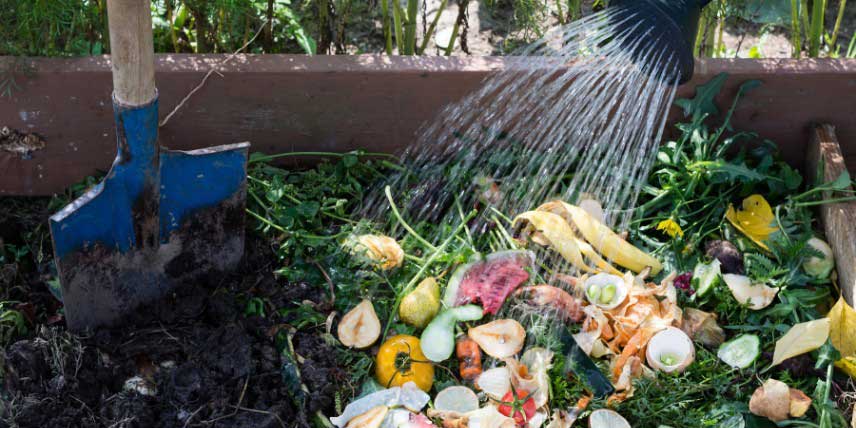
Feel free to water the compost regularly
- Subscribe!
- Contents
Comments