





























Our tips for growing a Fatsia in a pot outdoors
Enjoy the striking leaves of Japanese Aralia
Contents
Fatsia, also known as Japanese aralia, is a decorative plant with spectacular, exotic foliage. Grown in a pot, it is perfect for terraces, balconies, small gardens or very cold regions in winter. In this article, discover all the essential steps to grow this plant in a pot outdoors: from choosing the container to its care throughout the year.

Choosing the right Fatsia variety
The genus Fatsia comprises several varieties adapted to outdoor container culture, with aesthetic characteristics that suit different garden styles:
- Fatsia japonica: This is the most widespread species, appreciated for its large, glossy, lobed leaves. It creates an exotic ambience and adapts well to shaded areas of the terrace or garden.
- Fatsia japonica ‘Spider’s Web‘: a variegated form, with leaves marbled with white. Perfect for bringing a bright touch to a shady corner.
- Fatsia polycarpa ‘Green Fingers’: less well known, but just as spectacular, this variety is distinguished by its finer, deeply lobed leaves that resemble graceful fingers. ‘Green Fingers’ has a wilder, lighter habit, ideal for a modern or natural garden. It is a little less hardy than the other varieties.
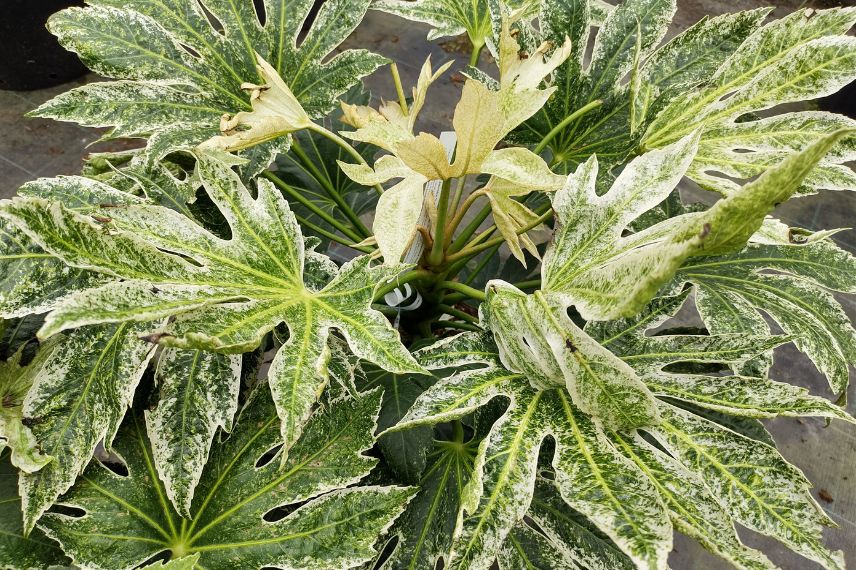
The Fatsia ‘Spider’s Web’ splashed with white
What type of pot? What size?
To keep your Fatsia healthy, choose a large, deep pot with a diameter and depth of at least 30 to 40 cm to give the roots enough space.
The material is also important: terracotta is porous; it’s a breathable material that retains less moisture. The Fatsia needs a moist, well-draining substrate during the growing season, but drainage is especially important in winter. If you live in a rainy region, opt for terracotta, even though you’ll need to water more in spring and summer.
Plastic or resin are light and easy to move, while glazed ceramic is aesthetically pleasing. These materials retain more water.
Make sure the pot has drainage holes to prevent water buildup.
Finally, a pot on wheels can be handy for moving the young plant easily, especially in winter or to adjust its exposure.
Which substrate?
Fatsia grows in neutral to acidic soil, moist during the growing season, but well-drained in winter, rather rich and light. In a pot, you will achieve this result with a good-quality multipurpose compost, with good water retention. Water retention is indicated on the back of the compost bags or on the online technical data sheet. Add drainage elements, via perlite or garden sand, up to a maximum of 20% of the compost. If you have well-decomposed compost, prefer this option, using the same amount. Provide a layer of clay pellets or gravel at the bottom of the pot to facilitate water drainage and prevent root rot. Also provide an organic mulch, ideally.
Read also
7 pairing ideas with FatsiaWhen and how to plant?
Planting of Fatsia is ideally carried out in autumn in a mild climate, not subject to heavy frosts, or in spring in less clement regions. Fatsias can be damaged by frost from -10°C. If possible, autumn planting is preferable to allow the plant to establish before the arrival of hot periods that require more water.
Here’s how to proceed:
- Dip the Fatsia’s root ball in a basin for about 30 minutes.
- Start by placing a drainage layer of about 3 to 5 cm of gravel, clay balls, or potsherds at the bottom of the pot.
- Fill the pot with your potting mix to about one third or half full, leaving space for the Fatsia’s root ball.
- Gently remove the Fatsia from its container, taking care not to damage the roots. If the roots are compacted, tease them apart slightly with your fingers. Place the root ball in the pot.
- Fill the pot with the remaining potting mix, gently firming to remove air pockets. Leave a 2 to 3 cm gap at the top of the pot to facilitate watering.
- Water generously after planting to help the soil settle around the roots and hydrate the plant.
- Apply a few centimetres of organic mulch to retain moisture from watering for longer.
Avoid waterlogging in a saucer beneath the pot. If you use a saucer, be sure to empty it regularly to protect the roots from excess moisture.
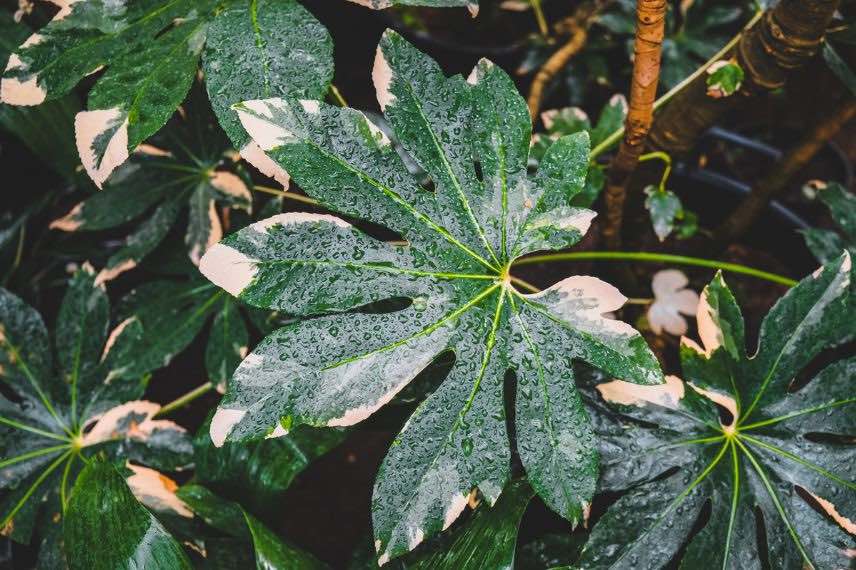
The Fatsia japonica ‘Variegata’
Where to place your Fatsia?
Fatsia is a hardy, adaptable plant, but for it to thrive fully in a pot outdoors, certain important conditions must be met.
The Japanese aralia prefers bright light, without direct sun. A partly shaded spot is ideal, even more so in regions where the sun’s rays are intense. Full sun can scorch its large leaves, while too-dense shade could slow its growth. If you place your Fatsia on a terrace or balcony, choose a sheltered corner where it can receive gentle light, such as under a pergola or protected by a wall.
Also protect the plant from wind and cold draughts by placing it in a well-sheltered position.
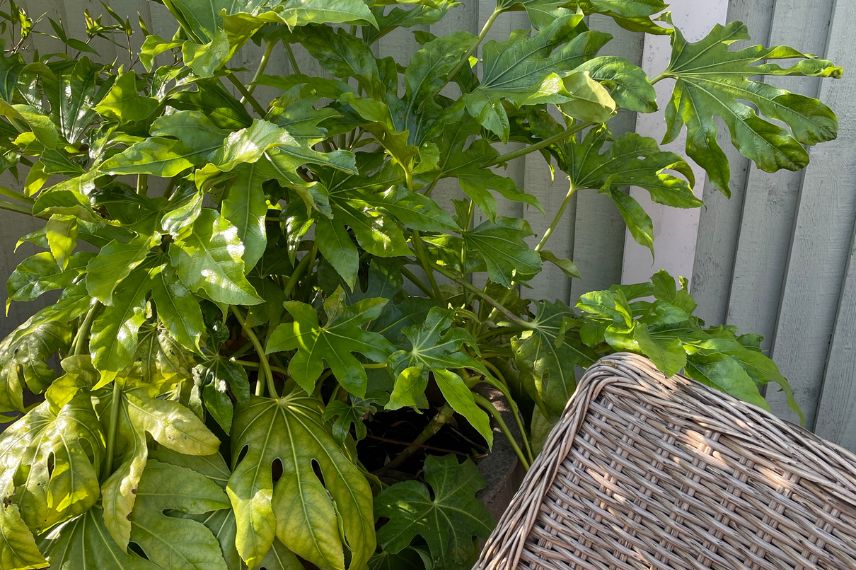
Fatsia enjoys partial shade
Watering? Fertilising?
Watering should be regular during growth, in spring and summer. The substrate should remain slightly moist without being waterlogged. In summer, increase the frequency of watering, especially during periods of intense heat, but always ensure the surface of the potting mix dries slightly between two waterings, and never allow the potting mix to dry out completely. It may be necessary in summer, during hot periods or drying winds, to water daily.
In autumn and winter, significantly reduce watering, as the plant enters vegetative rest. In winter, Fatsia prefers a dry environment.
During the growing season, from March to September, apply a liquid fertiliser for houseplants once a month. This nutritional supplement promotes dense and glossy foliage. In autumn and winter, stop fertiliser applications, as the plant enters vegetative rest and its needs decrease.
Care
Pruning is rarely necessary, but it can be useful for removing damaged leaves, yellowing or dead. If your fatsia becomes too large or unbalanced, you can also lightly prune the stems to harmonise its silhouette. This pruning can be carried out in spring, before growth resumes.
Monitor the potting mix through the seasons. If you notice that it becomes compacted or looks depleted, add a thin layer of compost or top-dress with fresh potting mix in spring. This simple step helps maintain soil fertility without having to repot the plant too often.
Repotting isn’t necessary every year. Monitor your fatsia’s growth and carry out this operation when the roots begin to emerge from the drainage hole or when the potting mix seems depleted. When the plant is too large and heavy to continue being repotted into larger pots, proceed with top-dressing: replace the top few centimetres of the potting mix with fresh compost.
Stagnant growth or pale leaves may indicate a nutrient deficiency. In that case, apply a liquid fertiliser for green plants once a month during the growing season, which should resolve the issue. If the roots appear cramped in the pot, consider repotting to give the plant more space.
If the leaves of your false aralia turn yellow in summer, it’s probably due to drought (then mist the plant with a little soft water); in winter, it’s often due to temperatures being too low.
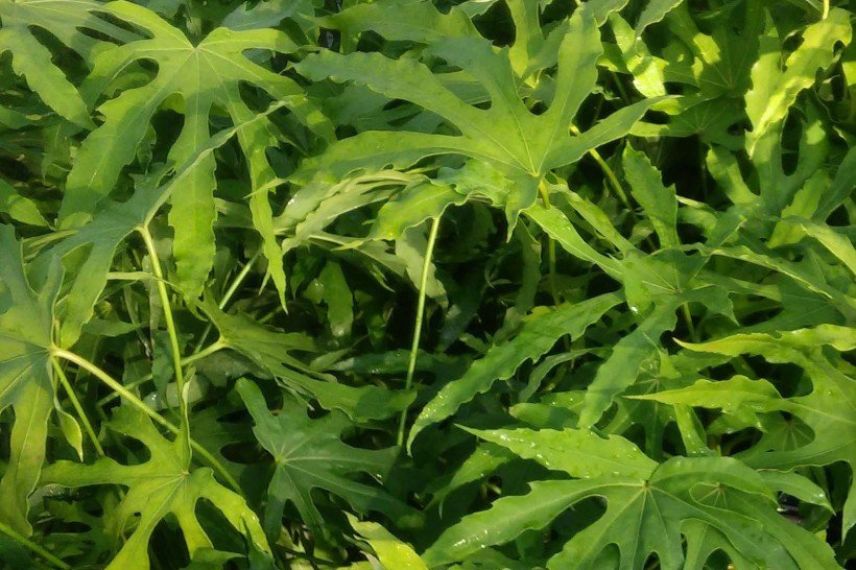
The Fatsia polycarpa ‘Green Fingers’ has a lighter appearance
Overwintering
Fatsias can tolerate cool temperatures, but they are frost-sensitive, especially when grown in pots, as their roots are less well insulated than those of plants grown in the ground. Fatsias tolerate frost down to at least -10°C, and down to -15°C for some varieties.
In cold regions, place the pot in a sheltered spot, such as beside a south- or west-facing wall that retains heat. You can also wrap the pot in insulating material, such as bubble wrap or hessian, to protect the roots from the cold. Install a thick layer of mulch on top of the pot. Place a fleece over the above-ground parts in case of severe cold forecast; remove it as soon as temperatures rise.
At the end of winter, simply prune any damaged stems and leaves, then apply a layer of compost or an appropriate amendment at its base.
- Subscribe!
- Contents
Comments