


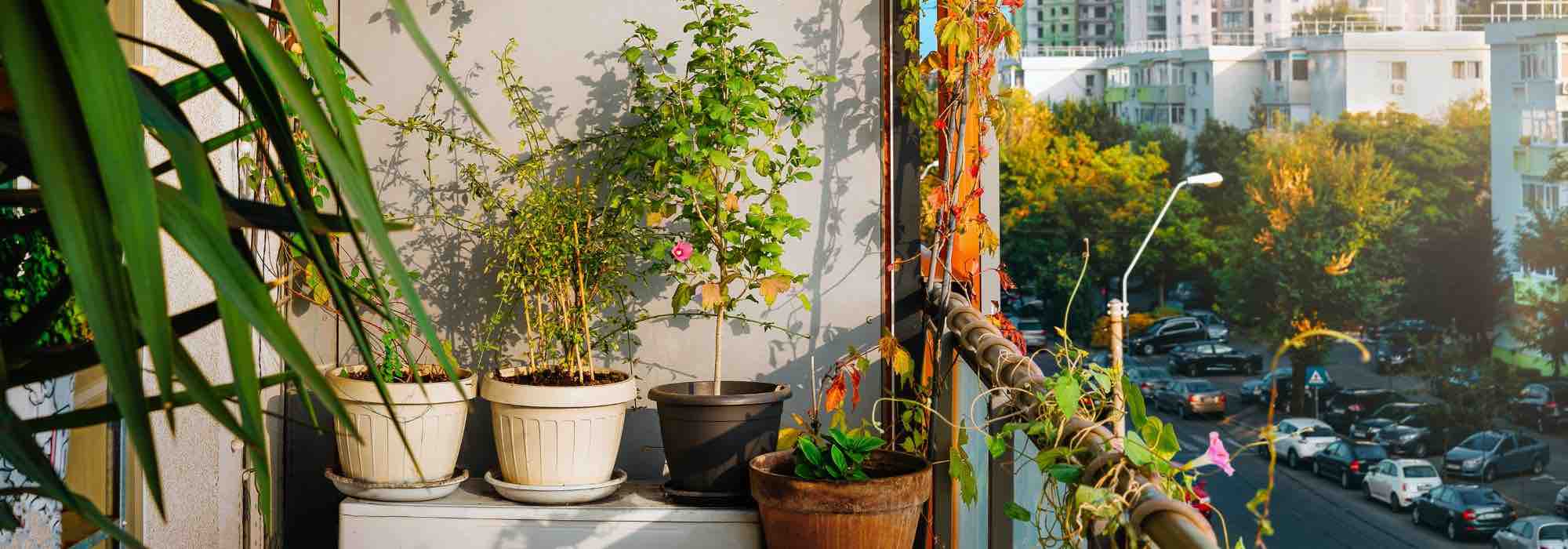
Our tips to making the most of an east-facing balcony
Constraints, plant choices and layout ideas
Contents
Having a balcony is a real boon: this outdoor space, even if it’s sometimes small, can become a true paradise, a dining and relaxation area as aesthetically pleasing as it is practical. Its orientation will affect how it is laid out: East-facing, the balcony benefits from the first ray florets of the morning sun, but will be rather shaded for the rest of the day.
Let’s see how to reconcile these constraints and achieve a beautiful balcony.

The constraints of this exhibition.
Exposure is one of the key elements to consider when designing an outdoor space, alongside soil type and growing constraints (climate, proximity to buildings, etc.).
If your balcony faces east, it will receive the first sun rays in the morning. This has the advantage of seeing flowers open earlier in the day. But in winter, this exposure may subject them to more frost and humidity, harmful to the frost-sensitive plants. This exposure is, in fact, the coolest after the North.
The rest of the day, the balcony will no longer receive the sun’s rays, and this is often from late morning onwards (varying with the seasons). This exposure will be ideal for plants that do not enjoy the sun’s scorching rays, particularly for balconies located in the hot southern regions of France.
East-facing balconies are particularly pleasant in summer, to enjoy the sunrise (if you’re the kind of early riser) without ever suffering from the heat for the rest of the day.
In some regions, east exposure can also be subjected to winds, such as the Levant, which blows across the Southern Alps and the Mediterranean coastline down to Corsica. It is a rather damp wind, which can accentuate the sensation of cold in winter. Let’s also mention the Grec, this north-easterly wind that blows over Provence, the Côte d’Azur, Languedoc-Roussillon and Corsica. It brings cold, dry currents and can bring frosts that can damage plants.
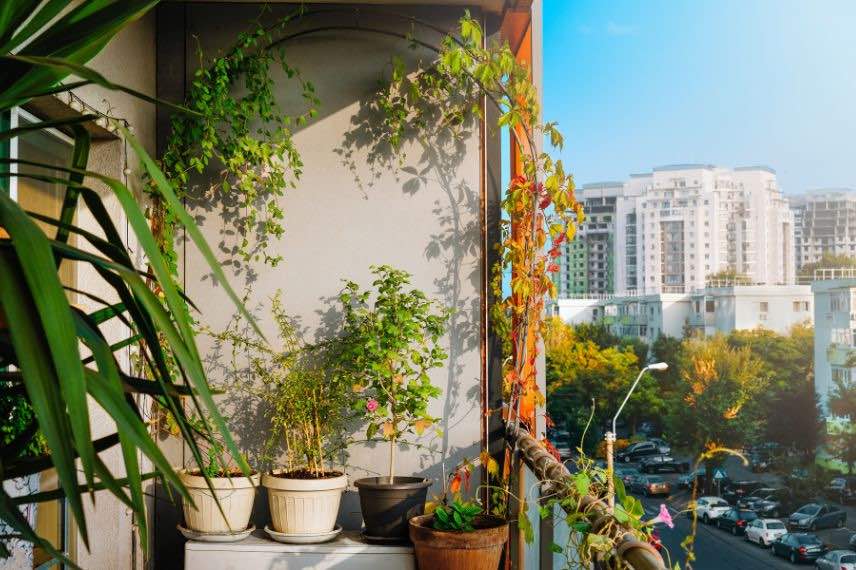
An east-facing balcony offers a sunrise and gentle light before it moves into the shade.
Choosing suitable plants: factors to consider
For an east-facing exposure, it will be necessary to choose plants able to withstand the exposure constraints.
They should:
- be hardy enough to withstand cold in winter, even up to mid-spring in the coldest regions;
- enjoy low-light exposures (only a few hours of sun in the morning), therefore rather semi-shaded.
Ideally, also choose plants that will flower after the last frosts, especially if your balcony is located in a cold region. East-facing exposure can indeed be subject to a sudden thaw, which can easily damage buds and young shoots. Therefore avoid early spring-flowering plants.
For balcony growing, another constraint is to choose plants suited to pot culture and small spaces.
Some examples of plants for east-facing balconies.
Within our wonderful plant palette, you’ll find many species of plants able to meet these constraints.
With perennials, this is for example the case:
- the Hellebores, which offer a beautiful winter flowering;
- the Ophiopogons, which resemble small grasses;
- the Primroses, with their colourful blooms;
- the Tiarella, prized for their panicle flowers and foliage;
- the Erythroniums, bulbs with delicate lantern-shaped blooms;
- the Hakonechloa, these grasses with lush foliage;
- the Corydalis, these herbaceous plants with elongated and colourful flowers;
- the Bleeding Hearts (Dicentra), adorable with their heart-shaped pink or white flowers;
- the Tricyrtis, or Orchid Lily, with its exotic-looking flowers.
Some compact shrubs will also be good candidates for an east-facing balcony, such as:
- the evergreen spindle ‘Dan’s Delight’, with dense, bright foliage and cream-white variegation;
- the Chinese Azalea Azalea of China ‘Delicatissima’, with a fragrant late-spring bloom consisting of clusters of pink flowers speckled with orange;
- the Rhododendron Rhododendron ‘Bloombux’, with summer flowering in round panicles of a delicate pale pink;
- the Weigela Weigelia ‘All Summer Peach’, with a long funnel-shaped flowering in a warm apricot-pink;
- the Lemoine’s mock orange seringat de Lemoine, with its fragrant white summer flowers;
- the Japanese Spiraea Spiraea japonica ‘Double Play Big Bang’, with changing foliage and a magnificent pink bloom;
- delightful Sarcococcas Sarcococcas, with evergreen foliage and winter flowering;
- many dwarf conifers;
- etc.
Finally, you’ll also have the choice on the annual side (or usually grown as such), with the Fuchsias, the Lobelias, the Pelargoniums or Coleus.
And if you’d like to grow a few herbs, opt for mint or coriander.
We recommend choosing plants with staggered flowering, to keep the balcony lively for many months without interruption.
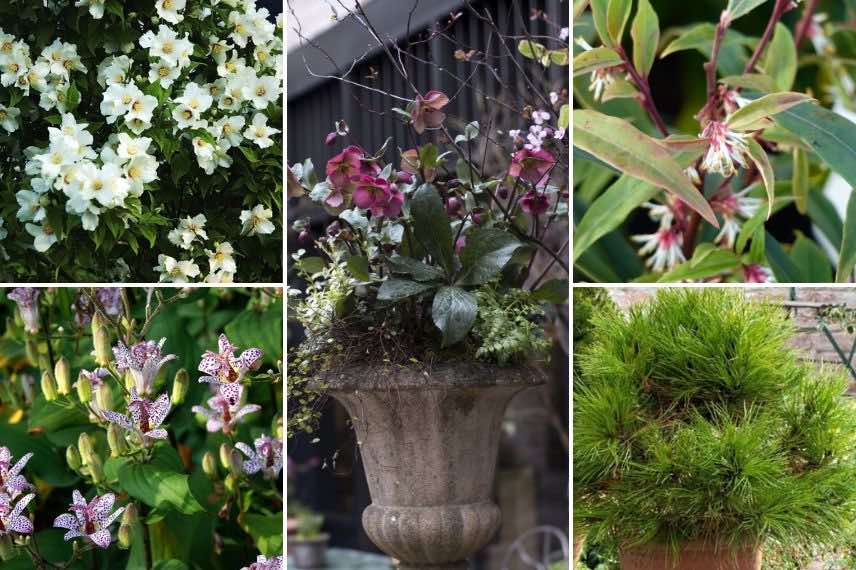
Many plants thrive in east-facing exposure, including in clockwise order: mock orange, Hellebores, Sarcococca, dwarf conifer, Tricyrtis
Create a living privacy screen
Must-haves on a balcony, climbing plants will be perfect for dressing the wall, the railing or the fencing. They also make excellent privacy screens for a touch of privacy, while naturally shielding you from prying eyes or an unsightly view.
- The Japanese honeysuckle. It provides a spectacular summer display with trumpet-shaped flowers and an intoxicating fragrance. Foliage can persist if winter isn’t too cold. Plant this climbing plant with twining stems in ordinary, rather cool soil. Guide its stems so that they grow along the chosen support.
- Akebia, or chocolate vine, which flowers from April to July and is ideal for regions that aren’t too cold. It tolerates partial shade and dislikes scorching sun. Aesthetically, it is interesting for its light, graphic foliage, as well as its flowering in colourful clusters. It will thrive in rich, moist but well-drained soil. Provide it with a support and guide its canes so that they cling to it themselves.
- Russian vine. This climber with late-summer flowering treats us to spikes of pale cream flowers that are very bright. It has heart-shaped foliage bronzed in spring. It prefers shaded locations. Grow it in light, moist soil.
- Hop. This fast-growing climbing plant can grow several metres in a season. While it is often associated with beer production, it is also an ornamental plant with interesting qualities. The inflorescences differ on male and female plants. It is mainly its lush, deeply cut foliage that will add volume and structure to the balcony. Give this climber a deep container and fertile soil.
- Aristolochia. This climber thrives in semi-shaded, cool and moist conditions: ideal for an east-facing balcony! It is notable for its heart-shaped leaves, which add a touch of exotica. It will quickly green the space. Suitable only for regions that do not experience frosts below -10°C. Provide rich soil high in organic matter that stays cool.
To create a Japanese-inspired, exotic privacy screen, you can also turn to small bamboos to grow in pots. They prefer shaded to semi-shaded exposures, such as Fargesia ‘Winter Joy’, ‘Deep Purple’ or ‘Black Dragon’, remarkable for their culms turning black.
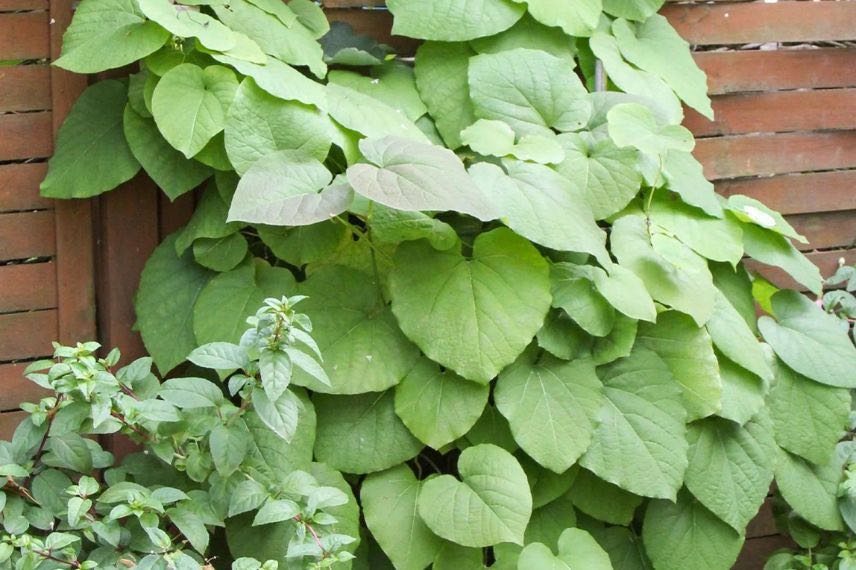
Aristolochia is a climbing plant that can form an attractive privacy screen on your balcony.
Balcony plant care
On a balcony, most plants will be grown in containers: pots, window boxes, hanging baskets, troughs, or containers.
The substrate dries out more quickly than in the ground (smaller volume and faster evaporation), you will need to water more often. To make life easier for you, especially in case of absence, you can install ollas or oyas, this practical and long-lasting watering system. Less aesthetically pleasing, but just as effective, the inverted bottle also helps to gain a little autonomy. Finally, a bit more expensive, but very practical, a drip irrigation system or a porous hose will allow watering gently, even total autonomy, if paired with a timer.
We recommend installing a organic mulch at the base of your plants, to limit evaporation and keep the soil cool, generally favoured by plants suited to east-facing exposure.
Fertilisation may also be necessary to support the growth of heavy-feeding plants.
In terms of maintenance, late-season pruning of the most vigorous specimens will help preserve the plants’ shape and prevent them from sprawling too much onto neighbouring balconies.
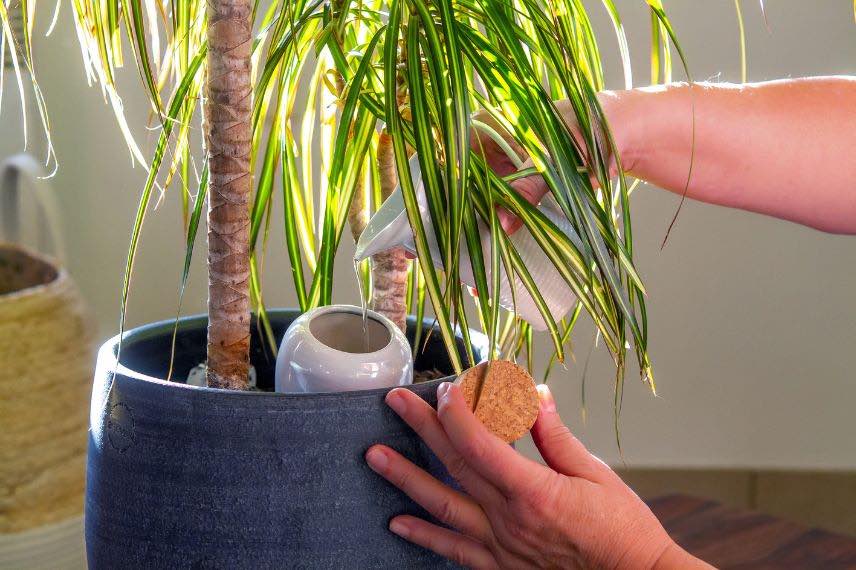
To improve the self-sufficiency of your potted plants, install mulch at the base and oyas that gradually release watering.
Further improvements for an east-facing aspect.
On an east-facing balcony, we recommend giving pride of place to colour in your furniture and decor. As it doesn’t receive much sun during the day, it would be worth opting for light, bright or vivid shades to suit your taste. Tables, chairs, benches, vases, carpets, curtains… All of these elements can brighten the space.
Also play with lighting to enjoy meals in the evening, when the sun will be on the opposite side: candles, lanterns, garlands, etc. You can also choose transparent materials, which will let more light through, such as glass.
On a small balcony, make use of vertical space to create a sense of volume and grandeur. Re-purposed crates or pallets can easily suffice to dress a wall high up.
Note: consider assessing the weight of the items you can install on your balcony to avoid any mishaps.
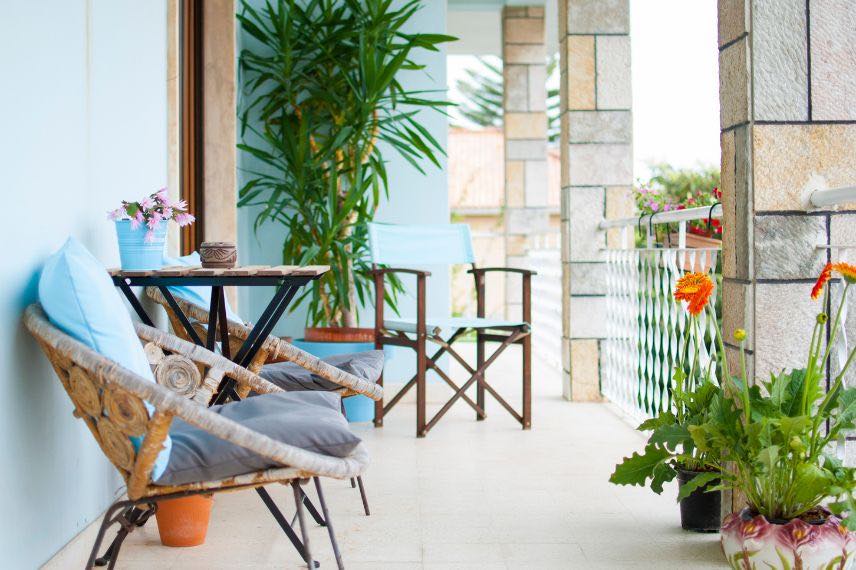
On an east-facing balcony, invest in colour, even on the walls
- Subscribe!
- Contents
Comments