





























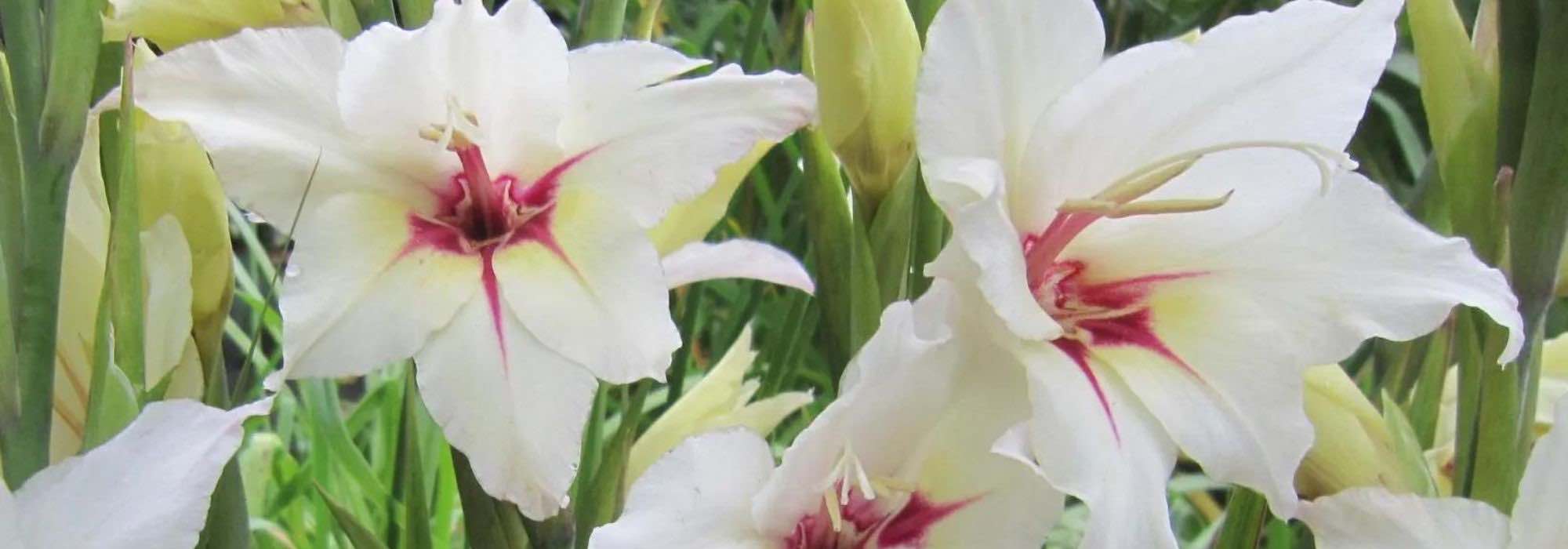
Our top 9 white-flowered summer bulbs
Bulbous plants with immaculate summer flowering that bloom until autumn in your borders and pots
Contents
Summer is the season of bright colours and long sunny days, but nothing speaks more of natural elegance than a garden dotted with white flowers. White-flowering summer bulbs bring a touch of freshness and light to the beds as well as on the terrace. In this article, we present a selection of nine summer bulbs chosen for their beauty and ease of cultivation.

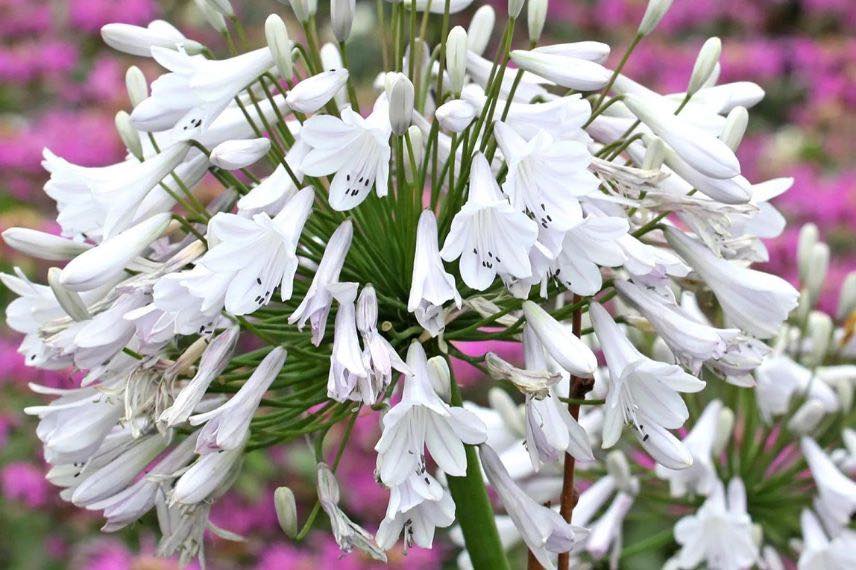
Agapanthus 'Windsor Grey'
Agapanthus ‘Windsor Grey’ captivates with its majestic appearance and giant umbels 18 cm in diameter, a delicate white-blue tinged with grey. This hardy variety is characterised by sturdy stems rising from broad, semi-evergreen foliage in light green. Its hardiness to -10° C allows it to grow in the ground in many regions with adequate protection over winter.
‘Windsor Grey’ stands out for its vigorous habit and umbels that capture and reflect light, creating a spectacular iridescent effect. The plant, in a dense clump of strappy leaves, can reach 1 metre in height and 60 cm in diameter.
The Windsor Grey Agapanthus is ideal for planting at the back of a border or at the rear of a bed, surrounded by low-growing perennials with grey foliage such as artemisia. It can also be grown on a terrace, in large pots that encourage the development of numerous flowering stems.
Read also
7 spring bulbs with white flowersTall Alstroemeria Majestic 'Maze' – Inca Lily
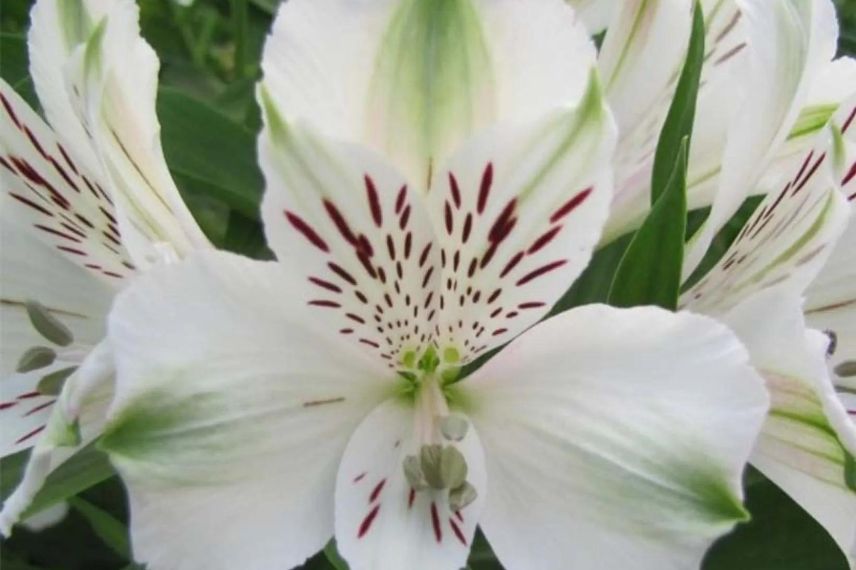
Alstroemeria Majestic ‘Mazé’ belongs to the Majestics series, known for its vigour and hardiness. Developed near Angers, it includes hybrids resistant to -15°C, provided the stump is protected from moisture in winter.
From spring, Alstroemeria Majestic ‘Mazé’ develops dense clumps of leafy stems, reaching 85 cm in height with a similar spread. Flowering extends from June to October, without interruption if the soil remains moist. Each flowering stem bearing several flowers of 5–6 cm arranged in umbels, displays white petals, the central ones being slightly brown-striped, and the outer ones tinged green at the tip. The dense, dark bluish-green foliage adorns all the stems, but disappears in winter.
In the garden, Alstroemeria ‘Mazé’ pairs perfectly with modest-sized agapanthus or grasses such as the Stipa, the Miscanthus or the Muhlenbergia capillaris.
Highly prized in borders where their brilliance catches the eye, Alstroemerias, flowering in rich, well-drained soil, require regular watering during dry spells and prefer a sunny to semi-shaded position, sheltered from winds that could tilt their stems.
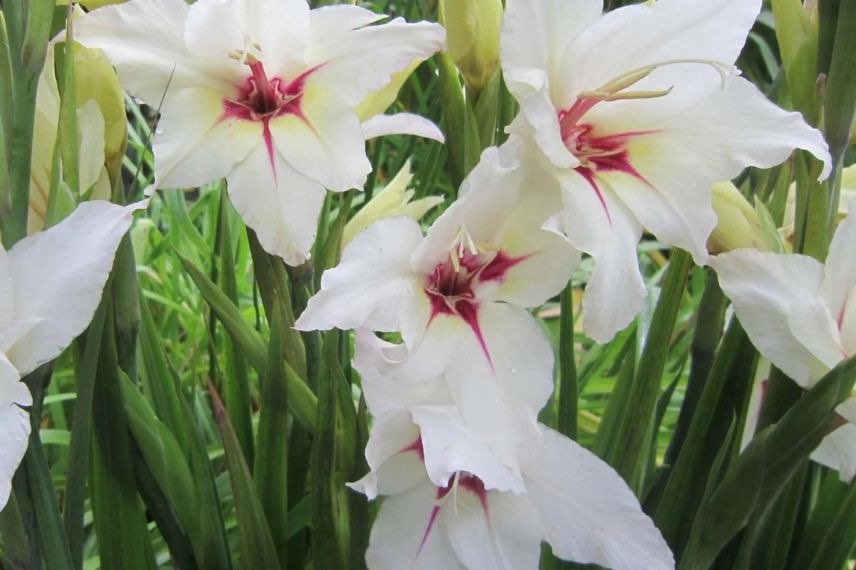
Gladiolus 'Lucky Star' - Abyssinian gladiolus
Gladiolus ‘Lucky Star’, native to New Zealand, is a cultivar of Gladiolus callianthus, previously known as Acidanthera murielae, an elegant wild species with a pleasant fragrance. Its tall stems support delicate triangular flowers with a yellow-centred heart and a lavender-pink star. This bulbous plant which flowers in late summer and autumn emits an enchanting fragrance during September evenings. It requires dry, fertile, cool and well-drained soil, but should be protected in winter.
Gladiolus ‘Lucky Star’ develops long linear leaves as spring arrives. Flowering occurs late, from August to October depending on the region, with flowering spikes reaching up to 1.10 m tall.
Gladiolus ‘Lucky Star’ is easy to grow in the ground or in a pot. Its aesthetic qualities make it ideal for compositions with grasses such as Pennisetum or Eragrostis and with simple annuals such as cornflowers or nigellas. Its elegant presence offers a charming alternative to more common and rigid varieties.
Zantedeschia aethiopica 'Himalaya' - giant Ethiopian arum lily
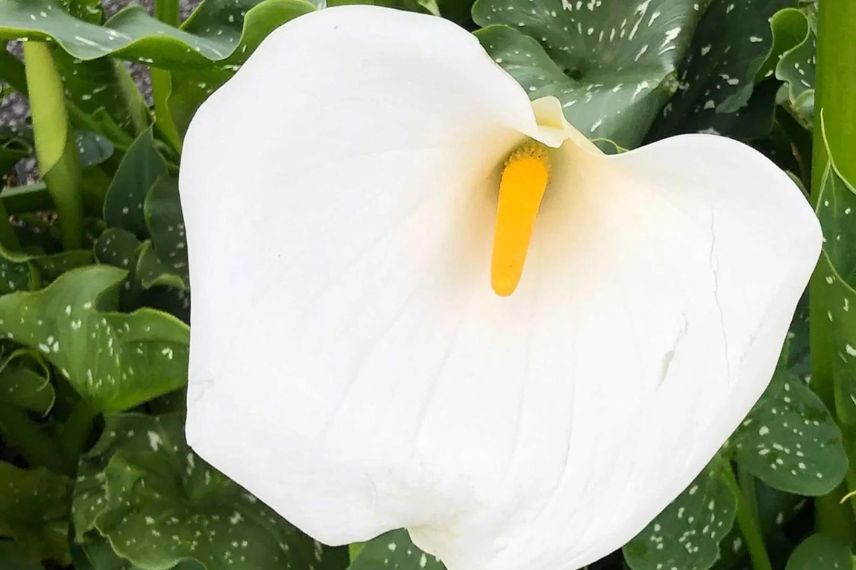
A stately Ethiopian arum variety, the Zantedeschia aethiopica ‘Himalaya’, stands out for its majestic stature and white spathes reaching up to 2 metres in height. From spring to summer, this plant displays lush growth with ample undulating and glossy foliage, speckled with white spots on a dark green backdrop. Perfect for the edge of water features or in damp borders, its flowers also make a striking addition to floral displays. Hardy to -7°C, it requires protection in regions where temperatures drop below this threshold.
The inflorescences are characterised by a pale yellow spadix surrounded by a velvety white spathe, exuding a subtle fragrance reminiscent of aniseed and rice powder. Flowering, from May to October, is abundant if the plant is well watered.
Arums bring a touch of contemporary or exotic elegance to gardens and are particularly suited to pond margins or the back of borders in cool, moist soil. They pair well with plants such as daylilies and some ferns that prefer damp soil such as the Royal Fern.
Allium karataviense 'Ivory Queen'
Allium karataviense ‘Ivory Queen’ stands out as one of the most decorative ornamental onions for its foliage and flowers. Its broad leaves, which can reach up to 10 cm, are curved and glaucous, offering a metallic sheen with a purplish tint. The flowering period runs from June to July, during which it produces umbels composed of numerous small flowers that, together, form an ivory-coloured globe measuring 15 to 20 cm in diameter. This Allium is particularly sensitive to excess moisture in winter. It thrives in a sunny position and prefers light, well-drained, stony or gritty soil. Planted among perennials such as hardy geraniums, it shows off its full splendour, delivering an impressive display in any garden. 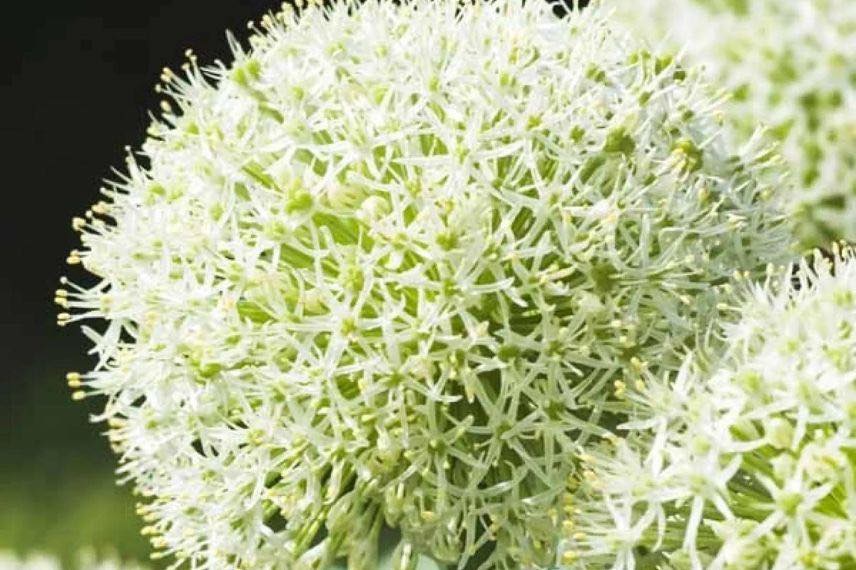
Dahlia 'Ice Baby'
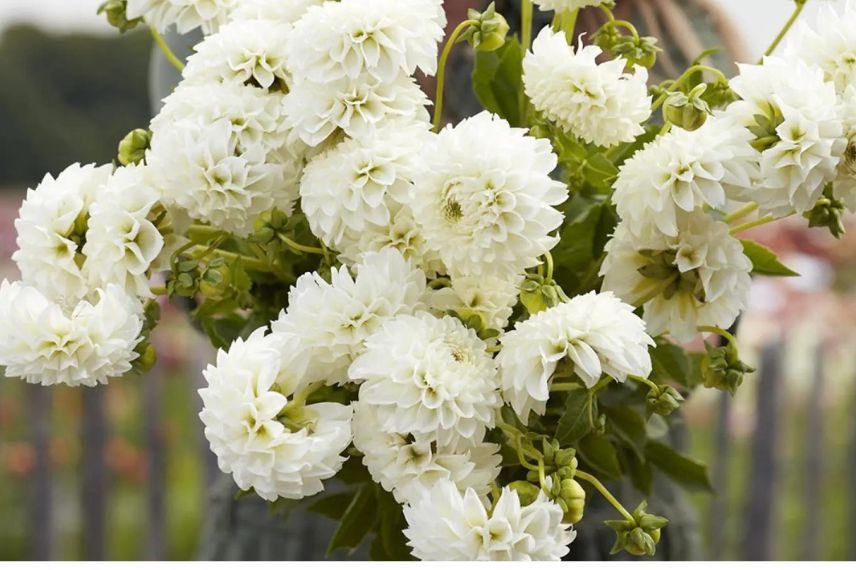
The Dahlia ‘Ice Baby’ is a remarkable variety, with spherical and perfectly symmetrical white flowers. Resembling slightly flattened pom-poms, they catch the light and create a fascinating visual display thanks to their alveolate structure. Excellent in cut flower arrangements, and also superb in borders or as a foreground plant in flower beds.
‘Ice Baby’ reaches a height of 75 to 90 cm after 3 to 4 months of cultivation, with a spread of 40 to 50 cm. Classed in the ball-type decorative dahlia group, its heads, lacking a visible centre, measure about 10 cm in diameter. Flowering runs from July to October–November, extended by regular deadheading of spent flowers or by using them in bouquets.
Plant ‘Ice Baby’ in a border, surrounded by perennials such as gaura, salvias, echinaceas, or grasses that add texture and movement.
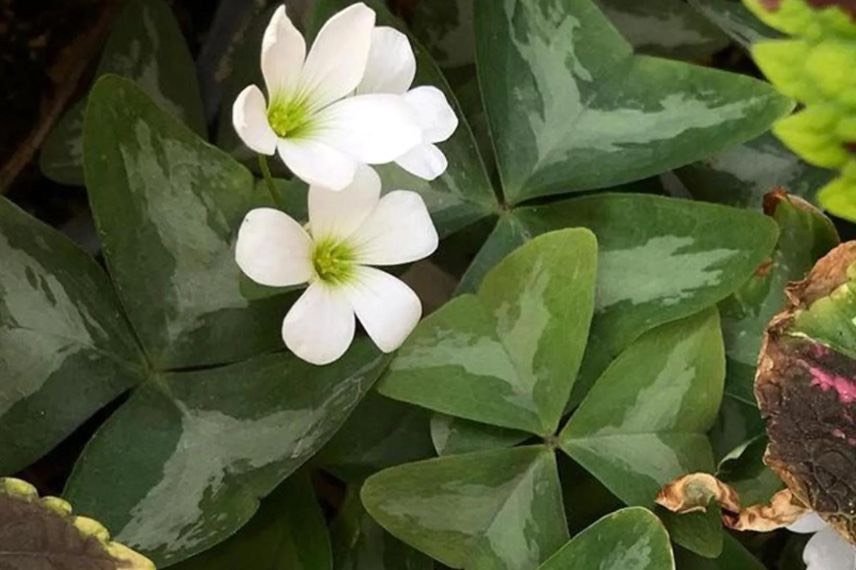
Oxalis triangularis 'Marmer' - False shamrock
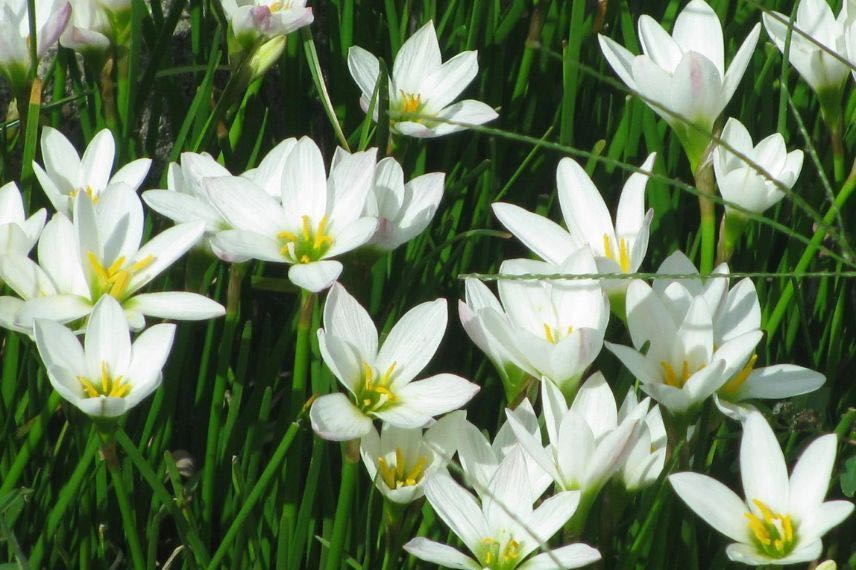
Zephyranthes candida – White rain lily
Bletilla striata Alba - White Hyacinth Orchid
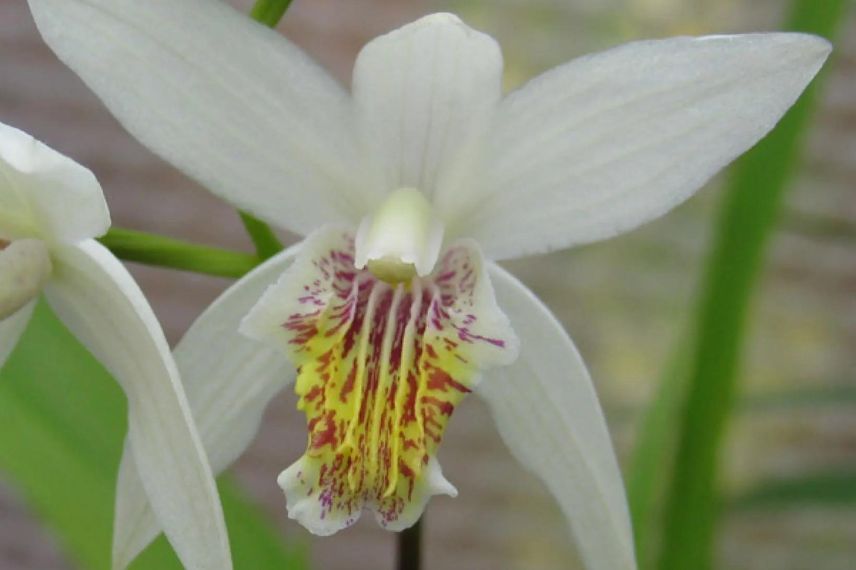
The Bletilla striata ‘Alba’ is an exceptional variant of the hyacinth orchid, with pure white flowers and fairly hardy in many regions. Less prolific than the type species, this elegant orchid flowers for about three weeks at the start of summer, offering a graceful flowering that rises above a clump of broad, pleated light-green leaves. Often regarded as difficult to grow, it proves adaptable to humid climates as well as hotter regions, but requires regular watering during warm periods and humus-bearing, cool soil to thrive.
From April, it produces young shoots that develop into a cluster of long oblong and lanceolate leaves, followed in June and July by flowering spikes up to 30 cm tall. Each spike bears 6 to 10 flowers of 3 cm in diameter, consisting of four petals surrounding a tubular labellum. After flowering, which lasts about a month, the foliage persists until November before the plant enters dormancy.
The Bletilla striata ‘Alba’ eventually forms beautiful, dense clumps. It is particularly suited to growing in borders, cool rock gardens, woodland areas or even in pots. Perfectly at home under low shrubs or near ponds, it pairs well with hostas, Solomon’s seal and ferns.
Further reading
Of course, in summer, superb Iris germanica also blooms, white as ‘Immortality‘. And among the dahlias, note the splendid Dahlia imperialis or Dahlia imperialis ‘White’ which bears its single flowers up to 3 m tall!
- Subscribe!
- Contents

Comments