





























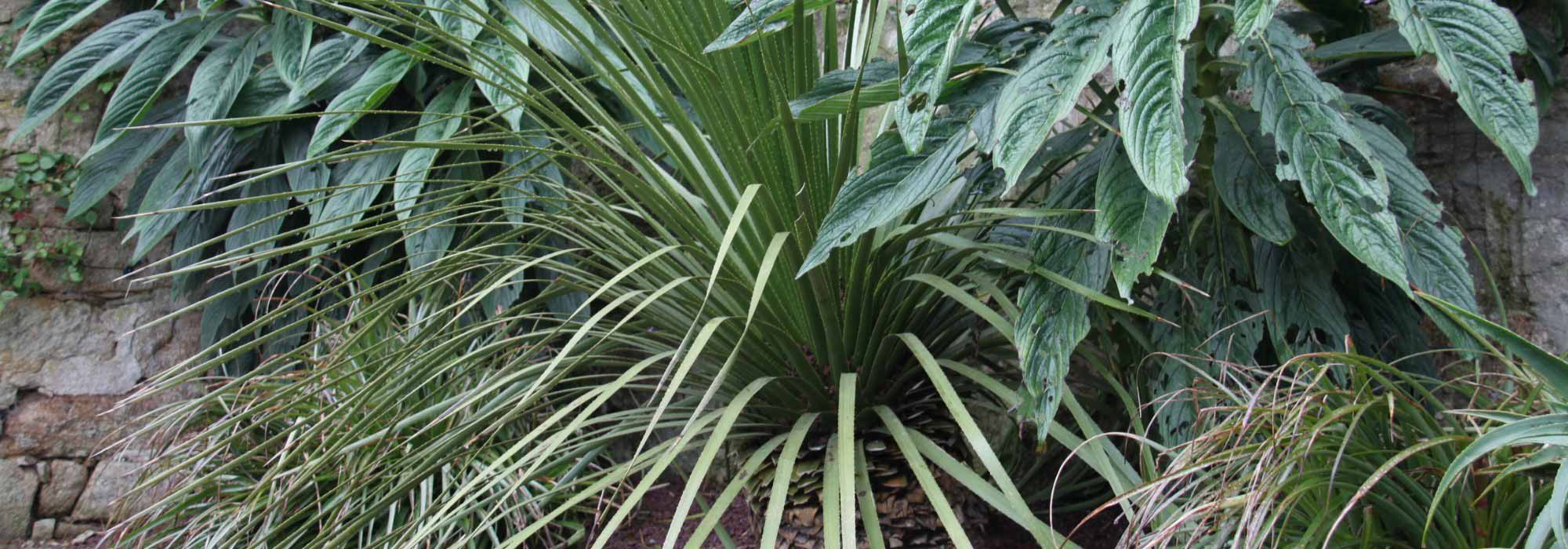
Pairing ideas with Dasylirion
6 beautiful ideas to create successful plant pairings
Contents
Originating from arid regions of Mexico and the southern United States, Dasylirion is a young plant prized for its striking, architectural silhouette. It forms a dense rosette made up of slender, rigid, strap-like leaves, evergreen, whose colour ranges from green to silvery blue. It is fairly hardy and very drought-tolerant, requiring very little maintenance. In the garden, it will easily find a place in an exotic, Mediterranean or architectural border, but it is also perfect for a pot on a terrace, to create a very evocative ambience! We’ve put together our best ideas for incorporating Dasylirion into your garden and creating spectacular displays.
And to learn everything about its cultivation, discover our complete guide: “Dasylirion: how to plant, grow and care for?”

In a Mediterranean garden
Dasylirion fits perfectly into a Mediterranean-style garden, where it can be paired with plants typical of the region. You can create a superb display by pairing it with the silvery foliage and the nodose trunk of an olive tree. At its side, install aromatic plants such as rosemary, thyme, Helichrysum italicum (Helichrysum italicum), santolina and lavender plants lavender. You can place them into a raised rockery or above a dry-stone wall to showcase them and improve drainage. Add colour touches with the flowering of Jerusalem Sage Jerusalem Sage (Phlomis fruticosa), agapanthus, Tulbaghia violacea and eryngiums. For shrubs, think rockroses, oleander, callistemons, as well as myrtle, an iconic shrub of Mediterranean landscapes and which offers stunning pure white flowers. They will add colour and texture that recall the sun-drenched landscapes of the Mediterranean.
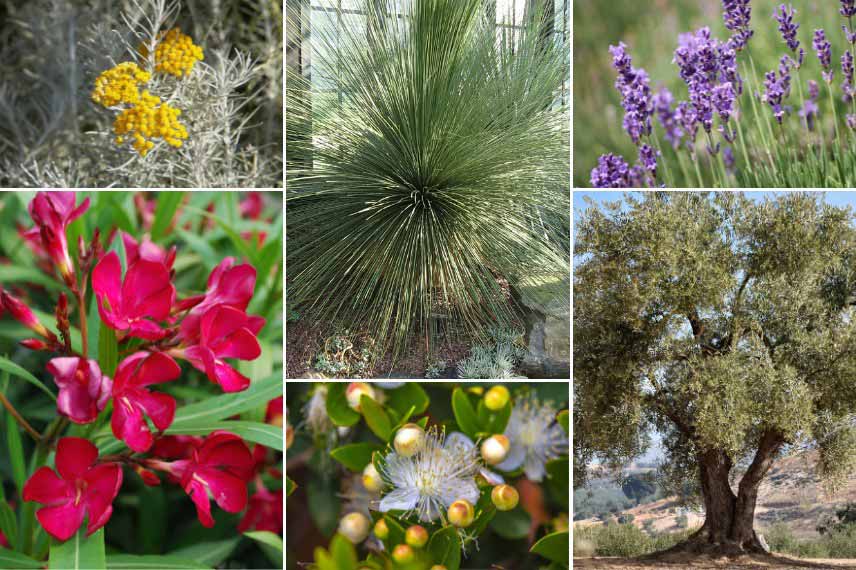
Helichrysum italicum, Dasylirion longissimum, Lavender, Oleander, Myrtus communis and Olive tree
In a dry, exotic border with cacti and succulent plants
To give your garden an exotic, desert look, pair Dasylirion with cacti and succulent plants. For example, think of Opuntia, prickly-pear cacti, which contrast with the slender silhouette of Dasylirion, and often have the advantage, depending on the variety, of being hardy down to -20°C. Choose, for example, the Opuntia engelmannii var. rastrera, hardy down to -20°C, or the charming Opuntia microdasys, which tolerates down to -10°C. Alongside them, plant agaves, such as Agave americana or the Agave victoriae-reginae, as well as yuccas (for example the Yucca rostrata) to reinforce the desert aesthetic. Carpet the soil with small succulent plants such as Sedums and Sempervivums, which can be planted along the border to soften the whole and add colour and texture. Also consider Beschorneria, the Hesperaloe parviflora, the Mangaves and the Aeonium arboreum ‘Schwarzkopf’ (to protect from frost in winter). Discover Graptosedum, relatively hardy as it can withstand temperatures down to -8 to -10°C. Finally, the flowering of kniphofias and delosperma will bring a beautiful splash of colour to enliven your exotic bed. This combination will be perfect for creating a low-maintenance garden reminiscent of arid desert landscapes while highlighting the distinctive silhouette of Dasylirion.
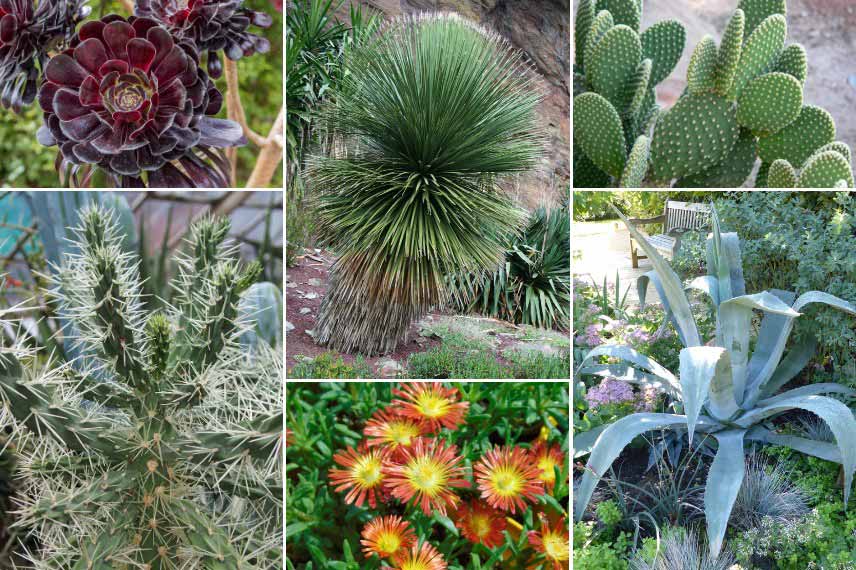
Aeonium arboreum ‘Schwartzkopf’, Dasylirion glaucophyllum, Opuntia microdasys (photo : Stan Shebs), Cylindropuntia imbricata (photo : Agnieszka Kwiecień), Delosperma ‘Wheels of Wonder Fire’ and Agave americana
In a tropical-style garden
For a tropical-looking garden, pair Dasylirion with broad, lush foliage. Palms such as Trachycarpus fortunei and Chamaerops humilis create a tropical ambience that contrasts with the Dasylirion’s upright habit. Bananas add a touch of exotica with their broad green leaves and imposing height. You could choose, for example, the Japanese banana Musa basjoo, which is notably hardy (down to -15°C), or the splendid Abyssinian banana Ensete ventricosum ‘Maurelii’, more tender but with splendid purplish foliage. Plant Colocasias, also known as ‘Elephant Ears’, for their large heart-shaped leaves that add a soft, voluminous texture, as well as Cannas with their broad leaves and colourful blooms to accentuate the tropical ambience. Think of Tetrapanax’s palmate leaves and those of Gunnera, as well as Hedychiums, which, in addition to their lush foliage, boast very exotic flowering. To complete the display, you can introduce a few climbers, which will evoke tropical lianas, such as Akebia quinata, with its striking five oval leaflets. These plants will help you craft a wonderfully exotic atmosphere in your garden, evoking a true jungle, while providing a handsome backdrop for the Dasylirion.
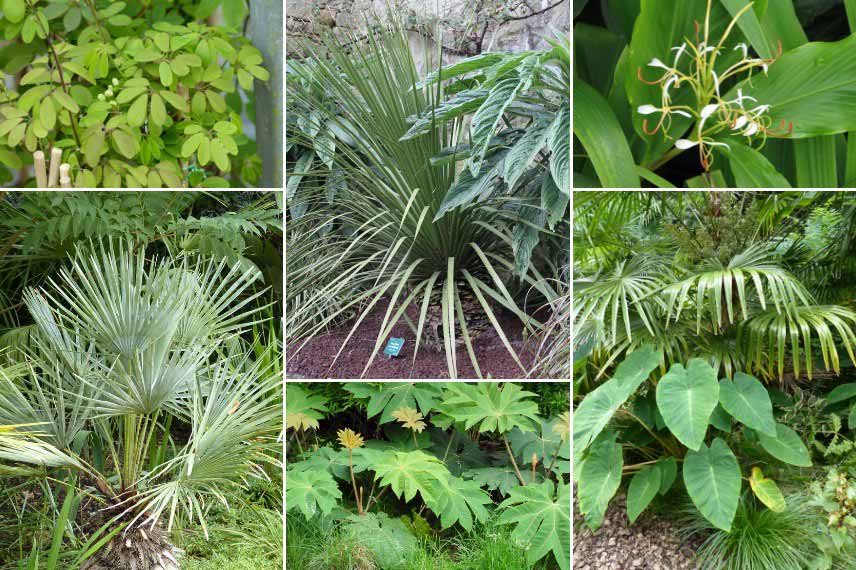
Akebia quinata, Dasylirion acrotrichum, Hedychium spicatum (photo: Peganum), Chamaerops humilis ‘Cerifera’, Tetrapanax papyrifera ‘Rex’, Colocasia esculenta and Trachycarpus fortunei
Read also
Growing Dasylirion in potsIn a pot on the terrace
Dasylirion adapts well to pot culture and can thus be used to brighten a terrace or balcony. Moreover, although it is generally fairly hardy (down to -12°C to -15°C), some varieties may prove a little more frost-sensitive, and growing them in pots will allow you to bring them easily under cover for the winter, and to bring them back out in spring to brighten your terrace through the summer. To create an exotic, summery display, plant the Dasylirion in a large terracotta pot and pair it with the graphic foliage of a Phormium, a Cycas, or a palm such as the Chamaerops humilis. Also consider the splendid Strelitzia reginae, whose flowers evoke exotic birds, and the climbing plant Gloriosa superba ‘Rotschildiana’, with its large, flamboyant lily-like flowers, bright red edged with yellow. These two plants offer exuberant flowering, but they are frost-tender and will therefore need to be brought under cover for the winter. Also enjoy the abundant and very bright flowers of Osteospermums, or Cape daisies. You can plant beside them succulents such as Echeverias, Kalanchoes, Aeoniums, Agaves (for example, Agave parryi) or mangaves to play on contrasts of shapes and sizes. You are creating a mini oasis of exotic plants that will make your terrace a haven of peace, ideal for unwinding.
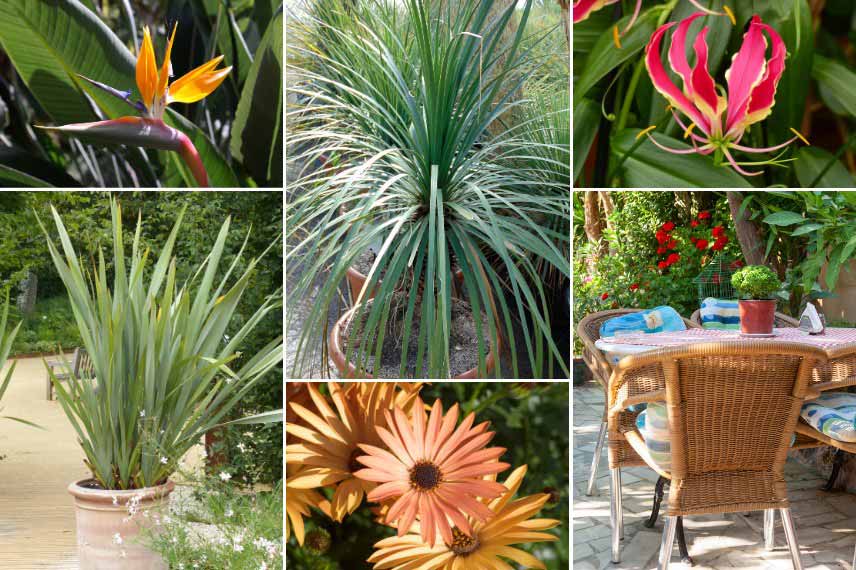
Strelitzia reginae, Dasylirion longifolium, Gloriosa superba ‘Rotschildiana’, Phormium tenax, Osteospermum ‘Cape Daisy Terracotta’
In a graphic garden, play with shapes and textures
With its fine foliage and its striking, architectural silhouette, Dasylirion is perfect for creating a garden with a modern, graphic style. Pair it with plants that emphasise this style by playing with geometric shapes and clean lines. In the border, plant, for example, Ophiopogon planiscapus ‘Nigrescens’ and blue fescues. At their side, incorporate Euphorbia characias ‘Glacier Blue’, whose blue-silver foliage will echo that of Dasylirion. Then play with contrasts of form. Grasses such as Pennisetum alopecuroides, Miscanthus, and Stipa tenuifolia and Stipa gigantea bring a sense of lightness and flowing lines, ideal for highlighting with the rigidity of Dasylirion. To accompany them, include white Gaura, for example Gaura lindheimeri ‘Snowbird’, which offer small, delicate butterfly-shaped flowers. Finally, consider the splendid flowering of Allium schubertii, which is distinguished by its enormous spherical inflorescences, whose tousled appearance will pair perfectly with Dasylirion’s original silhouette. Don’t hesitate to also integrate a few Agapanthus and Echinops. To perfect this graphic ambience, feel free to refine the décor and fine-tune the details by installing garden furniture and decorative elements, by creating neatly defined borders (for example in corten steel) and Japanese-style stepping stones, by installing large decorative pots, in materials with a modern and minimalist style.
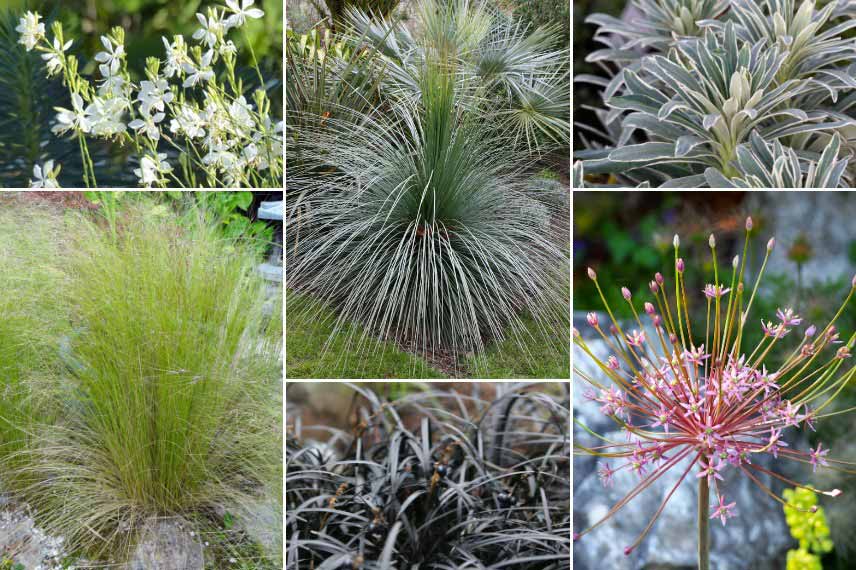 Gaura lindheimeri ‘Snowbird’, Dasylirion longissimum, Euphorbia characias ‘Glacier Blue’, Stipa tenuifolia, Ophiopogon planiscapus ‘Nigrescens’ and Allium schubertii (photo: Agnieszka Kwiecień)
In a silvery-blue bed
Some species of Dasylirion boast very handsome blue-tinged or silvery foliage, and it would be a shame not to use it to highlight it in a border with near-toned hues! For example, choose the Dasylirion wheelerii, the Dasylirion glaucophyllum or the Dasylirion longissimum and pair them with blue or mauve flowering plants and with grey-silver foliage. Think of the strikingly graphic flowering of agapanthus (for example the variety ‘Midnight Blue’) and of alliums (notably the Allium caeruleum), whose flower form will echo the Dasylirion’s spherical, tousled habit. Also include hardy geraniums (for example ‘Johnson’s Blue’), sages, ceanoths, eryngiums and Perovskia. Discover the majestic spike-flowering, very exotic, of the Canary Island viper’s-bugloss, Echium candicans, which will pair beautifully with the Dasylirion! However, be aware that it is frost-tender and cannot tolerate temperatures below -4 °C: planting in open ground will therefore be reserved for regions with mild climates, such as the Mediterranean basin, but it can be grown in pots in other regions. Also remember to incorporate decorative, silvery foliage into your border, such as Stachys byzantina, Cynara cardunculus, Salvia argentea, and of course Artemisia.
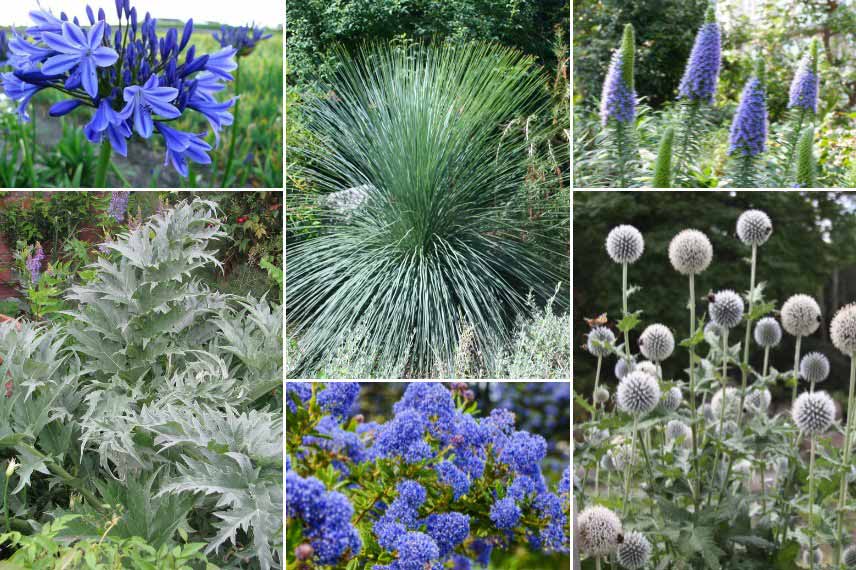
Agapanthus ‘Midnight Blue’, Dasylirion longissimum, Echium candicans, Cynara cardunculus, Ceanothus ‘Blue Sapphire’, Echinops sphaerocephalus (photo: Drew Avery)
- Subscribe!
- Contents
Comments