





























Plant biennials for a vibrant spring garden!
Make the most of flowers to brighten up pots, borders and flower beds
Contents
Biennial plants are named this way because their vegetative cycle extends over two years. In the year of sowing, they develop a root system and foliage. In their second year, they flower, produce seeds and then die. But biennials are also often used to refer to short-lived perennials. These highly floriferous plants (hence their short lifespans) are essential for creating a vibrant garden from the very start of spring and bringing a touch of freshness after the grey, cold months of winter. By following sowing and care guidance, and using tips to maximise flowering, you can create a flowering garden that will brighten your spring days. Don’t forget to add these spring flowers to your gardening to-do list.
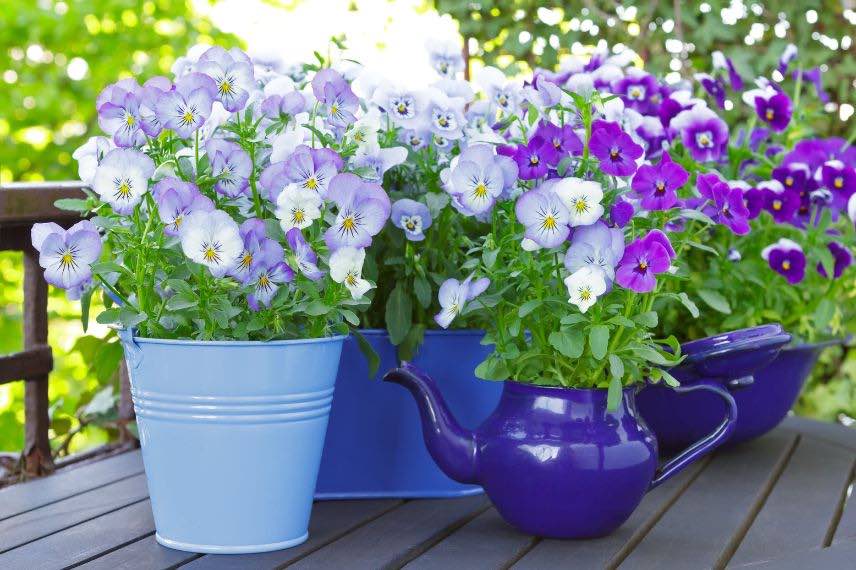
Violets or pansies in eclectic pots

Importance of spring-flowering biennials for a garden in bloom
Biennials are spring flowers that, like annuals, play an essential role in creating a flowering garden. What distinguishes biennials from annual flowers is their two-year life cycle. In their first year of planting, they develop leaves and roots over the winter, and in the following spring, their flowers burst into a blaze of colour. They offer a range of colours, shapes and textures and should not be overlooked when planting in the garden.
Biennials are an ideal choice for those who wish to create a vibrant garden from the early days of spring. They provide a contrast with bushes and perennial plants that generally start flowering later in the season. In addition, they are relatively easy to maintain and offer a range of choices to suit all tastes and garden styles.
Selection of the best biennials for spring
Here are some truly biennial plants to consider, starting with those whose life cycle is genuinely biennial, and then those commonly called biennials but which are more short-lived perennials.
The “true” biennials
- Pope’s money plant, or Lunaria annua, is a well-known plant in dried-flower bouquets for its seed pods that enclose its seeds. Pearly-white, flat, they are very decorative in the garden. But its violet spring flowering on a tuft of triangular leaves is equally interesting.
- Several Verbascums or mullein plants are biennials, such as the true common mullein: Verbascum thapsus, with yellow flowers, or Verbascum olympicum.
- Garden Angelica or Angelica archangelica, is a plant with large green globular inflorescences whose stems are used in confectionery and pastry. Purple Angelica or Angelica gigas is a species with purple stems and purple umbels at the onset of flowering.
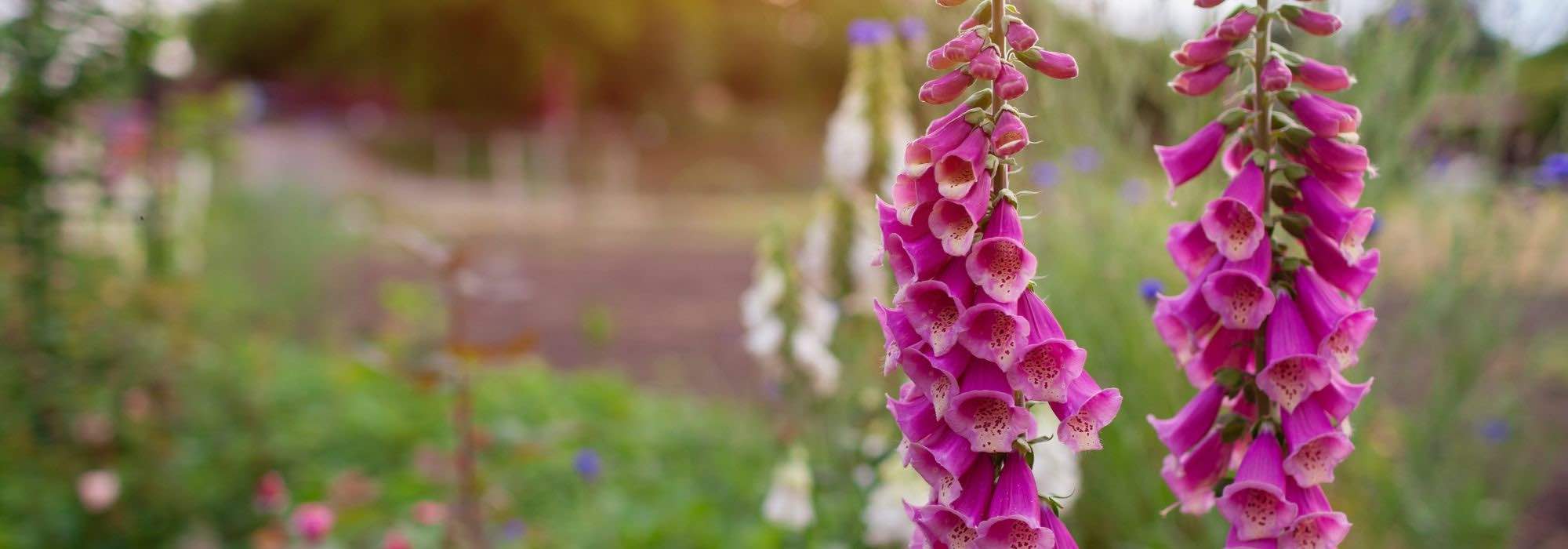
- Foxgloves or Digitalis purpurea with their tall flowering spikes, have a striking presence in the garden.
- Evening Primrose or Oenothera biennis forms a large ornamental plant with yellow flowers and an edible root.
These are the main ones, but there are others that are also interesting. Verbascums, Angelicas and Digitalis add a lot of structure to the garden thanks to their substantial growth and their graceful verticality. If conditions suit them, they can self-seed freely, bringing surprises and satisfaction.
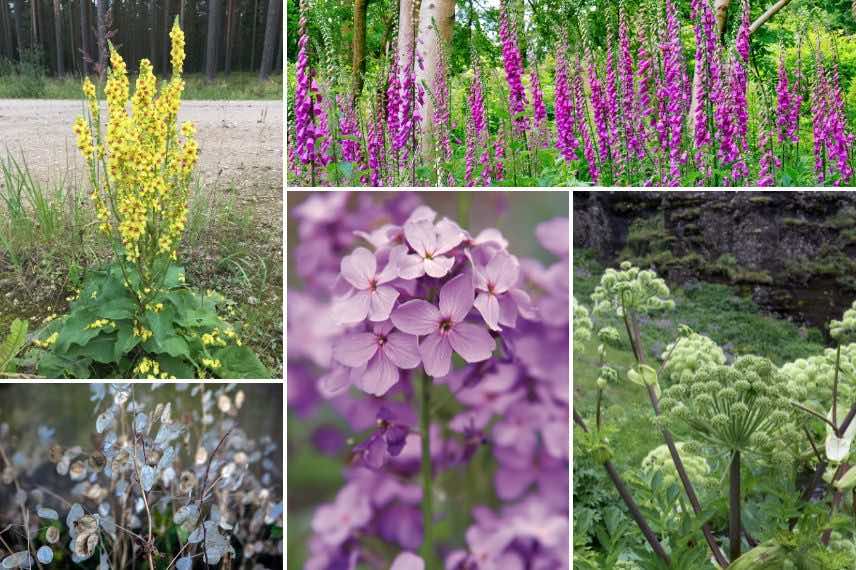
From top left to bottom right, clockwise: true biennials: Verbascum, Digitalis, Angelica, purple flowers and the silvery seed capsules of Pope’s money plant
The biennials or short-lived perennials
- Pansies (Viola x wittrockiana) and Viola cornuta: These small flowers in a multitude of colours on short stems are perfect for garden borders or pots. They are hardy and flower early in spring.
- Wallflower or Erysimum: They bloom abundantly with a pronounced fragrance and adapt to tough soils.
- Primroses (Primula vulgaris): Primroses are known for their vivid colours and their ability to brighten any corner of the garden early in the season. They are ideal for borders and containers.
- Forget-me-nots (Myosotis sylvatica): They produce delicate blue flowers that symbolise the renewal of spring. They naturalise easily.
- Snapdragons (Antirrhinum majus): These bell-shaped flowers are ideal for adding verticality to your garden. They come in a range of bright colours and are highly attractive to pollinators.
- Daisies or Bellis perennis: The pom-pom hybrids of daisies in a range of colours slip into window boxes.
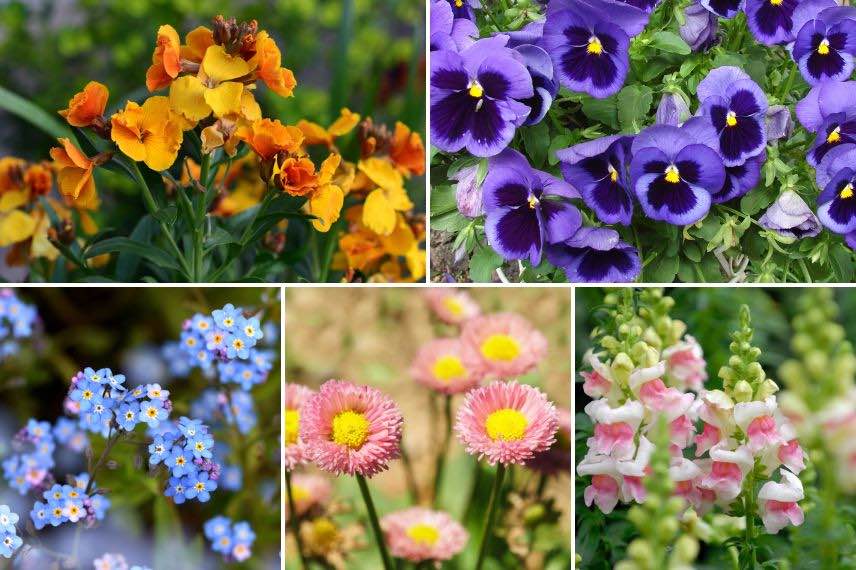
Wallflower, Pansies, Snapdragons, Daisies, Forget-me-nots
Tips for planting biennials
Here are some useful tips for planting biennials.
When to plant?
The ideal time to plant biennials is in spring or autumn, before the soil freezes. This gives them enough time to develop their roots before the following spring. They will flower after a period of cold, the vernalisation process.
‘True’ biennials can be sown in spring, in late summer or in autumn. Sown in spring, they have time to form a nice rosette of leaves in the year of sowing, to flower the following year. If sown in late summer or autumn, you may have to wait until the third year to see them flower.
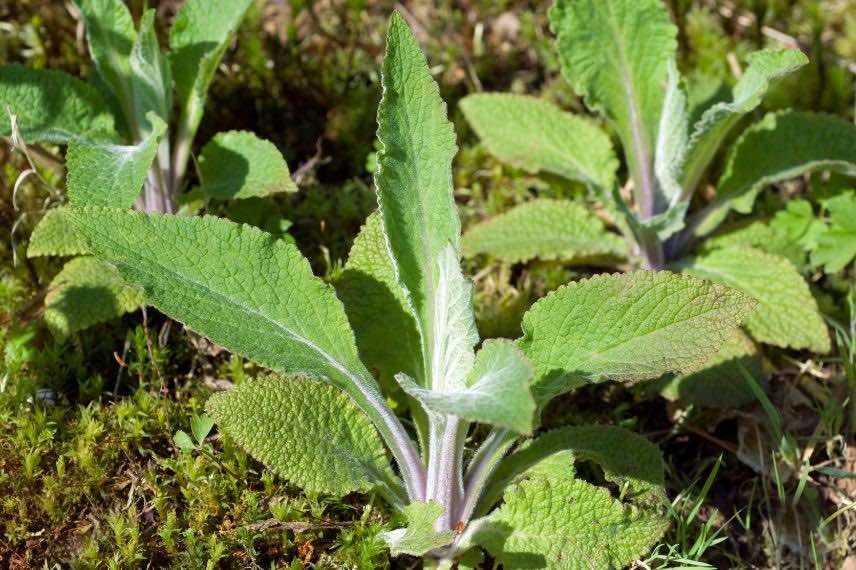
Basal clumps of foxgloves, the first stage of two-stage growth
If you are buying biennials in plug plants for containers, plant them in September. If they are in pots, you have until November. It is easier to plant rather than sow these biennials for pots, as sowing can be tricky when temperatures exceed 18°C.
→ Read Ingrid’s article: plant biennials in plug plants.
Where to plant?
Choose a sunny or partially shaded location for your biennials, according to the specifics of each variety. Ensure the soil is well-drained to prevent root rot.
How to plant biennials in plug plants?
- Prepare the soil by weeding and working it until it is loose and fertile.
- Dig planting holes at the recommended spacing for each variety.
- Place the plants in the holes so that the top of the root ball is level with the soil surface.
- Fill the holes with soil and lightly firm.
- Water generously to help the roots establish themselves.
In pots, choose a quality potting compost, rich and well-draining, with good water retention, the first step towards successful container plantings and optimised flowering.
How to sow biennials?
For sowing a “true” biennial, proceed with the same soil preparation, then dig furrows 1 cm deep, 40 cm apart. Place the seeds. Cover with 1 cm of fine soil or potting compost, then firm with the back of the rake. Water.
This is general guidance; refer to the sowing advice for each species for more precise measurements according to the size of the species.
Read also
Plant biennials in plug plantsSpring care for biennials
Once your biennials are in place, good maintenance is essential to maximise their flowering and create a blooming garden. Here are some tips for looking after your plants:
Watering
Water regularly to keep the soil slightly moist, but avoid overwatering which could cause root rot. Water needs may vary by species, so monitor them closely. Water your planters even in winter, lightly, as rain does not always provide the same thorough watering as a watering can would.
Fertilising
Fertilise your biennials with a balanced fertiliser at the start of spring to stimulate their growth and flowering. Repeat application in line with the fertiliser’s instructions.
Mulching
Add a layer of organic mulch around your biennials to maintain consistent soil moisture and reduce weed growth.
Protection against pests
Watch for potential pests such as slugs and snails, which can damage your biennials. Use appropriate control measures.
Extend flowering and maximise visual impact
To encourage continuous flowering, regularly deadhead the spent flowers. This will allow the plant to focus its energy on producing new flowers.
But if you would like to prolong the flowering of your biennials and maximise the visual impact of your garden, here are some additional tips to consider:
- Plant different varieties of biennials with slightly staggered flowering periods to have flowers from early spring through to the end of the season.
- Use planters and pots to create biennial arrangements that can be moved easily for an optimal visual effect.
- Mix your biennials with spring bulbs and perennials to vary and prolong flowering.
- Perform light pruning of the plants as needed to encourage branching and abundant flowering.
- Cut the flowers before they set seed to allow the plant to bloom for another year.
- However, letting the plant reseed as it pleases is the surest way to enjoy it for longer.
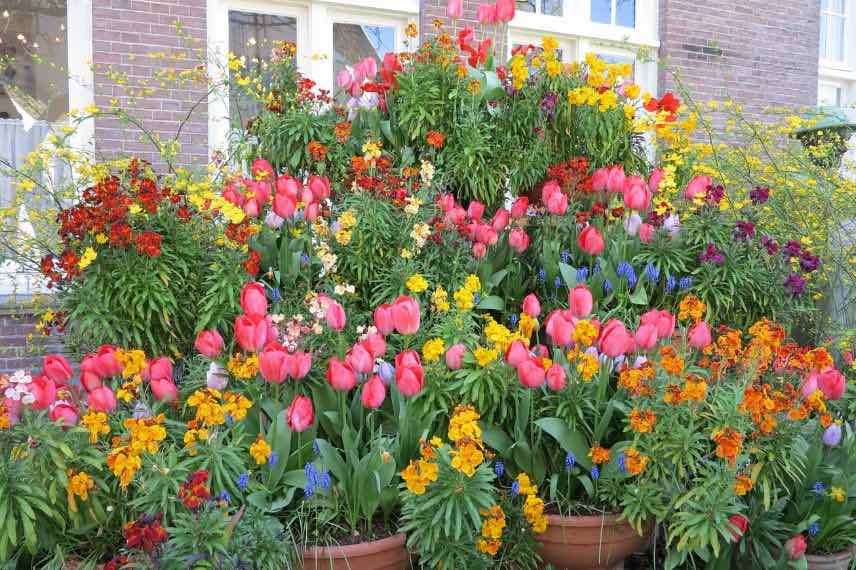
A display in numerous pots of carnations mixed with tulip bulbs, grape hyacinths and perennials
- Subscribe!
- Contents

Comments