





























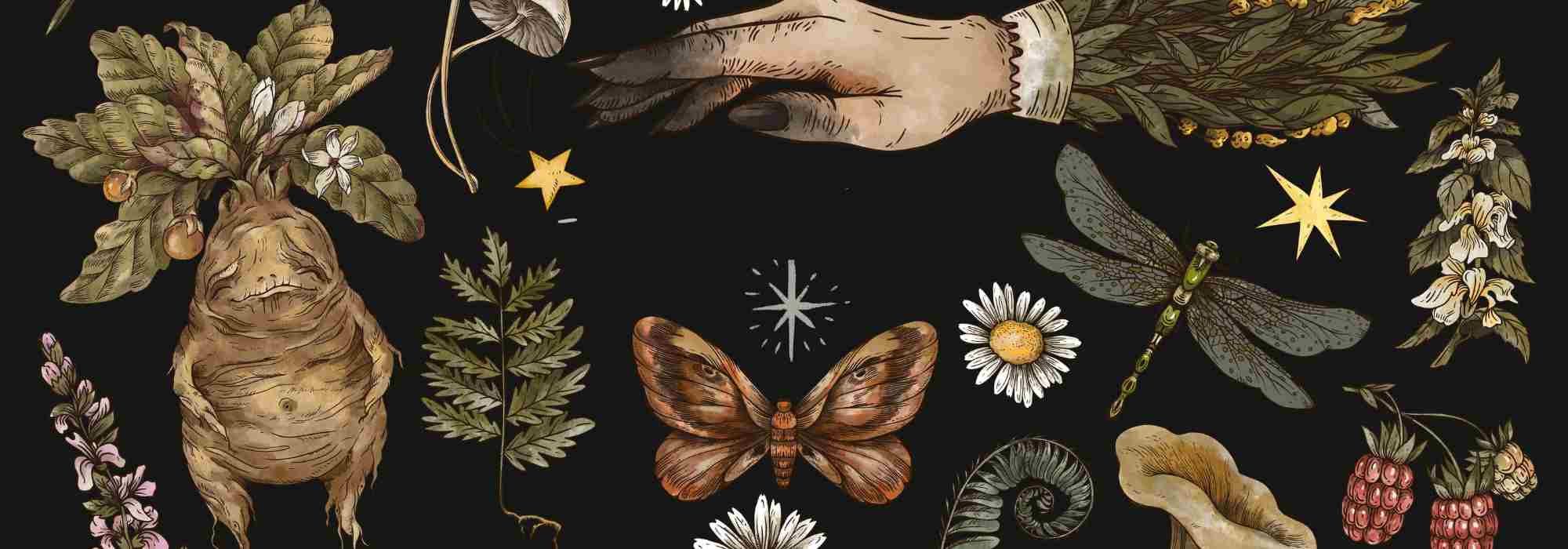
The plants of witchcraft
History and legends of magical plants
Contents
Ancient plant-based rituals for creating philters, enchanted potions and other elixirs fascinate. If the word “witchcraft” sounds frightening, modern witchcraft, also called white magic or green magic, embodies a beneficial practice in the use of plants.
Between devil’s plants, medicinal plants and sacred plants, whether belief or pure symbolism, we tell you a little more about the enchanted world of magical plants.

Magic and witchcraft: an ancient botanical history
Since time immemorial, man has used plants not only to feed or heal himself, but also in his quest for esoteric knowledge and power. Plants have therefore often been at the centre of mystical practices and beliefs, where they became talismans and key ingredients in potions and rituals. They entered the traditional pharmacopoeias of many cultures, notably in Asia and Latin America.Sacred plants are found in all ancient civilisations, from China to the Americas, from antiquity to our modern era. This link between plants and witchcraft has evolved over the ages, persisting today in various forms. Modern witchcraft now claims a curative role, most often working with plants as a practice of healing and alternative medicine. Many plants have indeed been recognised since the Middle Ages for their medicinal virtues, and some have been considered divinatory or bewitching plants, taking us back to certain tales of our childhood…
In France, each region has its own legends about sacred plants, but the Berry is regarded as a hotbed and cradle of witchcraft, as is Brittany, rich in legends surrounding the forest of Brocéliande. While some mystical plants venerated for their toxic properties are found, plants considered magical are often from the woodland environment. Certain blue-coloured flowers, less common in the plant world, were themselves considered celestial or even spiritual, forming a link between heaven and earth (the lesser periwinkle or sorcerers’ violet, the cornflower, etc).
As for witchcraft, often viewed with suspicion, it is not limited to black magic based on spells and malevolent enchantments. The green magic and the white magic that use the energy of plants are rooted in a deep understanding of nature’s cycles and draw on ancestral knowledge, linking man, the plant and the occult. They are intended to be beneficial to us.
Mystery surrounding grimoires and plants…
Read also
Tansy and its medicinal propertiesWhich plants are used in witchcraft?
The plant world has often borrowed names from the repertoire of witchcraft, even though the plants themselves had no real connection to it (the witch’s claw as we say in French for Carpobrotus is a good example). Unsurprisingly, plants used in black magic are often poisonous species such as aconite or datura… But there are many others venerated or feared for their powers. Among the best known:
Mandrake
Does the mandrake scene in Harry Potter and the Philosopher’s Stone ring a bell? The mandrake (Mandragora officinalis) is the star of magical plants, and certainly one of those that inspired the most superstitions and magical practices.
Its ramified root oddly resembles a human figure, which led to personified depictions in medieval bestiaries. It grows only at night and releases hallucinogenic substances. The mandrake played a notable role in the occult sciences. It was claimed that its cry could kill when it was uprooted. The mandrake potion in Harry Potter is said to reverse spells and un-petrify those who have been turned to stone.
It is a poisonous plant that, when expertly dosed, can be beneficial and was reputed to have aphrodisiac virtues. In popular belief, it was associated with wealth and protection, as well as with the ability to reveal the future.
In ancient superstitions the mandrake therefore provided wealth (hence the name “hand of glory” in the 18th century), since it was said to return twice what it received. It was used as an ingredient in magic potions to attract success. One legend even says it grew beneath gallows, from the semen of the hanged… A strange, fascinating plant that continues to make people talk about it in grimoires… It is endangered and is cultivated, among other places, at the superb Jardin des Cinq Sens in Yvoire.
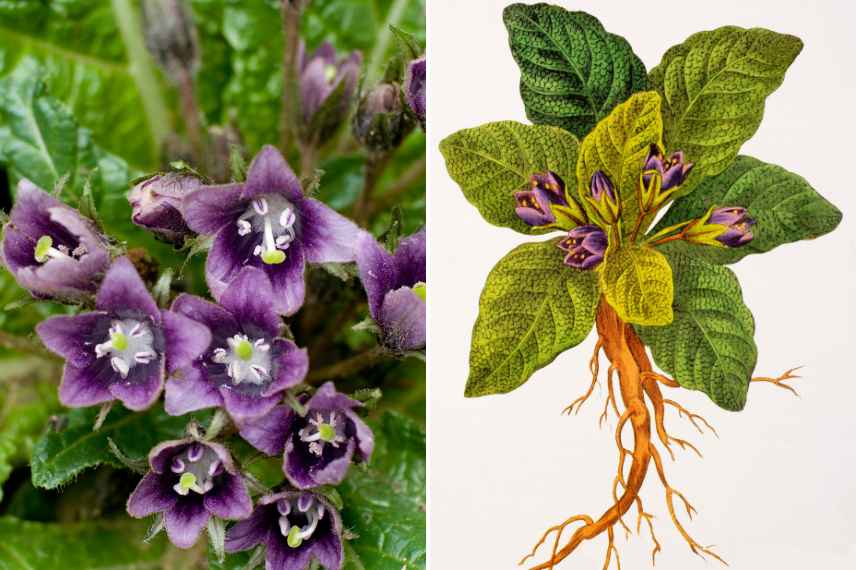
Mandragora officinalis
Black henbane
From the Solanaceae family, black henbane (or Hyoscyamus niger in Latin) is toxic. It is found by the wayside or in fallow ground throughout the Northern Hemisphere. Flowering from May to September, it has ovate, grey-green, dentate and sticky foliage, with a foul smell, and a yellowish flower with a purplish throat veined with purple. Its black seeds are poisonous. It is currently used in some homeopathic preparations to treat coughs or nervousness.
Like many plants with a magical connotation, it has acquired numerous names such as “chicken-killer”, “scabby-weed”, or “pig’s bean” (a reference to Homer’s Odyssey and the sorceress Circe who turned Ulysses and his comrades into pigs after they ate bread containing henbane…).
It has been regarded as a magical plant since time immemorial.
Also called hanebane, it is mentioned by François Rabelais as “a poisonous herb that would cause alienation of mind in those who ate it, making them bray like donkeys”. But long before, in antiquity, it was already noted. It was used in the oracle of Apollo at Delphi for prophecies. Its seeds were burned, the smoke inducing the Pythia’s trances. In overdose, the plant can cause hallucinations (and even cardiac arrest).
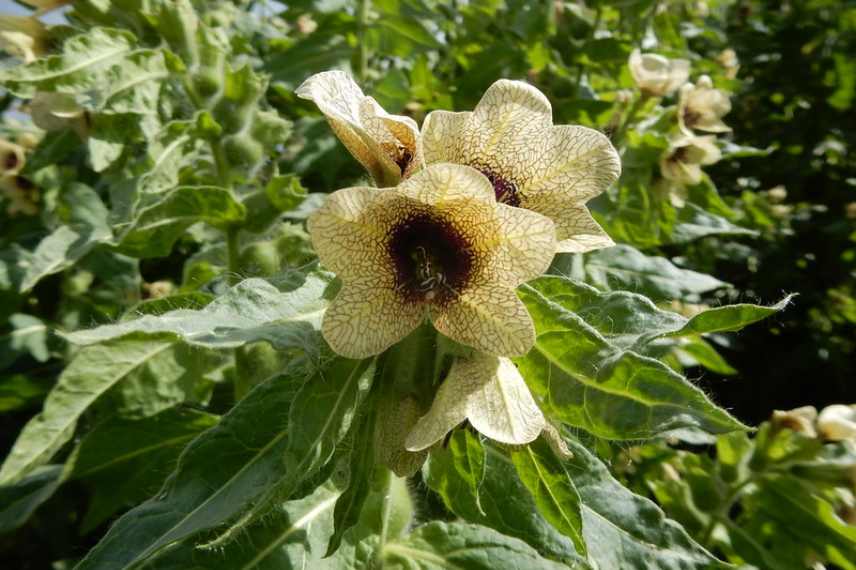
Hyoscyamus niger (© Matt Lavin)
White sage
Salvia apiana (Native American white sage, also called California sage) is one of the most common plants in esoteric and spiritual practices: it is sold as small bundles of leaves for burning. This sage, considered sacred, is indeed an essential component of smudging rituals, primarily used for the purification of spirits and spaces and to ward off evil spirits and negative energies.
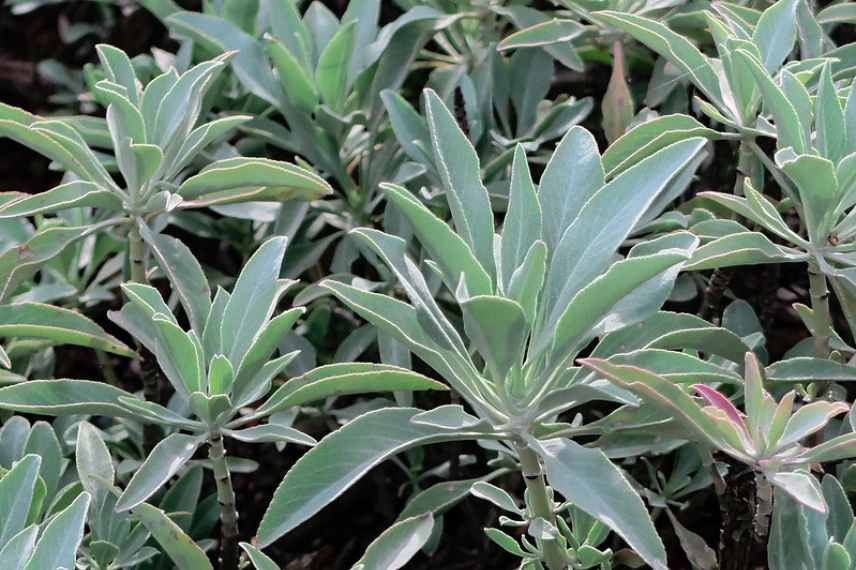
Salvia apiana (© John Rusk)
Belladonna and Datura
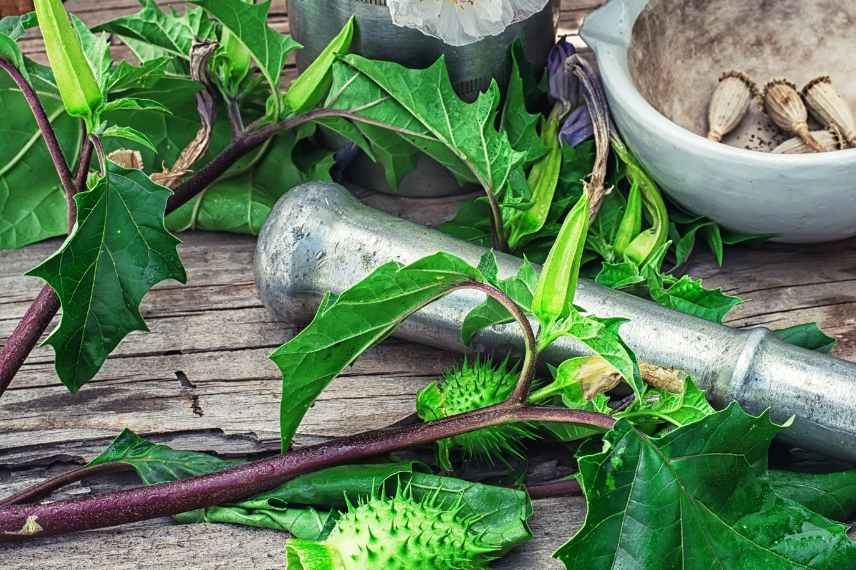
Datura stramonium, an annual plant with distinctive white foliage and flowers, has been known as henbane since antiquity. It, too, belongs to the Solanaceae family and contains proven toxicity, including alkaloids (atropine and hyoscyamine) that earned it many magical powers: confusion and pupil dilation, hallucinations… It could therefore make a possessed person commit evil acts.
Belladonna, also encountered under the equivocal names of devil’s herb, devil’s cherry or poisoner, is a perennial with violet summer flowers that turn into very toxic, deadly black berries. Its Latin name (Atropa belladonna) derives from the Greek ‘Atropos’, one of the three Fates in Roman mythology who cut the thread of human life. Close to Datura and black henbane, the fair lady was also the quintessential magical plant, carefully dosed by female magicians, who used it in various preparations. Among other effects, it dilated the pupils—making women appear desirable to the desired man—but above all it caused all manner of hallucinations. Belladonna later became a medicinal plant, losing its magical connotation from the 16th century onwards.
Mugwort
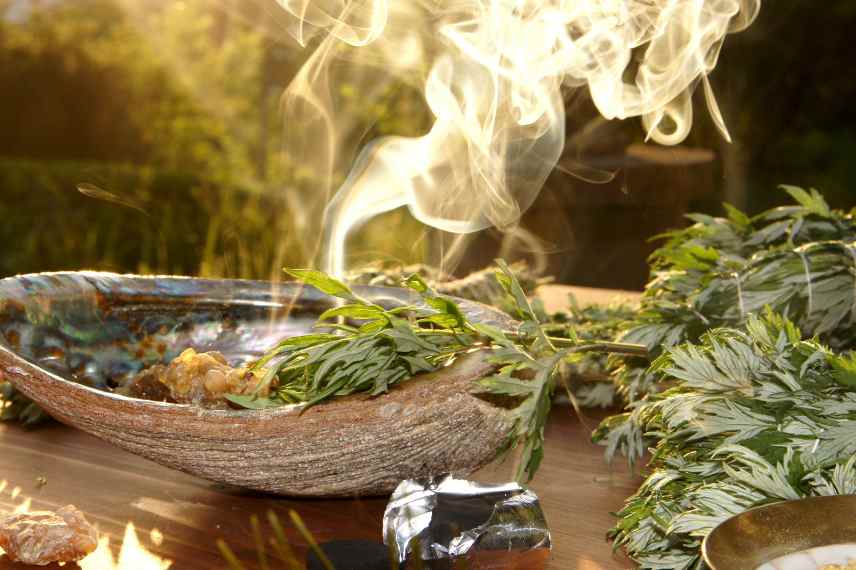
Mugwort or Artemisia is a medicinal plant straight from the physic garden, with many legends…and virtues. Used since antiquity across many regions of the globe, it is one of those herbs associated here with St John’s Day (24 June), used to ward off evil spirits, worn as a crown on the head then thrown onto the fire to protect against illness. Over the centuries absinthe, the drink made from mugwort, has been both praised and controversial, contributing to its bewitching reputation. This handsome, grey-green, very aromatic plant retains its reputation as a healing, purifying and protective herb… even as a prophetic plant.
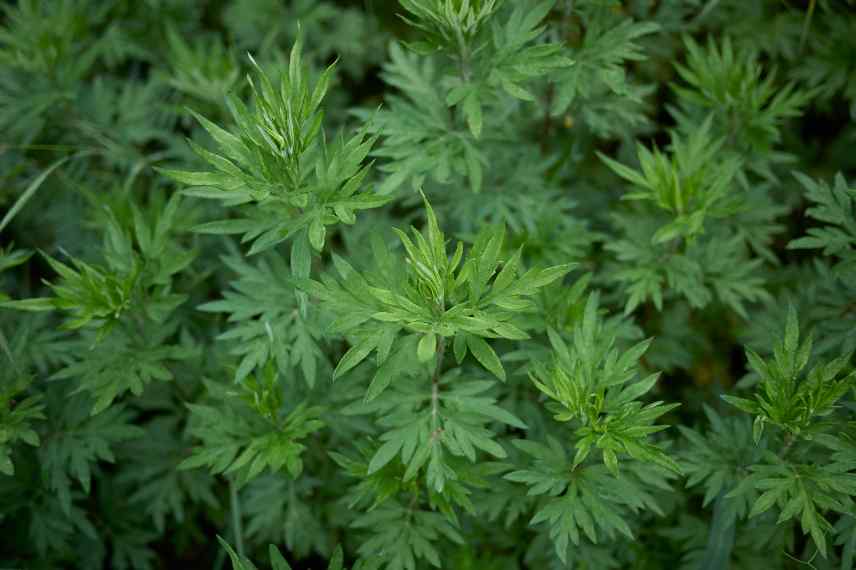
Artemisia vulgaris
Hazel
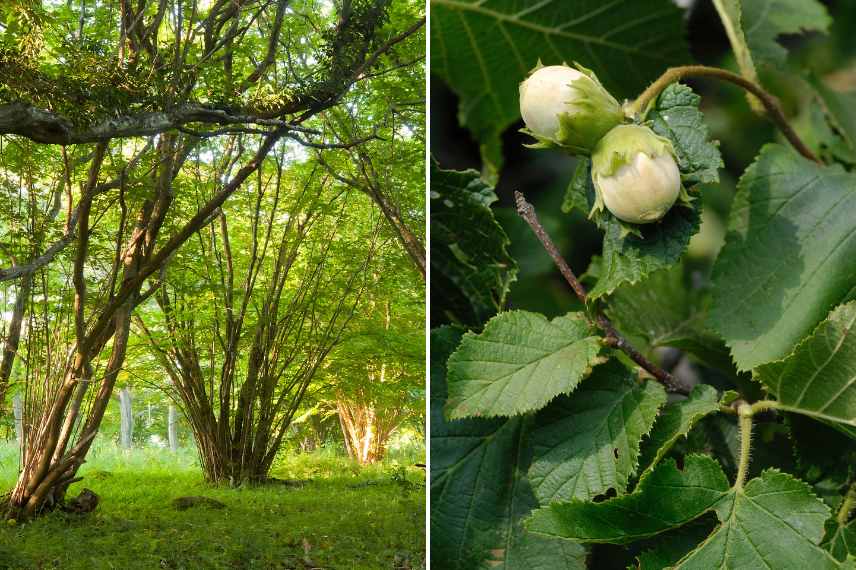
The hazel is a tree believed to have magical powers. It has several virtues, often contradictory, as is frequently the case when discussing witchcraft or magical phenomena. It was used by druids as a support for incantations.
Aside from the fact that the staff of the hazel (formerly called coudrier) was traditionally used to make the magic wands of magicians, witches or fairies (its straight branches are well suited to this), it is also credited with the power to detect springs (the famous dowsing practiced by water diviners, or the ability to sense the magnetic field of water). This ability would be enhanced by the essence of hazel wood, considered to have an affinity with water, the wand taking the shape of a Y. With the hazel, the wand points to mankind’s power over things and the elements.
In druidic times, hazel branches were cut into small pieces and then thrown like dice as a prelude to incantations for divinatory art. Among the Germanic-Scandinavian peoples, the hazel was strongly associated with fertility. Many tales refer to it or evoke the bush in love rites.
But its virtues are multiple; it was also said to counteract the actions of sorcerers. Legend finally holds that the witches’ broom is also made of hazel, and that the wand of fairies or witches must be cut at sunrise from a branch that has not flowered. You can always try…
Mistletoe and oak
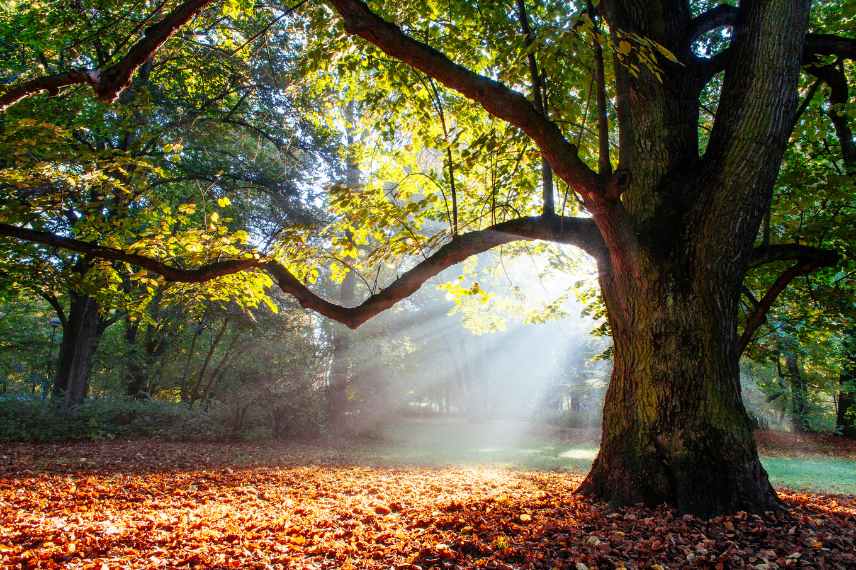
The oak or Quercus, a sacred tree, is symbolically linked to immortality and strength because of the hardness of its wood, its longevity and its resistance to wind and storm. King of the forest, it is the host tree of the Dryads, the place where Celtic druids and witches gathered for ceremonies and rituals. The oak formed a kind of sacred sanctuary within the forests, a protective place. Its bark has long been considered a benevolent good-luck charm.
Intimately connected to the oak, mistletoe grows on the tree, inheriting the sacredness of that tree, and becomes in turn a magical plant. Emblematic as a good-luck charm on a par with the four-leaf clover, mistletoe recalls the beliefs of the druids in Gaul. Many virtues were attributed to mistletoe, including the immortality associated with the oak, but also the ability to protect people against witchcraft.
→ Read also: Mistletoe, a rather pretty parasitic plant that brings good luck.
St John’s wort
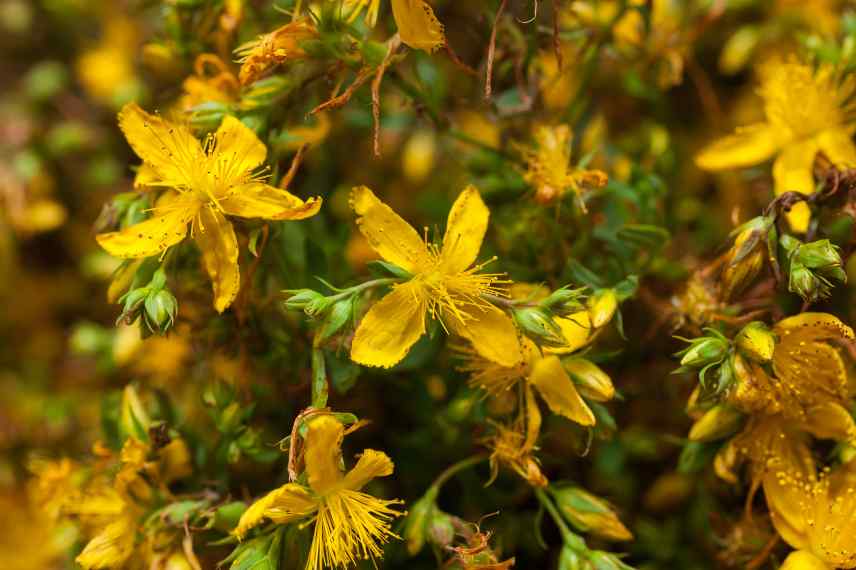
Also called witches’ herb, devil-chaser or fairy herb, the Hypericum perforatum with its golden-yellow flowers has been used since the Middle Ages. An herb of herbalism, known for its calming virtues, it had, in certain regions and countries (notably the southwest of France), the reputation of being the St John’s herb: on 24 June, the summer solstice, it was deemed beneficial to harvest it, then hang it on doorways to drive away the evil one, repel witchcraft and enchantment. St John’s wort was also used in the composition of a red oil, an oily macerate obtained by steeping the flowering tops in oil, acting as a healing balm. There are in fact many accounts of the magical virtues of St John’s wort, often described as a plant that healed the possessed.
Ferns
Another group of plants totally associated with the occult sciences: the ferns. They are renowned up to the early 20th century as protective, purifying, for ensuring healing, repelling demons… and snakes. grimoires of magic still mention them, mainly using the rhizome in various rituals. The seed of the male fern was even said to render one invisible and to tame the devil. The ritual was observed on St John’s Day, “at the stroke of midnight,” when spores were collected. To be effective, neither the fern leaves nor its spores were to have touched the earth (the precious “seeds” were collected on a cloth).
Among the great ferns traditionally used in witchcraft, note Osmunda regalis and Pteridium aquilinum (the bracken).
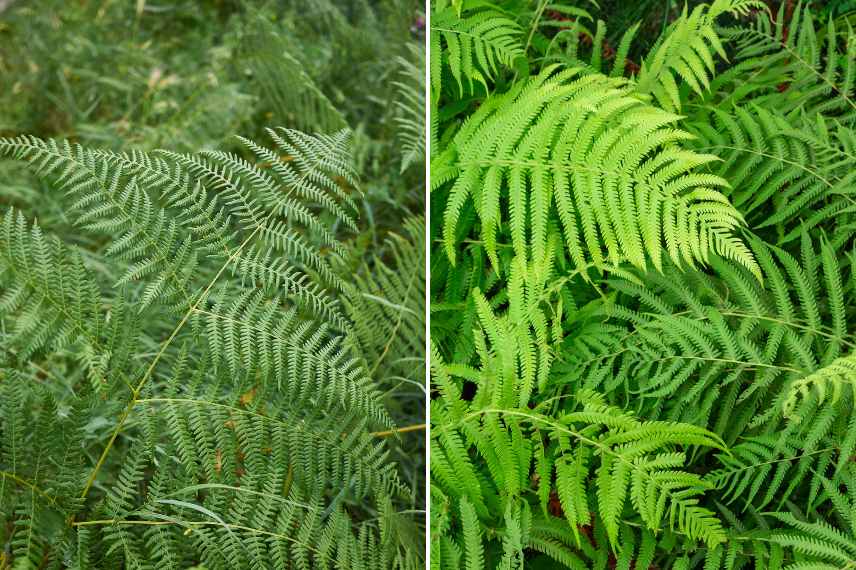
Pteridium aquilinum et Osmunda regalis
Holly
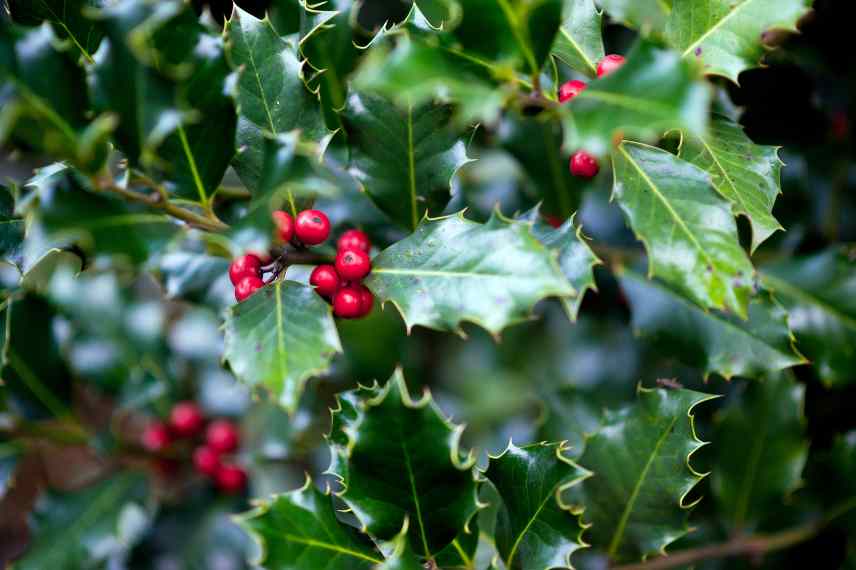
Recognisable by its glossy, spiny leaves and red berries, holly (Ilex aquifolium) is an evergreen bush essential to our festive decorations. Like the oak, holly is traditionally linked to Celtic and Northern cultures and inspires many legends and cults. Because of its remarkable longevity, it is also a symbol of immortality and protection.
It is said that witches used the red berries to make ointments and to create storms. Frequently planted near houses in the countryside, the berries (toxic) and leaves of holly were also believed to protect against evil magic, the evil eye and lightning. Magic wands have often been made from holly wood, a hard timber.
> Learn more about the history and legends of holly in this excellent Gallica article, and with Pascale in Fir, mistletoe, holly: the story of Christmas plant symbols.
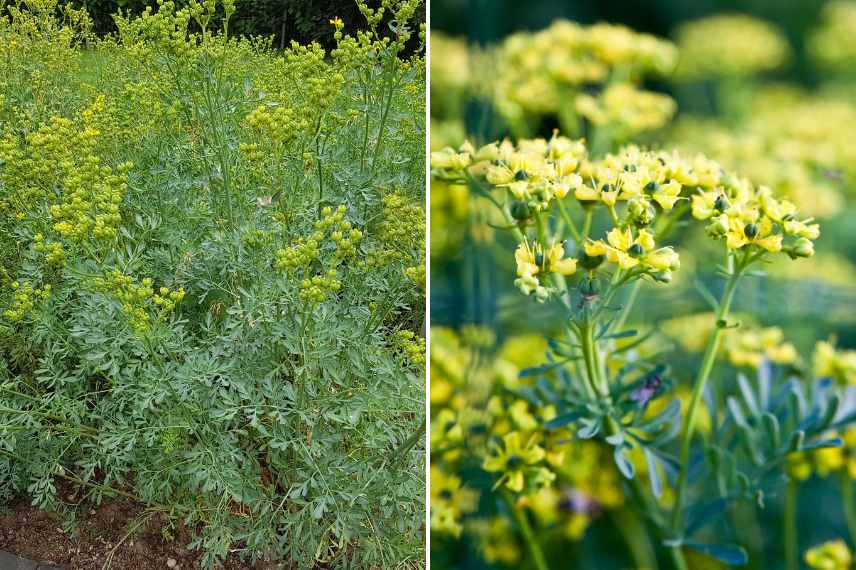
Common rue or Ruta graveolens
Stinking rue or herb of grace… take your pick when it comes to its nicknames! Here is yet another poisonous plant reputed to be magical, from the Rue family. Its bright yellow flowers illuminate the blue-green foliage all summer long.
The rue was considered a sacred herb and featured in many spells. It was commonly used for protection against the evil eye and to purify places from malevolent forces. It was also believed to strengthen psychic abilities. Now used in minute doses in certain therapeutic preparations, it is used to treat muscular pain and some eye disorders.
Phytotherapy, shamanism, and other related practices
The connection between plants and witchcraft extends into practices such as herbal medicine and shamanism. Herbal medicine is based on the healing properties of plants, while shamanism, rooted in ancestral spiritual traditions, sees plants as allies for healing and the pursuit of knowledge. These practices, although different in their approaches, share a deep respect for nature and recognise the power of plants to influence both body and mind.
Modern herbal medicine, for example, uses plant extracts to treat a multitude of ailments, thus reviving the legacy of ancient witch‑healers. Shamanism, for its part, engages in a dialogue with the spirit of plants to access altered states of consciousness and obtain guidance or healing.
These contemporary practices only confirm the central role of plants in human beliefs and rituals throughout history. Rooted in the past and blossoming towards the future, the relationship between plants and spirituality continues to flourish, offering an inexhaustible source of wisdom and well-being. Thus, whether one plunges one’s hands into the earth or lifts one’s spirit in a quest for connection, plants prove to be steadfast companions.
N.B.: This article is a brief overview of the historical and cultural relationship between plants and witchcraft, and in no way constitutes an encouragement to practise witchcraft or to use plants for therapeutic purposes without medical advice. It is important to understand that some of the plants mentioned are toxic and must be handled with caution and knowledge.
Read also
Medicinal plants in a forest gardenThe ideal library
To continue exploring this fascinating subject, I recommend a few reference works in French. Magical, divinatory or malevolent plants, grimoires of the sorcerer-gardener, find a list of books covering the topic, from medieval plants to shamanism.
- Magical and Astrological Flora of Antiquity. Guy Durcourthial. 2003. Belin Editions.
- Magical Plants and Witchcraft. Émile Gilbert. 2016. CPE Editions.
- Shamanic Herbalism: The Energy of Plants, Ancestral Recipes. Marilyn Brentegani. 2023. Rustica Editions.
- Witches’ Plants. Clémentine Desfemmes. 2024. Animae Editions.
- Investigation into Magical Plants. M. Bilimoff. 2022. Ouest France Editions.
- Magical Cooking. The Complete Guide to Wiccan Ingredients and Recipes. Lisa Chamberlain. 2023. Le Lotus and the Elephant Editions.
- Marvelous Medieval Plants. J. Marty-Dufaut. 2021. Ouest France Editions.
While preparing this topic I found these two articles particularly interesting, which I share with you to extend your reading a little: Magical Plants of Brittany by Roland Mogn and François de Beaulieu, and The Black Henbane, the Elite among Witches’ Plants.
- Subscribe!
- Contents
Comments