


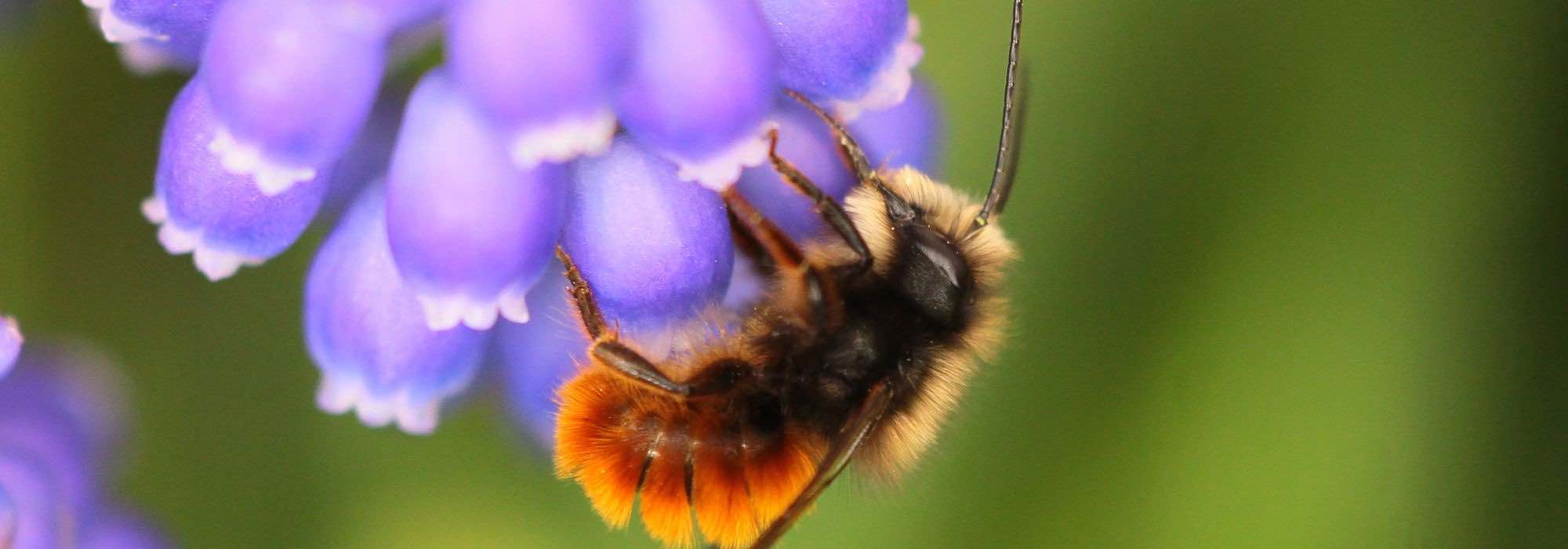
Pollinating mason bee cocoons: why and how to use them in the garden?
Valuable beneficial insects
Contents
The growing interest in biodiversity has highlighted essential players in our gardens: pollinators. To aid pollination of young plants, nothing beats mason bees or Osmias. Unlike honeybees, they do not live in colonies and do not produce honey, but they are capable of pollinating a large number of flowers in record time. These pollinators, with a solitary lifestyle, play a crucial role in ecological balance and the health of plants. This article explores the reasons why using mason bee cocoons is beneficial for your garden and provides practical tips for integrating them effectively. By adopting these practices, you contribute not only to the conservation of pollinators but also to improving fruit and flower production in your garden, while actively helping safeguard biodiversity.

What are these mason bees?
Red mason bees, also known as mason bees or under the scientific name Osmia bicornis, are pollinators native to France that actively contribute to biodiversity. These solitary bees do not form colonies or swarms. They lay their eggs in hollow stems, holes or crevices between stones.
They readily adapt to all types of environments, urban or rural, and can be welcomed in a garden, on a balcony or even on a windowsill, where they will always find something to feed on.
Red mason bees are very calm, non-aggressive and appreciate the insect shelters provided for them. They lay their eggs and stock food for their offspring in bamboo tubes, hollow stems or holes in bricks. As they forage for food, they pollinate flowers along the way. Then they seal the tubes by building a wall of clay, hence the name ‘mason bees’. They spend summer, autumn and winter sheltered in the tubes, and the cocoons hatch in spring when the sun warms them.
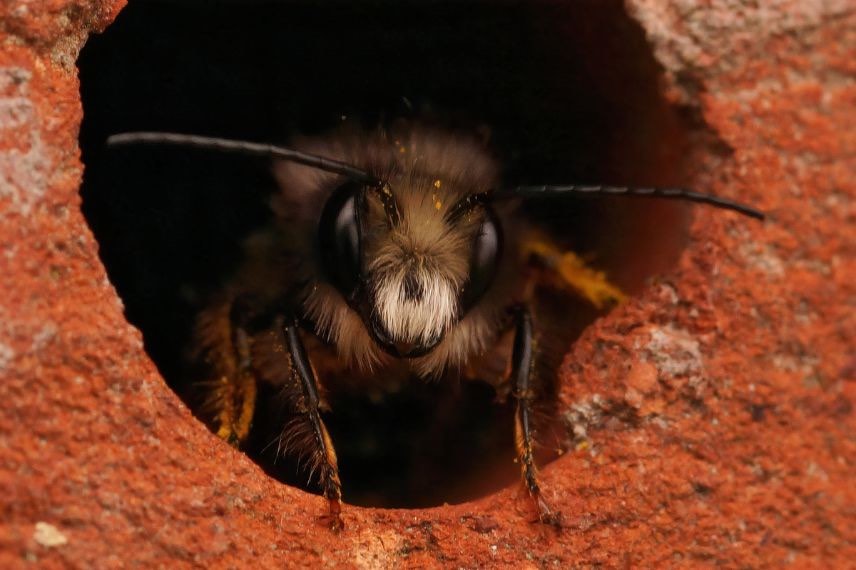
A red mason bee sheltered from the elements
Read also
Auxiliary insects: hoverfliesWhy bothering?
These mason bees are highly effective at pollinating plants, even more so than honey bees, but they do not produce honey. Each mason bee can pollinate up to 40,000 flowers. They visit a wide range of plants, including flowers, vegetables, bushes, including fruit trees such as apple trees, pear trees and cherry trees, as well as soft fruits such as strawberries, currants and raspberries, as well as trees such as oaks, willows and hazels.
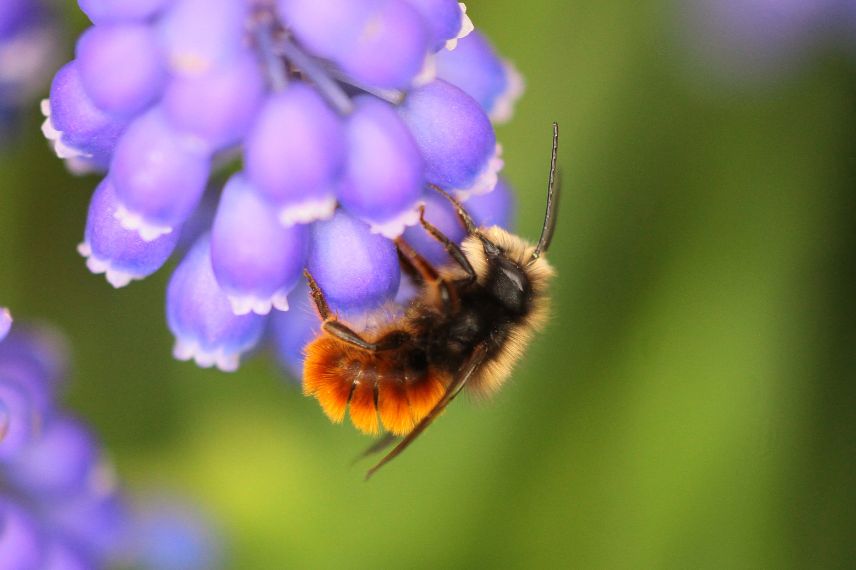
A mason bee can visit up to 40,000 flowers!
What are the advantages?
- Red mason bees forage at cooler temperatures than common bees, making them ideal pollinators early in the season.
- These bees are neither intrusive nor bothersome : they are not attracted to sugary foods or drinks, only flowers interest them. You can therefore install them near your home, even on a windowsill, and eat on the terrace without fear. You can also install them on a balcony.
- Males do not have a sting, and although females have a small one, they are not aggressive and sting only very rarely, for example if crushed.
- The life cycle of mason bees is fascinating, and raising them makes for an educational project. It goes through the stages of egg, larva, chrysalis and adult. The cocoons can be set up from March, and the development of the bees can be observed until the summer holidays.
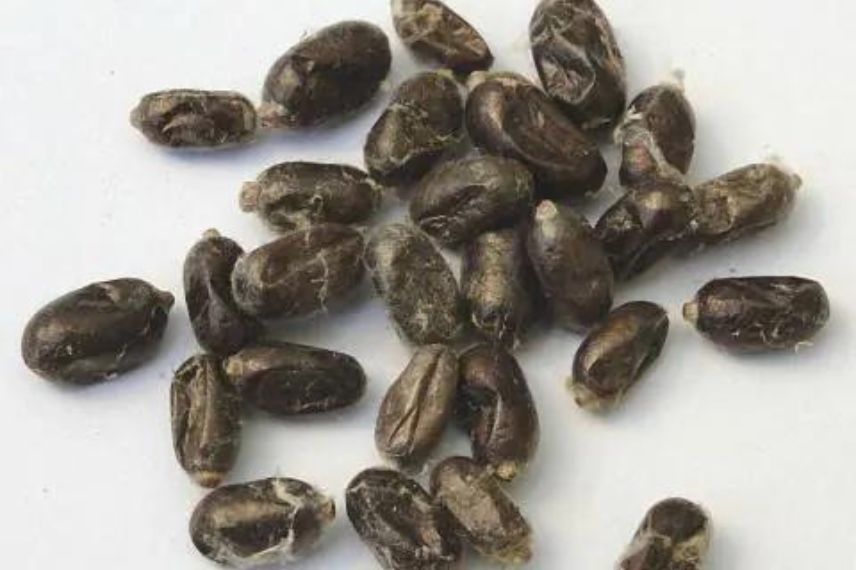
Osmia bees are supplied as cocoons
Restrictions
- It is not advisable to install them at elevations above 1,200 m.
- They cannot be installed on islands (Corsica, for example).
How do you install them?
The mason bee populations are delivered in a cardboard tube with a stopper, at the cocoon stage. The cocoons are dormant and will awaken a few days or weeks after you place them in your garden. They must be handled with care to avoid damaging them.
To install mason bees, you need to provide them with spaces to lay their eggs right beside where you want to install them. They build their nests in holes 0.5 to 1 cm in diameter and sufficiently deep. These spaces can be holes in walls, bricks or hollow branches, bamboo tubes, holes drilled in pieces of wood, for example.
You can therefore either obtain a mason bee nesting box made from bamboo tubes or hollowed-out pieces of wood, or set up or make their future shelters yourself.
→ Read our advice sheet: Welcoming garden insects, 7 shelters to build yourself. You will find a simple tutorial to build an Osmia shelter.
The nesting box must be placed in a sunny spot, sheltered from rain, at least 50 cm above the soil. It is thus possible to hang it on a wall or place it on a windowsill. It is not advisable to attach it to a tree. Once the nesting box is ready, simply fix the tube containing the cocoons inside the nesting box or as close as possible, keeping it sheltered from the weather, and ensuring that it cannot be carried away by animals.
Once the tube is fixed, simply remove the stopper from the tube. It is important not to move the nesting box once emergences have begun, as the bees would not find it again. It can be moved carefully when their activity has finished, in autumn or winter.
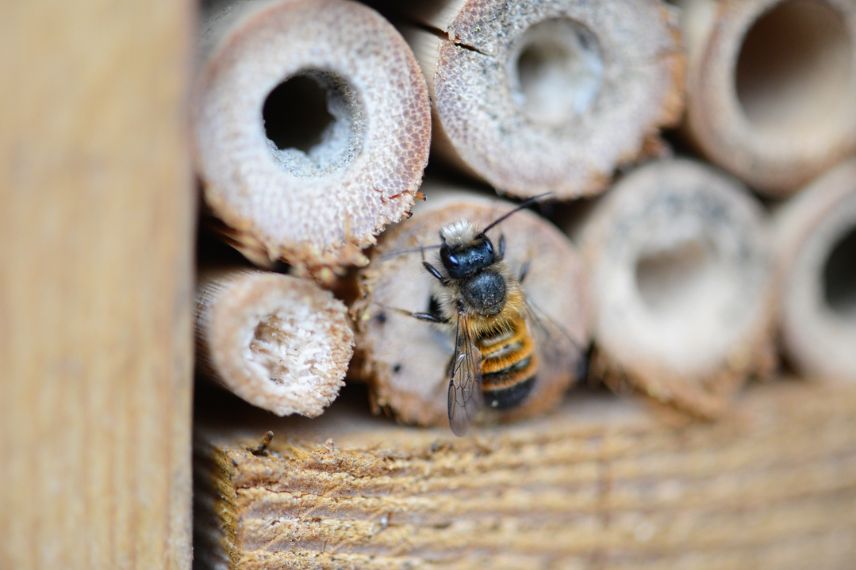
You can easily build a small shelter for Osmia
- Subscribe!
- Contents
Comments