





























Potted Gardenia: Planting and Care
For a beautiful flowering fragrance
Contents
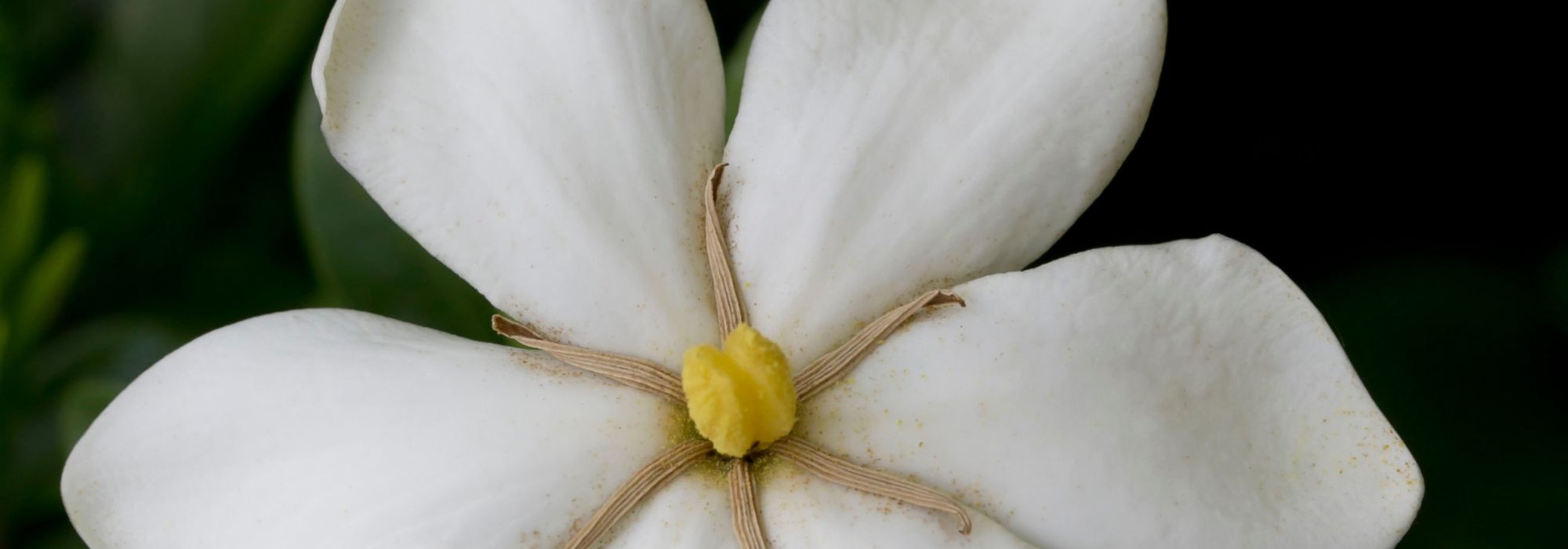
Native to Asia and South Africa, the gardenia is an ornamental bush that has more than one asset to please us. It features glossy, evergreen, dark green foliage, and offers white to cream flowers with an intense jasmine fragrance shaped like cups, from May to September. Its beauty comes at a price and requires some maintenance efforts as it is a frost-sensitive bush, capable of withstanding temperatures down to –10 to –12°C for certain varieties, and it can only be grown in the ground in a mild, humid oceanic climate. Outside areas with this type of climate, it should be grown in pots so it can be brought indoors during winter. It also requires perfect growing conditions, with an acidic, rich substrate and a humid atmosphere. Discover our tips on planting and maintaining gardenias in pots.

Which varieties should be prioritised?
- Gardenia is a bush that reaches a height of between 60 cm and 2 metres. With a compact habit, all varieties can be grown in pots.
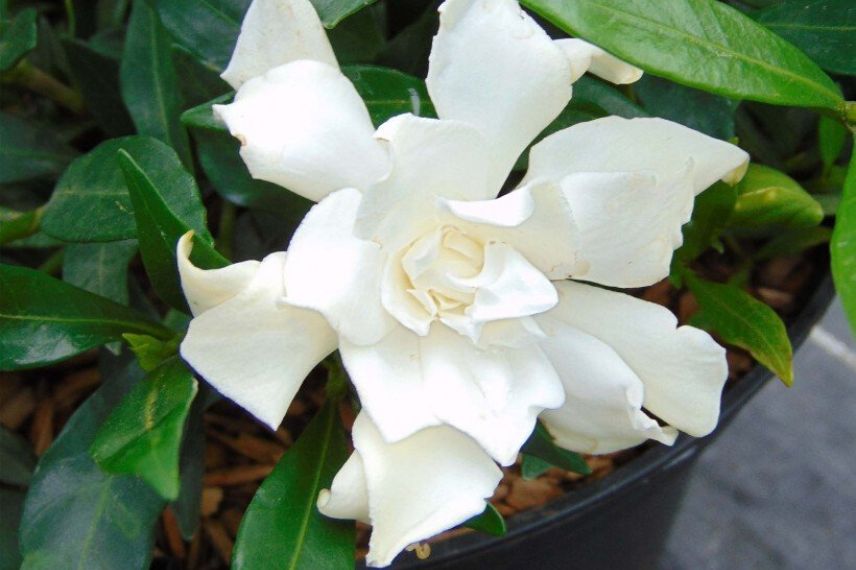
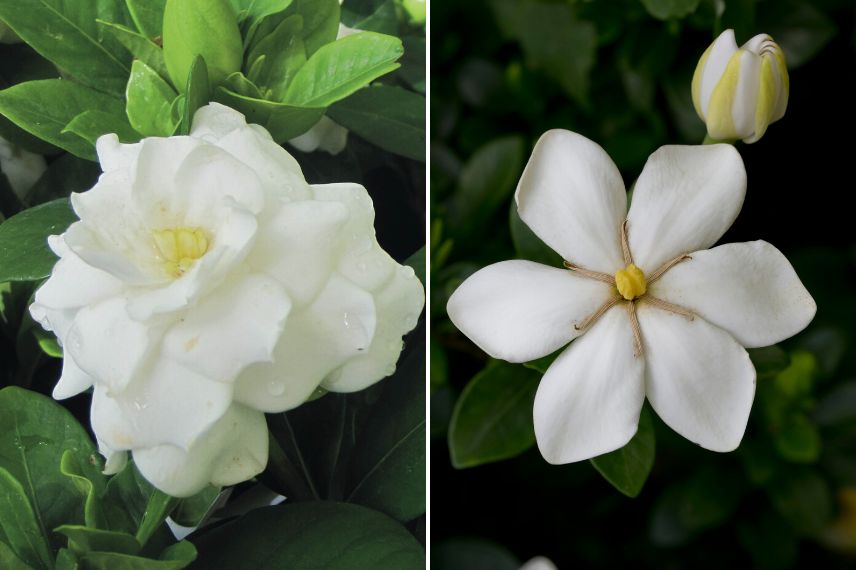
- You can for example grow in a pot Gardenia jasminoides ‘Crown Jewel’ or Cape Jasmine, which reaches a height of 1 metre at ripeness and grows slowly. Very floriferous, it produces pure white, double, fragrant flowers that contrast with the dark green of its glossy, evergreen leaves in winter. Its flowering lasts from May to September. It also withstands temperatures down to –10 to –12°C.
- Other varieties of Gardenia jasminoides are also interesting to grow in pots, such as Gardenia jasminoides ‘Summer Snow’ with semi-double flowers, which withstands temperatures down to –15°C, or Gardenia jasminoides ‘Kleim’s Hardy’ with large star-shaped flowers, which tolerates temperatures down to –12°C.
What type and size of pot?
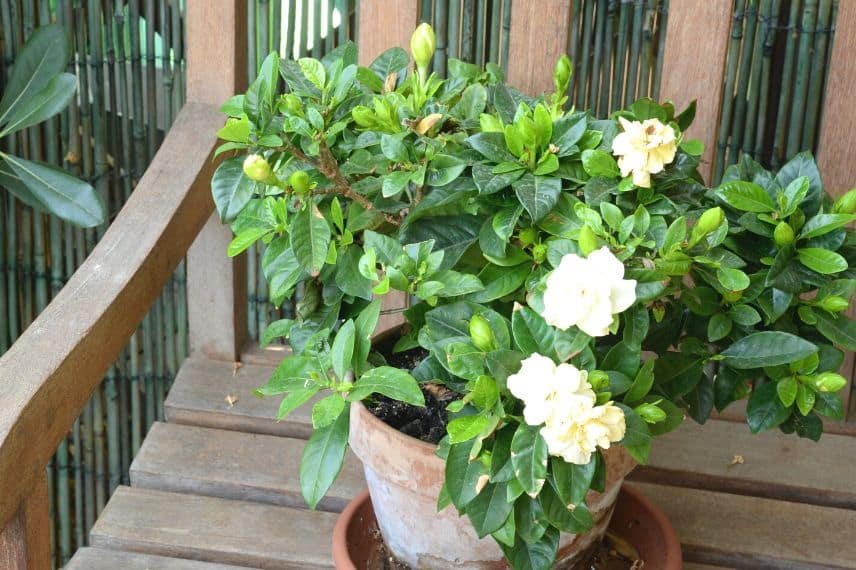
- You can use wooden, plastic, or clay containers, but clay pots are preferable, as they allow for better aeration of the plant’s roots.
- Regarding size, select a pot that is slightly larger and deeper than the root ball you are going to plant, so that the gardenia has enough space to grow.
What substrate?
- The cultivation of gardenia is delicate, and the bush requires a fertile and acidophilous substrate, such as heather soil to grow properly. Its roots do not appreciate stagnant moisture, so ensure that the substrate is well-drained. However, the substrate should remain moist in summer.
- Gardenia does not tolerate limestone, drought, or excess moisture.
Where to place the gardenia?
- Gardenia thrives in warmth and humidity and requires plenty of light to flower. However, it is sensitive to scorching sunlight that can burn its foliage.
- Place the potted gardenia in a bright, semi-shaded location, protected from the scorching sun and drafts. The idea is to avoid direct sunlight during the hottest hours. Also, ensure it is shielded from cold winds by positioning it against a wall, for example.
- On a terrace, avoid overly dry or confined atmospheres. You can also place it in a greenhouse or conservatory at a temperature between 12 and 18°C.
- To enjoy its beautiful, fragrant flowering, position it in a passageway or pathway.
When to plant it?
Outdoors, gardenia is preferably planted in May when the last frosts have passed or in autumn, from September to November, always avoiding frost.
How to plant it?
- Take a pot with drainage holes and place a layer of clay balls at the bottom.
- Add a mixture of heather soil combined with potting soil for indoor plants or leaf mould.
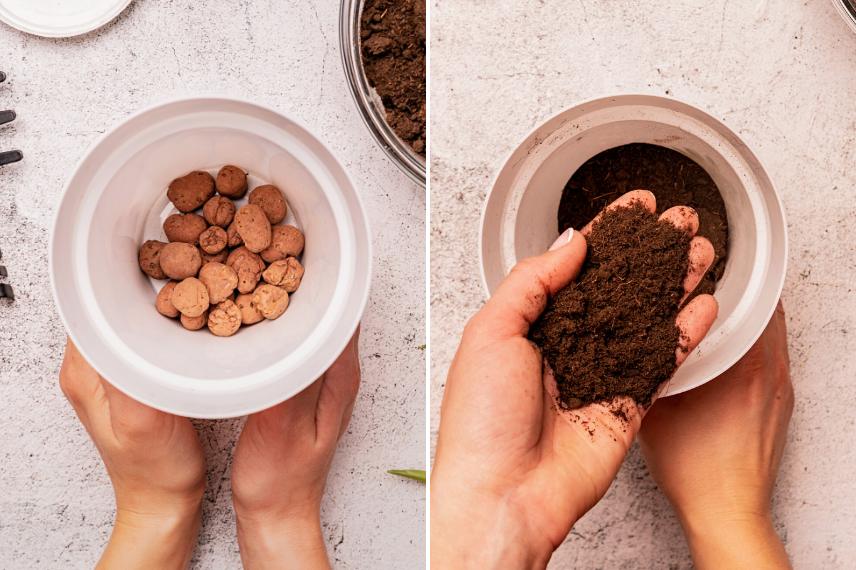
Place a layer of clay balls, then add the substrate to the pot
- Place the gardenia in the centre and fill the remaining space with the mixture of heather soil and potting soil, pressing down well to eliminate air pockets.
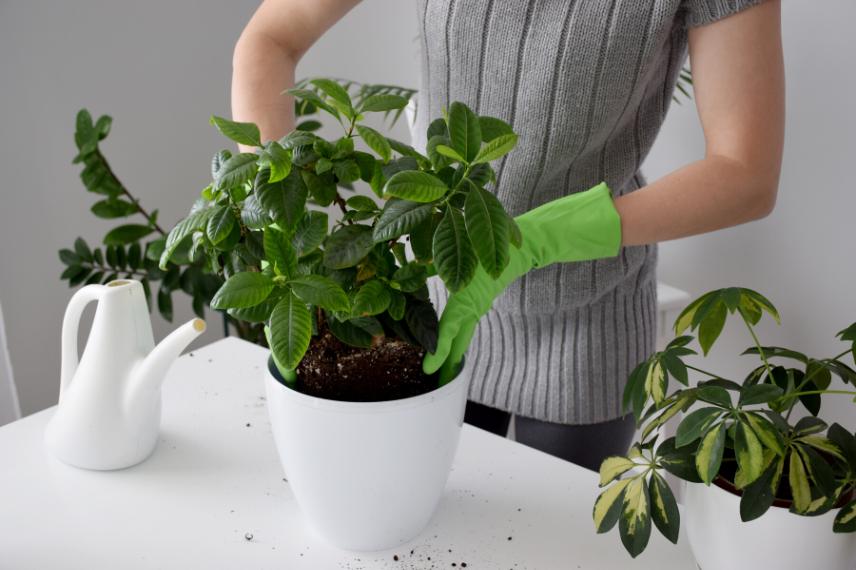
Place the gardenia in the centre of the pot
- Set the pot on a saucer filled with a layer of clay balls submerged in water
- Place the pot in a bright location out of direct sunlight
- For flowering, the ideal temperature is around 20°C.
Maintenance, pruning and care
Watering and Fertilising
- For watering, only use rainwater or spring water, as gardenias dislike lime. Be careful not to water the flowers, which may get damaged.
- In summer, water once or twice a week, allowing the soil to dry out between waterings.
- In winter, water every 15 days.
- You can add an liquid fertiliser for gardenias once a month. In summer, during the flowering period, apply fertiliser every 15 days.

Wintering
- This bush is frost-sensitive; in cold regions, bring the potted gardenia indoors to a frost-free area in a bright greenhouse or conservatory without direct sunlight in winter. The temperature can range from 17 to 24°C.
- Do not place it next to a radiator or fireplace, as it prefers a humid atmosphere. Also, protect it from draughts.
- For more details, find all our tips on wintering gardenias.
Repotting
- Top-dress every year in spring with a mix of heather soil and potting compost.
- You can repot the gardenia every 2 to 3 years, at the end of winter or the beginning of spring, when the gardenia has no buds or flowers. For this, use a mix of potting compost and heather soil, then immerse the pot in a bucket of water for a few minutes to moisten it.
Pruning
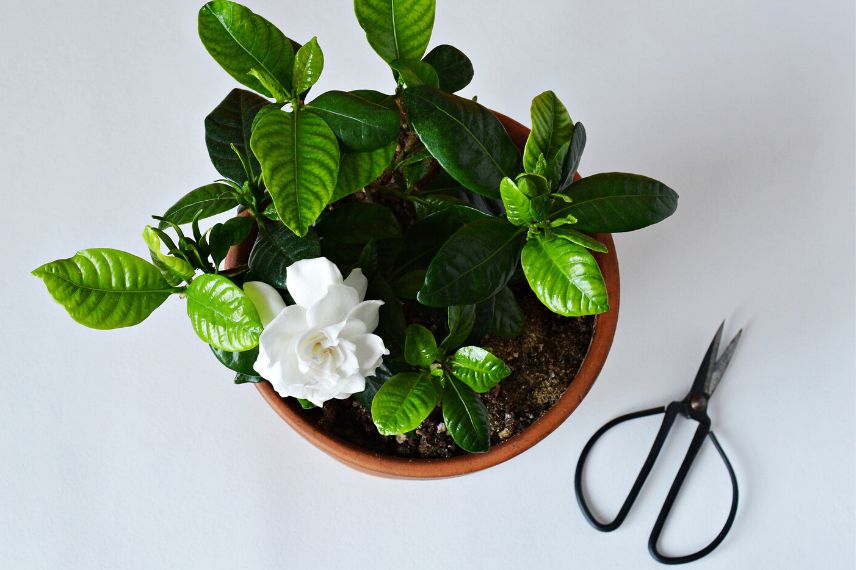
- After flowering, prune the gardenia to maintain a harmonious and compact shape.
- Using a pruning shear disinfected with alcohol and well-sharpened, cut the desired stems by about one-third and remove dead wood.
- Regularly remove faded flowers to prevent exhausting the gardenia and to encourage a beautiful flowering the following year.
Diseases and Specific Care
- Frost and excess water in winter are the enemies of the gardenia.
- It can also be attacked by aphids, mealybugs, and grey mould. To combat aphids, spray the foliage with non-lime water mixed with black soap. For mealybugs, spray with rapeseed oil to suffocate them.
- If flowers drop before blooming, mist the foliage with non-lime water.
For further reading
Discover:
- our complete sheet on growing, planting, and maintaining gardenias
- our tips on overwintering potted gardenias
- our advice on growing, maintaining, and caring for potted plants
- Subscribe!
- Contents
Comments