





























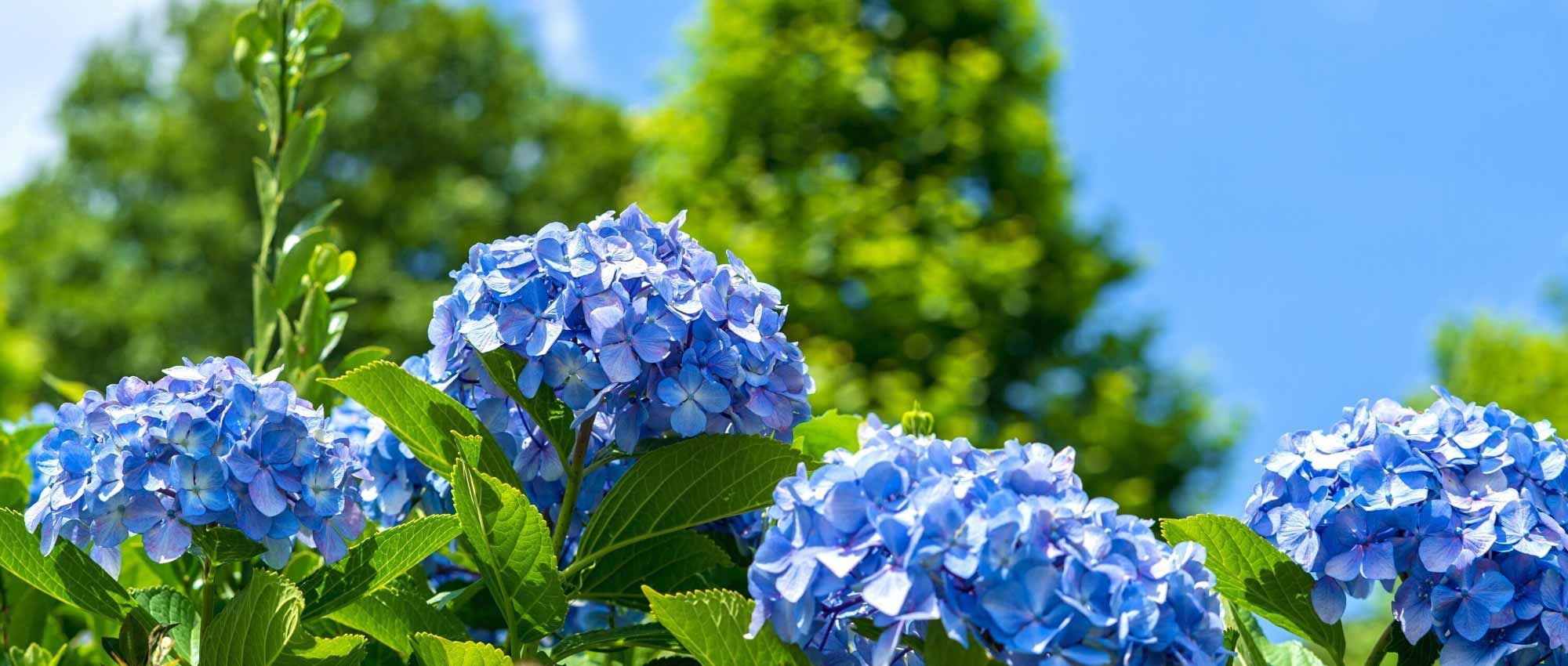
Protect your hydrangeas from heatwaves
How to minimise damage during heatwaves?
Contents
Valued for their impressive flowering in the form of large inflorescences often in pink, blue, or white, hydrangeas are shrubs sensitive to heat and drought, and in recent years, heatwaves have become increasingly frequent… When no measures are taken to protect them, hydrangeas suffer from these extreme heat waves, displaying softened foliage, or even dry and sunburnt leaves. Special attention must therefore be given to hydrangeas to help them withstand high temperatures: shading, regular watering, mulching… Discover our tips and tricks to protect them!

Shelter them from the sun
To prevent them from overheating, we recommend sheltering your hydrangeas from the sun:
- If they are grown in pots or containers, move them to a shaded area, for example under large trees, sheltered by a awning on the terrace, or against a north-facing wall of the house.
- If they are in the ground, try to shade them during the hottest hours, using, for example, a parasol or a shade cloth (in a light colour), which you can hang above the hydrangeas.
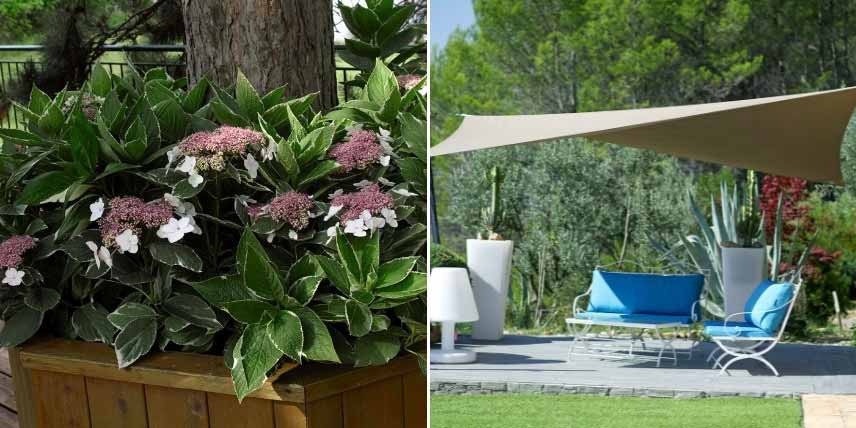
In case of high temperatures, hydrangeas need to be protected from the sun. If you are growing them in pots, you can move them to a shaded spot; otherwise, use a shade cloth in a light colour.
Keep the soil cool
- Consider mulching to retain soil moisture for longer. Use organic mulch, such as straw, fallen leaves, RCW (ramial chipped wood), hemp or flax shavings… which you should spread to a thickness of a few centimetres at the base of your hydrangeas. You may also choose to let weeds grow at the base of your hydrangeas, as they will form a plant cover that retains moisture. The main idea is to avoid having bare soil, as it would dry out very quickly.
- Water generously, very early in the morning (before 8 am) or late in the evening, from 8 pm onwards, so that the soil retains moisture. Indeed, if you water during the day, the soil may quickly dry out due to the heat. Water two to three times a week, directing the stream at the base of your hydrangeas (avoid wetting the foliage, as water droplets on the leaves could create a magnifying effect with the sun and cause burns). Be especially vigilant if your hydrangeas are grown in pots, as the substrate dries out much faster than in open ground! Before watering, manually check if the soil is still moist or dry, in order to adjust your watering accordingly. Preferably use rainwater, as tap water may be too calcareous for your hydrangeas.
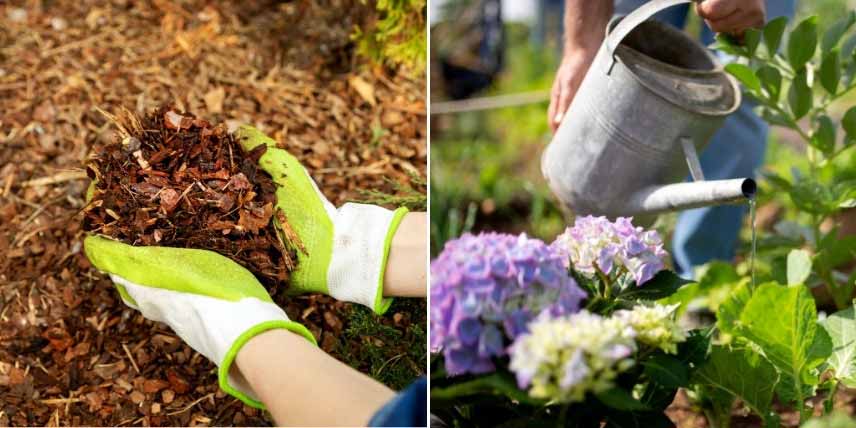 Spread a layer of mulch at the base of your hydrangeas to keep the soil cool for longer, and remember to water them regularly.
Discover other Hydrangeas
View all →
Available in 3 sizes
Available in 1 sizes

Available in 1 sizes
Available in 3 sizes
Available in 1 sizes
Available in 1 sizes

Available in 1 sizes
Available in 2 sizes
Available in 2 sizes
Available in 2 sizes
Cut off the faded inflorescences
We also advise you to remove faded flower heads to allow the hydrangea to conserve its energy and focus on its vital functions. Similarly, in cases of extreme dehydration, remove every other flower head, even if they are not faded: this will help the hydrangea save its resources.
Read also
Hydrangeas: planting, pruning and careGrow hydrangeas that tolerate sun and drought
If Hydrangea macrophylla and serrata thrive in shade and coolness, this is not the case for all hydrangeas! Some, like quercifolia hydrangeas and arborescens, are much more resilient and can tolerate sun and drought. For example, discover Hydrangea quercifolia ‘Ice Crystal’, which produces clusters of cream-white flowers in summer and has foliage with changing hues: silver in spring, almond green in summer, and then purplish in autumn. Hydrangea paniculata also enjoys sunny locations and can withstand occasional droughts.
For more information, check out our advice sheet “6 hydrangeas for sun and drought resistance”
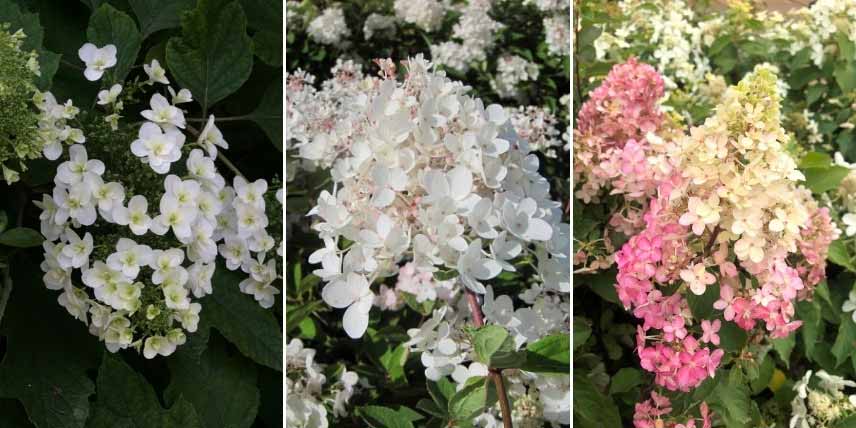
A few examples of hydrangeas resistant to sun and drought: Hydrangea quercifolia ‘Snowflake’, Hydrangea paniculata ‘Grandiflora’, and Hydrangea paniculata ‘Fraise Melba’
How to save a hydrangea after a heatwave?
Even if your hydrangea has suffered from the heat, looking sad with wilted, even yellow and dry leaves, there is still time to save it: start by watering it generously, removing the faded flowers, and pruning it. Cut back the blackened stems and remove any dry or damaged leaves, keeping only healthy green stems. This way, the hydrangea will have fewer stems and leaves to nourish, allowing it to concentrate its energy on the healthy parts to recover.
Discover our advice sheet “Hydrangea: how to save it after a heatwave”
- Subscribe!
- Contents
![[protect_hydrangeas_from_heatwave]
To protect {glossary:hydrangeas} from heatwaves](https://en.promessedefleurs.eu/blogwp/wp-content/uploads/2022/09/proteger-les-hortensias-de-la-canicule.jpg "[protect_hydrangeas_from_heat]")
Comments