



Raising geese in the garden: the ultimate Guide
Eco-friendly lawnmowers
Contents
Raising domestic geese in the garden represents far more than a simple garden pastime; it is also a rewarding tradition that blends harmoniously into a garden. These friendly birds, often associated with rural life and the tranquillity of the countryside, are a growing favourite among gardening and poultry-keeping enthusiasts.
Indeed, geese are recognised for their sociable behaviour and their ability to interact with other poultry as well as with humans. Moreover, they play a crucial role in the health and balance of the garden’s ecosystem. By their mere presence, geese help to control parasites and unwanted herbs, while providing a premium natural fertiliser for plants and crops. Furthermore, their distinctive vocalisations and their graceful movements (well… mine tended to have a rather comic gait) add a touch of nature and authenticity to the overall ambience of the garden.
This article will guide you through the different aspects of goose-keeping, offering practical advice to make the most of these feathered companions, and exploring the various ways in which they can contribute to the vitality of your garden.
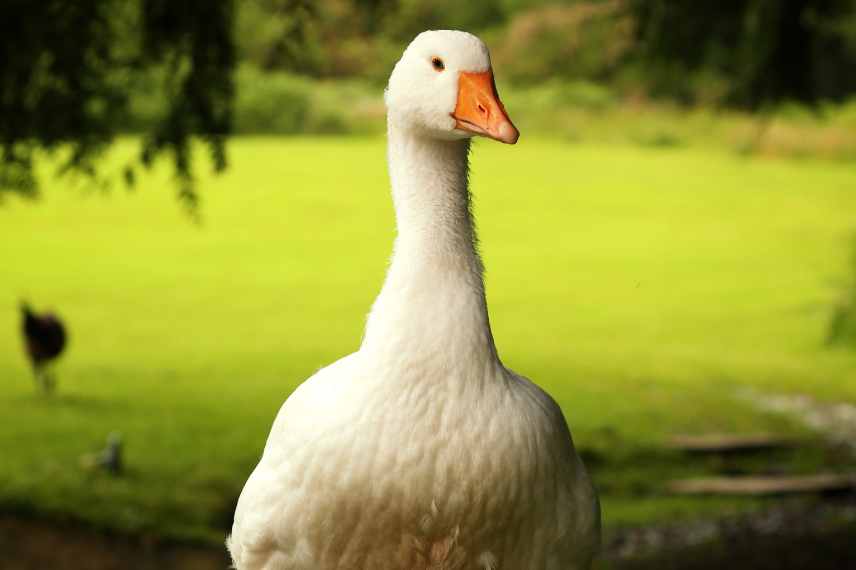

What is a goose?
Physical and behavioural characteristics
The goose, a distinguished member of the Anatidae (the goose family, which also includes swans and ducks), is characterised by its sturdy stature and long neck, features that distinguish it from other backyard birds. These birds can vary in size and colour depending on their wild type or domestic breed, ranging from bright white to slate grey, with intermediate shades. Their dense plumage protects them from the weather, an essential asset for geese that spend a lot of time outdoors. Their beak, strong and slightly rounded, is suited to their varied diet, which includes herbs, grains and small invertebrates.
Behaviourally, geese are known for their sociable and protective nature. They form strong bonds with their flock mates and can be highly vocal, using a range of sounds to interact. Their keen sense of community is also evident in their guarding behaviour, making them attentive to any changes in their environment.
Please note: The average lifespan of a domestic goose is typically between 20 and 25 years, although some geese may live longer with proper care and a healthy environment. A goose’s longevity can be influenced by various factors, such as genetics, quality of care, nutrition and the environment in which it lives. Adopting geese is therefore a long-term commitment.
History of goose domestication
The history of goose domestication goes back several millennia. These birds were raised by ancient Egyptians, the Greeks and the Romans, mainly for their meat, their feathers and their ability to alert in case of danger. Ancient Egyptian murals attest to the importance of geese in daily life, where they were often depicted alongside their keepers.
Over the centuries, goose farming spread across Europe and Asia, giving rise to a variety of breeds adapted to different climates and agricultural needs. These developments helped shape the diversity of breeds we know today. Goose domestication has also played a key role in cultural traditions, notably during feasts and celebrations, where their presence symbolised prosperity and abundance.
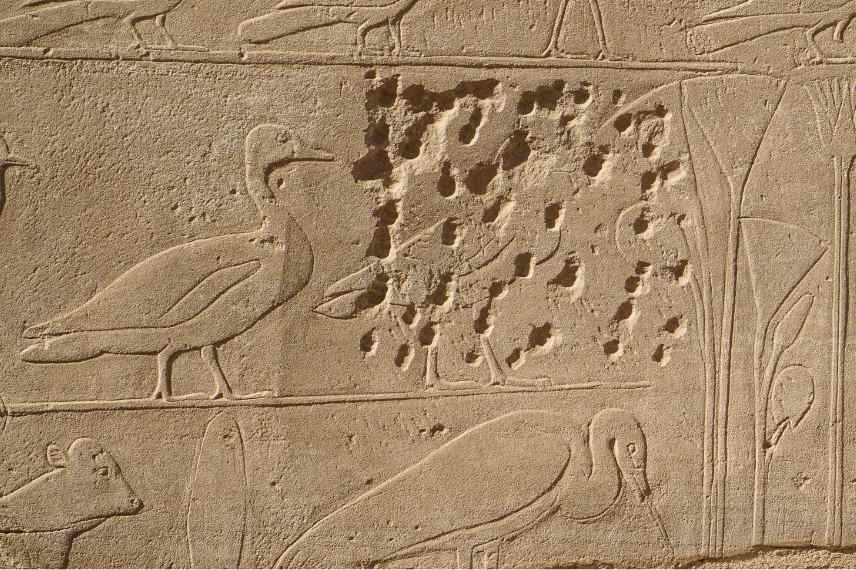
Ancient Egypt often depicted birds, including geese, on its temples (here the Karnak Temple)
Most common breeds of domestic geese
The world of domestic geese is rich and varied, with several breeds suited to life in the garden. Here are some of the most popular breeds:
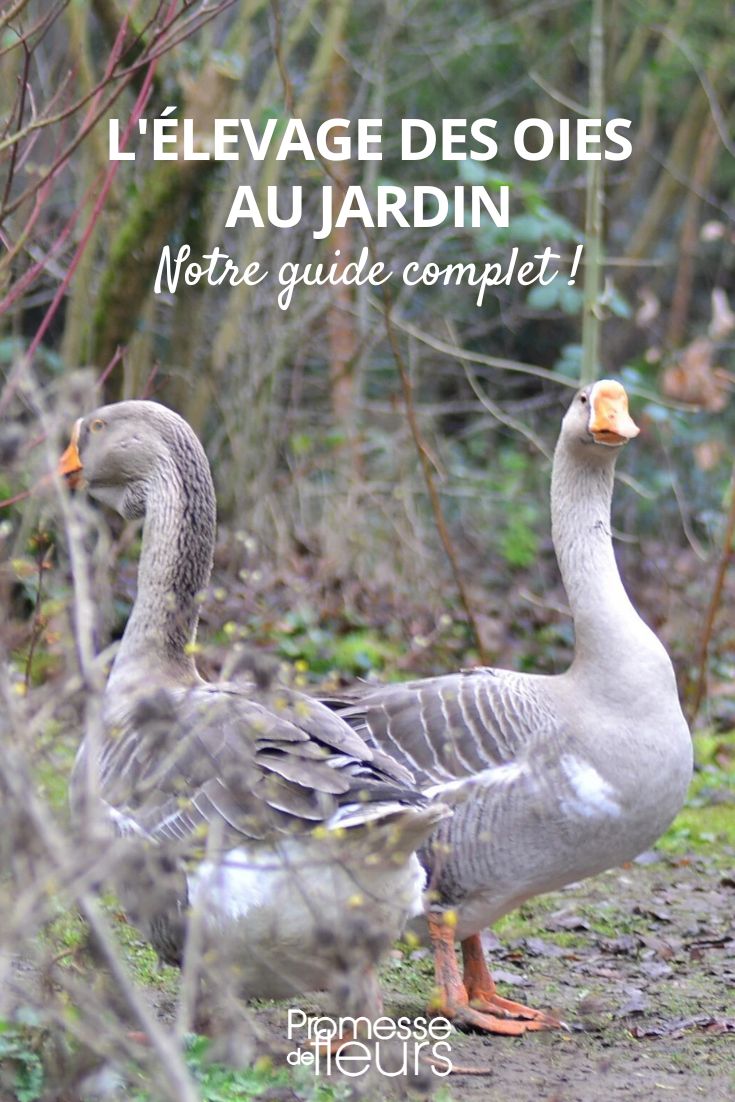
- The Toulouse goose: Originating from France, this goose is recognised for its grey plumage and its massive body. Ideal for large gardens, the Toulouse goose is appreciated for its calm character and its ability to adapt to different environments. It requires ample space for grazing and bathing.
- The Chinese goose (formerly known as the Guinea goose): Easily recognisable for its long neck and the distinctive knob on its beak, the Chinese goose is an active and alert breed. It is often used as a “guard goose” due to its vigilant nature. Known for its fertility and its effectiveness at controlling insects and weeds. It requires regular stimulation and interaction.
- The Emden goose: With its immaculate white plumage and blue eyes, the Emden goose is one of the largest goose breeds. It is known for its friendly temperament and ease of raising, making it a popular choice for beginner gardeners. Very productive in egg-laying. This placid breed is well suited to families with children.
- The African goose: Similar in appearance to the Chinese goose, the African goose is distinguished by its larger size and its more independent behaviour. It is valued for its hardiness and ability to adapt to various climates. It prefers large open spaces.
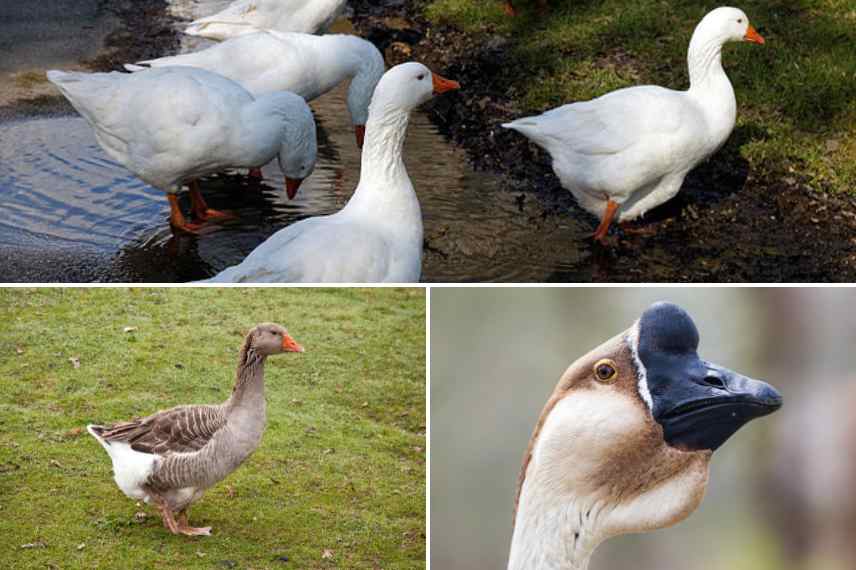
Emden goose (top), Toulouse goose (bottom left), and Chinese goose (bottom right)
The rearing of the domestic goose
Raising geese in the garden requires a few preparations to ensure their welfare and health.
Space and housing
- Living space: Geese are active birds that need ample space to move, graze and express themselves naturally. A medium-sized garden (around 1000 m²) can generally accommodate a small group of geese.
- Shelter: Although hardy, geese need a shelter to protect them from the weather and predators. A simple enclosure with a roof and sides to shelter them from rain, wind and sun is essential.
- Access to water: A water source, such as a small pond or a large tub of water, is crucial. Geese enjoy a bath and it helps to keep their plumage in good condition.
Feeding and basic care
- Diet: Geese primarily feed on herbs, but they also need a supplementary feed, especially in winter. A mix of poultry-specific grains can be given to ensure a balanced diet. Note that each goose has its own tastes (as with humans): some love old apples fallen to the ground, others nibble raspberries behind the gardener’s back, while others still forage for dandelion leaves.
- Daily care: Check their water and feed daily. It is also important to monitor their health, keeping an eye out for any signs of illness or injury.
- Maintenance of the living area: Regularly clean the enclosure to prevent disease. Goose manure can be used as a fertiliser in the garden. In winter, the surface formerly lawned may become a muddy skating rink. To keep your geese moving about on a surface that remains reasonably dry, you can spread a generous layer of straw.
The importance of a routine
Geese value routine. Establishing a regular schedule for feeding and care can help maintain a calm and orderly environment, essential for the wellbeing of geese.
Geese need space!
The question of how many geese are suitable for your garden depends closely on its size and on the capacity to provide a comfortable living space. As a general rule, each goose needs at least 30 to 50 square metres of outdoor space to move about, graze and interact socially. For small gardens (under 300 m²), a pair or a trio of geese will be sufficient, while larger spaces can accommodate larger groups. It is essential to ensure that each goose has enough room to avoid stress and aggressive behaviours.
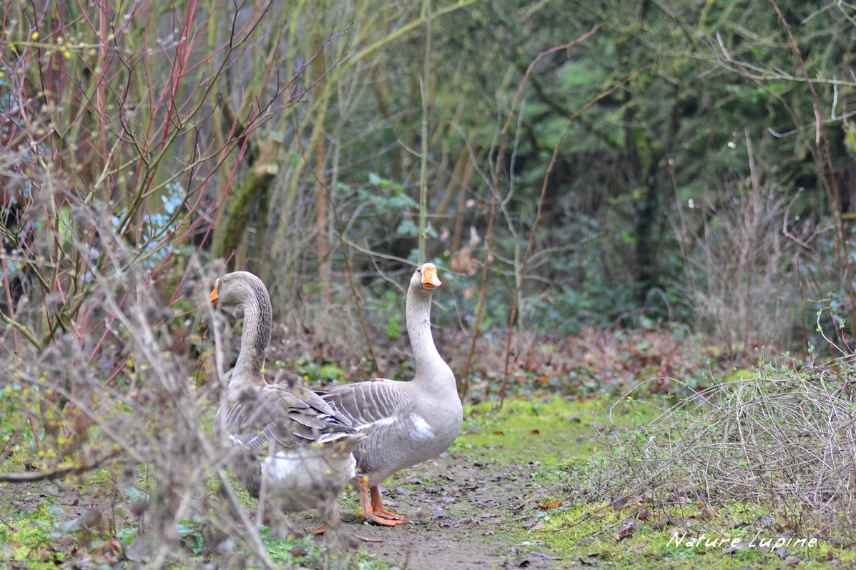
Geese will enjoy a garden with plenty of space (© Olivier Allard)
Geese reproduction
Who is Dad? Who is Mum?
Differentiating male domestic geese from females can be a challenge, as they often display similar physical characteristics. However, there are a few indicators. Males, or ganders, are generally larger and more robust than females, with a thicker neck and a broader beak. Behaviourally, males are often louder and may be more territorial or aggressive, especially during the breeding season. During the laying season, females can be observed incubating their eggs, which is a clear indicator of their sex.
Finally, a more technical, but reliable, method is to observe the specific anatomical characteristics of the two sexes, carried out by an experienced breeder or a veterinarian.
Reproduction
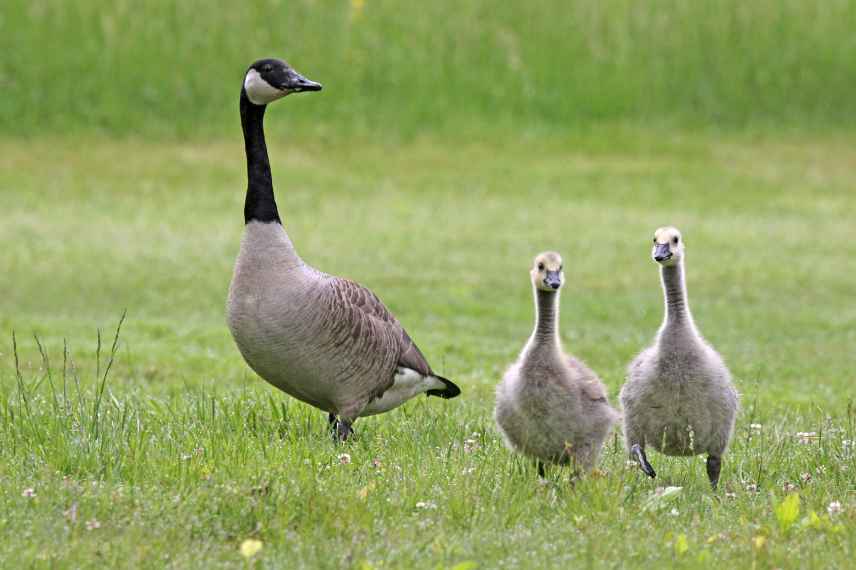
Reproduction of domestic geese begins in spring, when days lengthen and temperatures warm. Geese are monogamous birds, often forming lifelong pairs. The female lays between 5 and 12 eggs, which she incubates for about 28 to 30 days, while the male stays nearby to protect the nest. Once the goslings hatch, they are able to walk and feed almost immediately, but remain under the close supervision of their parents for several weeks. Goslings grow quickly and generally become independent after approximately 2 to 3 months.
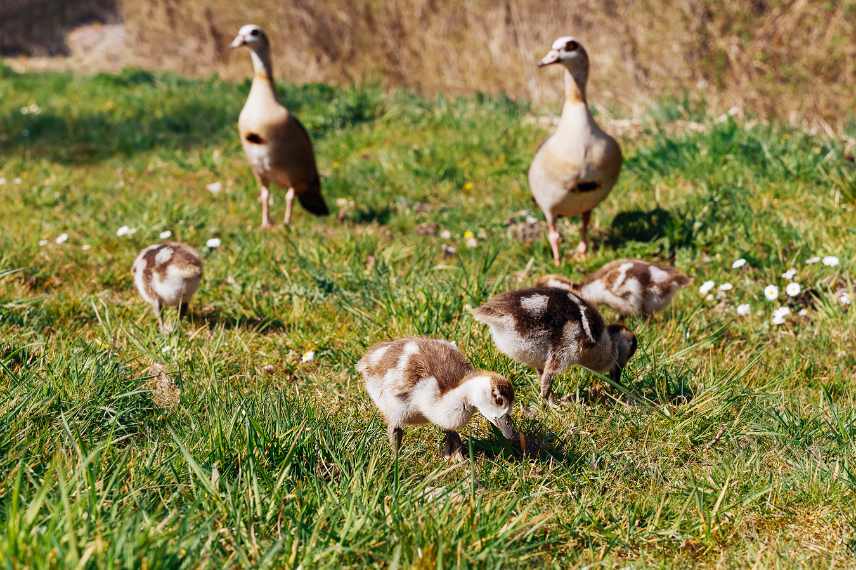
A pair of geese and their goslings…
Diseases or potential problems
Advantages and disadvantages of keeping geese in the garden
Numerous advantages
- Eco-friendly mower: geese feed primarily on herb and, by tirelessly raking the soil, provide you with a close cut of the herb. Geese are therefore ideal for a large lawn area that you may not wish (or be able) to mow regularly.
- Pest control: They feed on many small invertebrates and larvae, thereby helping to naturally reduce the population of pests without chemical products. In a lawned orchard, for example, geese are therefore more than valuable allies.
- Soil fertilisation: Their droppings are an excellent fertiliser, enriching the soil and promoting the growth of plants.
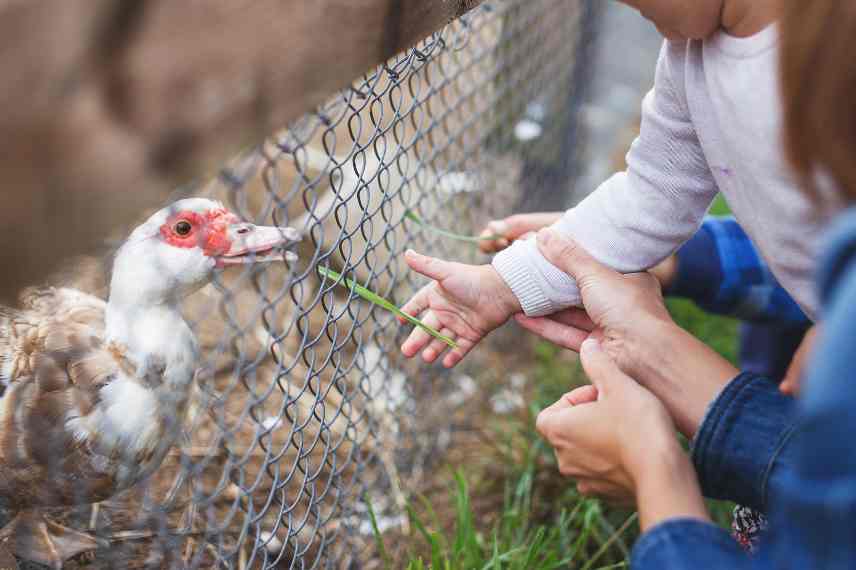
- Companionship and interaction: Geese are social and curious animals, providing companionship and liveliness in the garden. Their presence can be particularly rewarding and educational for children.
A few drawbacks
- Noise: Geese can be noisy, especially during breeding season or when they feel threatened, which can be a problem in residential areas.
- Potential aggression: During nesting season or in the presence of goslings, geese can be territorial, even somewhat aggressive.
- Care needs: Geese require regular care, including cleaning their living space and managing their diet and health. It is worth considering before adopting them.
- Trampling and potential damage: geese are large, ungainly birds and they may, out of fear or a quarrel between two geese, adopt the tactic known as “charging into the fray without looking back” (with wings spread wide) to the detriment of delicate plants or new plantings. If your geese wander at will throughout your garden, take that as read. The simplest way to avoid this is to confine them in a large “enclosure”, i.e., in a part of the garden set aside for them and fenced off.
Oliver’s little note: Contrary to a widely held belief, geese are not naturally mean. Their behaviour, often perceived as aggressive, is generally a manifestation of their protective or territorial instincts, especially during the breeding season. To foster harmonious cohabitation, it is essential to approach geese with calm and respect, avoiding abrupt or intimidating gestures. Providing enough space and regularly engaging with them in a gentle and patient manner can greatly help reduce defensive behaviours and strengthen the bonds of trust between geese and their “guardian”. Personally, when I bought my house, I also ended up taking the house cat, a few old tools and… two geese. Named “Jacquouille” and “Fripouille”, these latter, although initially reluctant to share their garden with a hairy little man, soon grew fond of him and became true darlings.
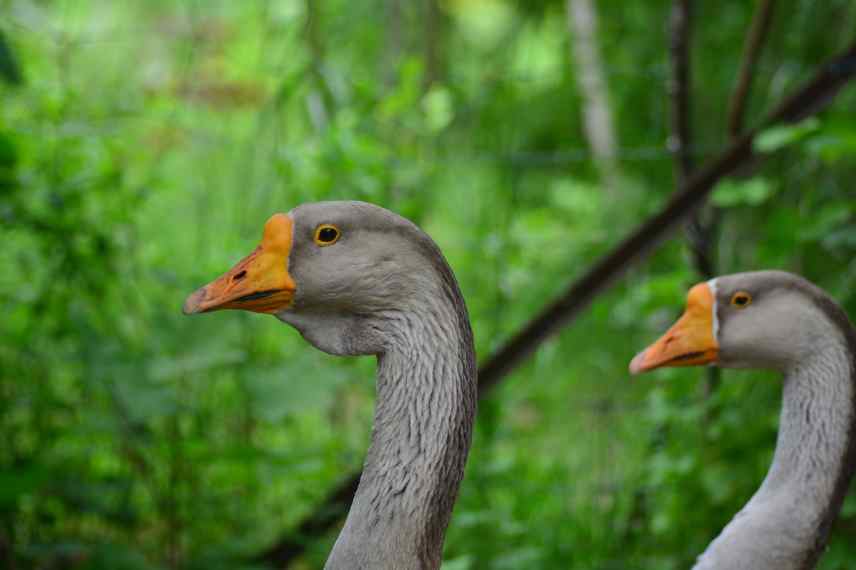
My geese Jacquouille and Fripouille (© Olivier Allard)
- Subscribe!
- Contents
Comments