





























Six annuals with purple flowers to discover
Our selection
Contents
The world of annuals offers an endless palette of colours, among which purple stands out for its natural elegance and its ability to create a mysterious and refined ambience in the garden. The purple flowers, symbols of nobility and delicacy, bring a touch of freshness and depth to floral displays, whether in beds, borders or pots. In this article, we invite you to discover a selection of 7 purple-flowered annuals, each with its own features and benefits, to brighten your garden.

Blue throatwort - Trachelium caeruleum 'Black Knight'
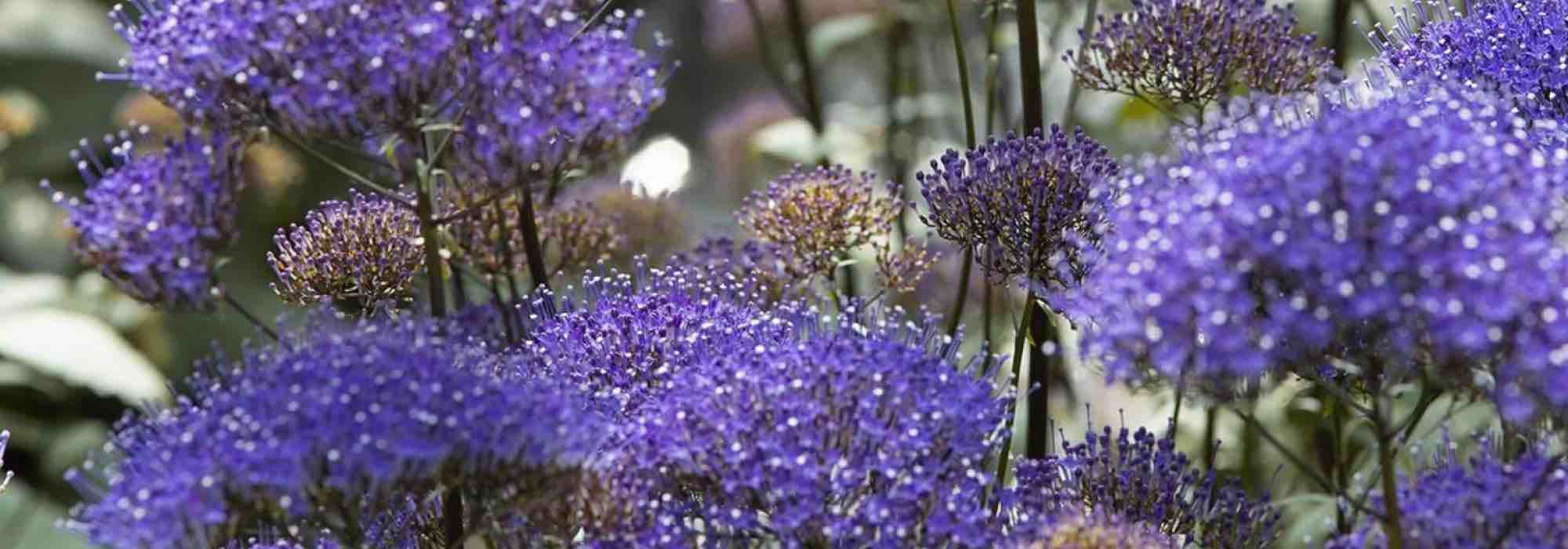
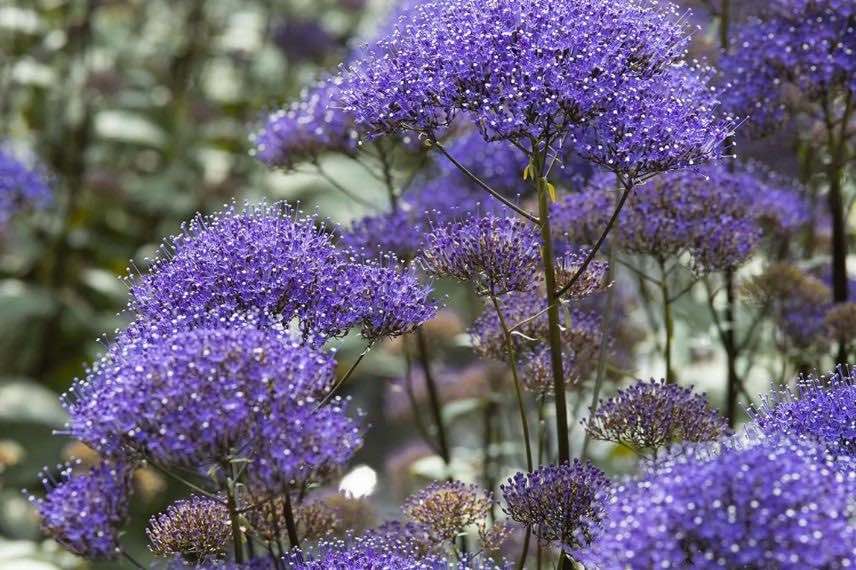
The Trachelium caeruleum ‘Black Knight’ is a plant with deeply dark foliage and long, fragrant purple umbels.. Adapted to the Mediterranean climate as a perennial, it shows moderate cold resistance, so it is grown as an annual in less temperate climates. Whether integrated into a rock garden, a low wall or scattered through borders, it creates unique colour effects. Once well established, the Trachelium caeruleum tolerates summer drought.
Although generally treated as an annual, its crown can withstand temperatures down to -10/-12 °C in winter, in dry, well-drained soil, and its foliage is partially evergreen in mild winters. Damp cold is, however, its main enemy.
The cultivar ‘Black Knight’ forms a dense clump of angled, leafy stems, which lignify at the base with time, reaching about 50 cm tall by 40 cm wide. The lanceolate leaves bear dentate margins and, in this variety, the stems and leaves display purplish-black tones, with purple veins on a glossy dark green background. The flowering, starting in May–June in the southern regions and a little later in the north, lasts until October if conditions remain favourable. The inflorescences, 10–15 cm across, consist of small fragrant tubular flowers, attracting a varied range of pollinators.
In borders, rock gardens, wild gardens or pots, Trachelium caeruleum ‘Black Knight’ adds a touch of lightness and colour. It pairs beautifully with the Alstroemerias, the Chinese peonies, the heritage roses and the medium-height grasses, offering a palette of complementary textures and colours. In a Mediterranean garden, allow it to self-seed freely for a natural and charming effect, alongside drought-tolerant plants and even shade.
Read also
Annual plant: 8 species for dry gardenThe honeywort 'Kiwi Blue' - Cerinthe major Purpurascens
Buenos Aires Verbena - Verbena bonariensis
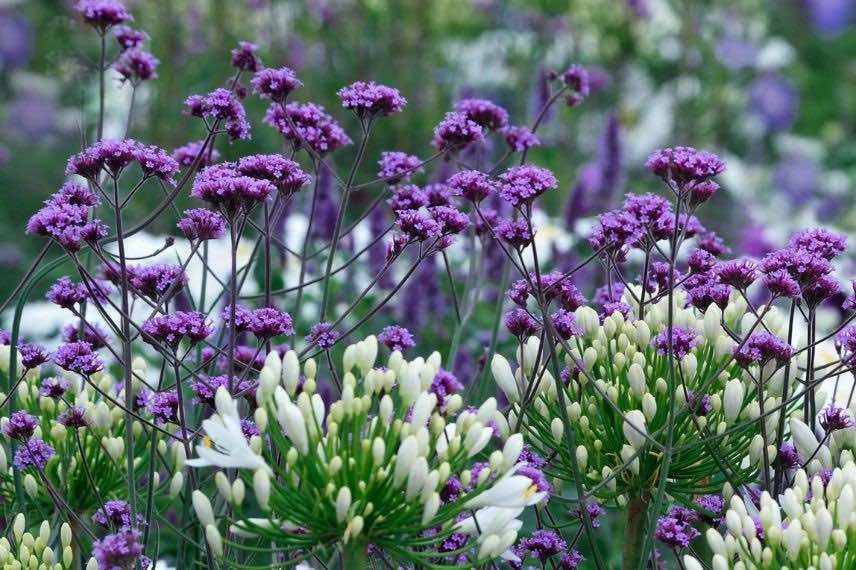
The Verbena bonariensis, or Buenos Aires Verbena, has, over a few years, become an indispensable plant in cottage garden borders. It is distinguished by its tall, slender habit and its airy flowering that seems to hover above the garden, creating an incomparable sense of lightness. Its panicles of purple flowers, with a cloud-like appearance, add natural elegance and a touch of refinement to the borders. Flowering from late spring to autumn, it has a relatively short lifespan and moderate hardiness, but makes up for it with its ability to self-seed readily in light soil, even when poor and dry.
Originating from South America, this verbena grows to about 1.2 m in height, with basal foliage 20–30 cm tall and a spread of about 50 cm. Its basal leaves, green and elongated, toothed at the margins, may remain evergreen depending on how harsh the winter is. In spring, square, rough stems rise, branching in their upper parts to bear rounded inflorescences of small purple tubular flowers, releasing a delicate fragrance and attracting a multitude of pollinating insects. Flowering lasts into October, with a pause in July during periods of severe drought.
The Buenos Aires Verbena, robust and remarkably easy to grow, thrives in sunshine, attracting a constant flutter of colourful butterflies. It adapts readily, provided it has a sunny position. In a natural garden, it forms beautiful associations with gauras, viper’s bugloss, evening primroses or yarrow, bringing a touch of lightness to the plantings.
Read also
Planting annualsLemon beebalm 'Bees Favourite' - Monarda citriodora
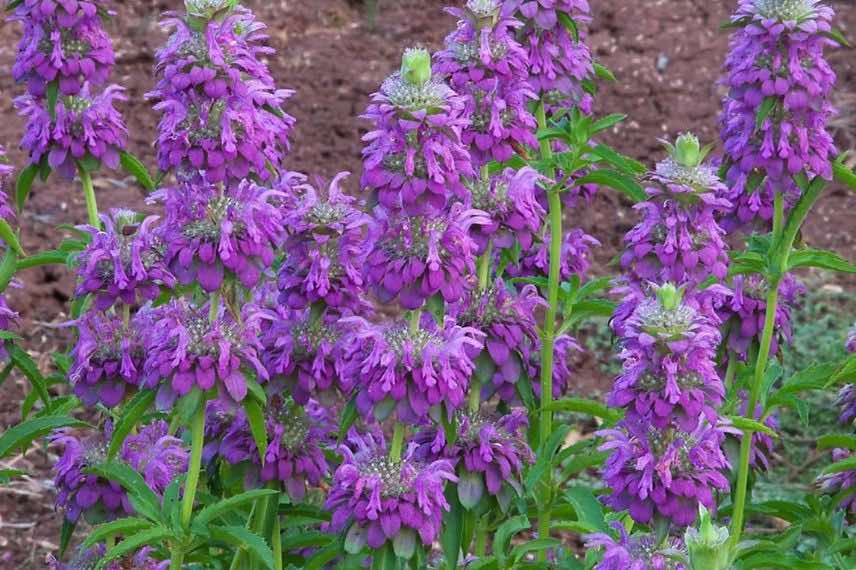
The Monarda citriodora ‘Bees Favourite’ is a short-lived perennial that captivates with its tousled habit and fresh lemon scent. More compact than the type species, it is notable for an abundance of lavender-blue flower spikes, forming whorls and zygomorphic inflorescences with tubular, bilabiate corollas. The flowering period extends from June to September, and the bright green foliage gives off a rich lemon scent when crushed, attracting bees and butterflies.
Suitable for sunny or shaded positions, Monarda citriodora ‘Bees Favourite’ thrives in ordinary, moist soils that do not retain water and do not dry out during the summer.
In addition to its ornamental qualities, lemon bee balm is also valued for its aromatic and medicinal properties. Its leaves, used fresh or dried, enrich herbal teas or meat and fish dishes with a subtle, lemony flavour. The flowers, with a mildly spicy flavour, add a distinctive note to salads. It has a place in the heart of aromatic or naturalistic gardens, bringing a touch of originality to the middle of a border. It harmonises well with lobelias or yarrow, creating colourful and attractive festoons.
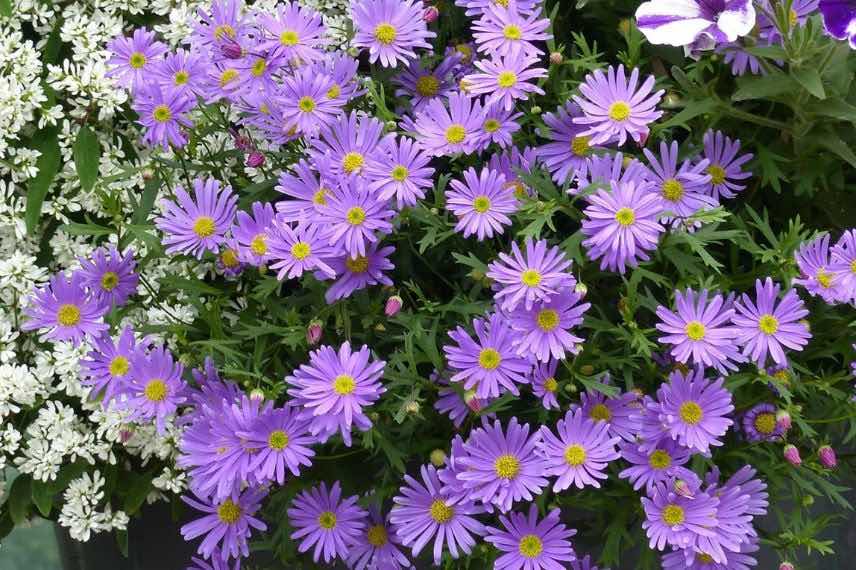
Australian daisy - Brachyscome 'Brasco Violet'
The Brachyscome ‘Brasco Violet’ stands out for its bushy, spreading habit, revealing throughout the summer an abundance of flowers reminiscent of small blue-violet daisies, with yellow centres. This annual plant, with a compact habit and abundant, fragrant summer flowering, proves to be an ideal choice for borders, planters and hanging baskets. Preferring hot, sunny spots, the Brachyscome requires fertile, well-drained soil, while displaying good drought tolerance.
Although perennial in its natural habitat, the Brachyscome is grown in our climates as an annual due to its rapid growth and two-year lifespan. The variety ‘Brasco Violet’ is characterised by a flowering mound 25–30 cm high and wide, offering early flowering, with heads of intense colour and larger than average size. Its flowers, resembling mauve asters or purple daisies around a yellow centre, rise from velvety grey-green foliage, cut into slender lobes.
Brachyscomes, renowned for their rapid growth and floribund flowering, require little maintenance and adapt perfectly to pot culture, hanging baskets, as well as rockeries or summer borders. They pair well with other annuals such as the Bacopa, the Diascia. In addition to their beauty, their melliferous flowers play an important ecological role in attracting pollinators and butterflies.
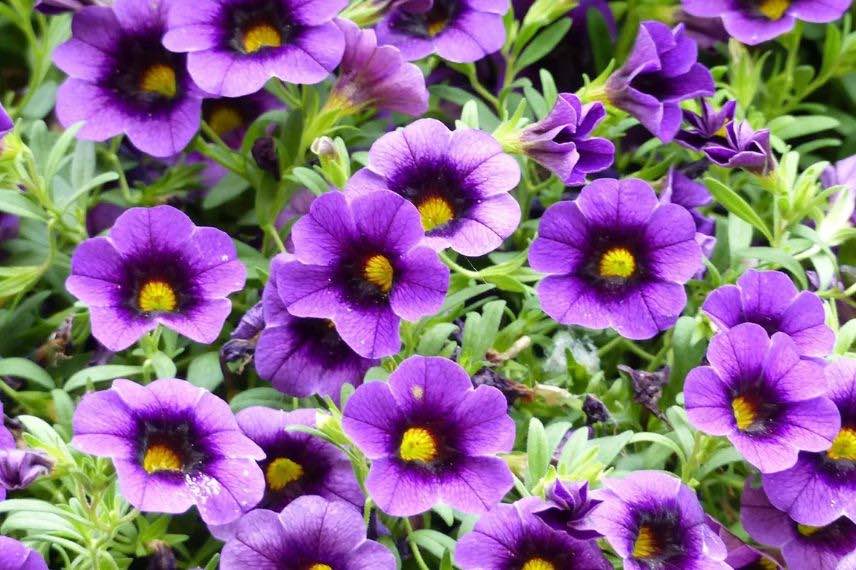
Mini-petunia 'Grape Punch' - Calibrachoa Superbells
Calibrachoa Superbells ‘Grape Punch’ enriches the collection of mini-petunias Superbells with its delicate two-colour purple flowers, each with a bright yellow eye. This plant is distinguished by fast and vigorous growth, forming a compact yet trailing, spherical habit. Adorned with long flexible stems and small pointed green leaves, this annual maintains its neat appearance throughout the season. Easy to grow in full sun, in light, fertile soil, it requires little maintenance.
Unlike petunias, calibrachoa, often called Million Bells, differ genetically and morphologically from petunias, notably with smaller flowers and greater resistance to rain. They prefer less humid conditions.
The Superbells ‘Grape Punch’ variety grows to 25–30 cm tall with a 40–60 cm spread. Its prolific flowering lasts from June until the first frosts, producing numerous small funnel-shaped flowers in deep violet. These calibrachoa are ‘self-cleaning’, with spent flowers dropping off without requiring pruning.
Perfect for hanging baskets and planters, Calibrachoa Superbells ‘Grape Punch’ also adapts well to in-ground planting thanks to its heat and drought tolerance. It creates attractive borders and adds colour to beds or rockeries. When paired with other varieties or plants such as verbenas and the surfinia petunias, it offers numerous possibilities to enhance terraces, balconies and conservatories.
- Subscribe!
- Contents
Comments