





























Small bulbs and groundcover plants, a winning duo
to carpet the garden with flowers!
Contents
A dynamic duo in the garden, groundcover plants and small bulbs come together in harmony to create beautiful flowering carpets. Semi-wild plants planted in a clever abandon to give a rustic effect, flowering blankets adorning dry rockeries or vibrant massifs in the foreground depending on the seasons, these associations of creeping plants and low-growing bulbs easily fill difficult spaces, slopes, or woodlands.
Groundcovers have the advantage of combating weeds and retaining soil, yet they do not prevent bulbs from emerging and surprising us with their flowering throughout the year.
If you wish to try these duos in your garden, discover our ideas for associations of groundcover perennials and small bulbs for spring or for summer.

A duo for a dry garden: botanical tulip polychroma and nodding verbena
This duo can be invaluable for greening very well-drained and dry soils in summer. The botanical tulip polychroma, absolutely exquisite, will display its star-shaped flowers from February, depending on the region. They exude a powerful fruity fragrance, and their abundance will enliven sunny rockeries and slopes on a carpet of Phyla or Lippia nodiflora, also known as nodding vervain. This perennial groundcover is used as an alternative to lawn in dry soil but can, of course, spread elsewhere in the garden. It quickly forms vast, low, semi-evergreen, or even evergreen carpets depending on the climate. Countless melliferous white and lilac flowers appear in spring, giving it a lovely rustic charm.
After the flowering of the botanical tulips, cut the flower stems and allow the leaves to dry completely before cutting them, as a resting period is essential after flowering for the bulbs to replenish.
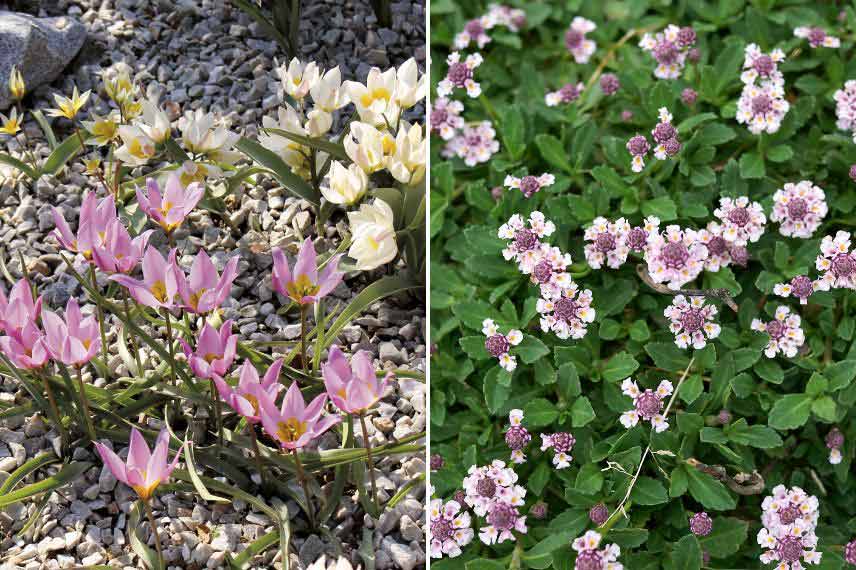 Tulipa polychroma and Lippia nodiflora[/caption>
Read also
5 perennials for dry groundA spring duo: Iris pumila 'Cherry Garden' and creeping stonecrop
Dwarf variety, the ‘Iris pumila ‘Cherry Garden’ produces frilly purple-burgundy flowers in April, with a silky texture. This dwarf Garden Iris quickly forms lovely flowering clumps, perfect for creating a beautiful contrast with the small fleshy leaves in silver-grey rosettes of the creeping Stonecrop ‘Cape Blanco’. This Sedum produces an abundance of small sulphur-yellow flowers in late spring (from May to June), with flowers, leaves, and stems forming a contrasting and highly ornamental arrangement.
This duo will thrive perfectly in rockeries and borders, content with poor soil with little substrate, even calcareous. It should preferably be placed in full sun and dry in well-drained soil.
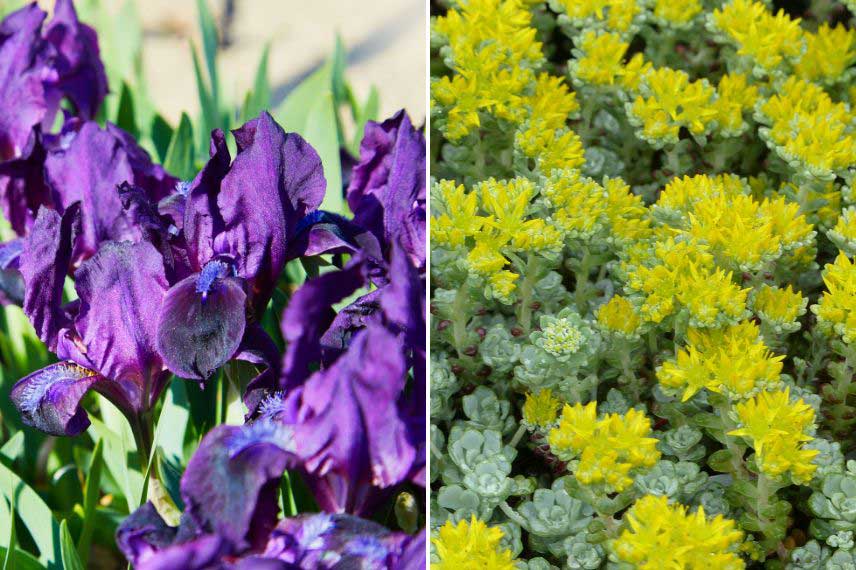
Iris pumila ‘Cherry Garden’ and Sedum ‘Cape Blanco’
Discover other Small Spring Bulbs
View all →
Available in 1 sizes
Available in 1 sizes

Available in 1 sizes
Available in 1 sizes
Available in 1 sizes
Available in 1 sizes
Available in 1 sizes
Available in 1 sizes
Available in 1 sizes
Available in 1 sizes
A floriferous duo: Ipheion and Aubrieta 'Cascade Purple'
Very easy to grow, the Purple Cascade Aubrieta forms stunning carpets literally covered with small light violet flowers in spring. For the rest of the year, its evergreen leaves will continue to adorn the garden. For a romantic effect, pair this lovely floriferous perennial with the adorable bulb Ipheion uniflorum. Its small star-shaped flowers, very pale lavender blue, will bloom from March to May, creating lovely floral carpets.
This lovely couple will thrive in the sun, in well-drained soil, but not too dry, even slightly calcareous. In case of prolonged drought, regular watering will be necessary.
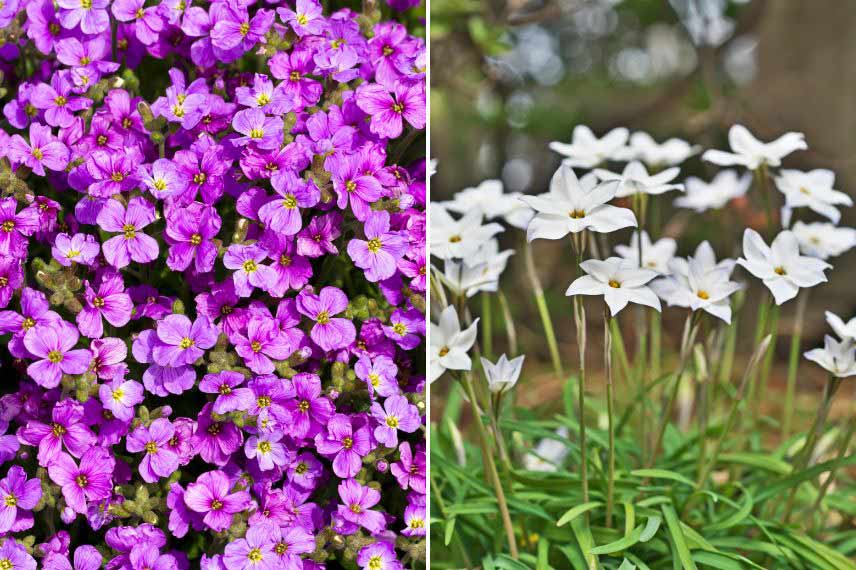
Purple Cascade Aubrieta and Ipheion uniflorum
Read also
5 groundcovers for clay soilAn unbeatable duo: Crocus and Ivy
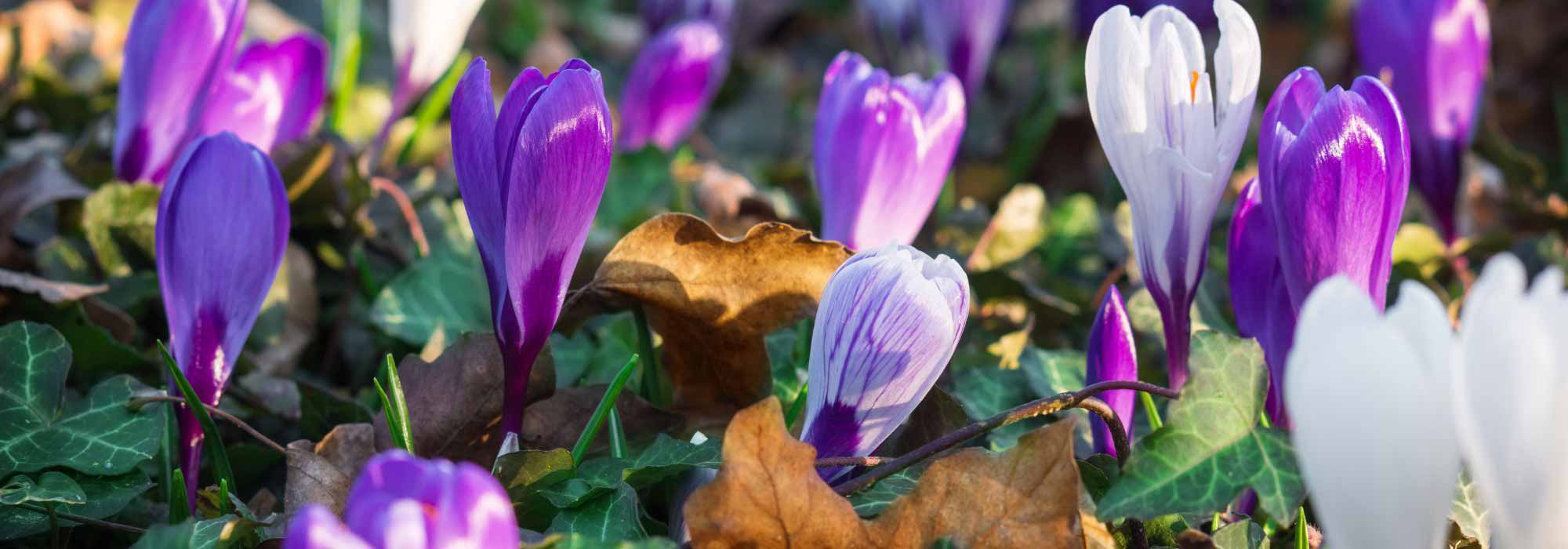
Ivy or Hedera helix are well-known and robust creeping or climbing plants, which, depending on the variety, bear triangular or lobed leaves, either green or variegated. Quickly forming remarkable evergreen groundcovers, they are very useful in challenging areas of the garden, even in very dry soil. Ivy pairs beautifully with lovely spring Crocuses, which will emerge with the arrival of fine weather. The Crocus Mammouth ‘Flower Record’, for example, particularly easy to grow, will offer you very large blue-violet flowers in March-April, enhanced by orange stamens. ‘Jeanne d’Arc’ produces large pure white flowers at the end of winter, while ‘Grand Jaune’, as its name suggests, bears beautiful corollas of bright golden yellow. Plant the bulbs in patches of colour or in a multicoloured mix, according to your tastes and the spirit of your garden.
Plant Crocus bulbs from September to November in light, cool, but well-drained soil. After planting, do not touch the bulbs; once flowering is finished, simply cut off the faded flowers and do not cut the foliage until it turns yellow. Your bulbs will form increasingly floriferous clumps!
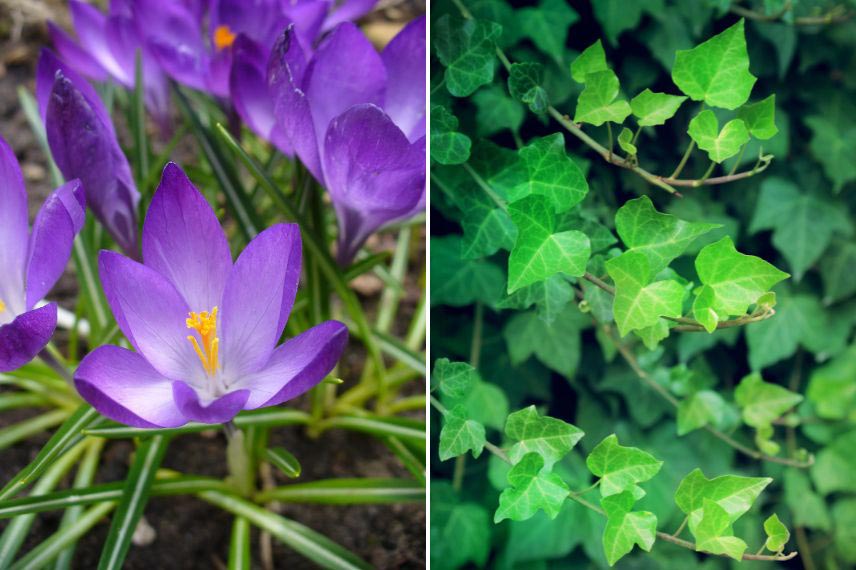
Crocus Mammouth ‘Flower Record’ and Hedera helix
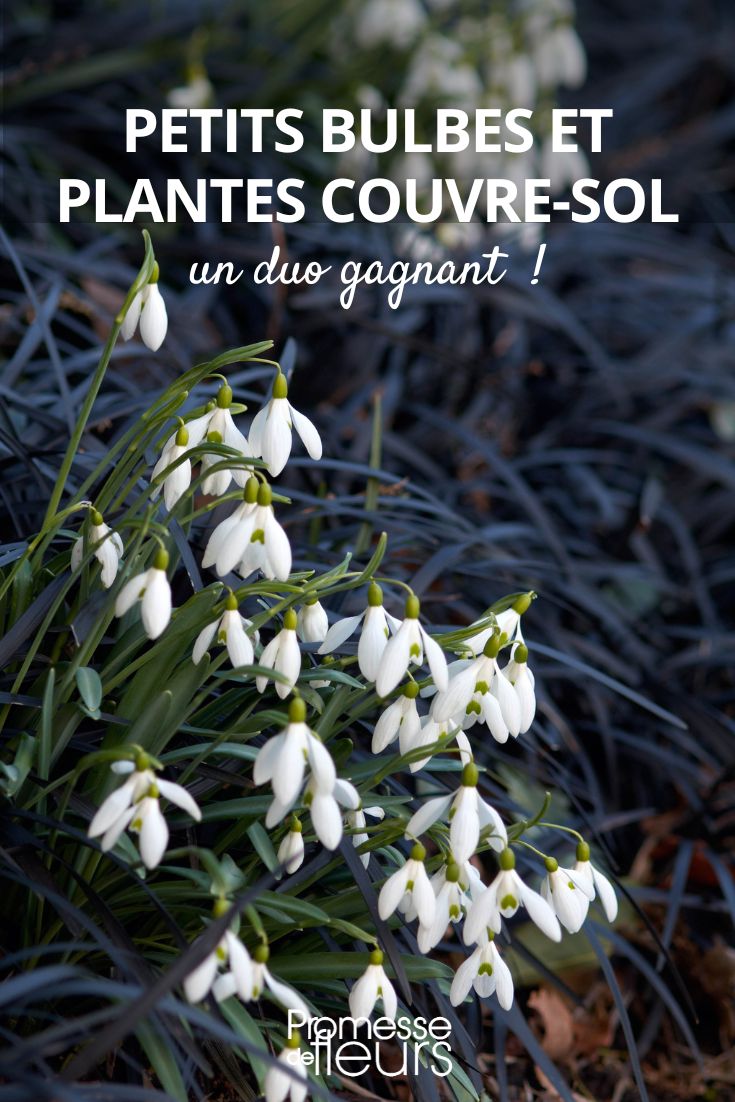
A graphic duo: Snowdrop and Ophiopogon
TheSnowdrops or Galanthus are among the first flowers to appear in spring, their small white bells emerging from January to March, even under a blanket of snow. They form lovely clumps of ribbon-like leaves about fifteen centimetres tall in winter, from which the flower stems emerge. The pure white flowers, marked with green and nodding towards the ground, are slightly fragrant and melliferous. The foliage yellows and then disappears by late spring. To create a striking and graphic contrast, plant alongside these bulbous plants the black Ophiopogon – Ophiopogon planiscapus ‘Nigrescens’ – with its persistent black leaves measuring 20 to 25 cm in length. It forms a compact stump that suckers in fresh, rich soil, and in summer, it produces pale pink flowers that contrast beautifully with the foliage.
Plant this duo in light woodland, in a shrub border, or in a cool rockery to create beautiful, delicate, and original atmospheres.
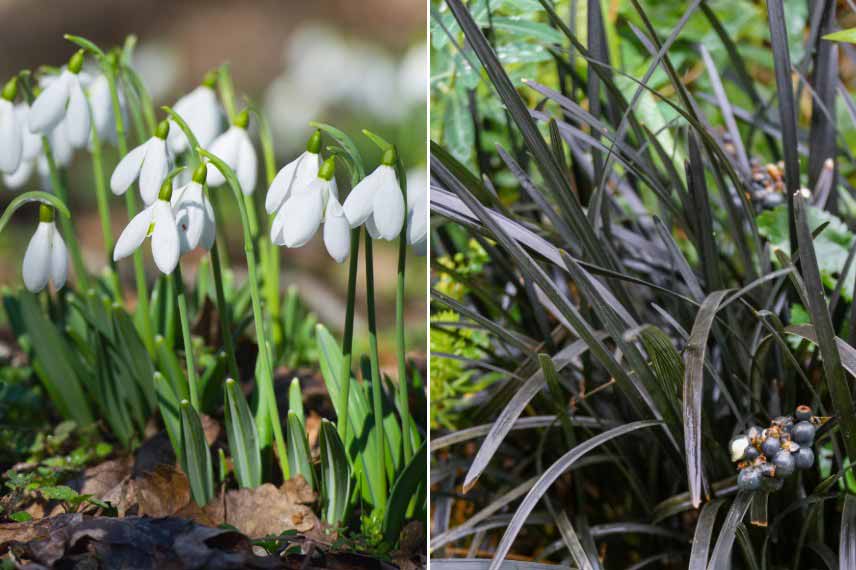
Snowdrop (Galanthus nivalis) and Ophiopogon planiscapus ‘Nigrescens’
A duo to discover: Rhodohypoxis 'Beverly' and Azorella 'Nana'
Little-known bulbous plant, Rhodoxis ‘Beverly’ stands out for its remarkably colourful, long summer flowering. This hybrid variety produces large star-shaped flowers in vibrant pink-red. Although a bit frost-sensitive (-8 °C in dry soil), it is easy to grow in full sun in acidic, well-drained soil. It is a small wonder to discover for rockeries and sunny borders in not too cold climates. Pair it with Azorella trifurcata ‘Nana’. Native to the Andean mountains, this Azorella is one of the few species found in cultivation. An astonishing perennial, it develops into cushions of evergreen rosettes that slowly cover the ground; a rarity for dry areas, perfect for rockeries. Plant it like the Rhodoxis in porous soil, avoiding too much lime which it dislikes, and in full sun.
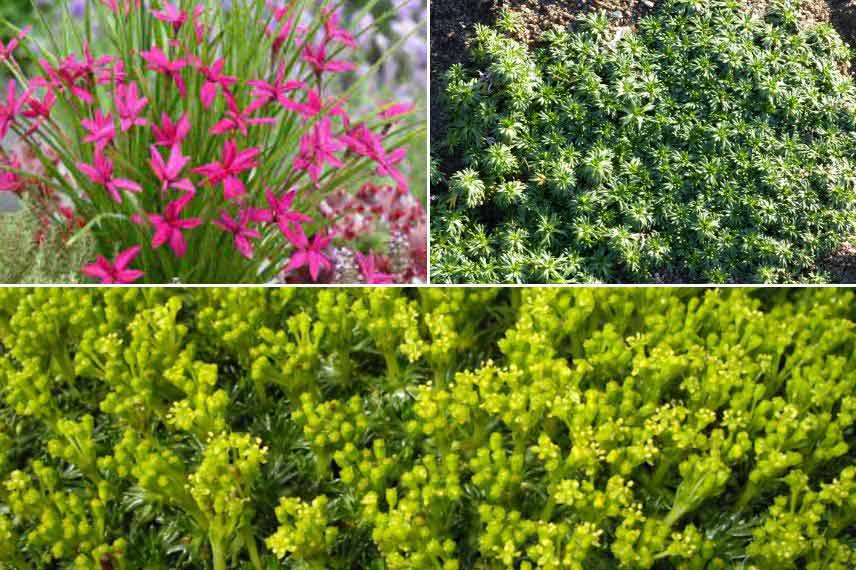
Rhodoxis hybrid ‘Beverly’ and Azorella trifurcata ‘Nana’, with and without flowers

- Subscribe!
- Contents
Comments