





























Berries in clay soil
Gooseberries, blackcurrants or raspberries, and more!
Contents
Clay soils are difficult to work with, but moreover, they often prove to be poorly drained and very wet in winter, only to dry out completely in summer. In short, it can be quite challenging to choose the plants that will thrive in this type of soil. There is a wide variety of small fruit trees that adapt well to heavy, clay soils: currants, raspberries, and blackcurrants foremost. But the list doesn’t stop there. Indeed, one can opt for lesser-known or somewhat forgotten shrubs like the male dogwood, Mayberry, or Aronia.
Here is a small selection of classic or more original small fruit trees, trouble-free and very hardy, for heavy and clay soils.

Raspberries and thornless brambles: Rubus
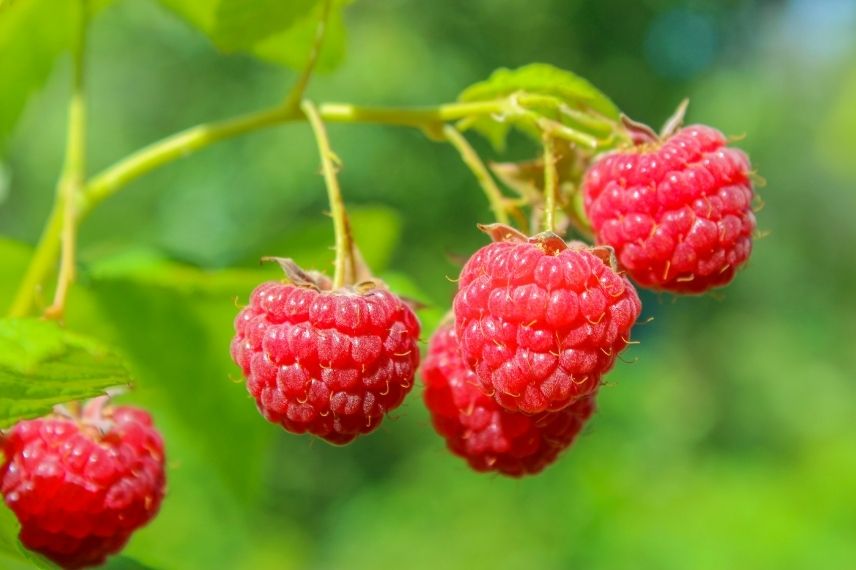
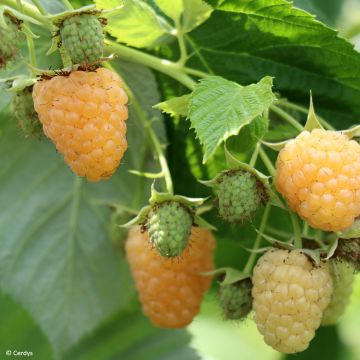
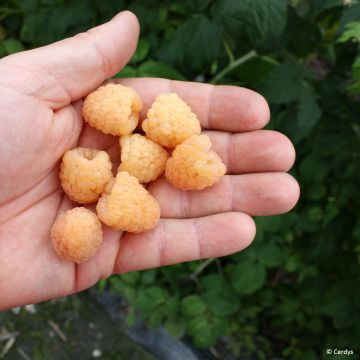
Raspberry (Rubus idaeus) is a bush that produces small drupes, the raspberries, which can be red, pink, orange and sometimes even nearly black depending on the variety. Some raspberries produce once a year, while others are repeat flowering and produce in summer and autumn.
Thornless blackberry or bramble (Rubus fructicosus) produces black or red drupes, the blackberries, in summer.
Raspberries and thornless blackberries are low-maintenance bushes and can thrive in clay soil, but it must be well-drained and remain moist throughout the year, in full sun or partial shade.
→ To learn everything about growing raspberries, read Raspberry: planting and care.
→ Follow Eva’s tips to successfully grow thornless blackberries.
Discover other Berries
View all →
Available in 1 sizes
Available in 1 sizes
Available in 1 sizes
Available in 1 sizes
Available in 3 sizes
Available in 1 sizes
Available in 1 sizes
Available in 1 sizes
Available in 1 sizes
Available in 1 sizes
Gooseberries and Blackcurrants: Ribes
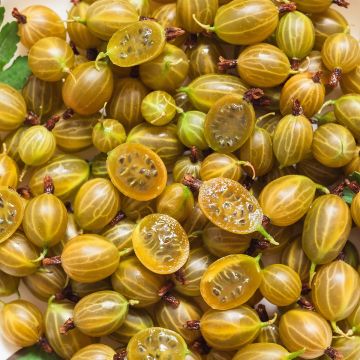
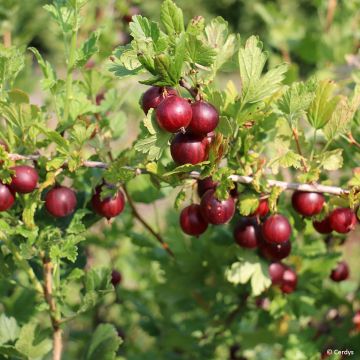
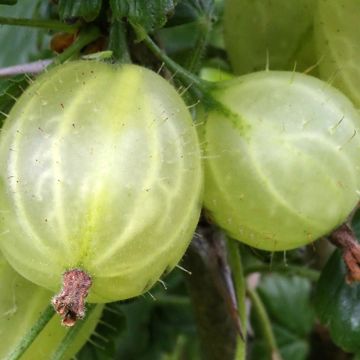
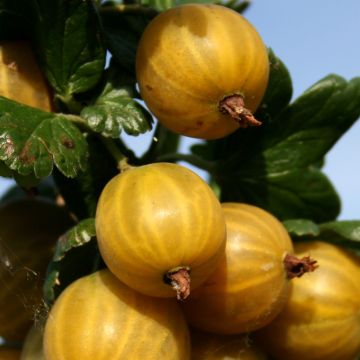
The well-known redcurrant bushes (Ribes rubrum) produce clusters of small berries, the currants, which can be red, pink, or white depending on the variety in early summer. Less commonly planted, and wrongly so, the gooseberry bushes (Ribes uva-crispa) are small thorny bushes that produce large green gooseberries (‘Worcesterberry’) and purple ones (‘Captivator’). While the redcurrant can be grown throughout France and Belgium, the gooseberry, on the other hand, is sensitive to high temperatures and should be reserved for the north of the Loire.
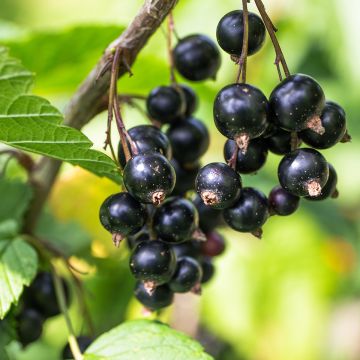
Botanically close to currants, blackcurrant bushes (Ribes nigrum) produce blackcurrants, a tangy and slightly astringent berry in summer. The Jostaberry is less known: it is a cross between a blackcurrant bush and a species closely related to the gooseberry. This bush (Jostaberry ‘Josta’) produces large black fruits, similar to large blackcurrants.
All thrive in clay soils, provided they are cool, relatively well-drained, and rich in organic matter.
→ Find all of Eva’s tips on growing redcurrant and gooseberry bushes.
→ As well as all the information regarding Growing blackcurrants.
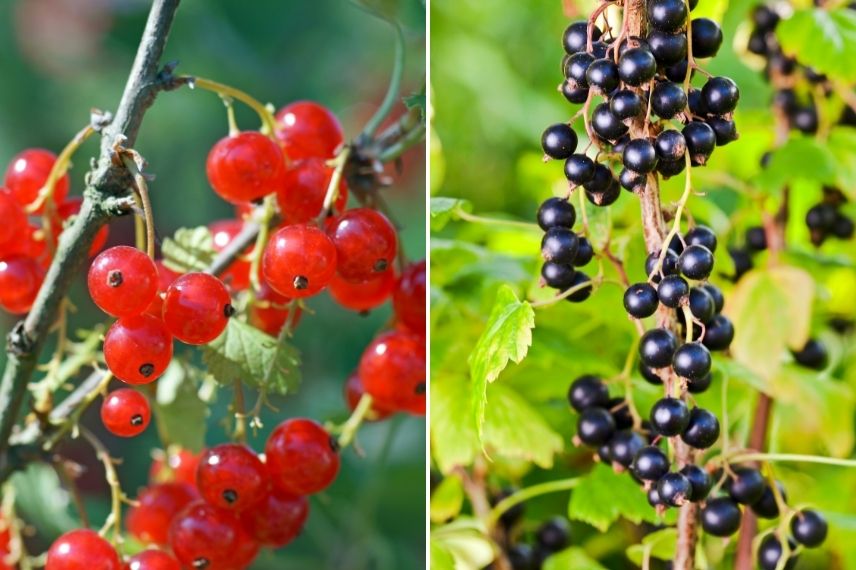
Amelanchier
The serviceberry is a bush that is both ornamental due to its spring flowering and beautiful foliage in spring and autumn, but it is also a fruiting bush. All serviceberries produce fruit, but the Amelanchier alnifolia ‘Saskatoon Berry’ is undoubtedly the one with the most spectacular fruiting. Its fruits resemble blueberries and are harvested from June to August. They can be eaten raw, dried, or cooked.
Serviceberries tolerate clay soils very well. Just remember to add some compost at planting and place a good mulch at the base of the bush.
→ Virginia tells you everything about serviceberries in Serviceberry: planting, pruning, growing.
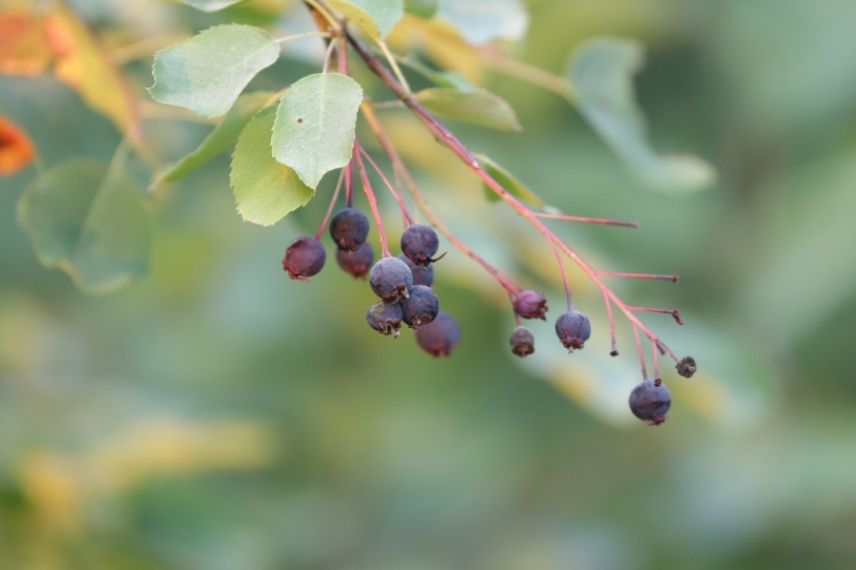
Aronia
Aronia is a very hardy American bush that produces black or dark red drupes rich in antioxidants. The fruits can be eaten fresh, dried, or cooked (in pies or jams, for example). The harvest takes place from late summer until December. One of the most productive varieties is the Aronia prunifolia ‘Viking’.
Aronia thrives in almost any soil, even clay. Adding compost at planting to lighten the soil a bit and applying mulch to keep the soil cool will be beneficial. A sunny or partially shaded position is ideal.
→ Eva tells us all about Aronia in her guide Aronia: planting, pruning, and care.
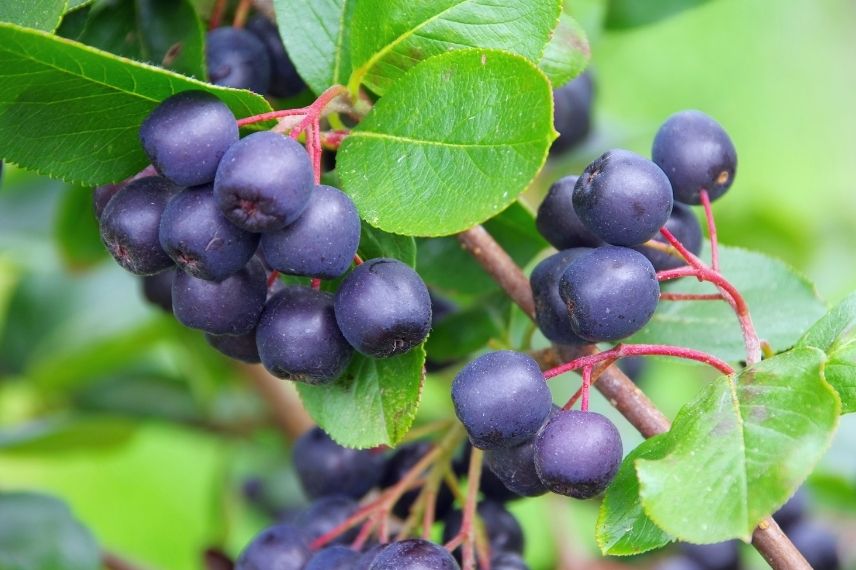
Cornus mas or Male dogwood
The male cornel is a native bush that has somewhat disappeared from our countryside. Nowadays, some very productive varieties have emerged, such as Cornus mas ‘Schönbrunner Gourmet Dirndl’ which produces large, sweet red cornels from the end of August. Additionally, the male cornel is adorned with a multitude of yellow flowers in early spring and displays beautiful autumn foliage. It is therefore both an ornamental bush and a somewhat forgotten fruit tree.
Male cornels thrive in full sun or partial shade and in any soil, even calcareous or clayey.
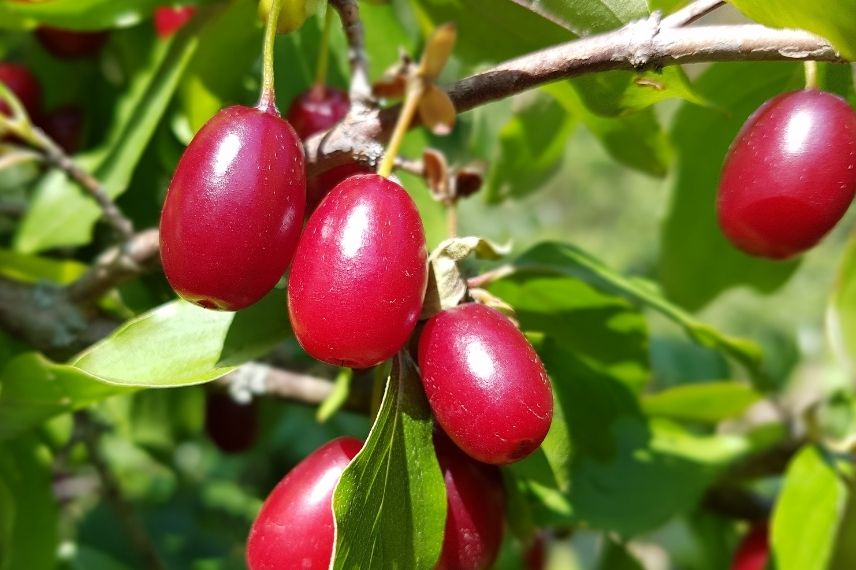
Prunus tomentosa
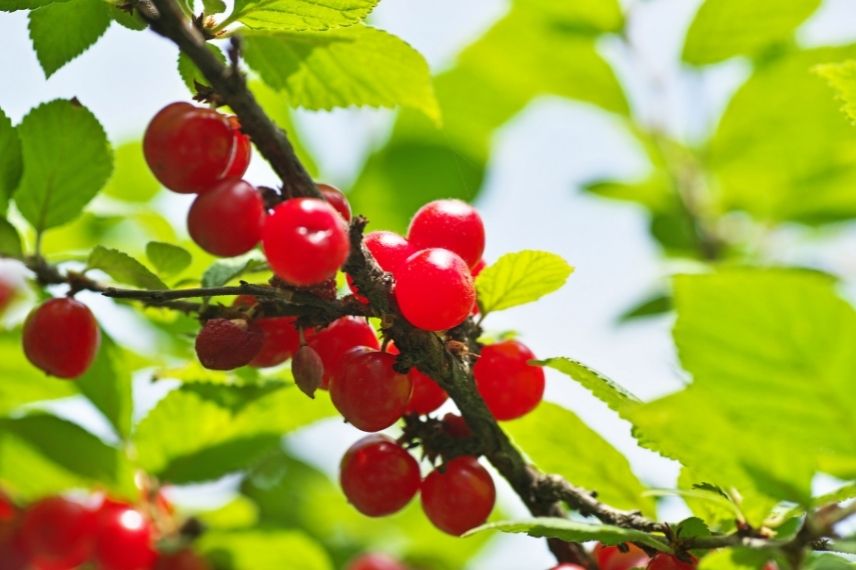
Prunus tomentosa is more commonly known as Nanking Cherry or ragouminier in French. It is a self-fertile fruit bush of small size. In spring, numerous small white flowers tinged with pink bloom before the leaves appear. The small, bright red fruits with a unique and sweet flavour that follow the flowering are clustered in small clusters and can be used to make excellent jams.
If care is taken to improve soil drainage (with clay pebbles and compost) at planting or to plant on a mound, the Nanking Cherry thrives very well in clay soil, in full sun north of the Loire in France and in partial shade south of it.
Lonicera kamtschatica or Mayberry
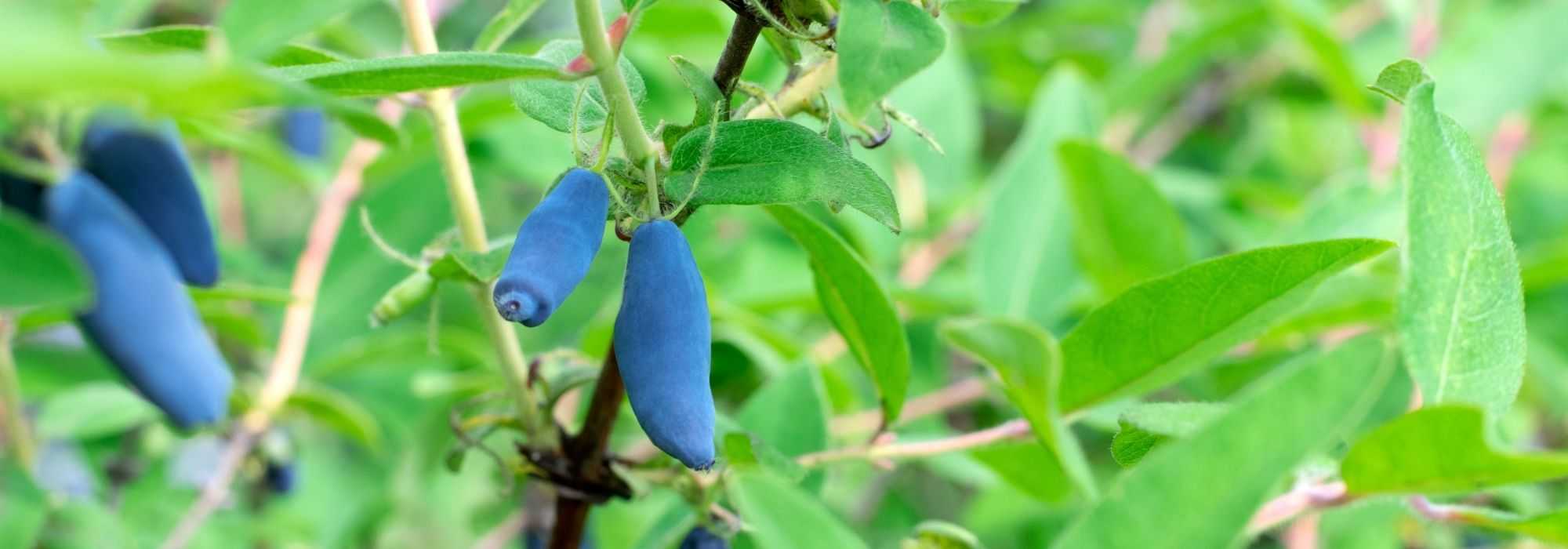
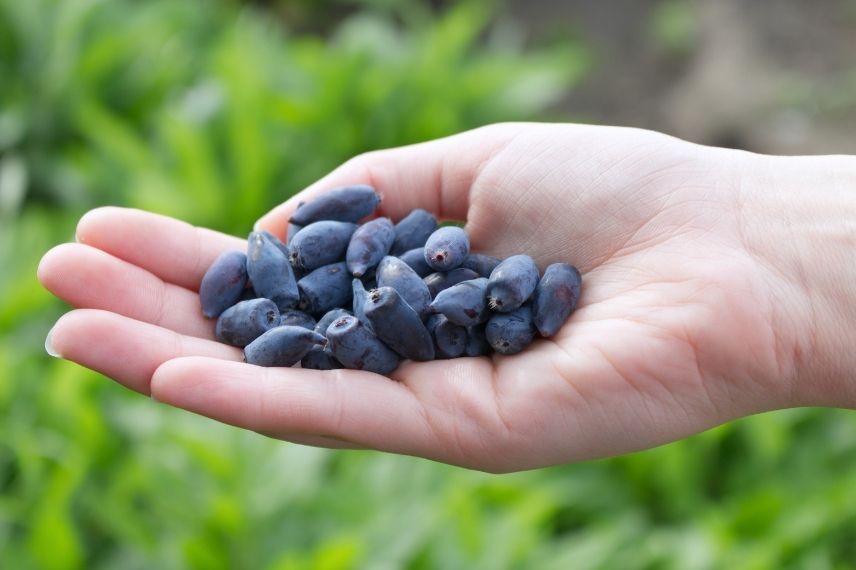
The Lonicera kamtschatica, also known as Mayberry or Blue Honeyberry, is a bush native to Eastern Europe. The Lonicera kamtschatica ‘Eisbär’ is a recent variety selected for its productivity. This honeyberry is grown for its large, elongated, fleshy, and particularly tasty edible fruits. This bush produces an abundant cream-white flowering in spring, delicately scented, followed by the formation of numerous vitamin-rich fruits that can be consumed fresh or made into jellies and jams.
The Lonicera kamtschatica is suited to a wide range of soil textures, from sandy soils to clay and heavy soils. However, it prefers soils rich in organic matter that remain cool in summer.
- Subscribe!
- Contents
Comments