





























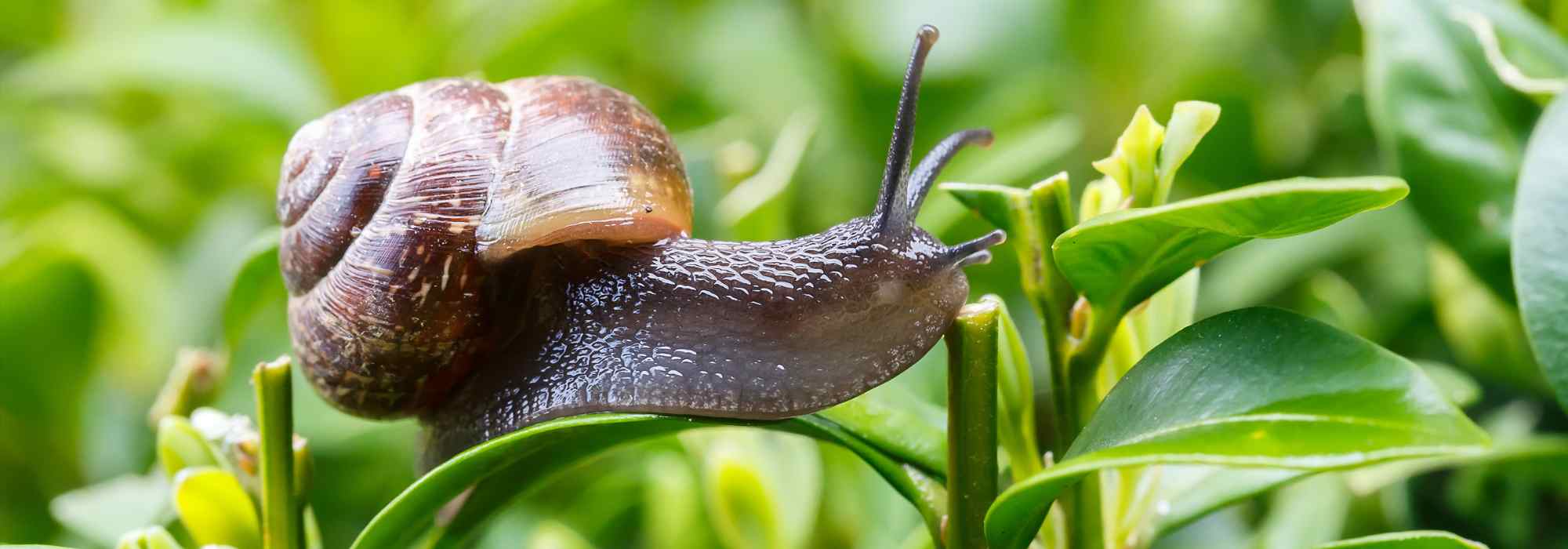
Snails and slugs in the garden: allies or pests?
Their essential role in the garden and in the ecosystem
Contents
Snails and slugs are terrestrial gastropods found in almost every garden. Often regarded as pests, they are dreaded by gardeners because of the damage they cause to young shoots, salad leaves and many plants in the ornamental and vegetable gardens. Yet their role in the garden ecosystem is far more complex than it seems. Should we eliminate them without further ado, or learn to coexist with them?
In this guide, we will explain why these animals are not merely enemies of crops. They play an essential role in soil fertility and contribute to the natural balance by recycling organic matter. However, a population that is too large can pose problems. We will see how to manage their presence in the garden through natural and ecologically friendly solutions that respect biodiversity.

Identification of snails and slugs
Differences between snails and slugs
Physical characteristics
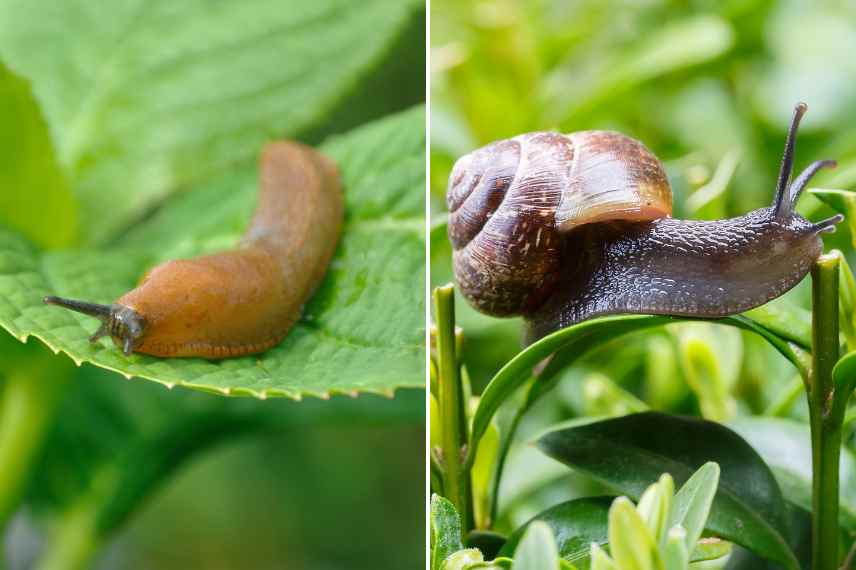
Snails and slugs belong to the same zoological class, the gastropods, but they display notable differences:
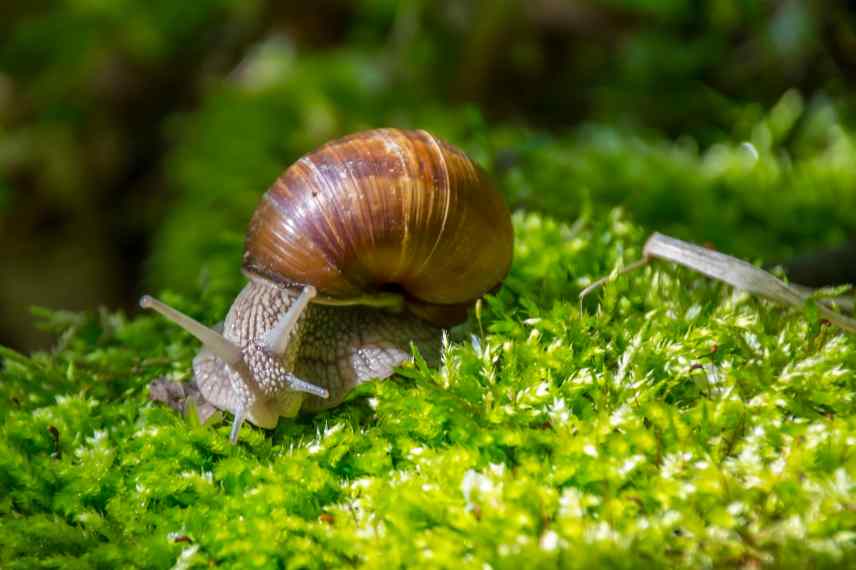
The snail has a hard and spiralled shell, which serves as protection against predators and weather conditions. When threatened or during dry periods, it can retract into its shell and seal the entrance with an operculum.
The slug, on the other hand, does not have a visible external shell (although it sometimes has a rudimentary internal shell). It is more vulnerable to climatic conditions and often hides in damp places to prevent dehydration.
Other physical differences :
- Size : snails are generally smaller and more compact than slugs, which can be long and stretched.
- Movement : slugs often leave a thicker mucus trail than snails.
- Habitat : snails cope better with dry periods thanks to their shell, whereas slugs continually seek damp environments.
Life cycle and reproduction
Snails and slugs have a fascinating mode of reproduction. They are hermaphrodites, meaning they possess both male and female reproductive organs. However, they generally must mate with a conspecific to fertilise their eggs. Mating can last several hours, after which each individual lays eggs in damp soil, under leaves or in crevices. Egg-laying varies by species, but a snail can lay up to 100 eggs at once, and a slug between 300 and 500 eggs in its lifetime. Hatching occurs a few weeks later: the young gastropods are immediately autonomous and begin feeding right away.
Snails can live several years (up to 5–7 years for the common brown snail), while slugs have a shorter lifespan (1–2 years).
Main species present in the garden
The garden harbours several species of snails and slugs, some more problematic than others for crops.
The common garden snails
The Common Brown Snail (Cornu aspersum)
- One of the most common snails in Europe.
- Size: about 3 to 4 cm in diameter.
- Colour: brownish shell with spiralled patterns.
- Role: decomposer of organic matter, but can also nibble young shoots.
The Garden Snail (Cepaea hortensis)
- Colourful shell, often yellow with brown bands.
- Smaller size (1.5 to 2.5 cm).
- Prefers damp and wooded areas.
- Less voracious than the common brown snail, with a limited impact on crops.
The Burgundy Snail (Helix pomatia)
- The largest land snail in France (up to 5 cm in diameter).
- Pale beige, robust shell.
- Protected in some regions, as it is endangered by over-collection.
- Feeds mainly on decomposing plant matter and plays a role in composting.
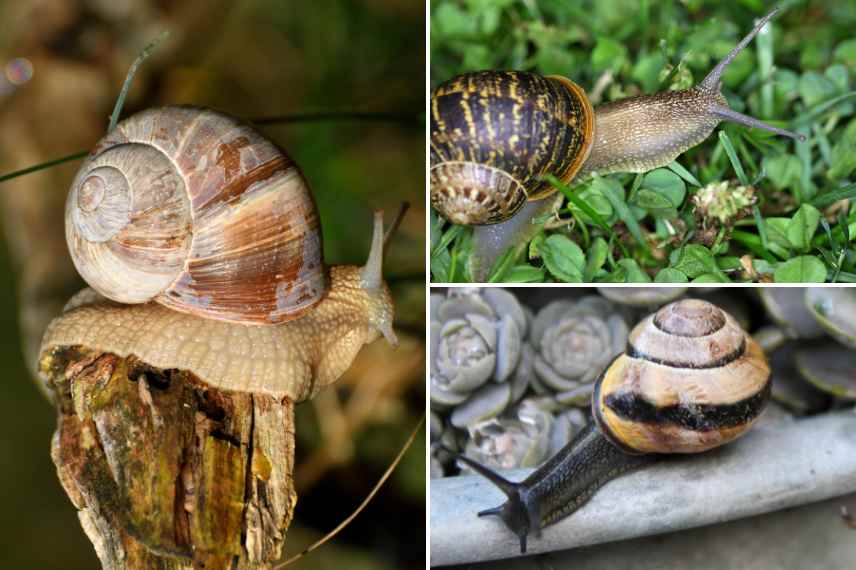
On the left, the Burgundy snail. Top right: the Common Brown Snail and bottom right: the Garden snail
The main slugs in the garden
The Red slug (Arion rufus)
- Large slug (up to 15 cm) with a red-brown body.
- Feeds on leaves, young plants and fallen fruit.
- Can cause significant damage in the vegetable patch.
The Grey slug (Deroceras reticulatum)
- Smaller (3 to 6 cm), grey-brown with a mottled body.
- Mostly active at night and in damp weather.
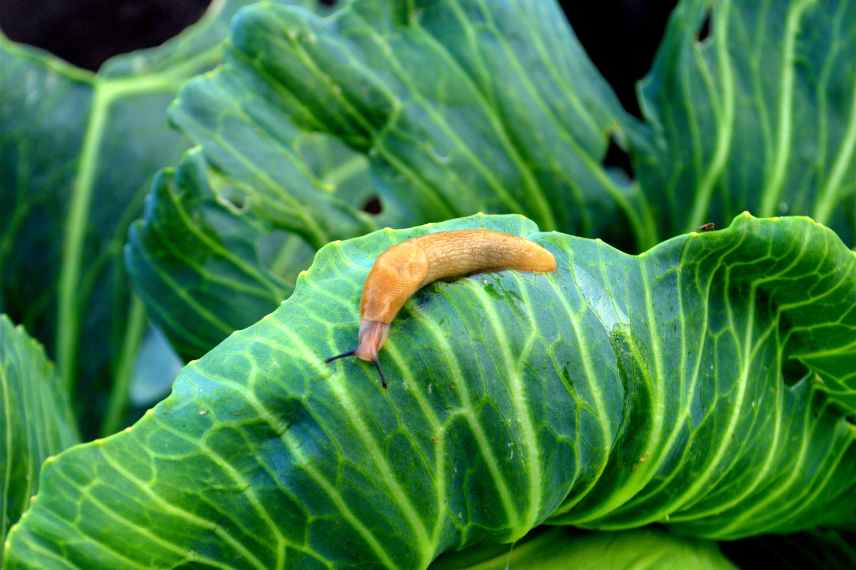
- Particularly attacks leafy vegetables (lettuce, cabbage).
The Black slug (Arion ater)
- Can reach up to 10 cm, with a black or dark brown body.
- Less of a pest, as it also feeds on decomposing organic matter.
Note : not all slugs are pests! Some species, such as the leopard slug (Limax maximus), primarily feed on fungi and organic waste and may even consume other slugs. For more on their life cycle, see our article: “Slugs in the Garden: Understanding Their Life Cycle to Better Manage Them“.
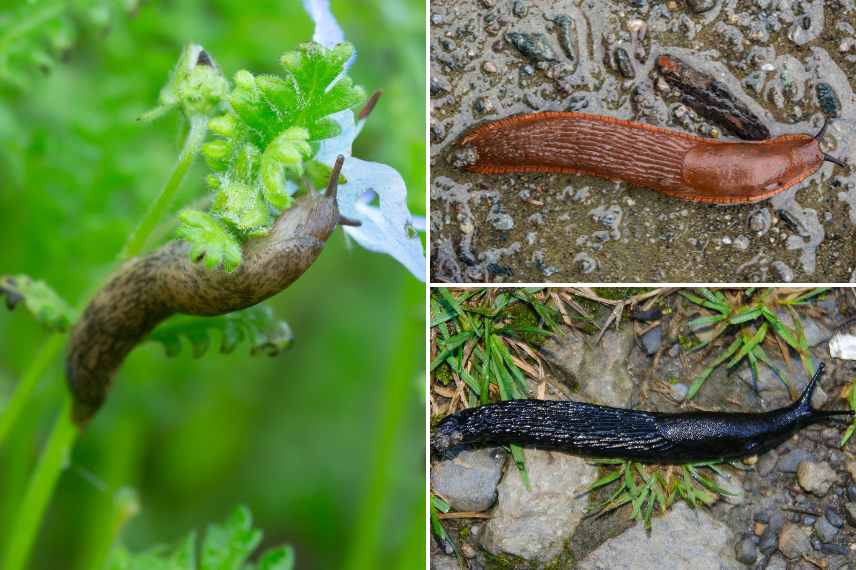
On the left, grey slug. Top right, red slug and bottom right, the black slug.
The ecological role of slugs and snails
Often regarded as garden pests, snails and slugs nevertheless perform essential roles in the ecosystem. They contribute to the recycling of organic matter, feed many predators, and promote a living, balanced soil.
Contribution to the decomposition of organic matter
Snails and slugs are natural decomposers: they feed on decomposing vegetation, accelerating its transformation into humus.
A key role in recycling dead leaves and plant debris
- Slugs and snails feed on decomposing vegetation, including dead leaves, withered stems and crop residues.
- By nibbling these materials, they promote the fragmentation of organic waste, aiding decomposition by soil microorganisms (bacteria, fungi).
- Some species, such as the leopard slug (Limax maximus), feed mainly on fungi and dead organic matter, playing a key role in soil balance.
Improvement of soil fertility
- By digesting dead plant matter, snails and slugs return essential nutrients to the soil in the form of faeces rich in nitrogen and minerals.
- Their mucus and their faeces contribute to humus formation, promoting water retention and soil structure.
- By lightly digging into the soil, they aerate it, facilitating the movement of air and water and improving conditions for plant growth.
Source of food for other species
Snails and slugs are integral to the food chain and provide a valuable source of food for many animals.
Many garden animals regularly feed on snails and slugs, thereby playing a role in natural regulation:
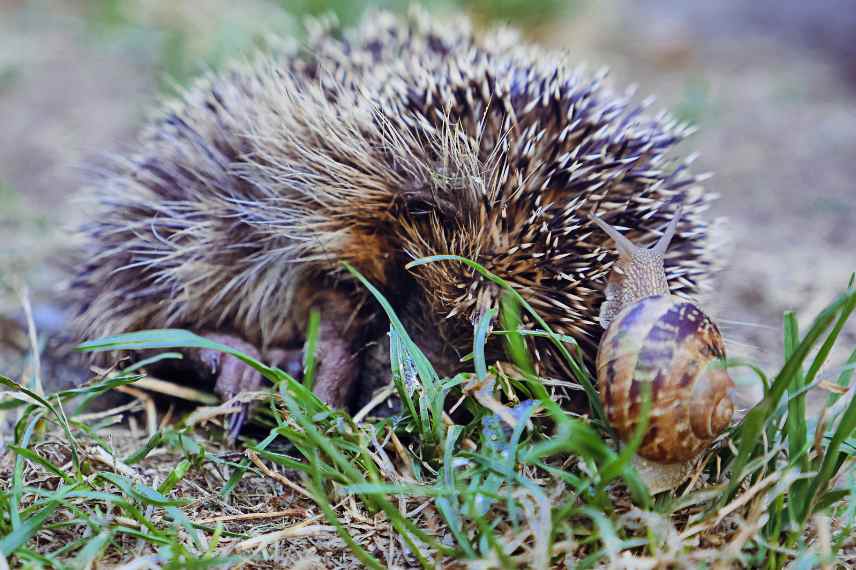
- Hedgehogs are excellent hunters of slugs and snails, helping to curb their population in the garden.
- Toads and frogs particularly enjoy slugs and thus contribute to protecting crops.
- Carabids and rove beetles, two common beetle groups in gardens, feed on slug and snail eggs and juvenile slugs, preventing their excessive proliferation.
- Insectivorous birds (blackbirds, thrushes and robins) regularly consume snails and slugs, as well as their eggs.
- Reptiles such as slow worms and some grass snakes may also feed on young gastropods.
Snails and slugs provide an essential source of protein and calcium for these animals. By naturally regulating their populations, these predators help prevent massive slug invasions in vegetable gardens.
Support for biodiversity
In addition to their role as decomposers and prey for other species, snails and slugs promote a rich and balanced ecosystem.
Interactions with other insects and microorganisms
- By decomposing dead vegetation, they promote the development of fungi and bacteria beneficial to the soil, which are then consumed by other organisms.
- Slug mucus is used by certain bacteria and fungi as a food source.
- Slug and snail eggs are sometimes consumed by beneficial insects such as carabids, which naturally regulate their populations.
Promotion of living soils
-
- Snails and slugs help maintain an ecological balance by limiting the excessive accumulation of dead matter.
- Their passage over the soil stimulates biological activity and promotes an environment conducive to earthworms, fungi and other natural decomposers.
- And a living soil with a varied fauna is more resilient to diseases and droughts, as it better retains moisture and nutrients.
➡️ In brief : snails and slugs are essential actors in the natural garden, actively contributing to soil biodiversity and its proper functioning.
Snails and slugs in the garden: friends or foes?
Slugs and snails are often perceived as garden pests due to the damage they can cause. They love tender young shoots, lettuce and strawberries, leaving behind chewed leaves and, sometimes, crops decimated overnight. Their proliferation is favoured by damp weather, soils rich in organic matter and natural shelter (piles of wood, stones, thick mulch).
However, these gastropods also have positive effects on the garden. By feeding on decomposing vegetation, they contribute to turning it into humus and thus support the soil balance. Their presence is also an indicator of healthy soil, rich in microorganisms and well hydrated. Rather than trying to eliminate them completely, it is better to learn to coexist intelligently with them, protecting sensitive crops and encouraging their natural predators.
Read also
9 slug-resistant HostasHow to deal with slugs and snails in the garden?
Snails and slugs are part of the garden ecosystem, but their voracious appetites can damage young plants and delicate crops. Rather than trying to eliminate them entirely, the aim is to limit their impact by promoting a natural balance.
Prevention and best practices
Encouraging biodiversity is an effective solution to avoid excessive proliferation. By attracting their natural predators such as hedgehogs, toads, birds and beneficial insects, their population stays under control without chemical intervention. For this, it is useful to create suitable refuges: diversified hedges, piles of wood and dead leaves, and small water features are all habitat features that support these garden auxiliaries.
In parallel, you can divert their attention by creating zones where they can feed without causing too much damage. A heap of decomposing plant material or planting certain varieties they favour can help keep them away from delicate crops. The choice of plants is also important: snails and slugs generally avoid plants with rough-textured or aromatic foliage, such as lavender, lavender, thyme or sage.
Natural solutions to limit damage
If their presence becomes too invasive, certain methods can protect crops in an environmentally friendly way. A well-chosen mulch can slow their progression and limit their attacks. Rough or desiccating materials, such as crushed eggshells, pine needles or flax mulch, create an unpleasant physical barrier to cross. But slugs are stubborn creatures.
Some plants also possess repellent properties. Ferns, nasturtiums or begonias do not seem particularly liked by gastropods and can be planted along the edges of vegetable plots to deter intrusions. Natural barriers such as wood ash, walnut shell chips or copper wire around plants can also prevent their progression.
Avoiding harmful solutions
The use of chemical slug deterrents is often tempting, but these products are dangerous for garden wildlife. They affect not only snails and slugs but also their natural predators, thereby disrupting ecological balance. Some alternatives, such as ferrous phosphate granules (Ferramol), should also be used with moderation and great caution.
Beer traps, often recommended, attract many slugs and can lead to an excessive concentration of these gastropods in a given area. Use them sparingly and as a supplement to other methods. Relying on a diverse garden and living soil remains the best approach to coexist with these garden inhabitants without becoming invasive.
- Subscribe!
- Contents
Comments