





























Solar energy in the garden
What can be installed?
Contents
Would you like to make your garden more eco-friendly while saving energy? Solar energy in the garden is the ideal solution to combine sustainability and modernity. Whether it’s for solar-powered irrigation, outdoor lighting or even fountains, solar energy transforms your green space into a haven of peace that is both aesthetically pleasing and environmentally responsible. In this guide, we explore different options for small solar systems for the garden, as well as some tips on installing and maintaining them for maximum efficiency. Discover how going solar can revolutionise your gardening experience while protecting the environment.

Solar energy: what exactly is it?
A brief history
Solar energy has been used since antiquity: for example, mirror systems to light the Olympic flame (or, according to legend, to set alight the Roman fleet during the Siege of Syracuse). Centuries later, several functional devices emerged: solar pump, solar furnace, a system for concentrating solar energy to melt metal… and even a solar engine as early as 1878. This latter device used solar energy to heat water, the steam driving the engine’s moving parts.
Discovered by the French physicist Edmond Becquerel (father of Henri), the photovoltaic effect enables the production of electricity from solar radiation. The discovery was presented to the Academy of Sciences in 1839. In his experiment, electrodes (silver or copper) immersed in an electrolyte bath and connected to a galvanometer produced electricity under exposure to solar radiation. By changing the wavelength, the production of electric current also varied.
Nearly a century later, in 1919, Robert Andrews Millikan imagined the use of a “solar cell”, but with almost negligible efficiency. In 1954, the first doped silicon photovoltaic cells were developed, achieving only about 6% efficiency.
The principle of the photovoltaic effect
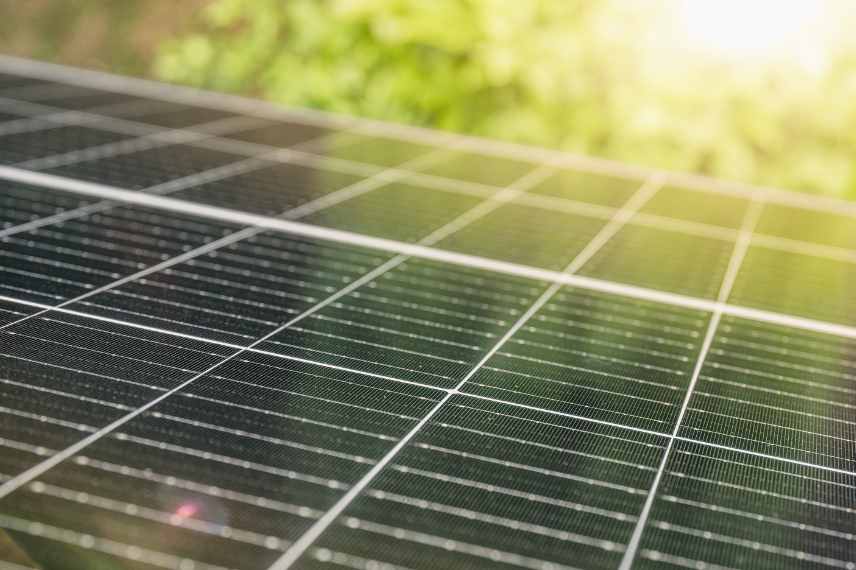
Let us take a semiconductor material: two layers of silicon (Si). Each of these layers is doped, one with phosphorus, the other with boron. When a photon (from solar radiation) strikes one of the silicon layers, it will knock an electron from a silicon atom. This electron will move in a highly excited manner between the two layers, because there is a charge imbalance between them. This movement of electrons creates a direct current.
This direct current must be transformed into alternating current for use (lighting, machinery and pumps…). This transformation is carried out by the inverter.
Please note: the equipment that uses solar energy to generate its own electricity may be equipped with a battery. Thus, stored energy during the day can be used at night. This is the case, for example, for solar-powered lighting.
Watering management
Among the available options, you can find solar water pumps, which can be integrated into a drip irrigation circuit. These systems are particularly effective for outdoor plants, vegetables and flowers that require regular, well-controlled watering. They are also convenient for those who are not able to tend to their garden every day.
The main advantage of solar irrigation is energy independence. You do not need to be connected to the electricity grid, which makes the installation and expansion of your irrigation system easier. Moreover, most solar-powered irrigation devices are equipped with sensors that adjust irrigation according to climate conditions, thereby ensuring optimal use of water.
To choose the right solar irrigation system, it is crucial to consider several factors such as the area to be watered, the type of plants and the climate of your region. It is also important to properly size your solar panels so that they provide enough energy, especially during months when sunshine is lower.
Lighting
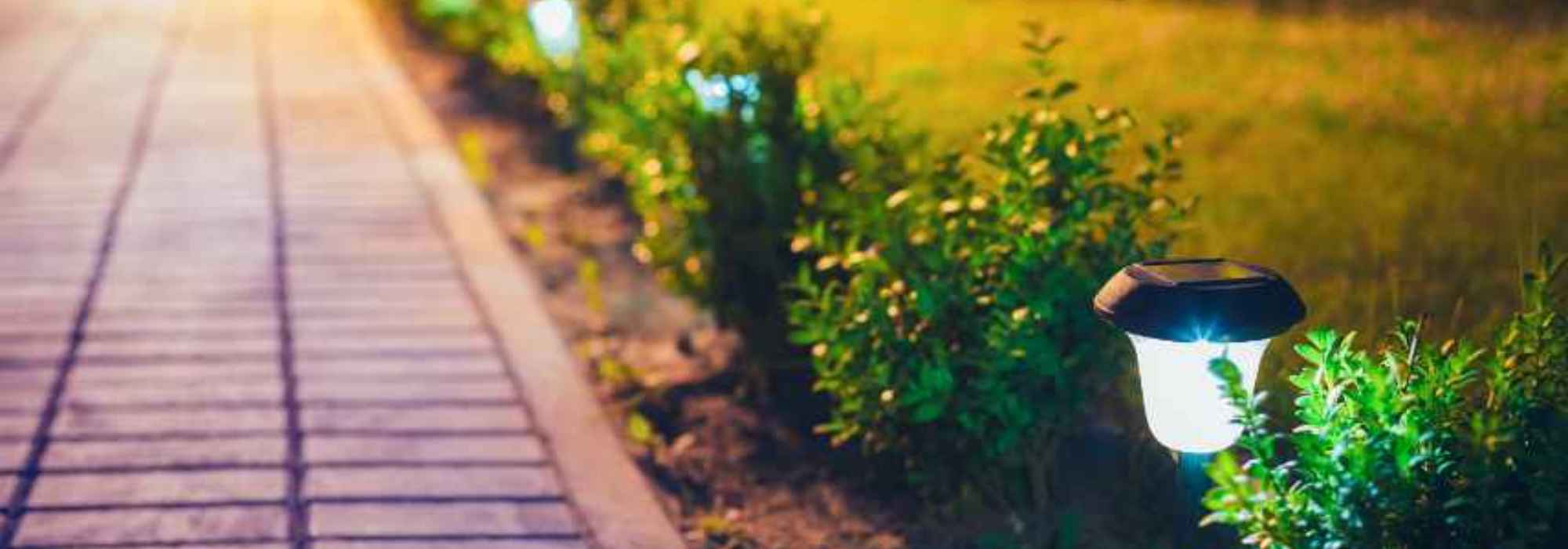
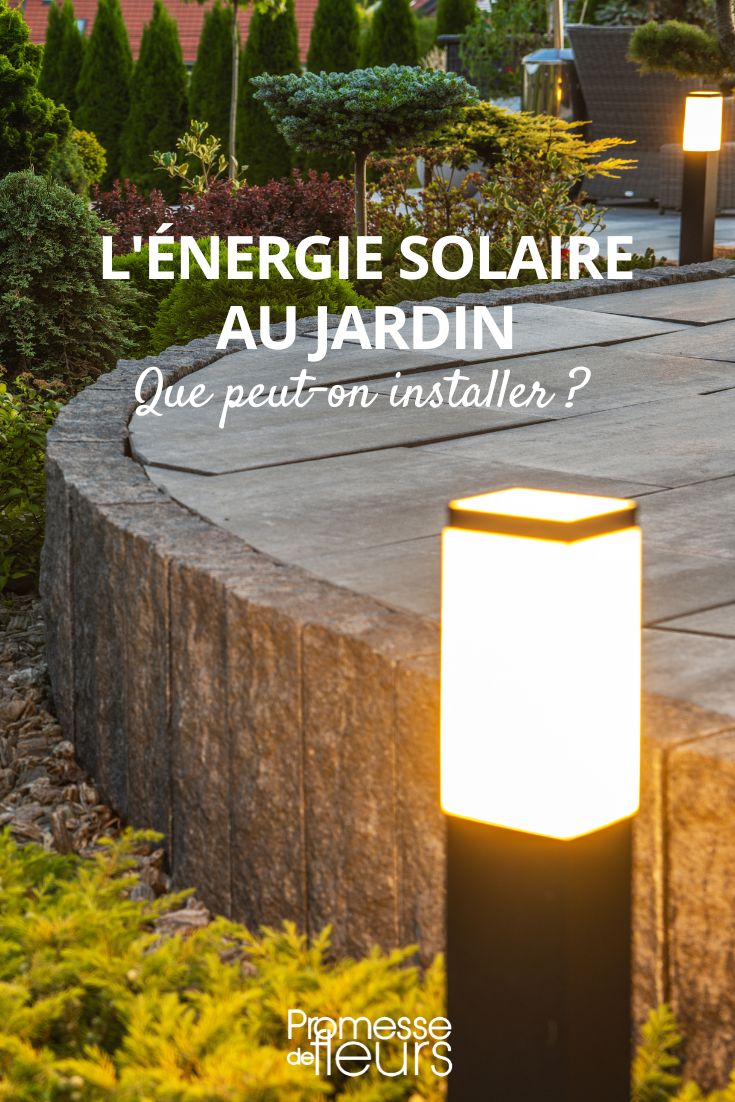
Solar-powered lighting for the garden, terrace and surrounding areas is a good solution. Opting for garden solar lamps avoids the need for costly and often complex electrical installations. In addition, thanks to integrated solar sensors, these outdoor lighting devices capture sunlight during the day and convert it into energy. This energy is then stored in batteries that power the LEDs as night falls, providing a soft and pleasant light for your garden or vegetable plot.
Solar lighting is ideal for highlighting specific elements of your outdoor space, such as trees or paths. It can also improve security in your garden by lighting potentially hazardous areas such as stairs or dark paths.
Among the different types of garden solar lamps, you’ll find solar spotlights, solar lampposts and even solar garlands, each suited to a specific need. Installation is generally straightforward, with no wiring or electrical know-how required, making them accessible to all.
Warning: Small solar-powered ground lights are commonly sold in garden centres, DIY stores and even supermarkets. Practical and inexpensive, they can be a good solution for lighting a small area, the base of a tree or a path. However, aside from producing very little light, this type of fitting is not durable. After only a few weeks (a little longer if they are protected from rain), they will fail and be thrown away.
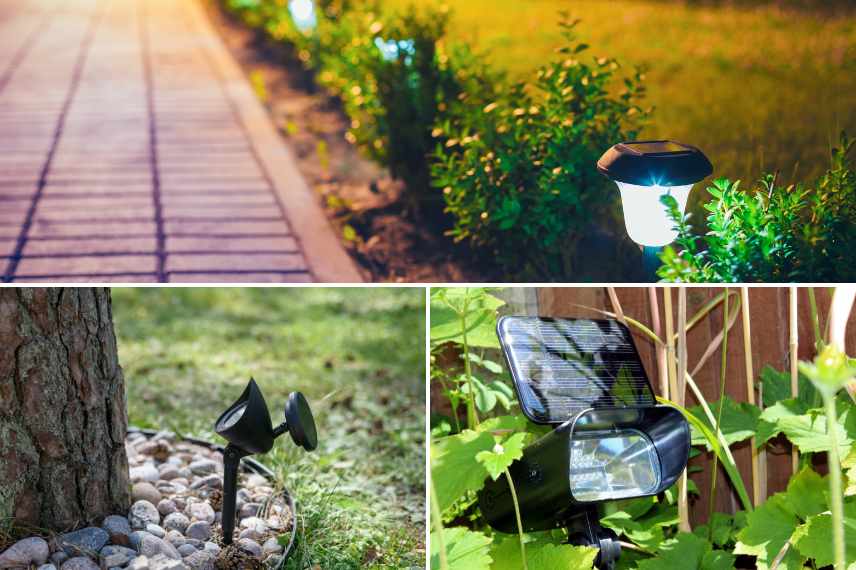
Solar lighting is increasingly sought after in the garden
Solar decor
Solar-powered decor is an innovative and eco-friendly way to elevate your garden while saving energy. Among popular options, solar lanterns are not only aesthetically pleasing but also highly practical. They illuminate automatically as night falls to light up your paths or flower beds.
Solar fountains are another decorative idea that combines beauty and durability. Powered by a small solar panel, they bring a soothing feature to your garden without increasing your electricity bill.
Solar string lights also work their magic, especially during summer evenings. They create a warm and welcoming atmosphere and can be placed wherever you like, from trees to pergolas.
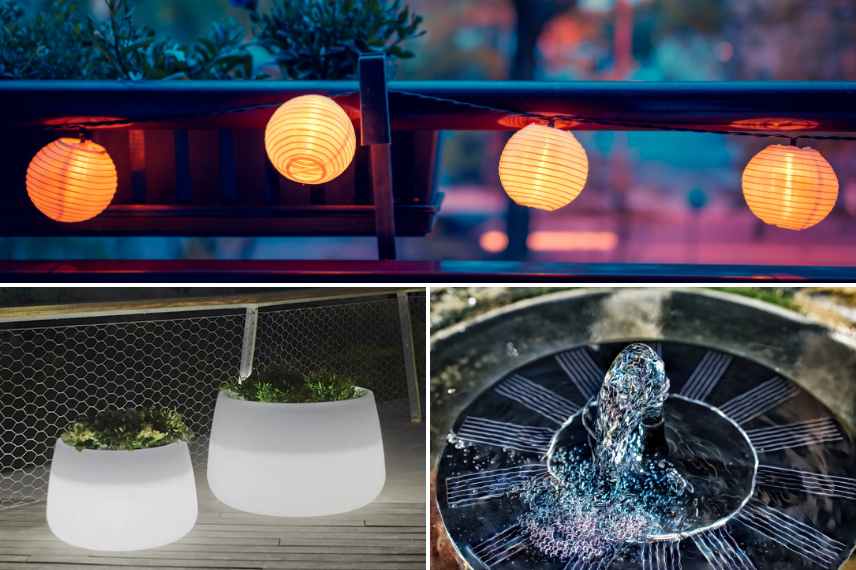
Solar string lights, plant pots and solar fountains
Installation, cleaning, maintenance...: all factors to consider
Integrating solar-powered elements into your garden combines efficiency and sustainability, but it’s important to consider certain aspects such as installation, maintenance and cleaning.
Take solar lamps for outdoor lighting as an example. Installation is often as simple as driving a stake into the soil, but to optimise the absorption of solar energy, they should be positioned where they will receive maximum direct light during the day.
Regarding maintenance, A regular cleaning of solar panels using a soft cloth is recommended to remove dust or debris that could impede performance.
Solar irrigation systems, for their part, require a little more attention, notably to check water levels and ensure that solar sensors are functioning. Installation may require some planning to maximise sun exposure. As for solar fountains, regular cleaning is essential to prevent algae growth and ensure efficient water circulation.
All in all, solar-powered garden equipment simplifies life while being environmentally friendly, but they also require regular maintenance to ensure their long-term efficiency.
Solar energy... not always such a bright choice
Solar energy offers many advantages for the garden, but it is not without some drawbacks that are worth considering. Firstly, the efficiency of solar equipment may be limited by climate or weather. For example, on cloudy days or in winter, solar panels capture less light, reducing their performance. It may therefore be necessary to supplement with another energy source to maintain optimal operation.
The upfront cost of equipment can also be a barrier. Even though the costs are recouped in the long term through energy savings, the initial investment can be significant. Additionally, some equipment, such as solar fountain pumps, may have a shorter lifespan than their mains-powered equivalents, requiring more frequent replacements.
Finally, the quality of solar equipment varies greatly depending on manufacturers. Opting for cheap products can lead to lower efficiency and reduced durability, which would negate the ecological and economic advantages sought.
But, as with everything, there is always a bright side and a downside… even when using the sun.
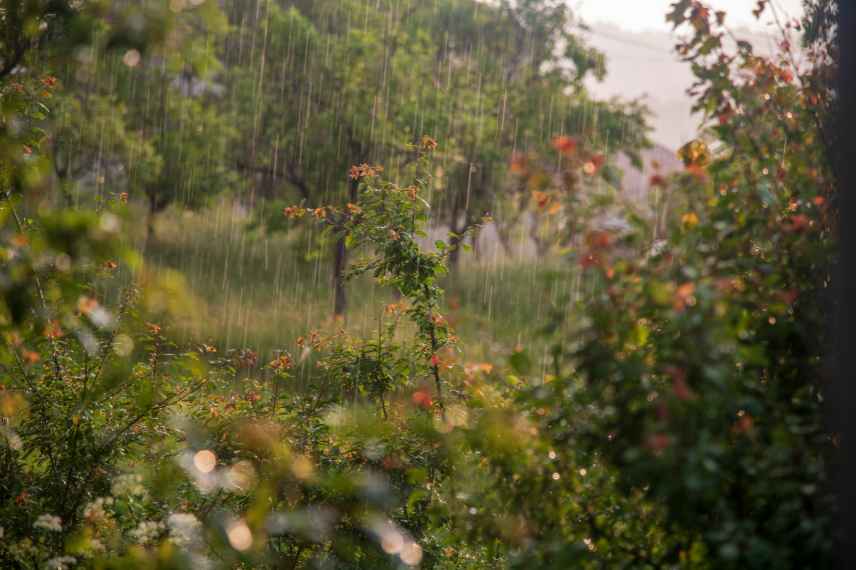
The weather, capricious in some regions, remains a key factor in solar installation
- Subscribe!
- Contents
Comments