





























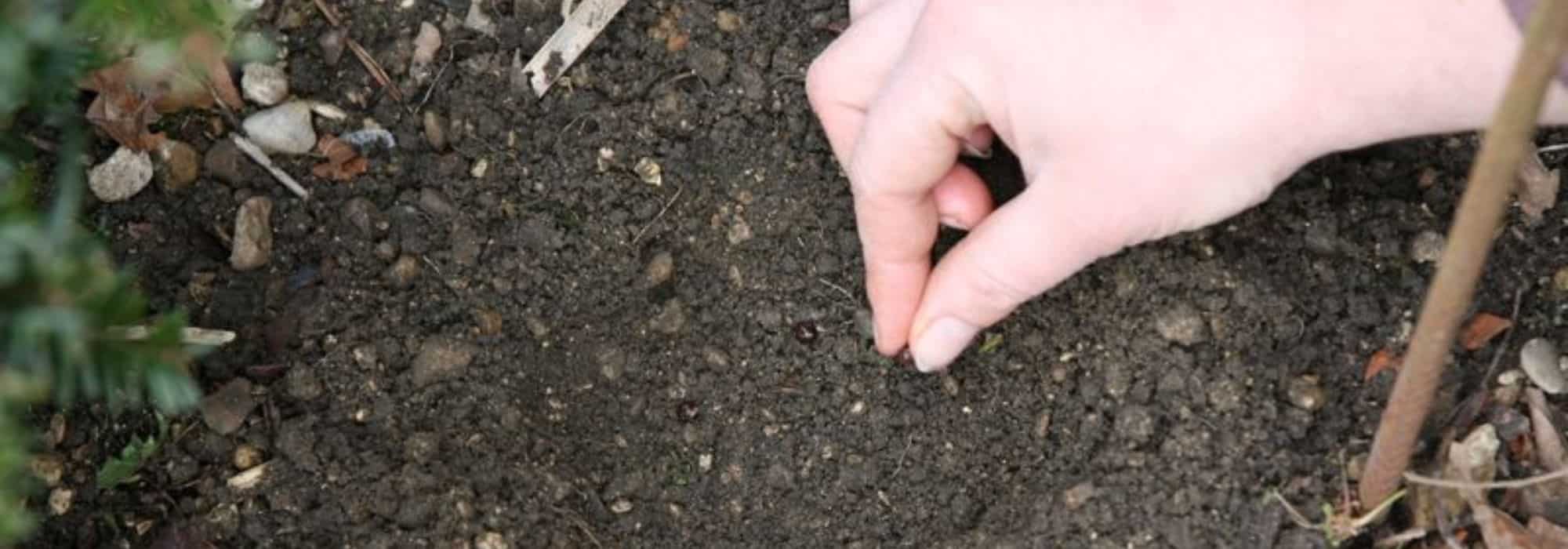
Sowing your own vegetables and flowers: the best way to save money!
In the kitchen garden and the ornamental garden
Contents
Cultivating a garden, whether it’s a vegetable garden or an ornamental one, is a rewarding pastime, but it can be costly for the gardener. To protect your wallet while beautifying the garden, nothing beats sowing your own home-grown seeds. This economical practice also allows you to select a wider variety of plants, while making a positive contribution to the environment. In this guide, we will explore how to save by sowing and by growing your own plants to create an attractive ornamental space or a vegetable garden, from seed packets to producing many plants and harvesting your own seeds, including basic sowing equipment.

The economic benefits of home sowing
The economic advantages of home sowing compared with buying ready-to-use plants become clear when you take a closer look at the prices.
When buying plants, the gardener pays for the plant itself, but also the time, labour, potting compost, the pot and the care invested by the producer to grow it. For example, a tomato plant bought from a garden centre can cost several euros, whereas a packet of seeds for tomatoes, which can yield dozens of plants, costs around the same amount, or sometimes less.
Certainly, you will need to buy a potting compost (except for sowing outdoors), but you can produce many plants at a lower cost. Moreover, it is possible to reuse pots from year to year, thereby reducing ongoing costs. For example, a gardener who decides to grow their own lettuce plants from seeds will make a notable saving. For the price of a single plant bought in-store, they can obtain enough seeds to produce a much larger amount of lettuces throughout the season.
These savings are even more evident when you consider the annuals or the aromatic herbs. Sowing enables the production of a large quantity of these plants at a cost substantially lower than that of bought plants.
Moreover, there is a wider range of varieties sold in seed sachets, than those available in pots at standard garden centres.
Read also
Storing vegetable seedsSeed selection for high-quality sowing at low cost
Start by choosing quality seeds from reliable suppliers offering good value for money We offer thousands of seed varieties :
For those looking to cut costs even further, buying seeds in bulk can be an economical option.
Gardening clubs or seed-swap groups are also excellent resources. They not only help you acquire seeds at lower costs, but also provide the opportunity to exchange tips and experiences with other gardeners.
Finally, do not neglect promotions and end-of-season sales. However, it is essential to store these seeds in good condition to preserve their viability until the next sowing season.
Harvest your own seeds
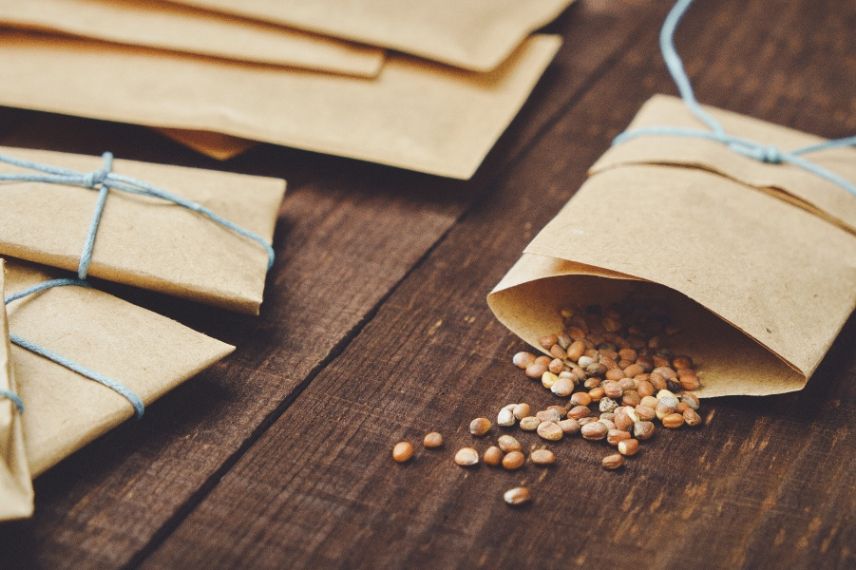
To cut costs even further, you can consider saving and storing your own seeds! It’s also a step towards self-sufficiency in gardening.
To harvest your seeds, select healthy plants, that have flowered well and set seed, in other words: the most beautiful and/or abundant. Seeds should be collected completely dry on the plant, which is often indicated by a colour change or the opening of pods or seed capsules.
After harvest, seeds should be carefully air-dried, in a dry, well-ventilated place to remove any residual moisture. This helps prevent mould and extends their shelf life.
Once dry, they can be stored in paper envelopes or airtight containers, labelled with their name and harvest date. Place the packets in a cool, dark place, away from moisture, such as a drawer, a garage cupboard or in a clean, dry cellar.
This will not only help cut costs of buying new seeds each year, but also preserve varieties that have performed well in the garden. Furthermore, this encourages the preservation of local or heritage varieties, contributing to biodiversity. Over the years, your plants will become better adapted to the climate conditions in your region.
For more information, read our article: “Save seeds: harvest them and store them properly“.
Equipment needed for sowing
To grow your own seedlings, some tools are required, but fortunately there are economical alternatives to obtain them.
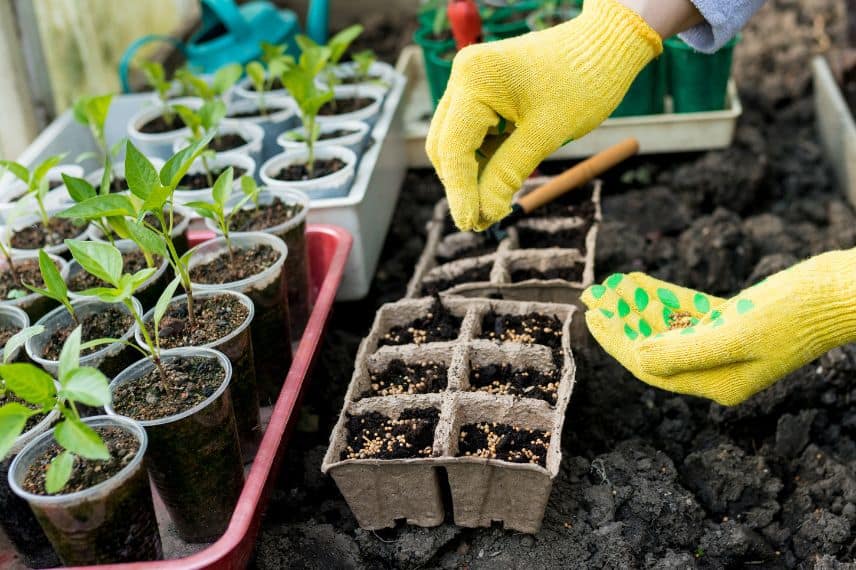
To get started, you will need some basic equipment, for example seedling pots that you can reuse year after year, or seed trays.
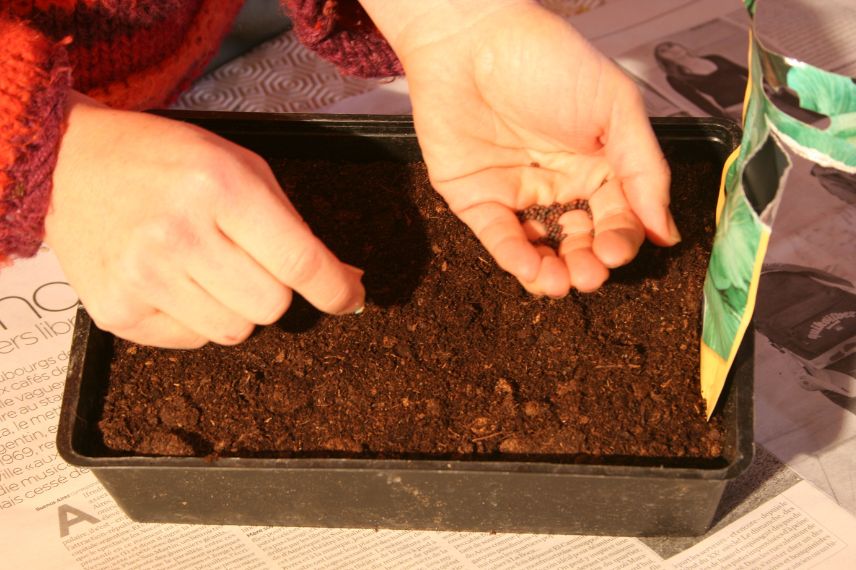
Also choose a high-quality potting mix, preferably for sowing (rich and well-draining) and, of course, seeds.
A watering can with a fine spout is also useful for a gentle watering that won’t damage the young shoots.
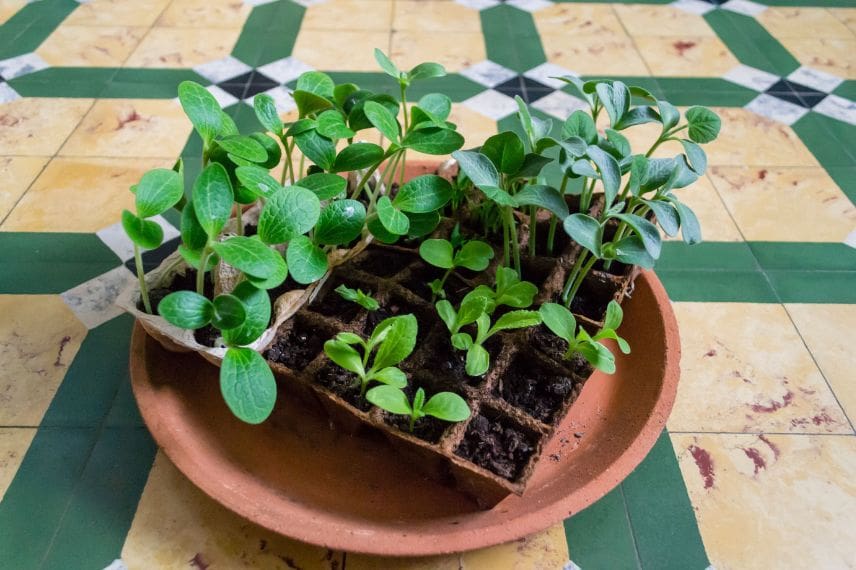
However, it is not always necessary to buy all this equipment new. Everyday objects can be repurposed for this purpose. For example, egg cartons easily transform into biodegradable pots perfect for sowing. Yoghurt pots, for their part, can be reused as small seed pots after making a few holes in the bottom for drainage. Don’t hesitate to reuse kitchen packaging instead of throwing them straight into the bin! Milk cartons, bottles, etc.
Another handy tip is the use of paper potter for sowing, using a paper potter or a cylinder. These devices allow you to create biodegradable sowing pots from newspaper, an eco-friendly and economical solution. These homemade pots can be planted directly into the soil, thereby avoiding transplant shock for seedlings. In the same spirit, you can also reuse the cardboard tubes from toilet rolls.
Consider diversifying species for a resilient garden
When choosing your seeds, we recommend integrating several varieties from different plant families to enable diversification and a spreading of flowering times or harvests. Some plant combinations help create a garden that is more resistant to diseases, pests and climate-related stresses. This diversity also helps safeguard biodiversity. In short, avoid monoculture!
For example, for a vegetable garden, it is advised to mix leafy vegetables, such as lettuces and spinach, with root vegetables such as carrots and radishes. Fruit vegetables, such as tomatoes and courgettes, also provide a plentiful and diverse harvest. Introducing aromatic herbs, such as basil or chives, can also improve neighbouring plants’ health while offering fresh ingredients for cooking.
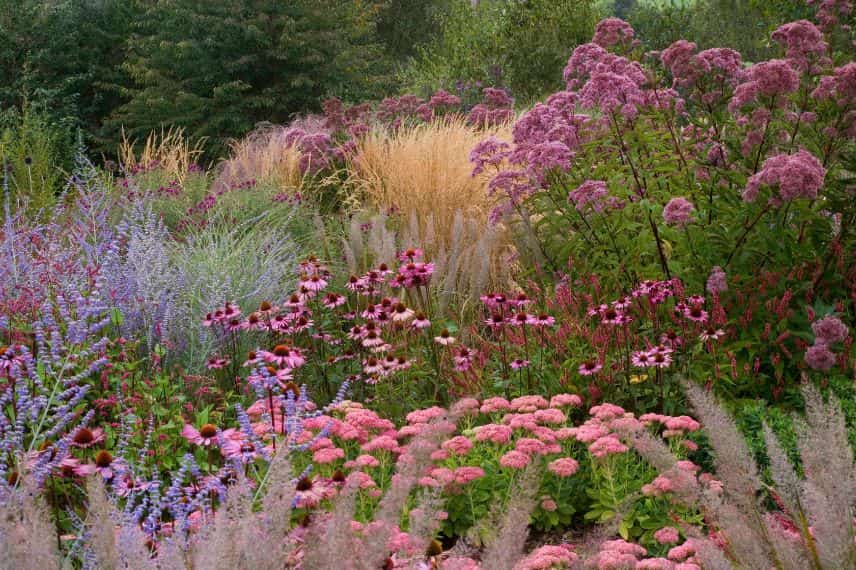
Another example, in an ornamental garden, the combination of perennial, annual and biennial plants creates a palette of colours and textures. Opting for local species adapted to the region’s climate guarantees robust growth and reduced maintenance. By selecting plants with different flowering periods, we ensure a continual display of colour in the garden, attracting pollinators and beneficial insects.
Tip: note in a garden diary the varieties that perform well in your garden and harvest their seeds.
Further reading
To succeed with your sowing, feel free to browse our other articles:
- Subscribe!
- Contents
Comments