





























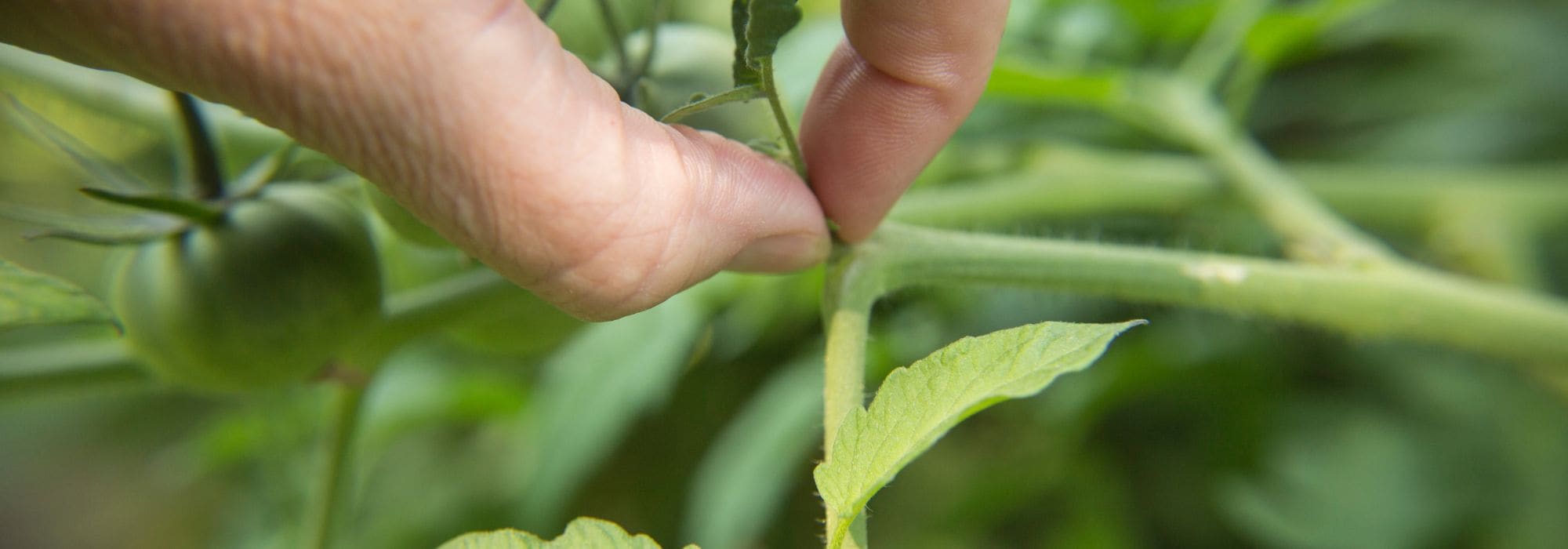
Summer vegetable pruning: why and how?
We explain everything to you
Contents
In the height of summer, certain vegetables such as courgettes, peppers, melons, and aubergines… need to be pinched. And a question quickly arises: how to prune these summer vegetables? This is a topic that sparks debate among gardeners… So, right from the start, if you are a proponent of natural gardening, where you let nature express itself fully without intervention, there’s no need to continue reading this text. However, if you prefer to pinch your young plants for better fruiting, these few tips may be useful to you. Especially since it is not always easy to prune, and the slightest mistake can quickly jeopardise a harvest. Discover, step by step, our tips and tricks for best pruning your summer vegetables.

Why pruning summer vegetables?
The term summer vegetable refers to sun-loving vegetables that require warmth and water to develop properly. Among summer vegetables, we primarily find solanaceae (tomatoes, peppers and chillies, aubergines) and cucurbits (courgettes, melons, squashes, cucumbers).
However, some of these summer vegetables should not be pruned. This is particularly true for determinate tomatoes such as Roma or cherry tomatoes. Similarly, there is no need to prune a non-running courgette that develops into a clump about a metre in diameter.
Other gardeners choose not to prune their summer vegetables and let nature take its course. Mainly because they believe that pruning opens the door to fungal diseases. Indeed, a prune is an incision, a cut, in other words, a wound inflicted on a vegetable plant.
Others, on the contrary, swear by pruning or pinching. Their numerous arguments are equally valid:
- Pruning summer vegetables allows for the removal of unnecessary shoots and branches that use sap to grow at the expense of the fruits. Thus, by pruning, gardeners would achieve a larger harvest as the sap would concentrate in the fruits.
- Pruning summer vegetables could result in a quicker and earlier harvest, as the fruits, exposed by the removal of leaves and shoots, would benefit from more light.
- Pruning summer vegetables allows for harvesting perfectly balanced and sized vegetables, all of good size since they would all receive the same amount of sunlight.
- Pruning summer vegetables helps to circulate air through the foliage, which helps to limit the risk of mildew.
- Pruning helps to limit their sometimes exuberant growth, which can be difficult to manage, especially in small gardens.
But…
- The foliage allows for photosynthesis, so removing it reduces photosynthesis, and thus fruit production.
- A fruit exposed to direct sunlight can burn. The foliage serves to protect it.
- As an amateur gardener, do you really need perfectly balanced fruits at all costs?
- Certainly, pruning aerates the plants and limits the appearance of mildew, but at the same time, it wounds the plant and encourages the entry of diseases or pests.
Therefore, the best approach is to test both methods in parallel over two consecutive summers. Because the development and harvest of summer vegetables depend not only on pruning or not pruning. Nature and soil fertility, geographical area and thus climate, regular watering, mulching… will all be factors that influence summer vegetable production.
For now, I will set aside my convictions to share some tips and tricks for pruning the main summer vegetables.
One last piece of advice: always prune your vegetables with a cleaned and disinfected gardener’s knife using methylated spirits to eliminate any risk of disease transmission.
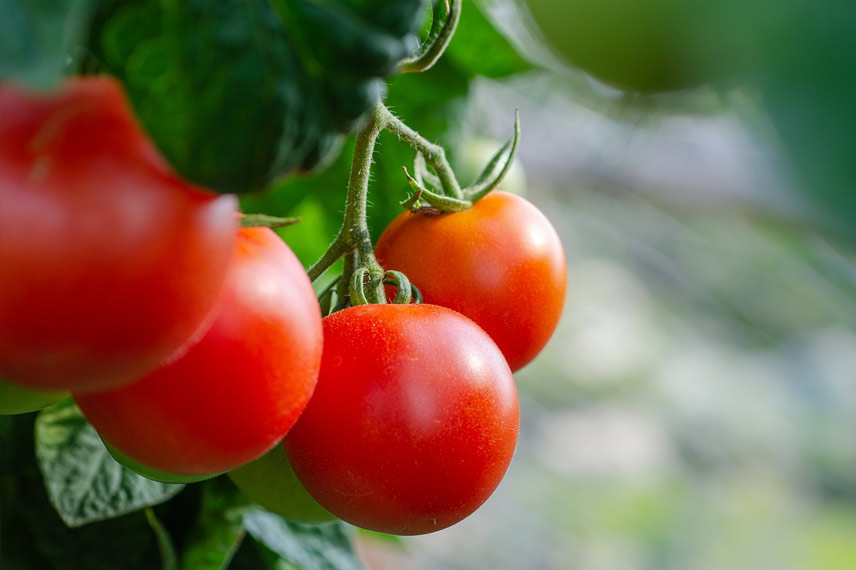 To prune or not to prune? That is the question!
Read also
Tomato pruning and managementThe pruning of the aubergine
Whether purple, white, or even green, elongated or round, aubergine is one of the standout vegetables of summer. It is also a staple of Mediterranean cuisine. In the garden, it is not very difficult to grow in rich, fertile, cool, and well-drained soil, provided it receives plenty of sunlight, warmth, and regular watering.
The aubergine generally produces several fruits on each secondary branch, so pruning is not obligatory. However, it can help limit the production of sterile vegetation. Therefore, if you decide to prune the aubergines, you can do so throughout the growth period from June to September.
How to do it?
- Prune the main stem above the second flower. If there is only one flower, prune above that flower.
- Following this cut, several secondary branches will develop and form flowers.
- Prune again above the second flower and above a leaf.
- Keep only one stem out of the two that will grow.
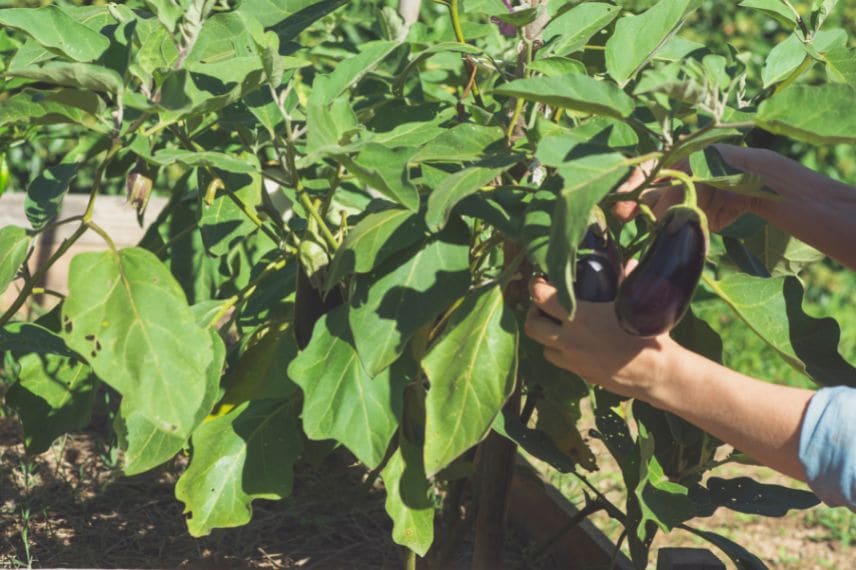
You can also remove the suckers, which are the small secondary branches that grow at the base of the aubergine plant.
To learn more:
Summer pruning of courgette
Here’s another essential summer vegetable that is highly productive. Hard to miss, courgettes still require fertile soil, well enriched with compost or manure, and kept cool. Courgette plants benefit from mulching. Additionally, the plants should be spaced at least 1 metre apart to facilitate their development.
Only the trailing varieties of courgettes need pruning; the non-trailing varieties do not require pinching at all.
How to do it?
- Prune just after the second leaf on stems that already have 4 or 5 leaves. This removes the apical bud.
- New axillary shoots will emerge, generally two new stems that will bear the fruit. When they have 7 to 8 leaves, you can prune them again after the 5th leaf.
- When the first flowers have produced the first courgettes, prune again after the first or second leaf that is just after the last fruit.
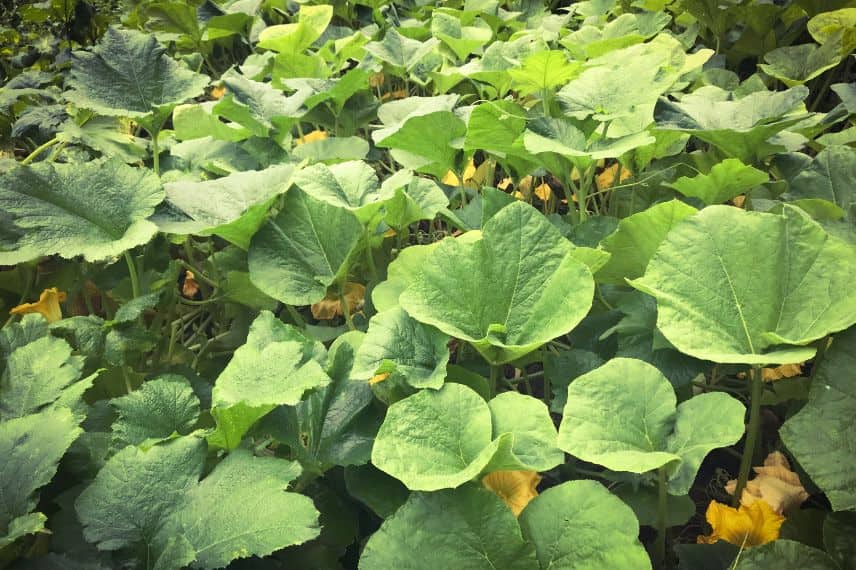
You will proceed in the same way for pruning squashes. To ensure they reach ripeness before the first heavy frosts, do not hesitate to remove some fruiting branches to keep only the most vigorous ones.
To learn more:
- Courgette: how to sow, plant, and grow in the vegetable garden
- Sowing and growing squashes, courgettes, pumpkins, and other gourds: it’s simple and it’s now
Read also
Aubergine: the best varietiesPruning peppers and chillies
Eminent representatives of the solanaceae family, peppers and chillies come from the same plant. The pepper is actually a sweet chilli. As sun vegetables, they also require warmth, regular watering, and rich, fertile, well-drained soil.
As with aubergine, pruning is not absolutely necessary, but it can be done to encourage fruiting and speed up ripening in the north of the Loire. Similarly, pruning helps to limit vegetation, as peppers and chillies can form dense clumps of at least 1 metre in height. 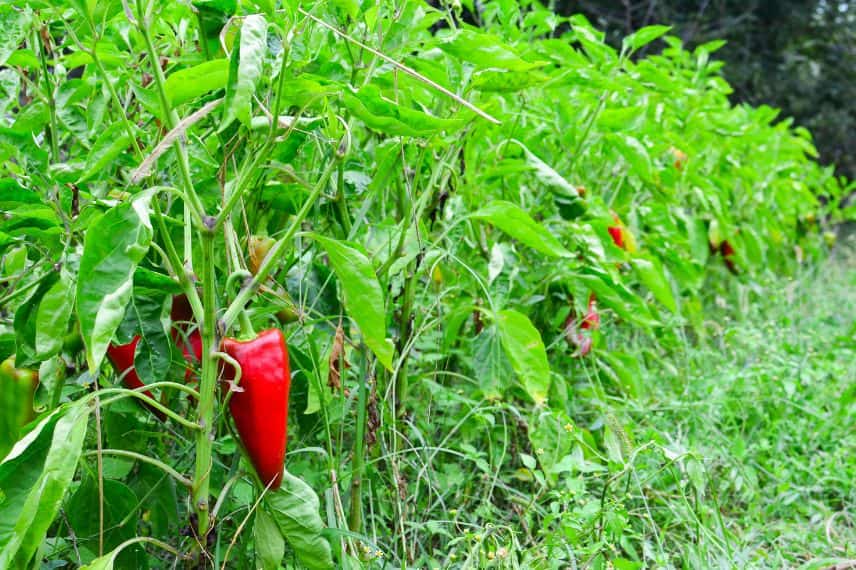
How to do it?
- Prune the main stem of the pepper or chilli plant when the plant has about ten fruits.
- Prune the secondary stems after the second leaf, following the last fruit.
To learn more:
The pruning of the melon
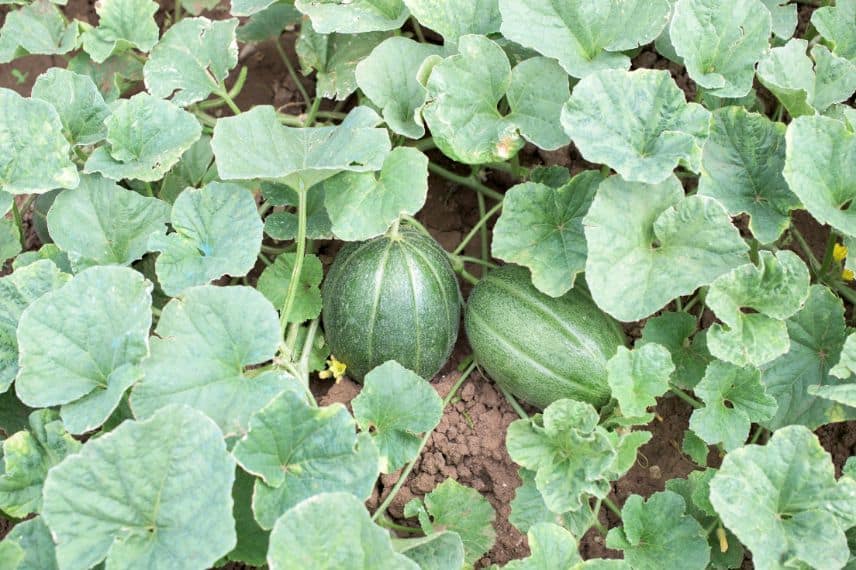
The melons should be pruned from June to August, especially in less sunny regions. This is simply to accelerate fruit formation and allow them the necessary time to develop and soak up the sun. In the south of France, pruning is not necessarily obligatory.
How to do it?
- Wait until your melon plant has developed 4 true leaves (not counting the cotyledons, which are actually the primary leaves of the plant, generally recognisable by their different shape). Cotyledons are usually two in number for most vegetable plants (known as dicotyledons) and are round in shape.
- Cut the main stem after the first two leaves of the lateral shoots.
- Repeat the operation with the new shoots that form.
- When the shoots bear fruit, cut the stem after the two leaves that follow the fruit.
Further reading:
Pruning cucumbers (and gherkins)
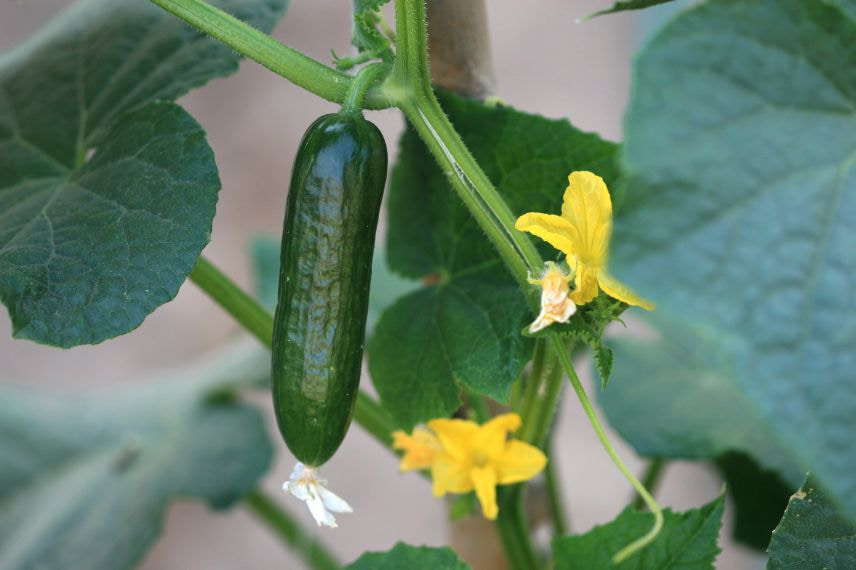
Cucumbers (and gherkins, which are actually cucumbers harvested before ripeness) prefer light, loose, very cool soils rich in humus. They also require plenty of sunlight. To facilitate growing and harvesting, it is recommended to support the plants that enjoy climbing on stakes, a net, or trellis. However, you can also choose to grow cucumbers and gherkins flat. It is advisable to prune cucumbers and gherkins to encourage fruiting.
How to do it?
- Prune the main stem above the second leaf. Secondary stems will develop.
- When these secondary shoots have 4 leaves, pinch above the 4th leaf.
- When the fruits appear, cut after the second leaf following the 3rd fruit.
Further reading:
The pruning of tomatoes
I have deliberately left the most controversial vegetable until last! The tomato! Without wanting to enter the debate, I will share two straightforward methods: the traditional method involves removing the suckers, topping, and leafing the plants, while the more natural method allows the tomatoes to develop as they please.
Discover the text by Ingrid B. who explains in detail tomato pruning and management.
As for Virginie D., she discusses growing tomatoes in a cage.
- Subscribe!
- Contents

Comments