






























Taproot plants: how and where to plant them?
Tips and precautions to consider
Contents
Understanding root systems is essential for long-term success of your plantings. Among the various root types, tap roots are distinguished by their ability to anchor deeply into the soil, providing the plant with stability and access to subterranean resources, notably groundwater. These vertical, dominant roots inevitably involve particular considerations when planting.
This handy guide will take you through the essential steps to plant these plants effectively, while taking into account the advantages and challenges presented by this type of root system.

A taproot: what is it?
It’s a carrot! Literally.
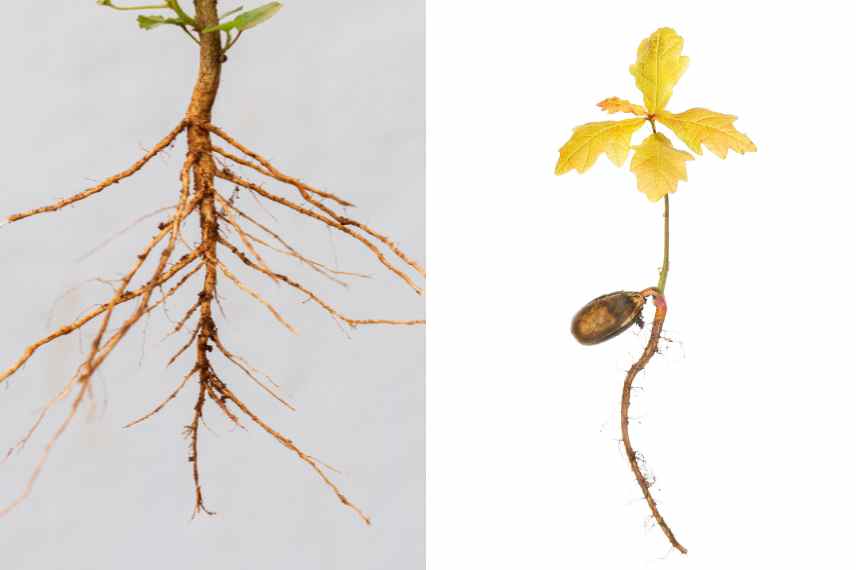
A taproot is a thick, dominant root that grows straight downward from the base of the stem of the young plant. This main root is usually larger and longer than the other roots of the young plant. It enables the young plant to access water and nutrients that can be located very deep in the soil, especially in arid environments.
In addition to its absorption function, the taproot plays a crucial role in anchoring the young plant to the soil, providing stability, especially against strong winds.
Note that we are talking about a taproot. Indeed, a root system is often complex and consists of several types of roots. For example, an oak, even when young, possesses, in addition to a taproot, a whole network of adventive roots.
Read also
The different types of root systemsSome examples of plants with taproots.
Trees and shrubs
- Walnut trees
- Oaks, especially when young
- Hawthorns
- Roses
- Holly
- a good number of conifers, including pines
Perennials and annuals
- Dandelion
- Root vegetables: radishes, carrots, parsnips, turnips, beetroot (and Swiss chard!)…
- Tomatoes
- Poppies
- Calendulas
- Wallflowers
- Columbines
- Thistles
- Acanthus
- Rumex
- Plantains

Pine, roses, and poppies — three plants with highly taprooted roots
Advantages and disadvantages of a pivoting main root
Plants with taproots, those that grow vertically downward, have specific advantages and disadvantages. Here is an overview of each:
Advantages:
- Stability : Pivot roots provide solid, deep anchorage in the soil, making plants particularly stable in the face of strong winds or extreme weather conditions.
- Access to water at depth : Pivot roots can reach water and nutrients located deep in the soil. This can be particularly beneficial in drought-prone areas.
- Help to soil structure : Deep roots can help improve soil structure by creating channels that improve drainage and air penetration.
- Reduced competition : As these plants take water and nutrients mainly from depth, they can coexist with plants with shallower roots, reducing competition for resources.
Disadvantages:
- Transplanting difficulties : Transplanting is difficult once established, as the main root is deep and can be damaged during the process. If you decide to move a plant with a taproot, do so when it is young.
- Sensitivity to soil compaction : Hard or compacted soils can impede the growth of taproots and negatively affect plant health.
- Damage to infrastructure : Pivot roots can potentially damage building foundations, water mains and other underground infrastructures if planted too close or directly above (notably for pipes).
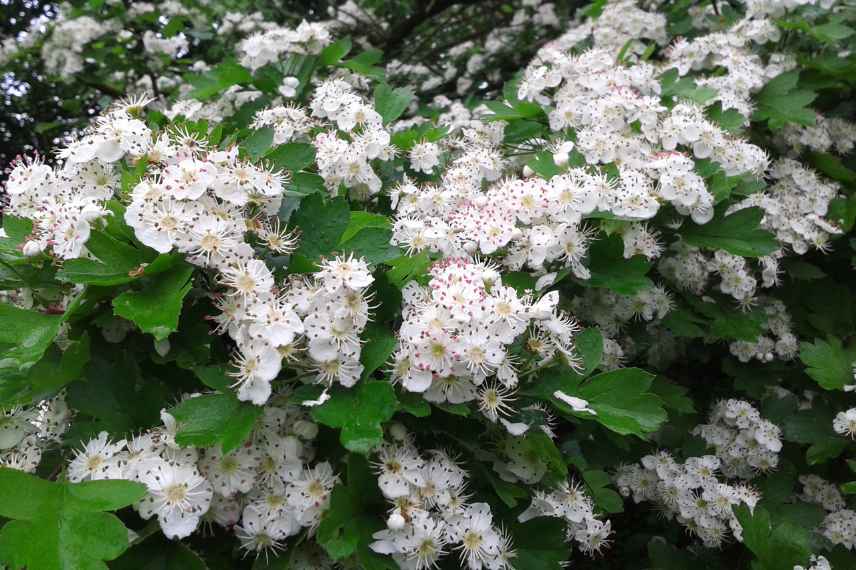 Hawthorn[/caption>
Read also
Root-related bunWhere and how should these types of plants be planted?
Where to plant them?
To avoid damaging structures or other plantings, choose areas away from foundations, paths, irrigation systems or pipes, especially directly beneath the tree you are planting.
How to plant them?
Planting is essentially the same as for any other plant:
- Preparing the hole : Dig a hole twice as wide as the root ball but not much deeper. This allows lateral roots to spread easily while anchoring the taproot vertically.
- Soil amendment : If your soil is compacted or poor, incorporate well-decomposed compost or manure to enrich the soil and ease root growth.
- Planting at the correct depth : Place the plant in the hole so that the top of the root ball is level with the soil surface or slightly above it to prevent stem rot.
- Initial watering : After planting, water thoroughly to remove air pockets and ensure good contact between soil and roots.
- Mulching : Apply a layer of mulch around the base of the plant (being careful not to touch the stem) to retain moisture, regulate soil temperature and reduce weed competition.
- Monitoring : During the first year, keep a close eye on the plant to ensure it establishes well. Water regularly, especially during dry periods.
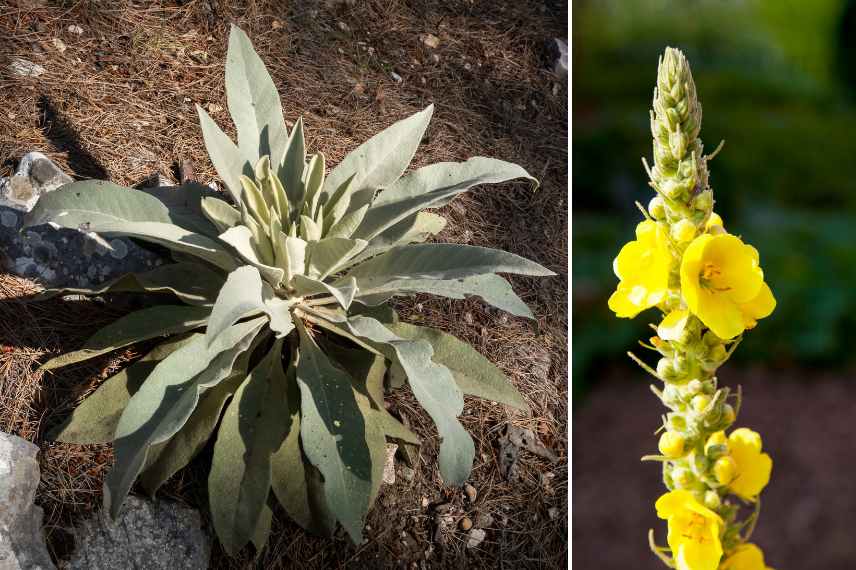
Verbascum thapsus, or white mullein
- Subscribe!
- Contents

Comments