





























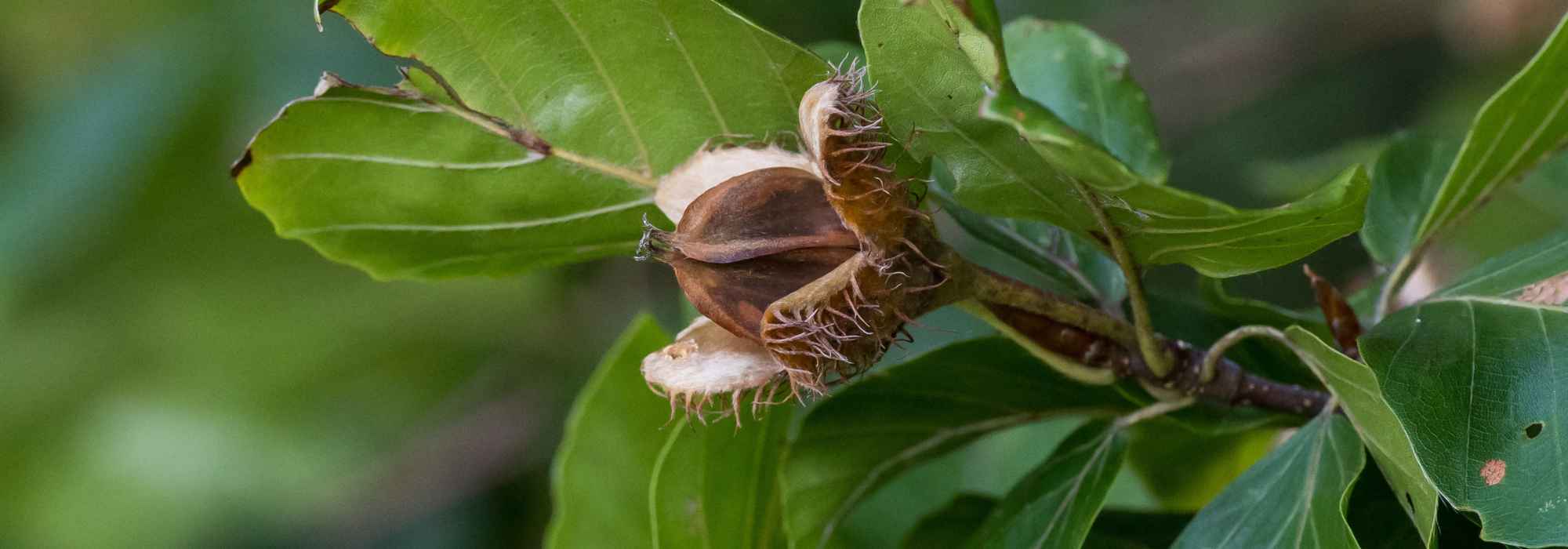
The beech nut: an edible fruit to discover!
Identification, harvest and culinary uses
Contents
The Beech (Fagus in Latin) is a well-known tree in our European forests, like Fagus sylvatica, the most popular common beech in France. But, did you know that this beautiful forest tree produces edible and nutritious fruits called beech nuts or beech mast? These small seeds, with a sweet and refined flavour, somewhere between hazelnut and chestnut, can be eaten raw or roasted in a pan. They enhance salads, serve as unique dried fruits for aperitifs or snacks, and can be included in cake recipes. They offer an innovative alternative to traditional dried fruits. Discover how to harvest, store, and use beech nuts, these delicious forgotten seeds!
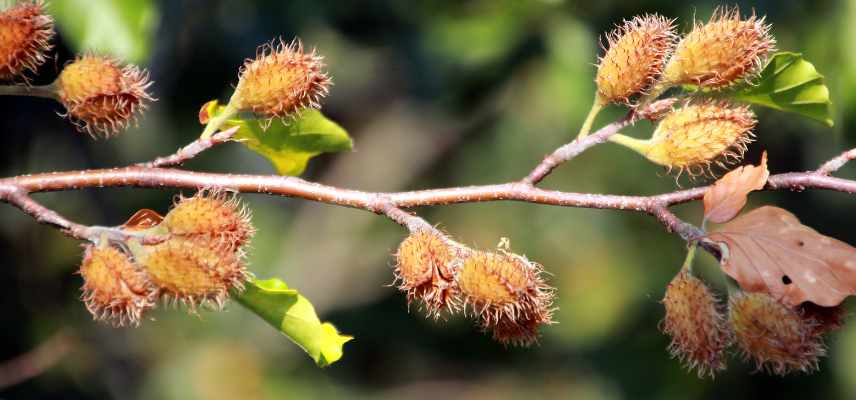
Learn to recognise and enjoy beech nuts!

How to recognise a beech tree?
Identifying the beech is the first step to embarking on the tasting of beech nuts! The common beech (Fagus sylvatica) is a majestic tree that populates our temperate European forests. This tree prefers shade or partial shade and shies away from hot, dry climates. It has a rather conical habit that can reach 20 m in height at ripeness. It is distinguished by its smooth, silver bark. The very dense foliage consists of ovate, undulating, and glossy leaves. Beech leaves are recognizable by their hairs and finely dentate margins. Tender green in spring, they take on coppery hues in autumn. Some varieties have golden foliage (Fagus sylvatica ‘Dawyck Gold’), purple (Fagus sylvatica ‘Atropurpurea’), or variegated. The foliage is marcescent, meaning it dries in autumn, clinging to the branches until it falls in the following spring when new leaves appear. The beech flowers discreetly from April to May.
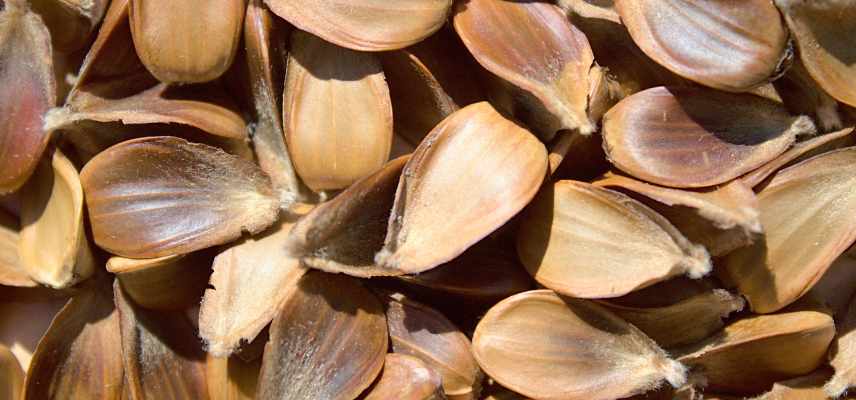
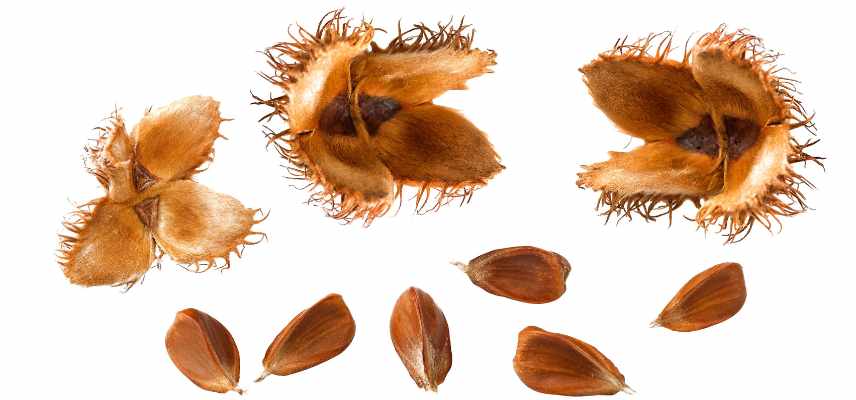
Fruiting only occurs on venerable specimens at least thirty years old. Hunched and bristly cupules form in spring and then open in fours in autumn, revealing 2 to 4 small, triangular-section fruits, brown and glossy: the beech nuts. It is under this brown skin that the edible seed is found, resembling a tiny white almond. These fruits are edible in small quantities and while they delight forest wildlife (squirrels, deer, birds) that help in their dissemination and thus ensure the species’ survival, they will equally delight you if you keep a keen eye out!
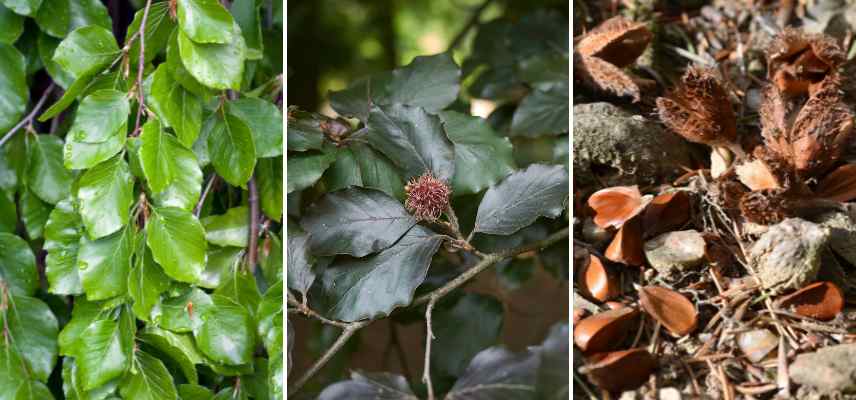
The characteristic foliage of the beech and its fruits
When to harvest beech nuts?
The harvest of beech nuts, known as faînée or fainée, takes place in autumn, typically from September to November, when the cups naturally open in four to release the fruits. They then perch at the base of beech trees. It is recommended to collect them quickly after they fall to prevent them from being devoured by animals or rotting on the ground. Production can be unpredictable and depends on the spring weather, especially if it has been rainy. A dry season encourages a good fainée. Choose a nice dry day to gather the fallen beech nuts.
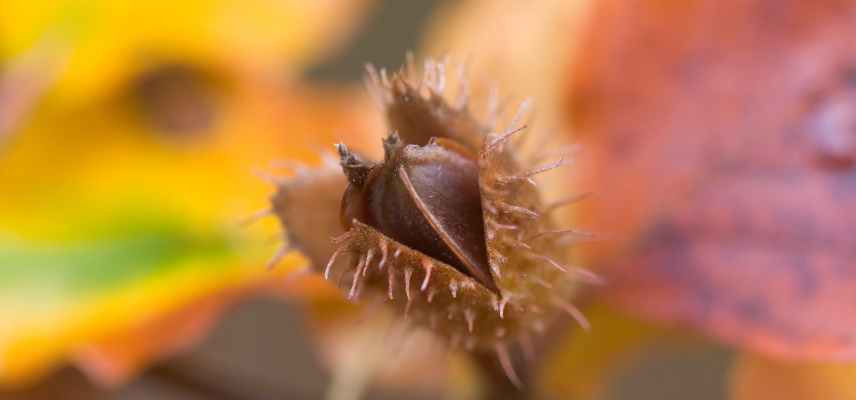 The beech nut</caption]
How to preserve beech nuts?
After harvesting, dry the shells in the open air in a dry place and protected from rodents for a few days in a crate. Beech nuts are stored in the same way as other nuts. Once dry, they do not keep for long, and it is better to consume them fairly quickly. They should be stored in a fabric bag or an airtight glass jar placed in a cool, dry place and protected from light.
Read also
How and when to prune beech?Uses of beech nuts
For centuries, beech nuts have provided food for forest animals. They were also once used, like acorns, to feed the pigs and hogs from farms that were taken to graze in the forest. It’s hard to resist their little taste reminiscent of almond or chestnut!
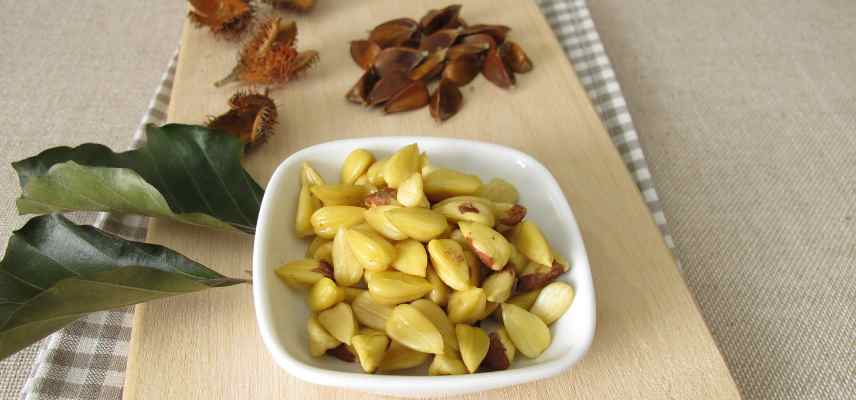
In the kitchen, beech nuts, once dried and after removing their fine brown skin, can be eaten as they are, lightly roasted in a pan, or incorporated into various recipes, as a substitute for almonds, hazelnuts, or pine nuts. They particularly enhance sweet recipes such as biscuits, cakes, or dessert creams. These little dried fruits are delicious for snacking! Additionally, they can be made into flour, rich in protein and gluten-free. A rare and precious oil with a strong walnut aroma is also extracted from beech nuts.
Properties and benefits of beech nuts
High in calories (576 kcal/100g), rich in carbohydrates and unsaturated fatty acids, beech nuts are an excellent source of nutrients. They are high in protein, fibre, and vitamins, particularly vitamins B6 and E. They also contain a good amount of minerals such as potassium, iron, and calcium. However, one should not overindulge in beech nuts, as their skin contains tannins that include fagine (choline), a molecule that is toxic in high doses and can cause headaches and gastrointestinal issues, but may help prevent certain neurological conditions.
- Subscribe!
- Contents
Comments