





























The best summer-flowering bulbs for a sunny garden
Bulbs that cope well with sunny exposures
Contents
Summer flowering bulbs are second to none for brightening flower beds, borders, rockeries, and containers. Their colours can be radiant or, at times, more restrained. Their varied forms and habits adapt to all types of garden and will easily please all tastes.
Some of these summer-flowering bulbs will tolerate sunny exposures very well, and may even withstand occasional drought. Discover our selection of summer flowering bulbs for sunny spots here.

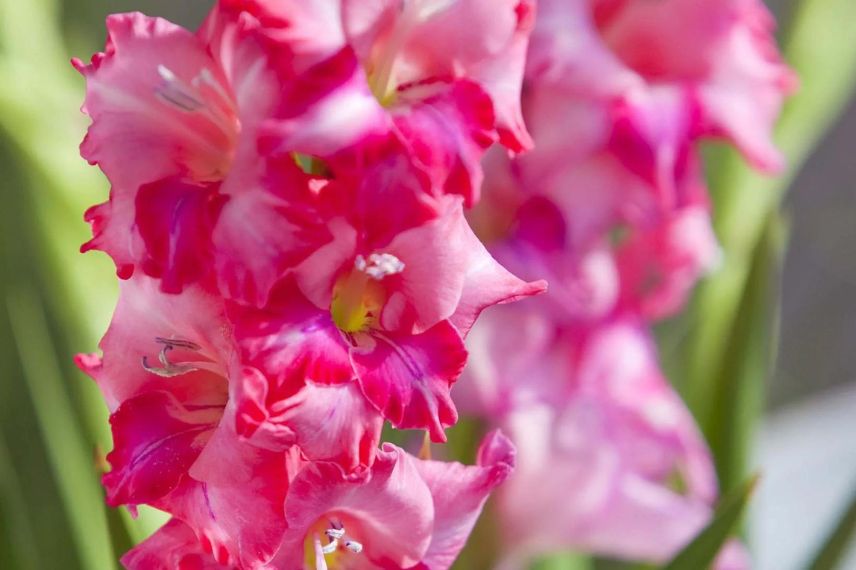
Gladiolus 'Charm' – Gladiolus tubergenii
‘Charm’ is a hybrid gladiolus variety with natural beauty that will no doubt enliven the summer. From June to August, this bulbous plant produces pretty funnel-shaped flowers arranged in spikes, which renew themselves almost continuously. In terms of colour, they range from a vivid cherry pink to a purple, both very bright and contrasting with white maculate markings.
The sword-shaped foliage adds a touch of graphic appeal.
Still not widely grown, this gladiolus hybrid benefits from being harderier than other varieties. It is, in fact, hardy down to -12°C.
Its compact size makes it suitable for planting anywhere, whether in a border, at the edge of a bed, or in a pot, always in a sunny position. Expect about 65 cm tall and 20 cm across. Plant it in soil rich in organic matter, but well-drained so that water does not stagnate in excess and risk rotting the corms (underground storage organs).
The flowers of this gladiolus will readily feature in summer bouquets, alongside antique roses.
To learn more about growing gladioli, read our article “Gladioli: how to plant, grow and maintain”.
Read also
When should we plant summer bulbs?Martagon lily ‘Arabian Night’ – Lilium x martagon
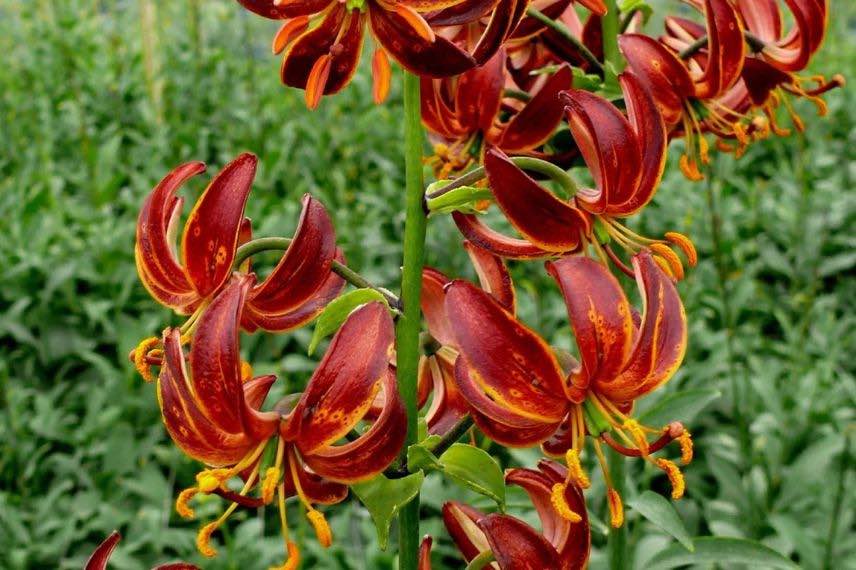
This martagon lily offers a quite striking colour: between June and July, it bears flowers in mahogany red, subtly shaded with orange leaning toward gold. A real little gem! The flowers of Arabian Night have very reflexed petals, which gracefully droop downward and reveal prominent stamens. Generously, this lily can produce up to around fifty flowers in a few weeks. This flowering will brighten the garden with colour and fragrance, while delighting visiting pollinators.
Dark green, lanceolate foliage dies back in winter.
This lily has a slender, light habit, reaching 80 cm to one metre in height for 45 cm across.
The martagon lily, with its warm colours, will look wonderful in a sunny, exotically inspired border, alongside Crocosmias in yellow tones and lush foliage to add volume.
It can be grown in the ground or in pots, and will reliably return year after year. Plant it in well-drained soil, never too wet. Hardy, it tolerates frosts down to -20°C.
For more on lily cultivation, read our dossier ‘The Lily: planting, cultivation and maintenance’.
Ornamental garlic ‘Lavender Bubbles’ – Allium
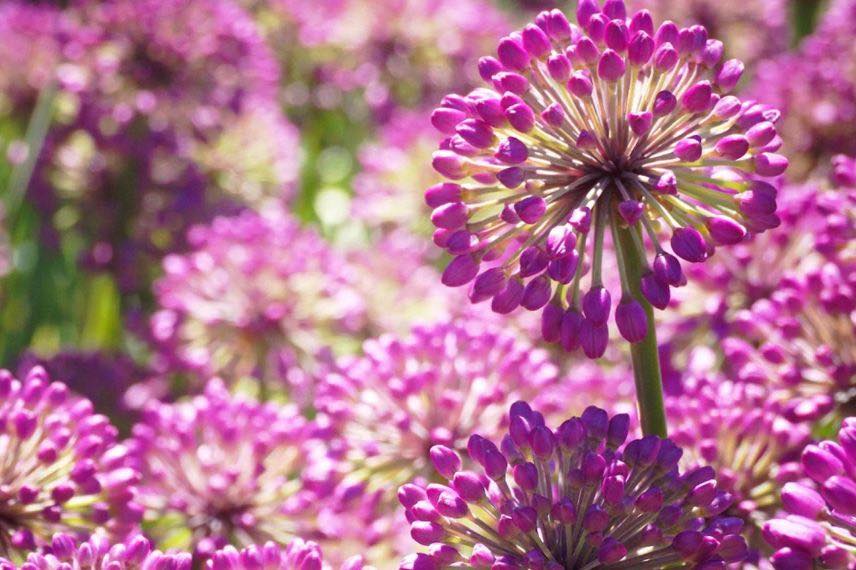
Between July and August, rely on ‘Lavender Bubbles’ to give you a graphic and colourful flowering! This ornamental allium produces in summer numerous ball-shaped inflorescences 8 cm in diameter showing a pink hue leaning toward violet. They are, in fact, made up of a multitude of tiny star-shaped flowers. This flowering is enhanced by lush, grey-blue-tinged foliage, which remains until the end of summer. This flowering in adorable pompoms will attract, once again, numerous pollinators.
This summer bulb will reach around 50 cm high and wide.
Plant this Allium in full sun, in ordinary but well-drained soil. Its flowers will look good anywhere: in a bed, in a border, or in a pot on the terrace or balcony. In rockeries, they will pair wonderfully with Sedum and Nepeta. Fresh or dried, they also make excellent cut flower arrangements.
To learn more about the culture of Allium, read our feature “Allium, Ornamental Garlic: Planting, Cultivation and Maintenance”.
Read also
Growing summer bulbs in potsGladiolus 'Venus' – Ixia
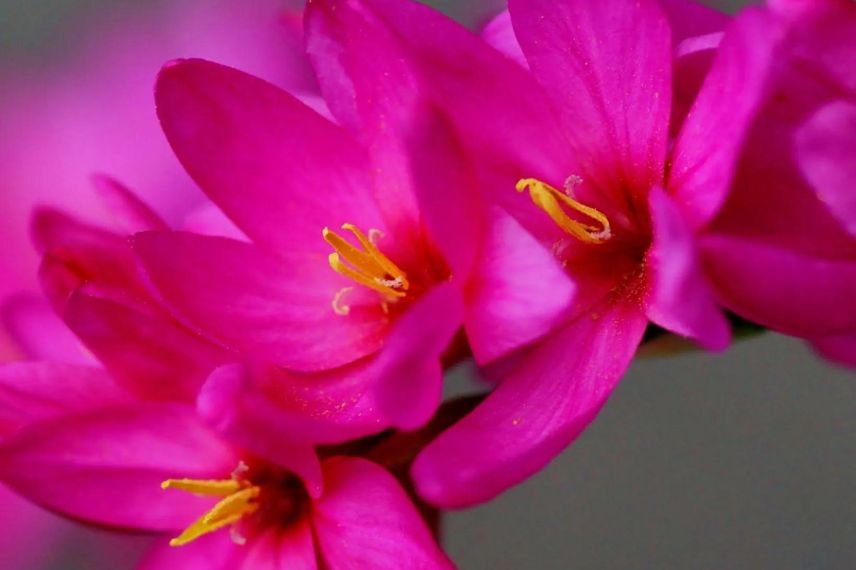
This small summer bulb is not stingy with flowers. Ixia ‘Venus’ graces us, in fact, from late June to late August with a myriad of tiny star-shaped flowers, displaying a vivid magenta-pink.
It forms a clump of slender, sword-shaped leaves that disappear in summer.
Originating from South Africa, this plant remains frost-tender. It is only hardy down to -5°C. But its small size, not exceeding 40 cm in height, makes it easy to grow in summer pots, to shelter the plant during the cold season. They will pair well with airy, colourful Cosmos.
Provide it with a light, well-drained substrate to avoid damaging its corms, as well as a sunny exposure (filtered in southern France). The flowers of this pretty Ixia open only in sunlight. Easy to grow, this gladiolus will naturalise easily and return year after year.
To learn more about growing Ixia, read our guide “Ixia: planting, cultivation and care”
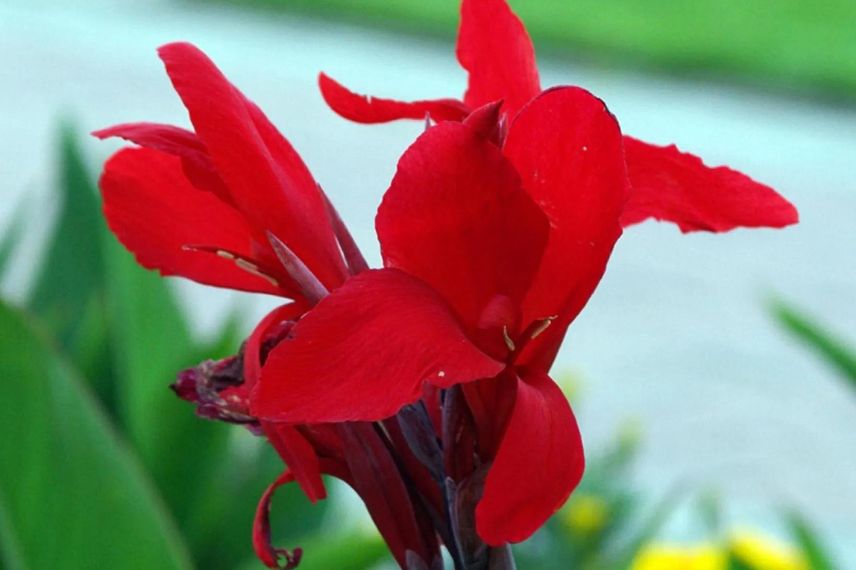
The vermilion red canna - Canna x generalis 'Firebird'
Cannas are unrivalled for adding an exotic touch to the garden in summer! ‘Firebird’ is no exception to the rule. This large young plant with rootstocks reaches nearly 1 metre in height and 60 cm wide. It flowers for a long period in summer, from July until the first frosts, revealing asymmetrical flowers, borne on slender flowering stems. They are arranged in spikes and offer us a very elegant vermilion colour. This flowering is followed by an interesting fruiting, which shifts from green to violet, before turning brown.
Its banana-like foliage is equally ornamental and lends an exotic look. Its dark green colour harmonises very well with the vermilion of the blooms.
This canna enjoys the sun and is drought-tolerant, although a cool, moist soil will make it more floriferous. Give it well-drained soil and enjoy its faithful presence year after year. Hardy to -15°C, the rootstocks should only be dug up (as with dahlias) in regions with harsh winters. Agapanthus will make good companions.
To learn more about growing Cannas, read our guide The Canna: Planting, Growing and Maintaining.
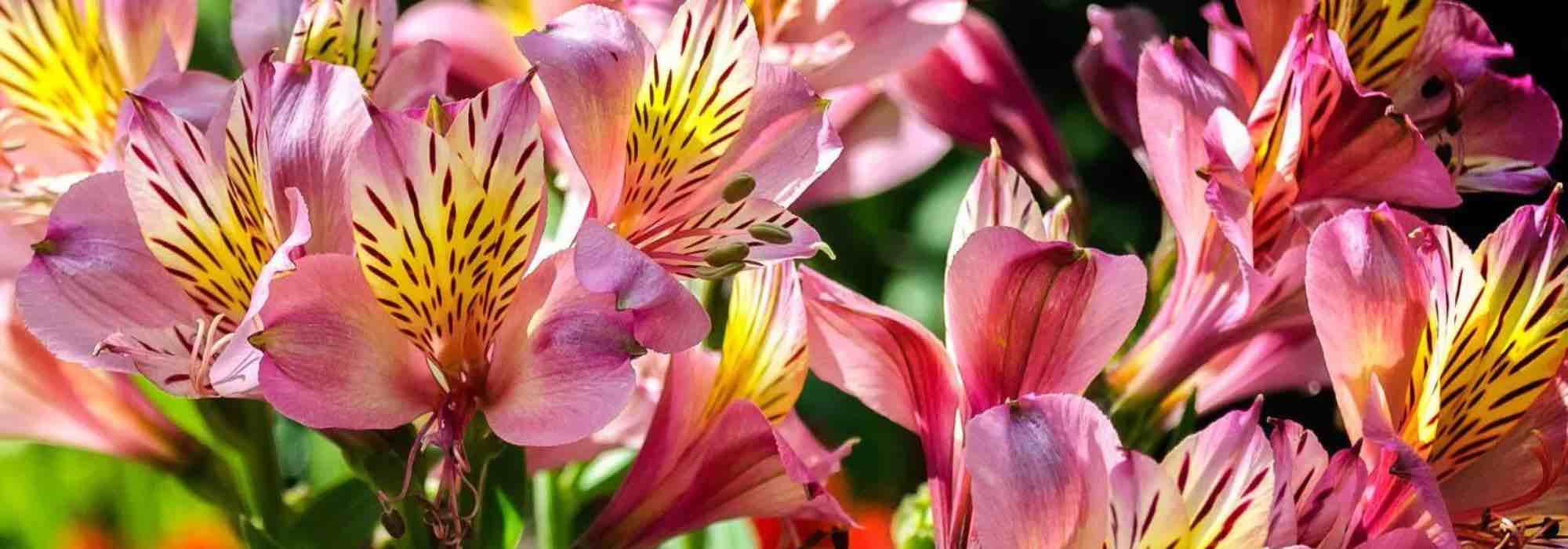
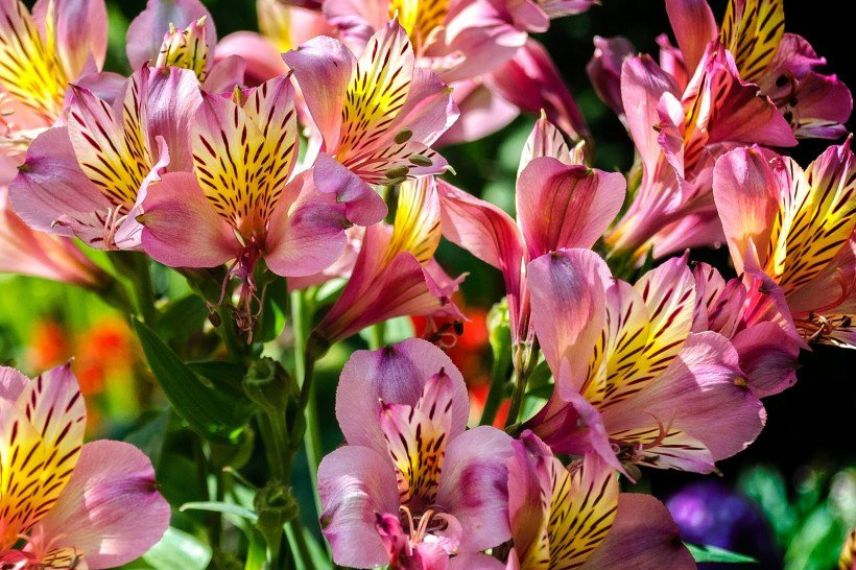
Inca lily 'Ligtu Hybrid' – Alstroemeria ligtu × haemantha
If you love multicoloured flowers, you’ll adore this Inca lily! Throughout the summer, it produces trumpet-shaped flowers about 4 cm across. They blend salmon-pink, orange, yellow and brown, with patterns that give them this exotic look.
When they’re happy in the right conditions, these bulbous perennials can come back year after year and spread generously over time.
They reach about 60 cm in height with a 40 cm spread.
They are very attractive cut flowers, but also good candidates for rockeries that aren’t too dry, for beds and borders. If they enjoy sun, they are sensitive to the scorching midday sun, especially in southern France. They need light soil that stays moist but not soggy, and fairly fertile for good growth. Once established in deeper soils, they will be more drought-tolerant.
To learn more about growing Inca lilies, read our guide “Inca lilies, alstroemeria: plant, grow, maintain.”
- Subscribe!
- Contents
Comments